Anouncement

Anouncement

The promise of AI replacing human workers swept through boardrooms like wildfire — and for a brief moment, it felt like the future had arrived ahead of schedule. Companies made headline-grabbing layoffs, confident that large language models and automation pipelines would absorb the slack. But something unexpected happened next: the phones started ringing again, and the same people who had been shown the door were being quietly invited back in.
This is not a fringe phenomenon. According to McKinsey Global Institute’s research on generative AI and the future of work, while AI will automate certain tasks at scale, the transition is far slower and more uneven than early projections suggested — and the human skills required to manage, verify, and contextualise AI outputs remain stubbornly irreplaceable. The gap between what AI was supposed to do and what it actually does in practice is now costing companies more than the layoffs ever saved.
In this post, we unpack why the AI replacement narrative is proving far more complicated than the headlines suggested, what the rehiring wave reveals about the real limits of current AI tools, and what smart businesses are doing differently in 2025.
When generative AI tools matured enough to handle drafting, coding, and data analysis, many companies made a calculated bet: replace headcount with software subscriptions. The logic seemed airtight on a spreadsheet. A mid-sized firm could theoretically replace a content team with a prompt engineer and a license. On paper, the ROI looked extraordinary.
The reality was messier. AI tools produced outputs that required significant human review — catching hallucinations, applying brand tone, managing client relationships, and making judgment calls that no model was trained to make. In many cases, the time spent reviewing and correcting AI output actually exceeded the time a skilled human would have taken to do the work directly.
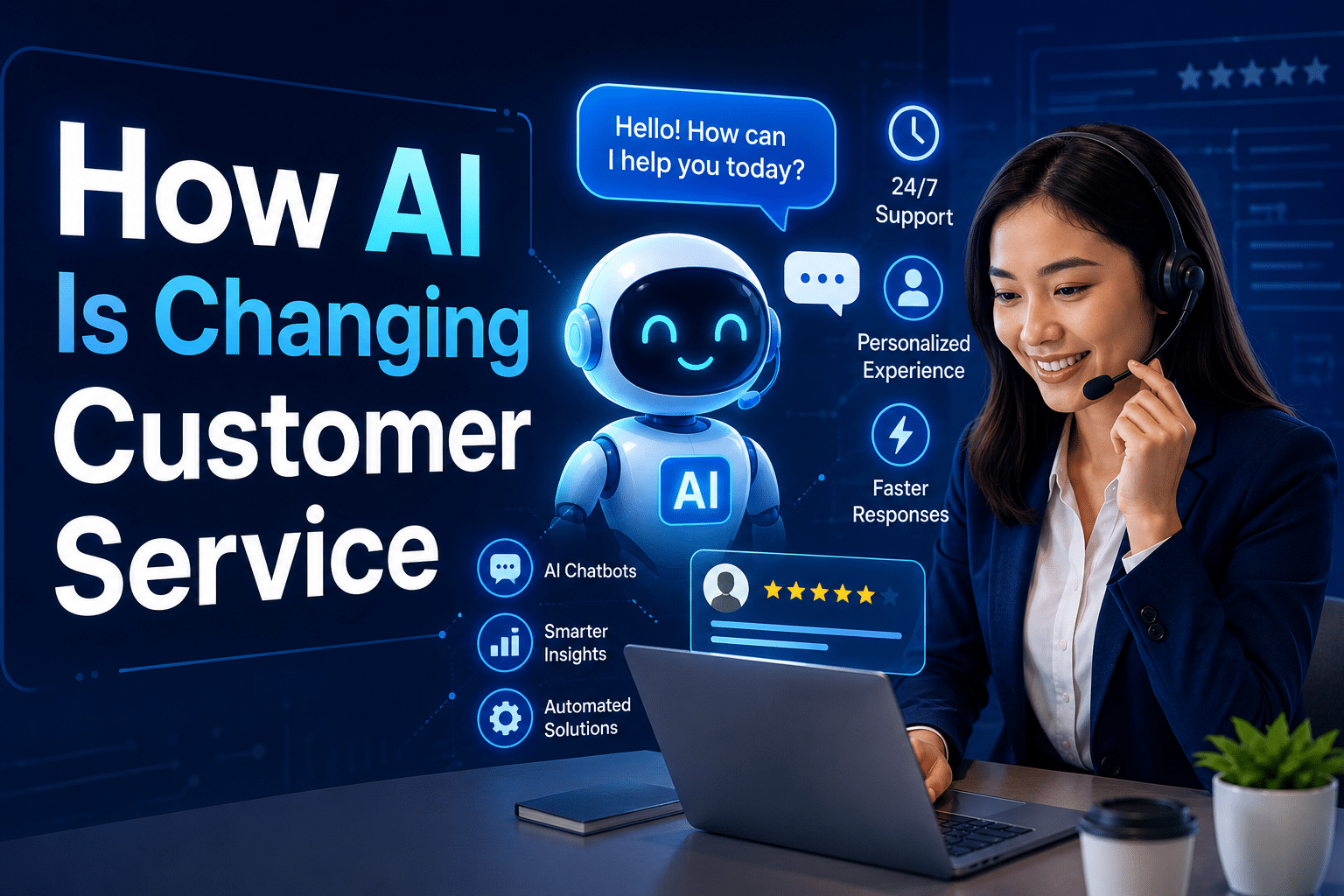
Customer-facing roles were hit particularly hard by this miscalculation. Firms that replaced support staff with AI chatbots found satisfaction scores dropping and escalation rates climbing. The cost of a frustrated customer — or a lost contract — rarely appeared in the original automation ROI model. Human empathy, institutional memory, and nuanced communication proved far harder to replicate than anticipated.
Pro Tip: Before automating any role, map every task that requires judgment, relationship management, or contextual awareness. These are the tasks AI currently handles worst — and where rehiring costs hit hardest when automation fails.
For a deeper look at how this shift is reshaping careers and organisational design, our post on the future of work and how AI is changing jobs and skills walks through the emerging skill sets that matter most right now.
There is a concept in economics called the “costs of production switching” — the price a business pays when it reverses a structural decision. Rehiring is expensive in ways that are easy to underestimate. Former employees who were laid off often return as contractors, sometimes commanding day rates two to three times higher than their previous salaries. The goodwill loss is harder to price, but it is real.
Beyond salary, there are onboarding costs, knowledge transfer gaps, and the cultural drag that comes from a workforce that watched colleagues get replaced by software. Trust, once broken at scale, does not rebuild quickly. Some of the most capable people — those with the most options — chose not to return at all, leaving firms with a talent gap that AI cannot fill and a hiring market that has grown wary.
There are also downstream quality costs. In industries like legal, medical, financial services, and specialised engineering, errors introduced by AI and missed in review have resulted in compliance failures, client disputes, and reputational damage. The firms that moved fastest and most aggressively toward AI replacement are, in many cases, the ones now scrambling hardest to rebuild.
Pro Tip: Track “AI-introduced error rates” as a dedicated KPI alongside productivity gains. If your team spends more time correcting AI than the AI saves, the model is not yet fit for that workflow — and a skilled human may still be the more cost-effective choice.
None of this means AI is failing — far from it. The nuance the rehiring wave exposes is not that AI is ineffective, but that it was applied carelessly to the wrong roles. Where AI genuinely excels is in repetitive, rules-based, high-volume tasks with well-defined outputs: data classification, first-draft generation, code autocompletion, image resizing, and pattern recognition at scale.
The companies winning right now are not the ones that replaced their people with AI. They are the ones that gave their people AI. When a skilled analyst uses AI to process ten times more data, or a developer uses code-assist tools to ship features faster, the productivity gains are real and compounding. The human remains the decision-maker; the AI is the accelerant.
This is the model the research increasingly supports: augmentation over replacement. AI tools elevate the output ceiling of a capable human worker rather than substituting for one. The firms that understood this early are now ahead — both in output quality and in staff retention. For a practical breakdown of how business leaders can apply this model, see our guide to AI automation and the workforce: what business leaders need to know.
The quiet rehiring trend is, in a strange way, a healthy correction. It is the market sending a clear signal that human judgment, accountability, and relational intelligence are not optional features — they are load-bearing parts of most organisations. The companies paying attention are using this moment to redesign their workforce strategies from the ground up.
That redesign tends to look like this: fewer roles that are purely administrative, more roles that are hybrid — part human expert, part AI operator. Job descriptions are being rewritten not to eliminate tasks but to elevate them. A content strategist today is expected to manage AI pipelines, review outputs for accuracy and brand alignment, and apply the creative and strategic thinking that no model can reliably replicate.
This shift also has implications for how companies recruit and train. The skills premium is moving toward critical thinking, communication, prompt engineering, and the ability to evaluate AI outputs — not just produce them. Workers who develop fluency in AI tools without losing their domain expertise are becoming some of the most valuable employees in the market.
The organisations that will thrive in the next five years are not the ones that view this as a binary choice. They are building what some researchers are calling “centaur teams” — human-AI hybrids where each side does what it does best. Humans provide direction, judgment, empathy, and accountability. AI provides speed, scale, pattern recognition, and tireless execution of well-scoped tasks.
This model requires a new kind of management thinking. Leaders need to understand not just what their AI tools can do, but where those tools fail quietly — producing confident-sounding but incorrect outputs, missing cultural context, or optimising for the wrong metric. That oversight role is deeply human, and it cannot be automated away without catastrophic risk.
It also requires honest conversations about workforce investment. Upskilling existing employees in AI tool use is almost always more cost-effective than replacing them and rehiring later. The firms that treated their people as appreciating assets — rather than costs to be optimised — are the ones with the institutional knowledge and team cohesion to move fast and adapt.
This playbook applies beyond traditional industries too. In the creator economy and decentralised platforms, the same tensions are playing out at an individual level. Our overview of Web3 and the creator economy explores how digital ownership and decentralised platforms are creating new economic structures where human creativity retains its premium — even in an AI-saturated environment.
In certain narrow task categories — data entry, image tagging, basic drafting — AI adoption has been rapid. But full role replacement has been much slower and more limited than early predictions suggested. Most companies are finding that AI works best as a productivity tool for existing employees rather than a wholesale substitute for human teams.
Industries with high volumes of structured, repetitive tasks — such as finance, logistics, customer support, and basic content production — have seen the most AI-driven role restructuring. However, even in these sectors, human oversight roles are growing alongside automation, not disappearing entirely.
Because AI tools, while powerful, introduce errors, miss context, and require significant human review to produce reliable outputs. The time cost of review — combined with the relationship, compliance, and quality risks of pure automation — often outweighs the savings from reducing headcount. Many firms are discovering this only after the damage is done.
The skills with the highest and most durable value in an AI-augmented workplace include critical evaluation of AI outputs, prompt engineering, domain expertise, stakeholder communication, and ethical oversight. Workers who combine deep subject knowledge with practical AI fluency are among the most sought-after in today’s market.
The most effective approach is to audit existing AI deployments for real productivity gains versus hidden correction costs, identify where AI can amplify rather than replace skilled workers, and invest in upskilling staff to work effectively alongside AI tools. Treating people as partners in the automation journey — rather than costs to eliminate — consistently produces better long-term results.
Most credible research, including from McKinsey and MIT, suggests that AI will transform the nature of most jobs rather than eliminate them outright. New roles — AI trainers, prompt engineers, output auditors, hybrid strategists — are already emerging. The net employment effect over the long term remains genuinely uncertain, but the short-to-medium term evidence increasingly supports augmentation over wholesale replacement.
The narrative around AI replacing human workers was always more complicated than the headlines allowed. The rehiring wave we are seeing in 2025 is not a sign that AI has failed — it is a sign that the first wave of AI adoption was applied bluntly, without enough respect for what humans actually contribute to complex work. The companies learning from that mistake are building something more durable: workplaces where AI makes people better at what they do, rather than trying to do it without them.
The most important shift is not technological — it is philosophical. Moving from “how do we replace this person?” to “how do we make this person ten times more effective?” changes everything: hiring decisions, training investments, team structures, and ultimately, the quality of what gets built. That mindset is the competitive edge that no software subscription can replicate.
If you are navigating this transition — whether as a business leader, a worker adapting to a changing landscape, or a builder creating the tools that power this new era — the conversation is worth having with people who are thinking about it seriously. Explore what we have built at attn.live.