Anouncement

Anouncement
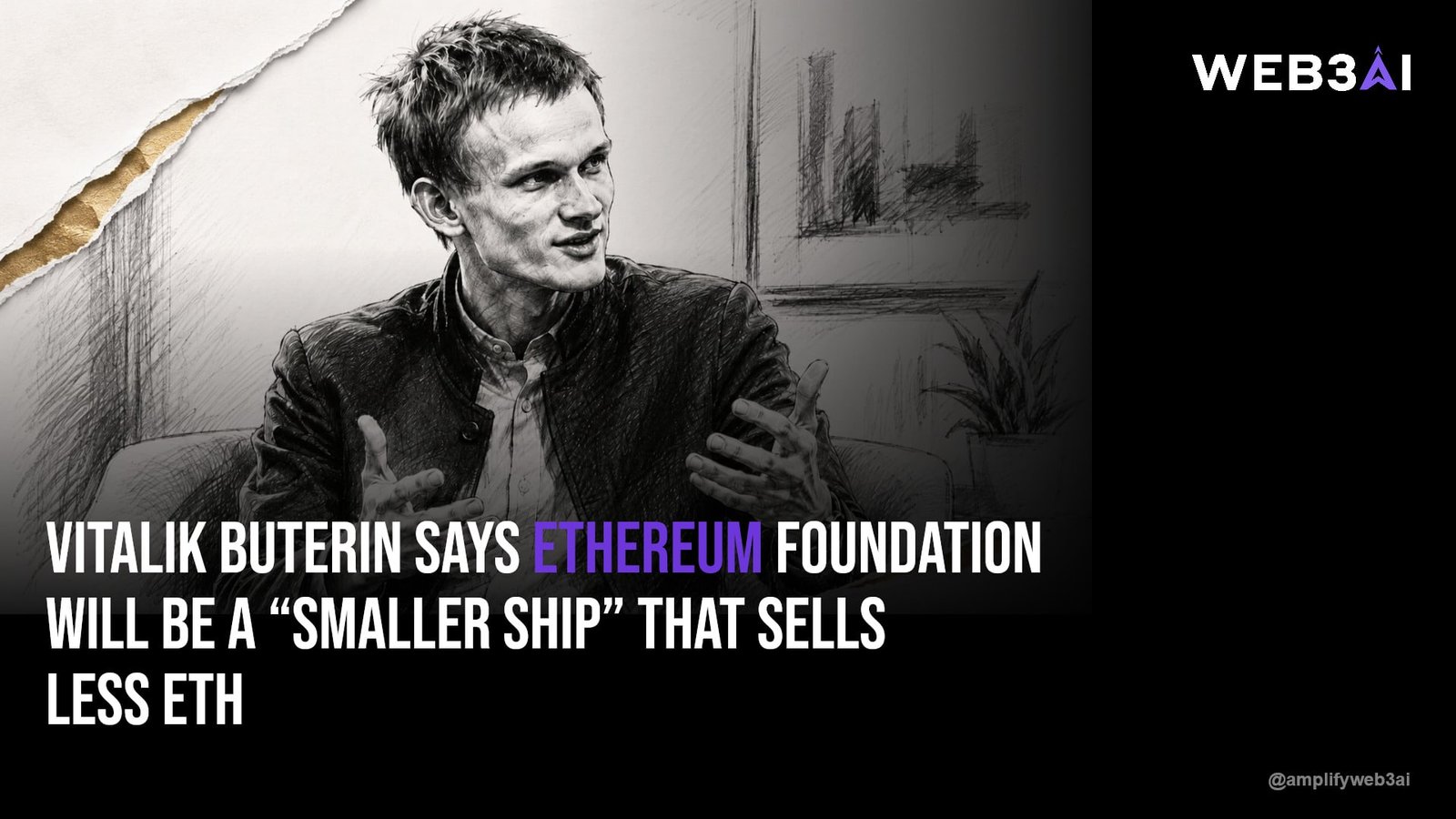

The Ethereum Foundation future strategy is undergoing one of its most significant resets since the network launched — and Vitalik Buterin wants the world to understand exactly why. In a candid public statement, Buterin described the Foundation as needing to become a “smaller ship” that sells less ETH, spends more intentionally, and earns a larger share of its revenue rather than relying on its treasury reserves. For anyone watching Ethereum’s trajectory in 2025, this signals a meaningful philosophical and operational shift.
This announcement arrives amid growing community scrutiny around how the Foundation allocates resources and whether its spending model is sustainable long-term. Fortune reported in March 2025 that the Foundation had already begun reshaping its leadership structure, with new executive leadership stepping in alongside Buterin to steer the organization through a more accountable era. The timing of Buterin’s latest comments suggests that transformation is now accelerating.
If you have ever wondered whether the organization behind the world’s second-largest blockchain can evolve beyond its original startup model, this post breaks down exactly what is changing, what it means for ETH holders, and why the broader Web3 ecosystem should be paying attention.
At the heart of Buterin’s statement is a straightforward but consequential idea: the Ethereum Foundation has historically sold ETH from its treasury to fund operations, and that practice is going to shrink considerably. Buterin described the goal as ensuring the Foundation covers more of its costs through earned income rather than liquidating holdings that the broader community views as a shared resource. This is not a crisis announcement — it is a deliberate recalibration toward long-term sustainability.
The language Buterin used — “a smaller ship” — is particularly telling. It implies agility, reduced overhead, and a leaner organizational structure that can move faster without the weight of large institutional spending. For a Foundation that has faced criticism for being too slow to adapt to Ethereum’s rapidly evolving needs, this framing is both practical and symbolic.
He also emphasized that the Foundation’s core mission remains unchanged: supporting Ethereum’s development, security, and ecosystem growth. What changes is the financial architecture underneath that mission. Fewer ETH sales means less selling pressure on the market, which is a detail that has not been lost on traders and long-term holders watching closely.
Pro Tip: When evaluating any blockchain foundation’s health, look beyond price performance. How a foundation manages its treasury — how much it sells, how much it earns, and how transparently it reports — tells you far more about long-term network viability.
For context on how Ethereum’s broader development has evolved over recent years, our deep dive into The Ethereum Merge and its impact on investors and the environment shows just how far the network has already come — and why institutional confidence in Ethereum’s governance matters now more than ever.
The “smaller ship” metaphor deserves unpacking because it carries real organizational implications. A smaller ship is not a weaker one — it is a more maneuverable one. For the Ethereum Foundation, this likely means fewer large discretionary grants, tighter focus on high-impact technical priorities, and a shift toward partnerships and earned revenue streams that reduce dependency on ETH liquidations.
This model is not unprecedented in the open-source world. Many of the most resilient software foundations — think Mozilla or the Linux Foundation — have moved toward diversified income models over time, blending donations, corporate sponsorships, and service revenues to remain operationally independent. Buterin appears to be pointing Ethereum’s Foundation in a similar direction.
The practical effects could include a reconfiguration of grant programs, more selective funding of research initiatives, and potentially new commercial or partnership arrangements that generate recurring income. None of this diminishes Ethereum’s decentralization thesis — the Foundation has never controlled the protocol itself. But it does affect how the organization that shepherds the ecosystem’s culture and technical roadmap operates day to day.
Pro Tip: Do not confuse the Ethereum Foundation with Ethereum the protocol. The network is decentralized and governed by its validator community. The Foundation is one influential participant — not a controlling authority. Understanding this distinction is essential for evaluating any news about the organization.
The Ethereum Foundation future strategy has direct implications for anyone holding ETH. When the Foundation sells tokens to fund operations, those sales add to circulating supply and can create modest downward pressure on price — particularly during bear markets when liquidity is thinner. A commitment to selling less ETH is therefore not just a governance story; it is a market dynamics story.
Beyond price mechanics, the Foundation’s financial health shapes Ethereum’s development velocity. A well-funded, strategically focused Foundation can accelerate research on scaling, security, and new use cases. A financially stressed one may slow down or deprioritize foundational work in favor of short-term operational survival. Buterin’s announcement suggests the Foundation is trying to avoid that second scenario by acting proactively rather than reactively.
For a clear grounding in what Ethereum is and why its governance structures matter, our beginner’s guide to Ethereum covers the fundamentals in plain language — useful context whether you are new to the space or need a refresher on how the ecosystem fits together.
Buterin’s treasury comments do not exist in isolation. They follow a period of meaningful leadership transition at the Foundation, with new executive direction designed to bring more operational accountability to an organization that has historically operated with limited public transparency about its finances and decision-making. The combination of leadership renewal and financial strategy reform represents the most comprehensive reset the Foundation has attempted in years.
What the community will be watching for now is follow-through. Statements about selling less ETH and operating more leanly are easy to make — the harder task is building the earned-revenue infrastructure that makes those commitments viable without compromising the Foundation’s independence. That likely means cultivating relationships with enterprise partners, layer-2 ecosystems, and institutional stakeholders who benefit from Ethereum’s continued growth.
Ethereum is not operating in a vacuum. The broader Web3 ecosystem in 2025 is maturing rapidly, and the Ethereum Foundation’s strategic pivot reflects pressures felt across the industry: the need to professionalize governance, reduce speculative dependencies, and demonstrate that decentralized organizations can operate with the same discipline as their traditional counterparts.
Competing layer-1 networks have used Ethereum’s governance challenges as a talking point. A more strategically coherent Foundation — one that is leaner, financially sustainable, and publicly accountable — directly addresses that criticism. It also sends a signal to institutional investors and enterprise partners that Ethereum’s stewardship is in capable hands.
To see how these governance shifts connect to the larger forces shaping crypto and Web3 in 2025, our roundup of top Web3 trends to watch in 2025 provides essential context — from tokenization to decentralized AI and beyond.
Vitalik Buterin described the Ethereum Foundation future strategy as becoming a “smaller ship” that sells less ETH and generates more earned income. The goal is to reduce the Foundation’s reliance on liquidating its treasury reserves while maintaining its core mission of supporting Ethereum’s development and ecosystem growth.
The Foundation holds a significant ETH treasury built up over years of the network’s operation. It has historically converted portions of that treasury into fiat or stablecoins to fund salaries, grants, research, and operations. The practice is common among crypto foundations but has drawn scrutiny because it adds selling pressure to ETH markets.
Reduced ETH sales from the Foundation removes a consistent source of selling pressure from the market. While the Foundation’s sales are not the dominant driver of ETH’s price, reduced institutional selling combined with ongoing demand growth could contribute to a more favorable supply-demand dynamic for long-term holders.
No. The Ethereum Foundation does not control the Ethereum protocol. The network is governed by its validator community and developer ecosystem. Foundation strategy changes affect organizational operations and funding priorities — not the underlying protocol’s rules or consensus mechanisms.
The Foundation brought in new executive leadership in early 2025 alongside Buterin to improve operational accountability and strategic clarity. These changes were designed to complement the financial restructuring Buterin described, creating a more professionally managed organization better equipped for Ethereum’s next phase of growth.
Many major blockchain foundations — including those supporting Solana, Polkadot, and Cardano — have faced similar sustainability questions. The Ethereum Foundation’s move toward earned income and reduced token sales mirrors best practices seen in traditional open-source foundations like Mozilla and the Linux Foundation, which blend donations, partnerships, and service revenue for long-term stability.
The Ethereum Foundation future strategy Vitalik Buterin has outlined is not a dramatic departure — it is a responsible maturation. Selling less ETH, operating leaner, and building toward earned income are exactly the kinds of moves you make when you are thinking decades ahead rather than quarters ahead. For an ecosystem as significant as Ethereum, that long-term orientation matters enormously.
What happens next will depend on execution. The community, developers, investors, and enterprise partners are all watching to see whether the Foundation’s new direction translates into tangible structural changes or remains aspirational language. Given the weight of Buterin’s public commitment and the leadership changes already underway, there is genuine reason for optimism.
If you are building on Ethereum, investing in ETH, or simply tracking where Web3 is headed, this moment is worth understanding deeply — because how the Foundation navigates the next two years will shape Ethereum’s competitive position for the decade that follows. Explore what we have built at attn.live.