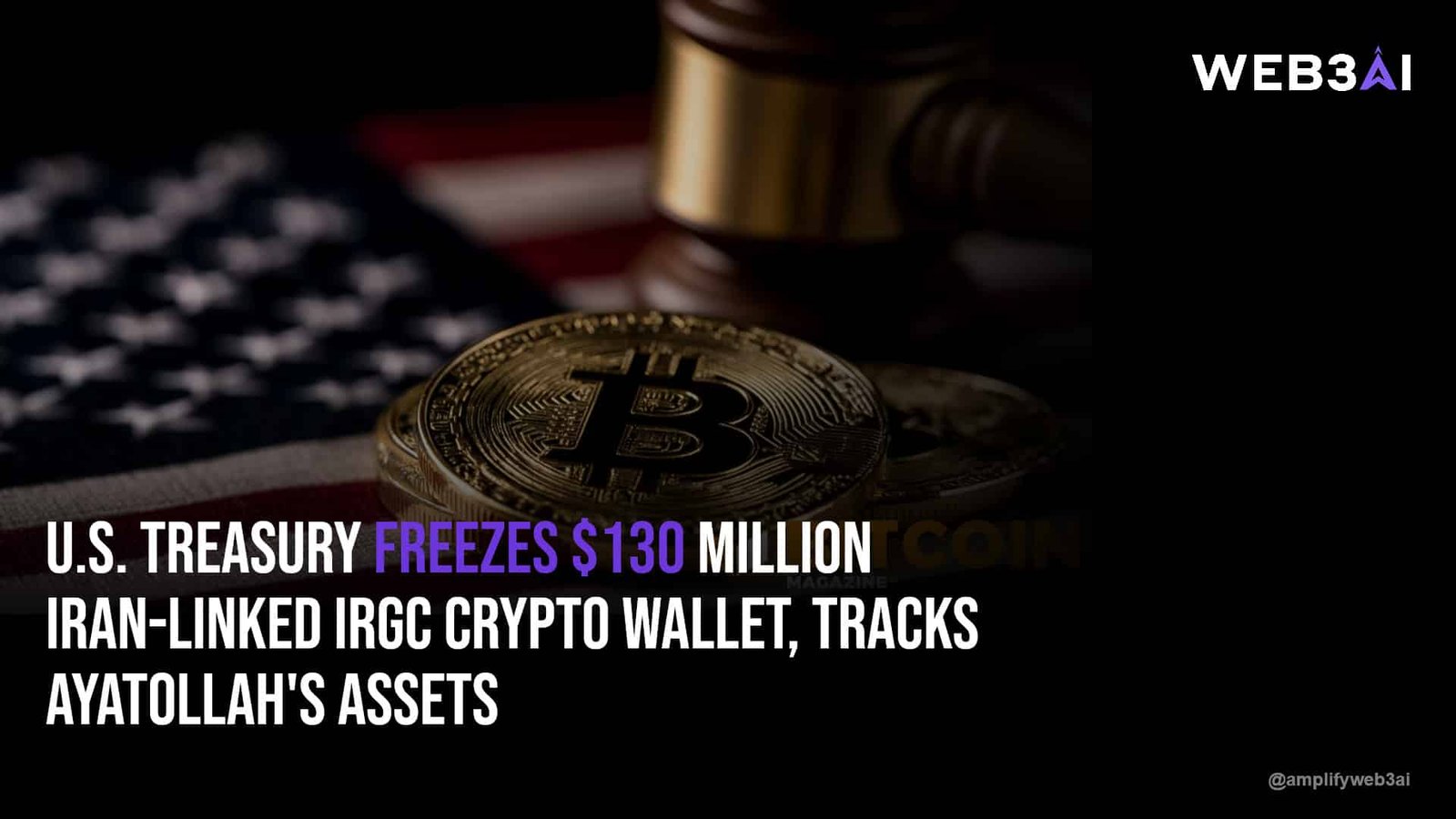
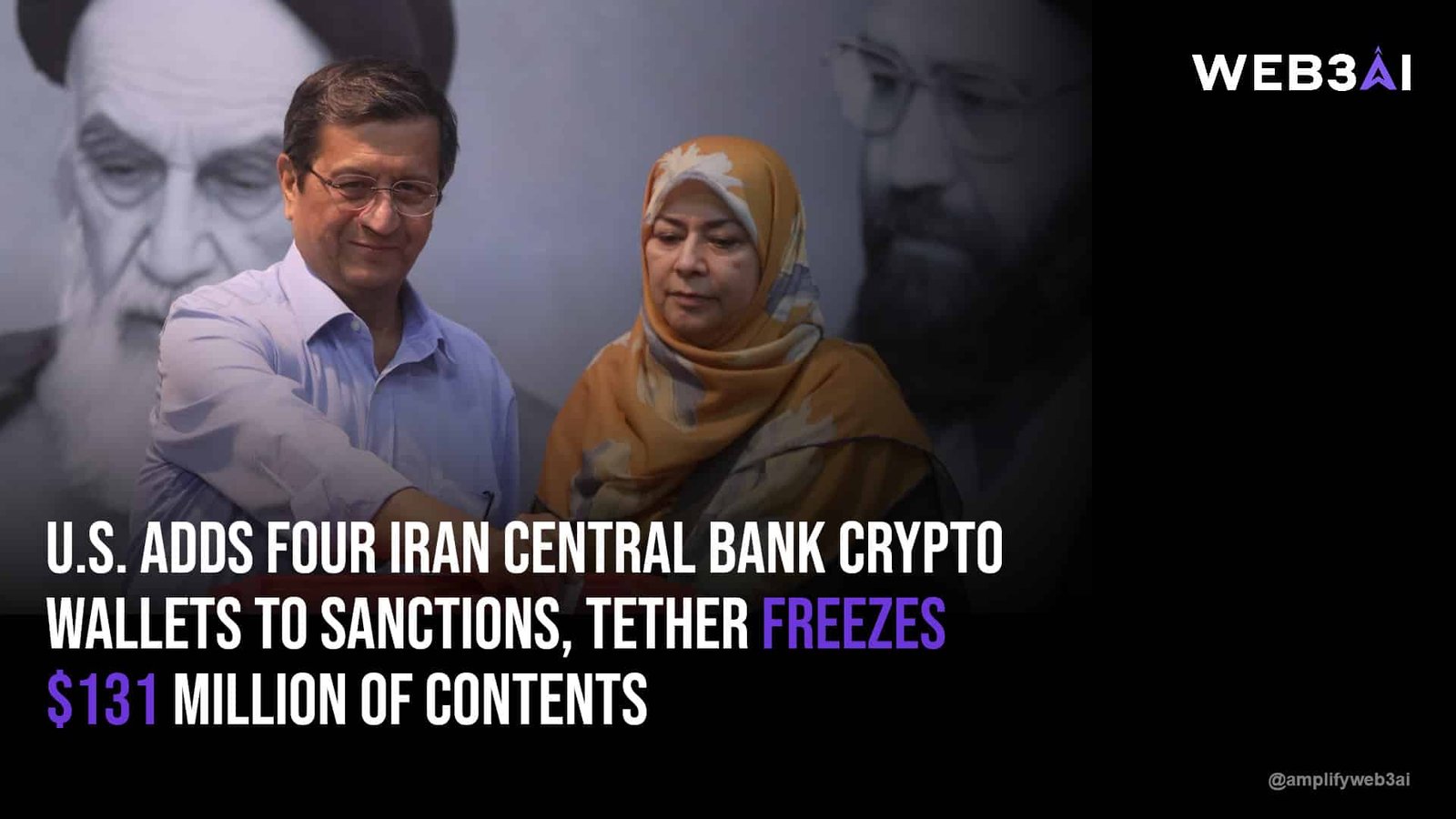
U.S. Treasury Freezes $130 Million Iran-Linked IRGC Crypto Wallet, Tracks Ayatollah’s Assets
Ramen
07/22/2026
## When Sanctions Meet the Blockchain: What the $130M Freeze Really Means
Iran crypto sanctions enforcement just got a real-world stress test. Treasury Secretary Scott Bessent confirmed that the U.S. Treasury froze roughly $130 million in digital assets tied to Iranian networks, marking one of the largest crypto-related sanctions actions in recent memory. If you have been watching the space and wondering whether blockchain transactions can actually be tracked and stopped, this case answers that question loudly.
The move lines up with what analysts have been predicting for a while. According to Reuters’ coverage of the Treasury’s sanctions network actions, U.S. regulators have steadily expanded their toolkit for tracing crypto flows tied to sanctioned states. That is not just a headline — it is a signal that the “anonymous crypto” narrative many people still believe in is fading fast.
If you have ever felt uneasy about how much oversight actually exists in crypto, you are not alone. This post breaks down what happened, why it matters, and what it tells us about the future of Iran crypto sanctions enforcement and blockchain compliance more broadly.
## What Actually Happened With the $130M Freeze
Bessent’s announcement centered on a network of wallets and exchange accounts linked to Iranian actors attempting to move funds through digital assets. Treasury’s Office of Foreign Assets Control (OFAC) worked with blockchain analytics firms to trace the transaction trail. The funds were reportedly routed through multiple intermediary wallets before being frozen at exchange-level chokepoints.
This is not the first time OFAC has gone after crypto-based sanctions evasion, but the scale here stands out. $130 million is a significant number, and it shows that bad actors are not just using crypto for small-scale movement — they are attempting large, structured transfers. That should reshape how we think about Iran crypto sanctions enforcement going forward.
Pro Tip: If you run a Web3 business, always screen wallet addresses against OFAC’s SDN list before processing large transactions. It takes minutes and can save you from massive compliance headaches.
## Why Iran Crypto Sanctions Enforcement Is Getting Sharper
For years, critics assumed blockchain’s pseudonymous nature made sanctions largely unenforceable. That assumption is aging poorly. Modern blockchain forensics tools can now map transaction clusters, identify exchange off-ramps, and flag suspicious patterns almost in real time.
If you are new to how these systems work, our Web3 Security Guide for Beginners breaks down the basics of wallet tracing, transaction transparency, and why “anonymous” crypto is more of a myth than a reality. Understanding these fundamentals helps you see why enforcement actions like this one are becoming more common, not less.
Treasury’s success here also depended heavily on cooperation with centralized exchanges. Even in a decentralized ecosystem, most large transfers eventually touch a centralized on/off ramp — and that is where enforcement teams tend to strike.
None of this happens without serious infrastructure behind the scenes. Blockchain analytics firms build tools that flag risky wallet clusters, score transaction risk, and alert compliance teams before funds move too far. These tools have matured rapidly over the past two years.
We cover many of the platforms powering this shift in our breakdown of Top Blockchain Compliance Tools for 2025. If you work anywhere near crypto operations — exchanges, DeFi protocols, or even NFT marketplaces — these tools are quickly becoming non-negotiable.
Real-time wallet risk scoring
Sanctioned address screening (OFAC SDN list matching)
Transaction cluster analysis
Automated suspicious activity reporting
Pro Tip: Even small Web3 startups should budget for basic compliance tooling early. Retrofitting compliance after a violation is far more expensive than building it in from day one.
## How This Fits Into the Bigger Regulatory Picture
Iran crypto sanctions enforcement is not happening in isolation. It is part of a broader wave of regulatory tightening across the crypto industry. Governments worldwide are pushing for clearer rules around custody, reporting, and cross-border transfers.
Our post on How Regulation Is Reshaping the Crypto Industry dives deeper into this trend, covering everything from stablecoin oversight to exchange licensing requirements. The Treasury’s action against this Iranian network fits neatly into that larger pattern.
If you are simply holding or trading crypto, this news might feel distant — but it is not. Increased Iran crypto sanctions enforcement pressure often trickles down into stricter know-your-customer (KYC) requirements on the exchanges you use every day. That means more verification steps and sometimes slower withdrawals.
It also means exchanges are getting better at protecting the ecosystem from bad actors, which is a net positive for legitimate users. A cleaner, more compliant market tends to attract more institutional capital over time. That is good news if you care about long-term crypto adoption.
Analytics firms flag suspicious wallet activity
Treasury/OFAC investigates and confirms sanctioned links
Exchanges are notified and freeze related accounts
Funds are formally seized or frozen pending investigation
Public disclosure follows, as seen with Bessent’s statement
## Lessons for Web3 Builders and Businesses
If you are building in Web3, this case is a reminder that compliance is not optional overhead — it is core infrastructure. Iran crypto sanctions enforcement actions like this one show regulators are serious, well-resourced, and increasingly effective. Building compliant systems from the start protects your business and your users.
Startups that ignore this risk facing frozen funds, reputational damage, or worse. The smartest teams treat sanctions screening the same way they treat basic cybersecurity — as a baseline requirement, not an afterthought.
What triggered this round of Iran crypto sanctions enforcement?
Treasury Secretary Scott Bessent confirmed that OFAC froze approximately $130 million in digital assets linked to an Iranian network attempting to move funds through crypto channels. Blockchain analytics tools helped trace the transaction trail across multiple wallets.
How does the Treasury actually freeze crypto assets?
Treasury works with centralized exchanges and blockchain forensics firms to identify sanctioned wallet addresses. Once flagged, exchanges can freeze the associated accounts, effectively blocking further movement of the funds.
Why is Iran crypto sanctions enforcement getting more effective?
Blockchain forensics tools have improved significantly, allowing investigators to trace transaction clusters in near real time. Most large transfers still touch centralized exchanges, giving regulators a practical enforcement point.
Does this affect regular crypto users?
Indirectly, yes. Increased enforcement pressure often leads exchanges to tighten KYC and verification processes for all users, not just flagged accounts.
What should Web3 businesses learn from this case?
Compliance tooling — including wallet screening and sanctions list matching — should be built into operations early. Waiting until after an incident is far costlier than proactive prevention.
## Conclusion: Iran Crypto Sanctions Enforcement Is Reshaping Crypto’s Future
Iran crypto sanctions enforcement is no longer a theoretical concept — it is an active, evolving practice backed by real tools and real results. The $130 million freeze confirmed by Bessent shows that blockchain’s transparency can work in favor of regulators just as much as it works for legitimate users. As compliance technology matures, expect more actions like this one, not fewer.
For builders, businesses, and everyday users alike, understanding this landscape is no longer optional. Explore what we have built at attn.live.