Anouncement

Anouncement
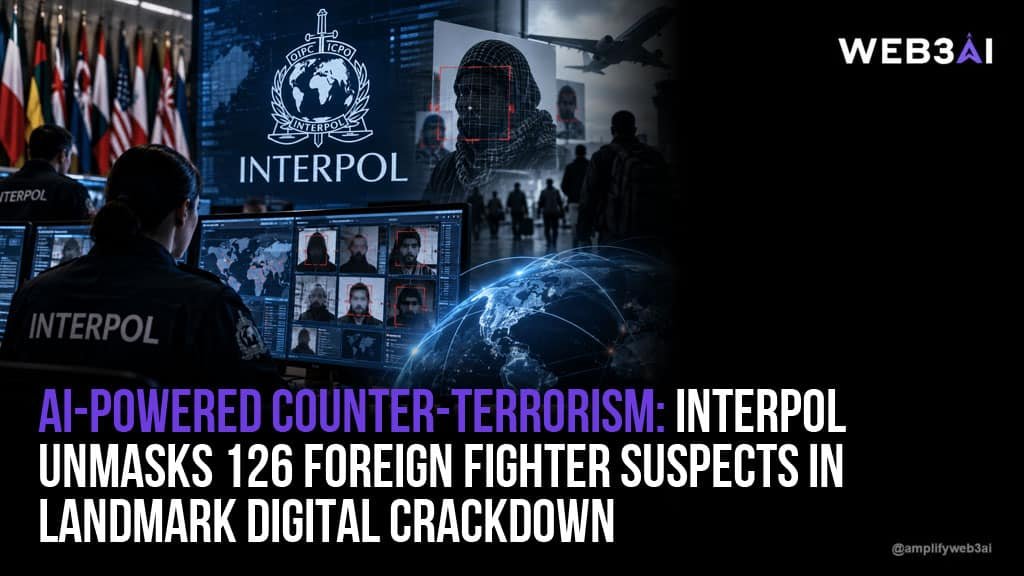

LYON, France / TUNIS, Tunisia — In a major milestone for global security in the digital age, INTERPOL has concluded a pioneering counter-terrorism initiative that deployed artificial intelligence to identify 126 suspected foreign terrorist fighters across international borders.
The initiative, dubbed Operation Shams II, brought together 28 specialized intelligence officers and digital forensics experts representing 11 member nations. Operating out of Tunis, Tunisia, the task force analyzed massive troves of extremist media propaganda and jihadist networks operating online.
Online extremist organizations regularly churn out vast libraries of video and photographic propaganda to recruit followers, spread doctrine, and coordinate logistics. Historically, manually cataloging, deduplicating, and reviewing millions of frames has presented a daunting bottleneck for counter-terrorism analysts.
Operation Shams II addressed this challenge by integrating customized AI agents and automated analytical scripts into the investigative workflow:
Every algorithmic lead was subject to human-in-the-loop verification, with specialized intelligence officers confirming matches in compliance with INTERPOL’s Rules on the Processing of Data.
| Metric | Figure | Operational Significance |
| Raw Media Ingested | 108,076 images | Propaganda scraped across extremist digital ecosystems |
| AI-Refined Profiles | 6,362 images | High-clarity biometric targets ready for recognition databases |
| Confirmed Matches | 126 suspects | Identified Foreign Terrorist Fighters (FTFs) |
| Crypto Disclosure Notices | 3 urgent requests | Target virtual asset flows funding extremist activities |
| Participating Countries | 11 nations | Multi-regional coalition spanning Africa, Asia, and the Middle East |
Beyond facial biometrics, Operation Shams II zeroed in on the financial architecture sustaining terrorist cells. Specialized cyber analysts deployed advanced cryptocurrency tracing software to map illicit funding channels.
These investigations resulted in three urgent disclosures served to Virtual Asset Service Providers (VASPs), enabling law enforcement to freeze suspect wallets and disrupt cross-border capital flows earmarked for terror operations.
Recognizing that modern recruitment targets younger demographics through interactive media, the operational coalition met directly with representatives from the online gaming industry.
The joint sessions focused on identifying extremist exploitation of gaming servers, voice chats, and custom modding platforms, establishing early-warning frameworks to counter youth radicalization before it spills into real-world violence.
The operational intelligence gathered in Tunis has already been disseminated to national judiciaries, directly assisting in ongoing prosecutions—including active legal proceedings against two detained foreign fighters.
“The success of Operation Shams II demonstrates the value of combining international law enforcement cooperation with responsible AI-assisted analytical capabilities,” stated María Carmen Muñoz González, INTERPOL’s Director of Counter-Terrorism. “The operational model provides a strong foundation for supporting future international law enforcement cooperation targeting criminal actors around the world.”
Operation Shams II was delivered under the CT TECH+ Project, funded by the European Union’s Foreign Policy Instruments and supported by the United Nations Office of Counter-Terrorism (UNOCT). Participating member nations included:
With thousands of additional digital assets queued for cross-referencing, INTERPOL officials anticipate further identifications and investigative leads as national databases synchronize with global watchlists.