Anouncement

Anouncement

A Beginner-Friendly RWA Story
For Audio, listen HERE
Grab your imaginary wallet and come with me to a neighborhood bakery.
The owner, Maria, makes the kind of bread that disappears before lunch. Her customers are loyal, her recipes are excellent, and her second oven is barely surviving. A new commercial oven would let her double production, but it costs more than she can comfortably pay today.
Traditionally, Maria might ask a bank for a loan. The bank would examine her business, decide whether she qualifies, prepare documents, and either lend the money or turn her down. She might also ask a wealthy local investor, but that person may want a large share of her company. Those are familiar doors, yet neither one always opens.
Now imagine Maria legally creates an investment that gives approved buyers a claim on part of her future bakery revenue. The agreement is divided into many smaller units. A digital token records who owns each unit, and a blockchain helps track permitted transfers and payments.
The bread is real. The oven is real. The revenue is real. The legal agreement is real. The token is the digital handle attached to those rights.
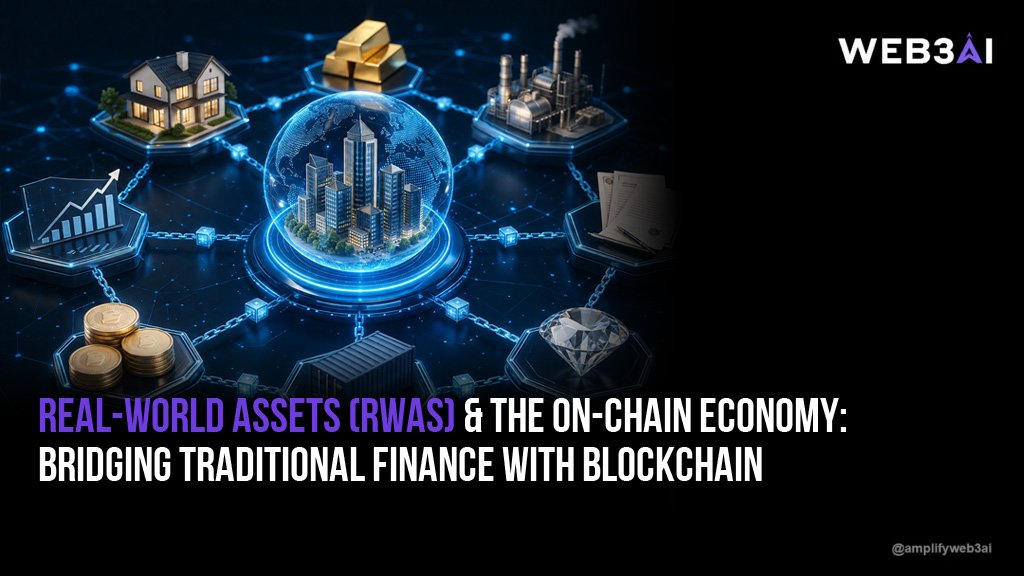
That is the heart of a real-world asset, or RWA, in Web3.
A real-world asset is generally an asset, financial claim, or economic right that originates outside a blockchain but is issued, represented, or recorded digitally on one. The Financial Stability Board defines tokenization as using technologies such as distributed ledger technology to issue or represent assets in digital-token form. The Bank for International Settlements uses a similar idea: generating and recording a digital representation of a traditional asset on a programmable platform.
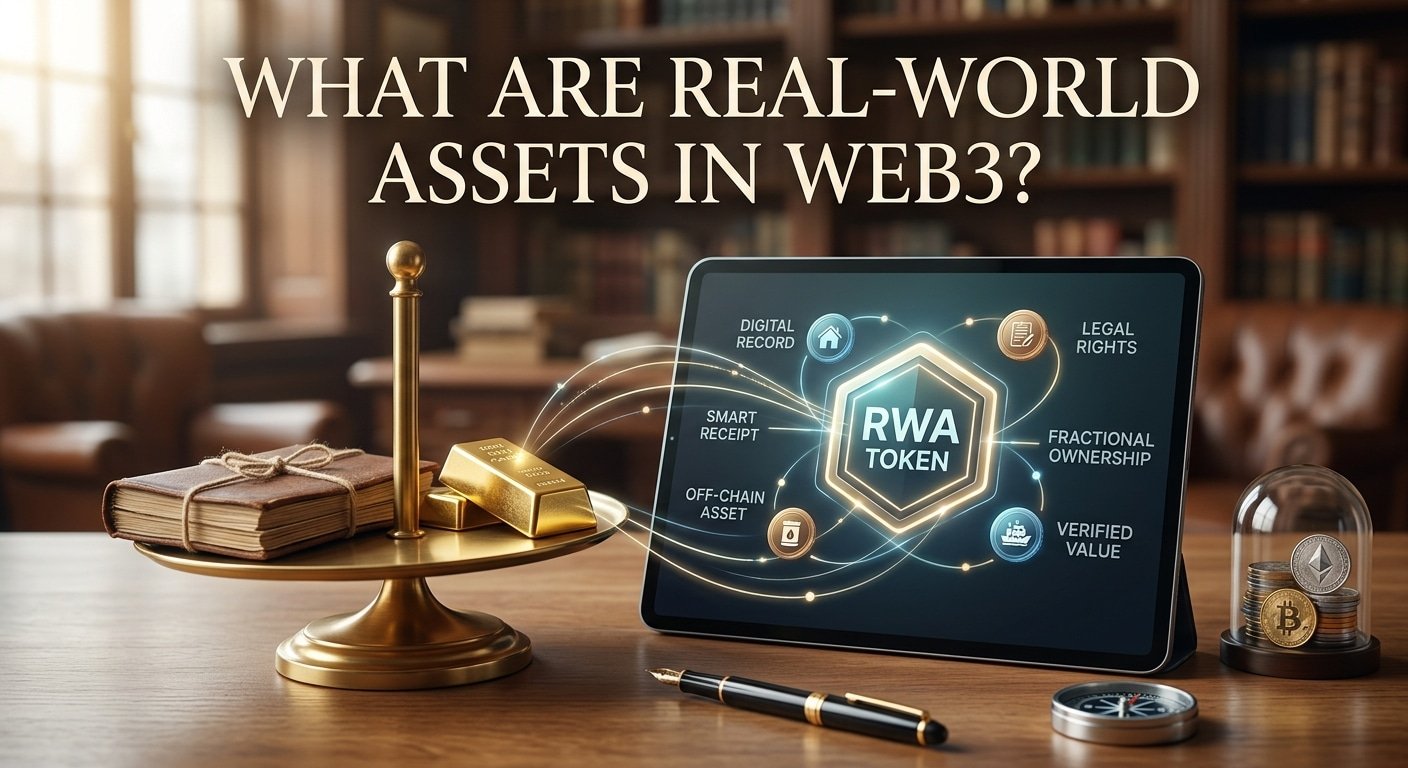
Here is the simplest analogy: the token is a smart receipt, not the thing itself.
A coat-check ticket is not your coat. It is evidence that you have a claim to a particular coat. A property deed is not the house. It is a legally recognized record connected to ownership. A share certificate is not the company. It represents a bundle of rights in that company.
An RWA token works in the same general way. It may represent:
That last distinction matters. Not every token gives direct ownership of the underlying asset. One token might make you a legal co-owner. Another might give you shares in a company that owns the asset. A third may provide only a contractual promise from an issuer. The picture on the app can look nearly identical while the legal rights are completely different.
Think of three people standing outside the same apartment building. One owns a condominium unit. One owns shares in a company that owns the building. One has loaned money to the landlord. All three have exposure to the same property, but they do not have the same rights. “Backed by real estate” does not tell you which person you are.
The process can sound technical, so let us turn it into five rooms in one house.
Room one is the asset. Someone identifies the building, bond, loan, gold bar, fund, invoice, or other right to be represented. The asset must actually exist, and its condition, value, ownership, and restrictions must be verified.
Room two is the legal wrapper. Lawyers and regulated firms decide what token holders legally own. The asset may sit inside a company, trust, fund, or special-purpose vehicle. This room answers the questions that matter when life gets messy: Who holds title? Are assets separated from the issuer’s own property? What happens if the platform becomes bankrupt? Can an investor enforce the claim in court?
Room three is the token. Software creates digital units and writes the transfer rules. A smart contract may allow only verified wallets, block investors from restricted countries, calculate distributions, or pause transfers when legally required.
Room four is the bridge to reality. Blockchains cannot walk into a warehouse, inspect a gold bar, or ask whether a tenant paid rent. Custodians, auditors, property managers, banks, appraisers, data providers, and “oracles” supply the off-chain facts. An oracle is simply a messenger that brings outside information to blockchain software.
Room five is the exit. A legitimate structure explains how holders sell, redeem, or receive payments. A token may move around the clock, but the underlying asset may not. A building cannot be sold in twelve seconds, and a private loan may not have a crowd of ready buyers. Digital speed does not automatically create economic liquidity.
If one of these rooms is missing, the house is not finished.
RWA projects try to connect traditional assets with programmable digital infrastructure. The potential benefits include more efficient recordkeeping, faster settlement, lower administrative costs, improved transparency, and smaller investment units. The BIS notes that fractionalization can broaden investor access, while programmability can automate parts of transactions.
Imagine a group dinner where twelve friends must divide the bill. The traditional process is one person paying, everyone sending money later, several people forgetting, and somebody keeping a spreadsheet. A programmable transaction can act more like a restaurant system that divides the amount, checks each payment, and issues receipts automatically.
In finance, that could mean:
Notice the phrase could mean. Tokenization does not guarantee lower costs, instant settlement, easy resale, or fair access. Many projects still depend on banks, custodians, transfer agents, legal documents, identity checks, and conventional payment rails. IOSCO reported that efficiency gains remain uneven because tokenized systems often continue to rely on traditional infrastructure for trading and post-trade processes.
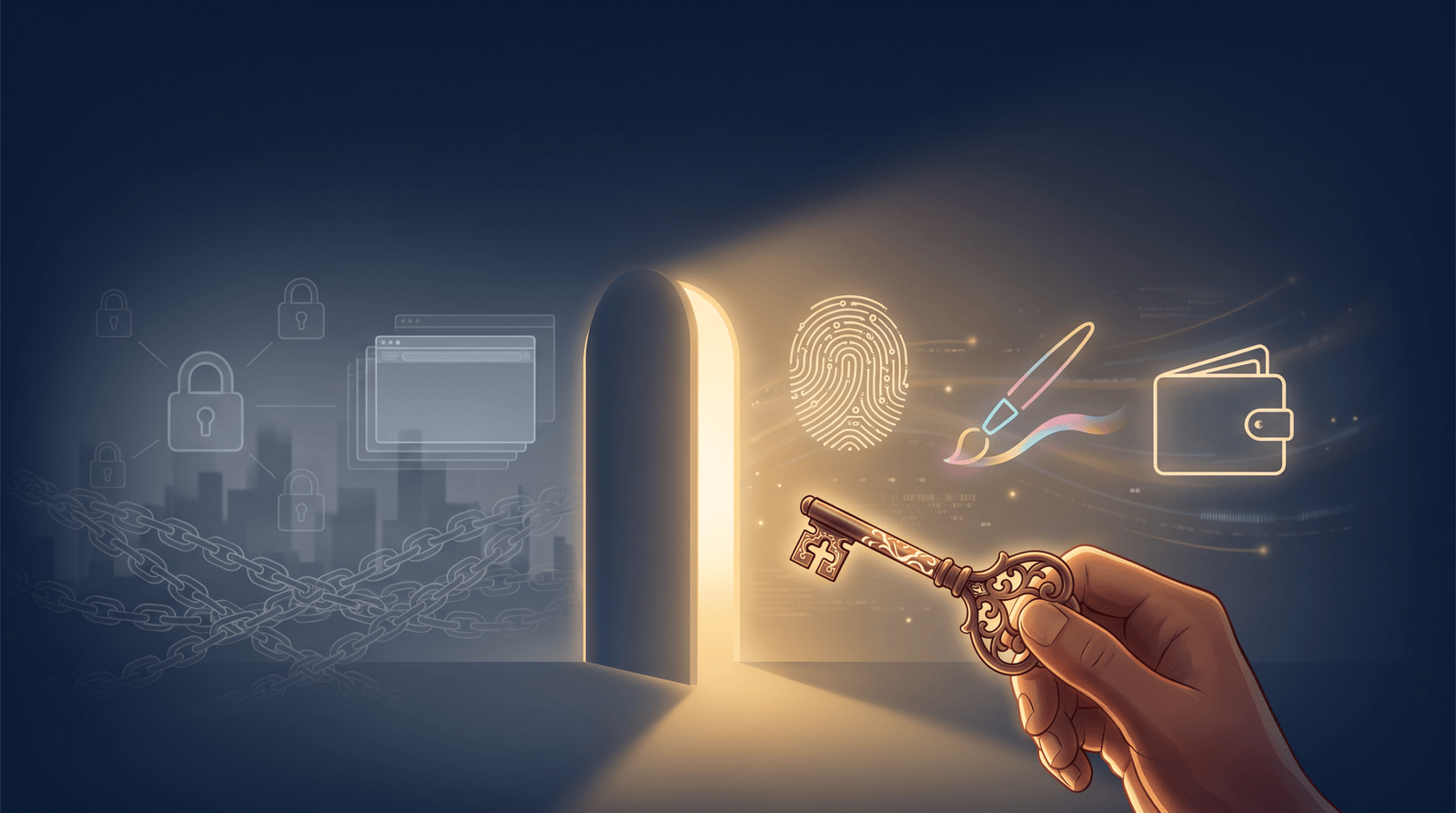
A shiny digital front door does not mean the entire building has been renovated.
One clear example is BlackRock’s USD Institutional Digital Liquidity Fund, known as BUIDL. It launched on Ethereum in March 2024, invests in cash, U.S. Treasury bills, and repurchase agreements, seeks a stable value of $1 per token, and pays accrued dividends to investors’ wallets as additional tokens. As of September 18, 2026, RWA.xyz reported roughly $2.63 billion in BUIDL value, although the number naturally changes as investors subscribe and redeem.
BUIDL is important, but it is not a five-dollar product for everyone. Its original minimum investment was $5 million, and participation was limited to eligible investors. That tells us something essential: tokenization may modernize the rails without immediately democratizing the passenger list.
Gold provides the most visual analogy. A tokenized-gold product can represent an interest in physical gold held by a custodian. As of September 17, 2026, RWA.xyz tracked about $4.85 billion in tokenized commodities, led by Tether Gold and Paxos Gold. You can move the digital claim without carrying a heavy bar through airport security, but you still must ask who stores the gold, whether it is audited, whether your token can be redeemed, and what happens if the issuer fails.
An RWA is NOT automatically safe because the word “real” appears in the name.
A bad loan remains a bad loan after tokenization. An overpriced building remains overpriced. Fake invoices can still be fake. A dishonest issuer can still lie. A smart contract can still contain errors. A custodian can still fail. A borrower can still default.
Putting a rotten tomato in a beautiful glass jar does not make it fresh.
An RWA is also NOT automatically decentralized. Many serious tokenization projects use permissioned systems with known institutions and controlled access. The BIS (Bank for International Settlements.) notes that most current projects use permissioned distributed ledgers with centralized governance. That may frustrate people who expect Web3 to remove every gatekeeper, but regulated assets require someone to verify identity, enforce transfer rules, safeguard records, and answer to a court.11
Finally, an RWA token is not always freely tradable. Securities law, investor eligibility, geography, lockups, market demand, or platform rules may restrict transfers. In the United States, the SEC has emphasized that tokenized securities remain securities and that purchasers of third-party wrappers can face additional counterparty risks.
Beginners often ask, “What blockchain is it on?” That is useful, but it is not the first question.
The first question is: What do I legally own?
Then ask:
IOSCO (International Organization of Securities Commissions) warns that non-native token structures can leave investors uncertain about rights to the underlying assets, and even a completed blockchain transfer may not settle the legal question if the technical and legal records conflict.
That is why the strongest beginner definition is not “an asset put on blockchain.” It is this:
An RWA token is a digital record connected to legally defined rights in an off-chain asset or financial claim. Its value depends on both the technology and the real-world system supporting it.
The token is the visible part. Underneath it sit contracts, people, institutions, laws, bank accounts, custodians, data, and physical property. Web3 does not make those layers disappear. At its best, it helps them coordinate more transparently and efficiently.
So when someone tells you that everything will be tokenized, do not picture buildings being sucked into a computer like a scene from a science-fiction movie. Picture a better coat-check system: clearer tickets, faster transfers, programmable rules, and a shared record. Then remember that somebody still needs to protect the coat, recognize the ticket, and open the door when you return.
Always remember, stay curious, stay grounded and stay human.