Anouncement

Anouncement
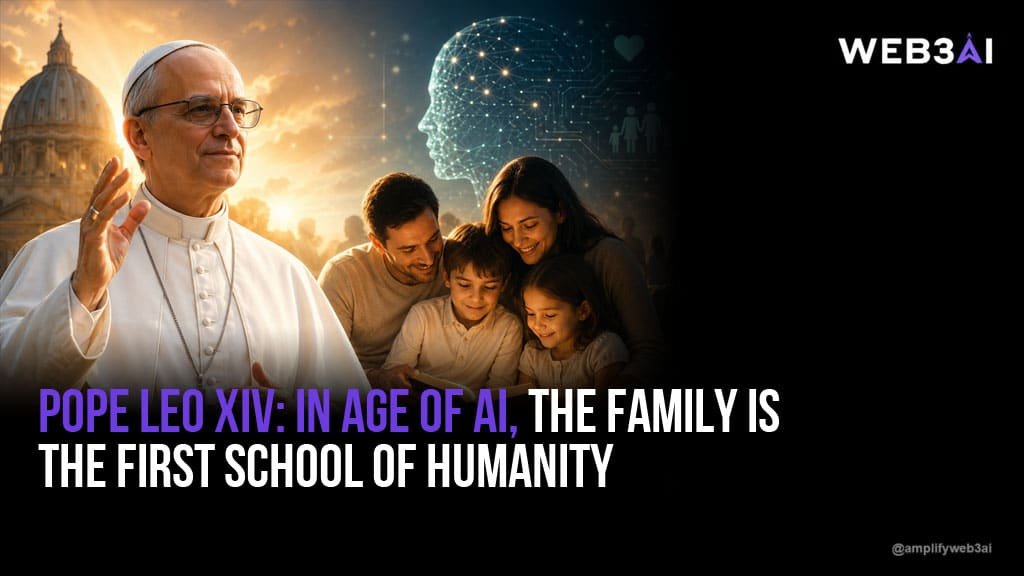

VATICAN CITY — August 21, 2026 — As artificial intelligence rapidly transforms human communication, work, and education, Pope Leo XIV delivered a urgent reminder to political leaders: no algorithm can replace the fundamental human formation provided by the family.
Speaking at the Vatican to participants of the 17th Annual Meeting of the International Catholic Legislators Network (ICLN), the Supreme Pontiff emphasized that as machine learning and automated systems proliferate, protecting the family structure is paramount to preserving true human dignity.
“In an era increasingly dominated by virtual interactions and artificial intellect, the family remains the first and indispensable school of humanity. It is within the home that human beings learn empathy, ethical judgment, and the irreplaceable value of love.” — Pope Leo XIV
During his address, Pope Leo XIV cautioned against the subtle threat of “digital reductionism”—the tendency to reduce complex human relationships, emotional needs, and personal identity into data points for algorithmic consumption.
He warned that unchecked technology risks isolating individuals within their own households, substituting genuine interpersonal presence with artificial companionship and automated feedback loops.
| Domain | Unregulated AI Risk | Family-Centered Policy Goal |
| Child Development | Algorithmic addiction and emotional detachment | Enforce age-appropriate platform design and screen-time regulations |
| Education | Over-reliance on synthetic information | Prioritize critical thinking, human mentorship, and parental oversight |
| Labor & Household | Displacement of parents from stable employment | Ensure economic policies support family wages and work-life balance |
| Privacy & Data | Unconsented profiling of domestic environments | Prohibit invasive data harvesting within home and educational software |
Pope Leo XIV urged lawmakers to draft legislation that explicitly protects parents’ rights to educate their children in a safe digital environment. He called for international standards that hold technology corporations accountable for the psychological and societal impacts of their products on young minds.
“Laws must not merely react to technical capabilities; they must actively champion the primacy of the human person. If a technology weakens the relational fabric of the family, it weakens the foundation of society itself.”
Concluding his audience, the Pontiff encouraged Catholic lawmakers to approach digital governance with courage, wisdom, and an unwavering commitment to the common good, ensuring that technological progress serves to unite families rather than divide them.