Anouncement

Anouncement

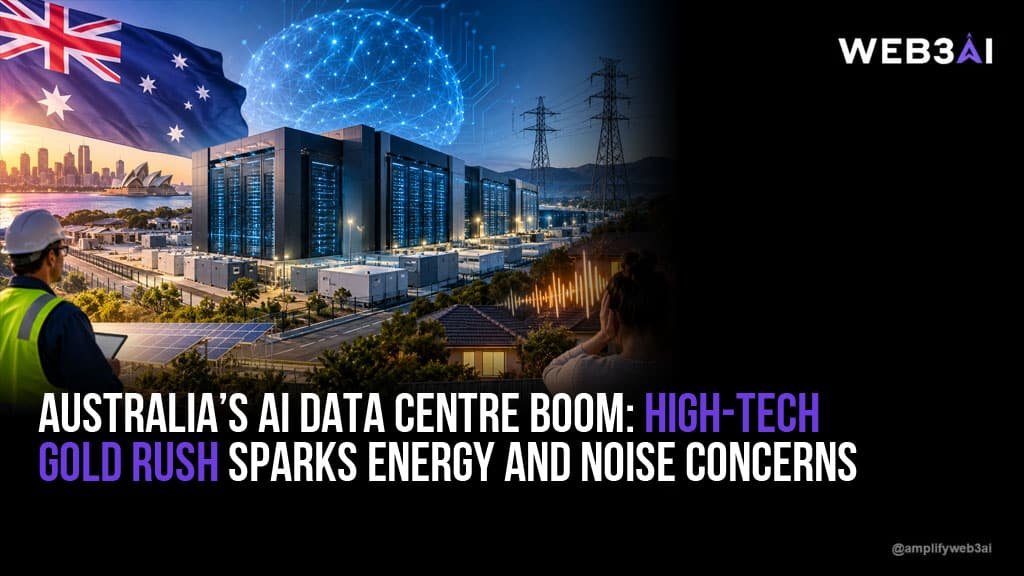
AI data center infrastructure in Australia is entering a remarkable new era, and the latest deal from Firmus Technologies signals just how serious the continent is about becoming a sovereign AI powerhouse. The Perth-based company has struck a landmark agreement that positions Australia alongside the United States, Europe, and Southeast Asia in the race to build the physical backbone of the artificial intelligence economy. For anyone watching the global tech landscape, this is a story worth understanding in full.
The global appetite for AI infrastructure has exploded in recent years. According to Reuters’ coverage of the AI infrastructure boom, data center investment worldwide is accelerating at a pace that few predicted even three years ago, with energy, land, and sovereign data concerns pushing countries to develop domestic AI capacity rather than relying solely on hyperscale foreign providers. Australia, with its stable political environment, abundant renewable energy potential, and growing tech ecosystem, is a natural fit for this next wave.
In this post, we break down what the Firmus Technologies deal means, why AI data center infrastructure in Australia matters for the broader Web3 and AI economy, and what investors, developers, and businesses should be paying attention to right now.
Firmus Technologies, headquartered in Western Australia, has announced a significant new AI infrastructure agreement that will expand its capacity to serve the growing demand for sovereign, low-latency AI compute in the Asia-Pacific region. The deal reflects a broader trend: enterprises and governments no longer want their most sensitive AI workloads processed in data centers located on the other side of the world. They want local, reliable, and secure infrastructure — and they are willing to invest heavily to get it.
What makes Firmus distinctive is its focus on purpose-built AI infrastructure rather than retrofitting legacy data center space. Purpose-built facilities are optimised from the ground up for the power density, cooling requirements, and networking speeds that modern AI training and inference workloads demand. This is not a small distinction — a data center built for traditional enterprise IT in 2010 is fundamentally ill-equipped to run today’s large language models or real-time AI inference at scale.
The company’s approach also aligns with Australia’s national interest in digital sovereignty. Governments across the Asia-Pacific are increasingly legislating where data must reside and where AI systems processing sensitive information must be hosted. Firmus is positioning itself directly in the path of that regulatory tailwind, which gives its infrastructure a defensible competitive moat that pure commercial operators may struggle to match.
Pro Tip: When evaluating AI infrastructure plays, look for companies that combine purpose-built physical assets with regulatory alignment — that combination creates durable competitive advantages that hyperscalers find difficult to replicate at the local level.
Australia’s push for sovereign AI computing is not happening in isolation. It is part of a global recalibration of where critical digital infrastructure should live. The Five Eyes intelligence alliance, of which Australia is a member, has placed increasing emphasis on ensuring that AI systems used in defence, healthcare, finance, and government are hosted on infrastructure that cannot be subject to foreign jurisdiction or compelled disclosure. This is the sovereign computing case in its clearest form.
For businesses operating in regulated industries — financial services, healthcare, legal, and government contracting — this is not an abstract policy conversation. It is a procurement reality. The ability to say “our AI runs on Australian soil, under Australian law, in an Australian-owned facility” is becoming a genuine differentiator in enterprise sales conversations. Firmus is building exactly the infrastructure that makes that statement possible.
To understand how AI infrastructure investment connects to the broader transformation of the technology economy, it helps to look at how AI is reshaping foundational systems. We explored this in depth in our post on how AI is transforming the future of Web3, which examines the convergence of AI compute demands and decentralised network architectures — a convergence that makes sovereign infrastructure even more strategically valuable.
The capital flowing into AI data center infrastructure in Australia is coming from multiple directions simultaneously. Private equity firms, sovereign wealth funds, infrastructure investors, and hyperscale cloud providers are all circling the market, recognising that the supply of purpose-built AI compute in the region is structurally undersupplied relative to projected demand. Firmus Technologies represents the locally-grown side of this investment story, but it is far from alone.
Global hyperscalers — Microsoft, Google, Amazon Web Services — have all announced significant Australian investment commitments in recent years. But hyperscaler investment and sovereign infrastructure investment serve different markets. Hyperscalers serve global commercial workloads; sovereign infrastructure serves the regulated, sensitive, and strategically important workloads that governments and enterprises cannot or will not place with a foreign-controlled provider. Both markets will grow, but they are not substitutes for each other.
For smaller investors and businesses, the more interesting play may be in the ecosystem that grows around anchor infrastructure investments like Firmus. When a major data center is built, it creates demand for power, cooling, networking, security, and managed services — and it attracts the technology companies that want to co-locate near high-quality compute. Understanding those second-order effects is often where the most interesting opportunities emerge.
Pro Tip: Watch for the ecosystem effects around major AI infrastructure announcements — the managed service providers, energy suppliers, and co-location tenants that cluster around new data centers often represent more accessible investment and partnership opportunities than the anchor infrastructure itself.
One of the most important and often overlooked aspects of the AI infrastructure story is how physical data centers relate to the emerging world of decentralised AI. There is a tendency to assume that decentralisation means infrastructure becomes irrelevant — that everything moves to distributed networks with no central point of control. The reality is more nuanced and more interesting than that.
Decentralised AI networks still require physical compute, and the question of where that compute is hosted, who controls it, and under what legal framework it operates is just as important in a decentralised architecture as in a traditional one. In fact, sovereign infrastructure like what Firmus is building could become a critical node in decentralised AI networks — providing the reliable, high-performance compute backbone that distributed inference and training systems depend on.
We examined this dynamic in our analysis of the rise of decentralised AI, which explores how distributed AI architectures are beginning to interface with real-world infrastructure constraints — and why sovereign compute is becoming a building block rather than an obstacle in the decentralised AI future.
The Firmus Technologies deal is a signal, not just a transaction. It signals that the AI infrastructure race is no longer confined to the United States and China — it is genuinely global, and regions that move decisively now will capture disproportionate long-term value. Australia has the ingredients to be a genuine AI infrastructure hub: political stability, English-language talent pool, strong rule of law, growing renewable energy capacity, and proximity to the enormous Asia-Pacific market.
For the Web3 economy specifically, the growth of sovereign AI infrastructure creates new opportunities at the intersection of decentralised networks and high-performance compute. Smart contract platforms, decentralised autonomous organisations, and tokenised real-world assets all increasingly depend on AI systems for analytics, automation, and security — and those AI systems need reliable, trusted infrastructure to run on.
Understanding how Web3 infrastructure underpins the next generation of the internet is essential context here. Our post on Web3 infrastructure and the future of the internet provides a clear framework for thinking about how physical, protocol-level, and application-layer infrastructure interact — a framework that applies directly to understanding why investments like Firmus matter beyond the data center sector alone.
Whether you are a technology business, an investor, or a policy professional, the AI data center infrastructure boom in Australia creates concrete action points worth considering now rather than later. The window for early positioning in emerging infrastructure ecosystems tends to be shorter than people expect.
AI data center infrastructure in Australia refers to the purpose-built physical facilities — including power systems, cooling, networking, and compute hardware — that support AI training and inference workloads on Australian soil. Growth is being driven by a combination of surging global AI demand, sovereign data requirements from governments and regulated industries, and Australia’s strategic position as a stable, high-trust location in the Asia-Pacific region.
Firmus Technologies focuses specifically on sovereign, purpose-built AI infrastructure rather than general-purpose hyperscale cloud services. While hyperscalers like AWS, Google, and Microsoft serve broad commercial markets, Firmus targets regulated enterprises and government customers that require Australian-owned, Australian-operated facilities. This gives Firmus a defensible niche that hyperscalers are structurally unable to fully address due to their global corporate structures.
AI data center infrastructure in Australia represents a genuine infrastructure asset class with strong structural tailwinds — sovereign data regulation, growing AI compute demand, and limited existing supply. Investors can access this theme through direct infrastructure investment, listed technology companies, and the broader ecosystem of services that cluster around major data center projects, including energy, cooling, security, and managed services.
Decentralised AI and Web3 applications still depend on physical compute infrastructure — the protocols are distributed, but the hardware must exist somewhere. Sovereign infrastructure provides the reliable, high-performance, legally compliant compute backbone that decentralised networks depend on for critical workloads, making projects like Firmus strategically important for the Web3 ecosystem as well as the traditional enterprise market.
The primary demand drivers in Australia are financial services, government and defence, healthcare, and legal services — all sectors where data sovereignty, security, and regulatory compliance are paramount. These industries cannot responsibly place sensitive AI workloads on infrastructure controlled by foreign entities, which creates durable, regulation-backed demand for locally-owned AI data center capacity.
AI data center infrastructure in Australia is no longer a future aspiration — it is an active, accelerating build-out with real capital, real regulatory support, and real strategic importance. The Firmus Technologies deal is one of the clearest signals yet that Australia is ready to compete for its share of the global AI infrastructure economy, and the implications ripple across investment, enterprise technology, Web3, and national digital strategy.
For businesses, investors, and technologists watching this space, the lesson is clear: sovereign compute is becoming a structural feature of the AI economy, not an edge case. The organisations that understand this early — and position themselves accordingly — will be far better placed as the regulatory and competitive landscape continues to tighten around AI infrastructure ownership and control.
The intersection of AI infrastructure, Web3 protocols, and decentralised networks is exactly the territory that platforms like ours are built to navigate. Explore what we have built at attn.live.
##