Anouncement

Anouncement
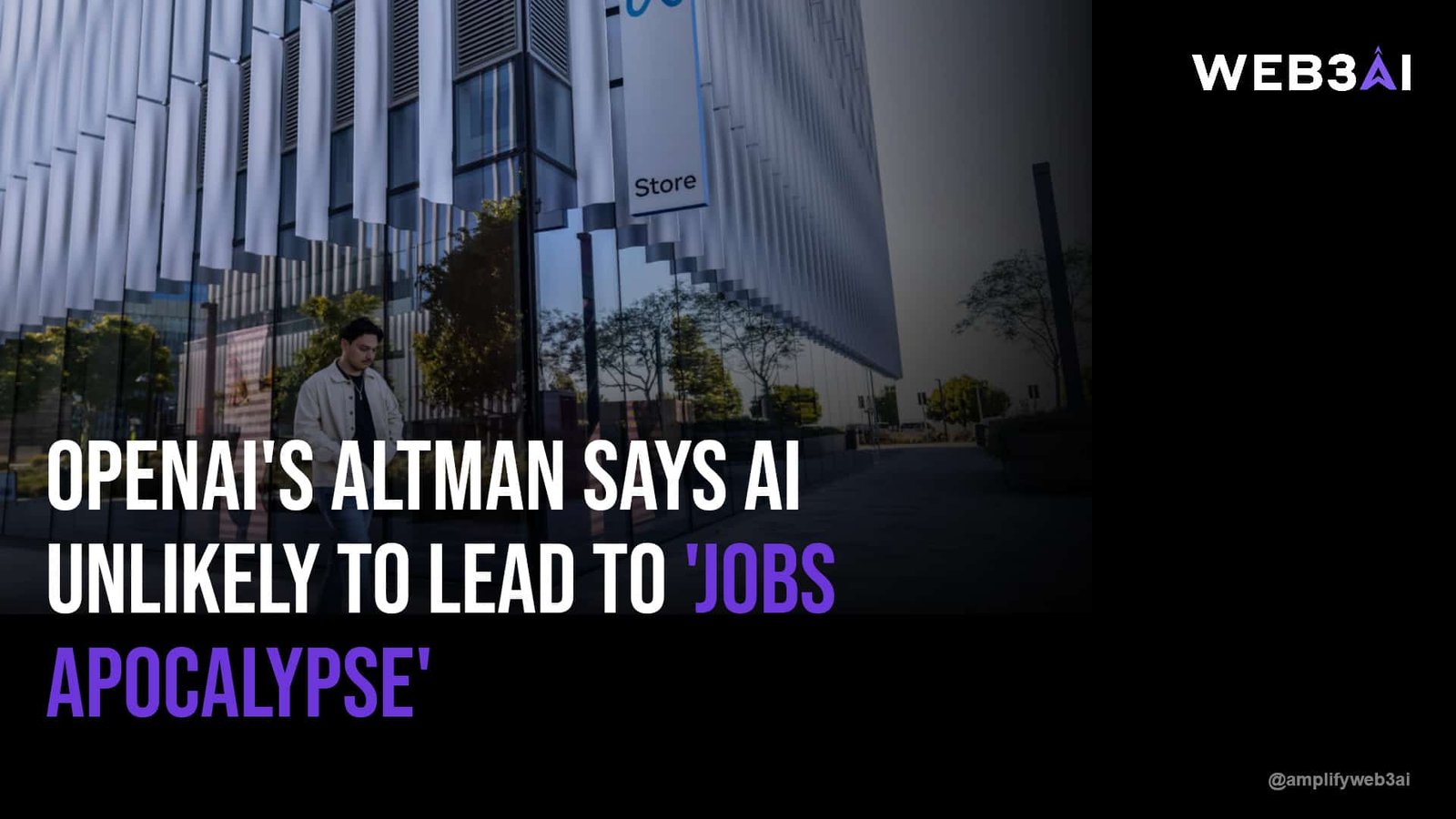

The phrase AI jobs apocalypse has been dominating headlines, dinner table conversations, and late-night doom-scrolling sessions for years now — but OpenAI CEO Sam Altman thinks the panic may be overblown. In a recent interview, Altman pushed back against the most catastrophic predictions, arguing that AI is far more likely to reshape work than to simply eliminate it. His words carry weight: this is the man steering the most influential AI company on the planet.
The fear is understandable. Automation anxiety is not new, but the speed and capability of modern AI systems have given it fresh urgency. McKinsey’s research on AI, automation, and the future of work acknowledges that while some roles face significant displacement risk, new categories of jobs are simultaneously being created at a pace that makes a simple “AI kills jobs” narrative incomplete at best. The picture is genuinely complicated — and that is exactly why Altman’s perspective deserves a closer look.
In this post, we break down what Altman actually said, why he believes a full-scale jobs apocalypse is unlikely, what experts and economists think, and most importantly, what this means for you and your career right now.
Altman’s core argument is that AI will be a tool of augmentation before it becomes one of replacement. He has repeatedly stated that while AI will automate specific tasks — particularly repetitive, process-driven ones — the leap from “AI does this task” to “AI does this entire job” is still a significant and non-trivial one. He acknowledged that disruption will happen, but framed it as a transition rather than a termination.
He also pointed to historical precedent. Every major technological revolution — from the printing press to the industrial revolution to the internet — triggered the same fears. In each case, new industries, new roles, and new forms of value creation emerged to fill the gap. Altman’s bet is that AI follows the same trajectory, but faster and with broader reach than anything we have seen before.
Critically, Altman did not say there would be zero job losses. He was careful to note that some roles — particularly those centered on narrow, predictable tasks — will shrink. His argument is about magnitude and speed: a restructuring, not an apocalypse. That distinction matters enormously for how workers, educators, and policymakers should respond.
Pro Tip: When evaluating AI’s impact on your role, ask yourself: “Does my job involve judgment, relationship-building, creativity, or ethical decision-making?” If yes, you are likely safer than headlines suggest — and potentially more valuable than ever.
To understand why Altman’s reassurances land the way they do, it helps to understand why the jobs apocalypse narrative took hold in the first place. Studies from Oxford University famously predicted that up to 47% of U.S. jobs were at high risk of automation. That figure, taken out of context, became a rallying point for both genuine concern and media sensationalism. The nuance — that “at risk” does not mean “gone tomorrow” — often got lost.
More recently, the arrival of large language models like GPT-4 and its successors accelerated the conversation. When AI could suddenly write legal briefs, debug code, create marketing copy, and pass medical licensing exams, the abstract threat became concrete. People who felt safe from automation — knowledge workers, creatives, professionals — suddenly felt the ground shift beneath them.
For a deeper look at how these dynamics are playing out across industries, our team at amplifyweb3.ai explored this topic in depth — check out How AI Is Reshaping the Future of Work, which breaks down sector-by-sector impact with practical takeaways for professionals navigating this shift.
Mainstream economists largely share Altman’s tempered view, though they are quick to add important qualifications. The consensus is that AI will cause significant labor market churn — meaning high displacement in some sectors paired with high growth in others — rather than a net collapse in total employment. The problem is that churn is painful, especially for workers in displaced roles who lack the resources or access to reskill quickly.
The distribution of AI’s benefits is another major concern. If productivity gains accrue primarily to capital owners and highly skilled workers while middle-income and lower-income workers bear the brunt of displacement, the outcome could be economically catastrophic even without a net jobs loss. Altman has spoken about this too — he has backed concepts like universal basic income (UBI) and profit-sharing models as potential buffers — but the details remain vague.
The timeline question is equally important. Altman and other AI leaders sometimes speak of five-to-ten-year horizons that assume a pace of deployment that may or may not materialize evenly. Regulatory environments, infrastructure gaps, and the sheer complexity of integrating AI into legacy business systems all act as natural brakes on how fast disruption can realistically spread.
Pro Tip: Do not wait for your employer or government to hand you a reskilling plan. Identify one AI-adjacent skill you can build over the next 90 days — whether that is prompt engineering, data literacy, or AI-assisted content creation — and start today. Small moves compound fast.
One of the most underappreciated factors in the jobs debate is the rise of AI agents — autonomous systems that can plan, execute multi-step tasks, and learn from outcomes without constant human supervision. This is where the conversation gets genuinely complex, and where Altman’s optimism gets its most serious stress-test.
AI agents are not just smarter chatbots. They represent a qualitative leap in what AI can do independently. An agent can browse the web, write and run code, manage files, communicate with external APIs, and make decisions based on goal-driven reasoning. That is a very different threat profile than a text generator — and it opens up displacement risk in roles that previously felt immune.
We have covered this emerging shift in detail. If you want to understand what AI agents actually are and how they are already being deployed in real business contexts, read our breakdown of The Rise of AI Agents: What You Need to Know — it is one of the most practically useful pieces we have published for professionals trying to get ahead of this curve.
Whether or not you believe in the AI jobs apocalypse framing, the practical advice for workers and business leaders is largely the same: adapt proactively rather than reactively. Here is what that looks like in concrete terms.
For individual workers, the priority is understanding which parts of your job are task-based versus judgment-based. Tasks can be automated; judgment — shaped by context, relationships, ethics, and lived experience — is much harder to replicate. Leaning into the human elements of your role while simultaneously building AI literacy is the most defensible career strategy available right now.
For businesses, the challenge is cultural as much as technological. Organizations that treat AI as a tool for augmenting their people — reducing drudge work, freeing up creative capacity, accelerating research — tend to outperform those that treat it purely as a cost-cutting mechanism. The latter approach often destroys institutional knowledge and team trust faster than it saves money.
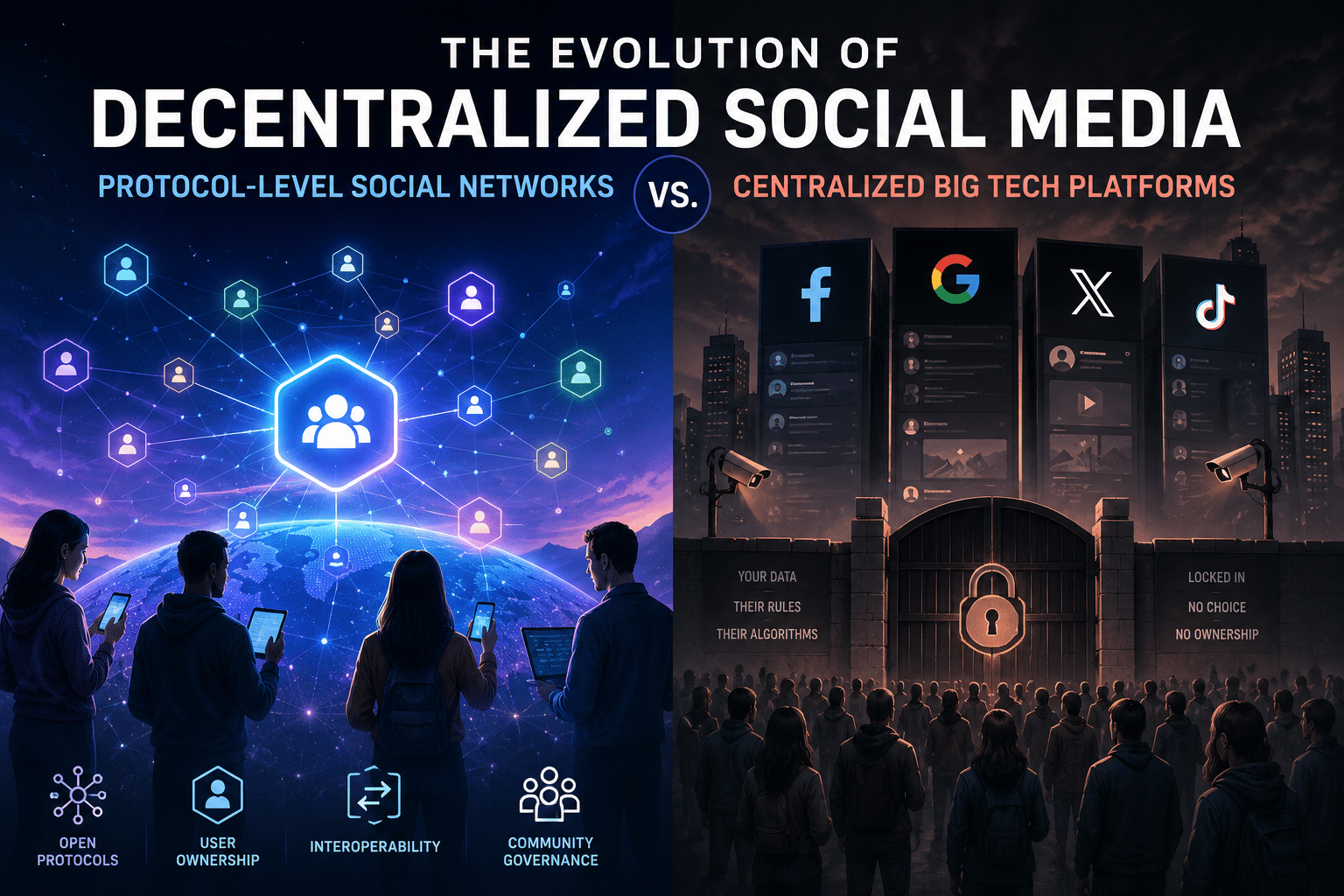
The intersection of AI and decentralized systems is also creating entirely new career categories that simply did not exist five years ago. For a forward-looking perspective on what those opportunities look like, our post on Web3 and AI: The Convergence Shaping Tomorrow is worth your time — especially if you are interested in the creator economy, DAOs, or decentralized infrastructure.
History is not destiny, but it rhymes loudly here. The Luddite movement of the early 19th century was not simply technophobia — it was a rational response by skilled textile workers who watched their livelihoods be dismantled by industrial machinery in a matter of years. They were not wrong about the disruption. What they could not see was that industrialization would eventually create more jobs than it destroyed, across a broader and more prosperous economy.
The internet offers a more recent and more legible example. In the mid-1990s, serious economists predicted that ATM machines would eliminate bank teller jobs almost entirely. The opposite happened: lower operational costs allowed banks to open more branches, which actually increased demand for tellers, even as the role itself evolved. The job changed; it did not disappear.
None of these transitions were painless. All of them required real workers to make real sacrifices during the transition period. Acknowledging that is not pessimism — it is honesty. But the pattern of net job creation following technological transformation is robust enough that outright apocalypse predictions have consistently failed to materialize.
Sam Altman has stated that he believes AI is unlikely to lead to a full-scale jobs apocalypse. He argues that AI will primarily automate specific tasks rather than entire jobs, and that historical patterns of technological disruption suggest new roles and industries will emerge to replace those displaced. He does acknowledge that some jobs — particularly those centered on narrow, repetitive tasks — will shrink, but frames this as a structural transition rather than an employment collapse.
The risk is real but often overstated in its speed and totality. Serious research from organizations like McKinsey and Oxford confirms that many roles face significant disruption, but the timeline and scale are frequently exaggerated in media coverage. The more nuanced picture involves significant labor market churn — displacement in some sectors, growth in others — rather than a simple net elimination of jobs. The distribution of impact will be deeply unequal across income levels and industries.
Jobs most at risk tend to involve high volumes of predictable, rules-based tasks: data entry, basic customer service, routine legal document review, certain accounting functions, and entry-level content production. Jobs involving complex human judgment, emotional intelligence, physical dexterity in unpredictable environments, creative direction, and deep relationship management are significantly less at risk — at least in the near to medium term.
Start by identifying which parts of your current role are task-based versus judgment-based, and invest in strengthening the latter. Build AI literacy so you can work with AI tools rather than being replaced by them. Seek out industries and employers that are investing in human-AI collaboration models. Stay engaged with communities where these transitions are being actively discussed, and treat continuous learning as a career survival skill rather than a nice-to-have.
Altman’s perspective shapes OpenAI’s public positioning around responsible AI deployment and its advocacy for policy frameworks like universal basic income and worker profit-sharing. It also influences how OpenAI communicates the purpose of its products — framing them as productivity multipliers for human workers rather than replacements. Whether that framing holds as AI capabilities scale further remains one of the most closely watched questions in the technology industry.
This is one of the most credible challenges to Altman’s optimistic framing. AI agents — systems that can autonomously plan and execute multi-step tasks — represent a qualitatively different risk than simple text or image generation tools. If agents become capable enough to handle complex, context-dependent professional workflows, the scope of job displacement could expand significantly beyond what historical analogies would suggest. Most experts consider this a medium-to-long-term risk rather than an immediate one, but the pace of development warrants serious attention.
The AI jobs apocalypse is a compelling narrative — but Sam Altman’s pushback is grounded in both historical pattern recognition and a sober read of where AI capabilities actually stand today versus where the headlines suggest they are. That does not mean complacency is warranted. The disruption is real, the inequality of impact is a genuine concern, and the speed of change is unprecedented in some sectors. What it does mean is that workers, businesses, and policymakers who approach this moment with clarity rather than panic are far better positioned to shape what comes next.
The most powerful thing you can do right now is stay informed, stay adaptable, and engage actively with the communities and platforms that are building the future of work rather than just reacting to it. AI is not going to pause while we figure it out — so the best move is to learn its language, understand its limits, and find your irreplaceable human edge within it.
Explore what we have built at attn.live.