Anouncement

Anouncement
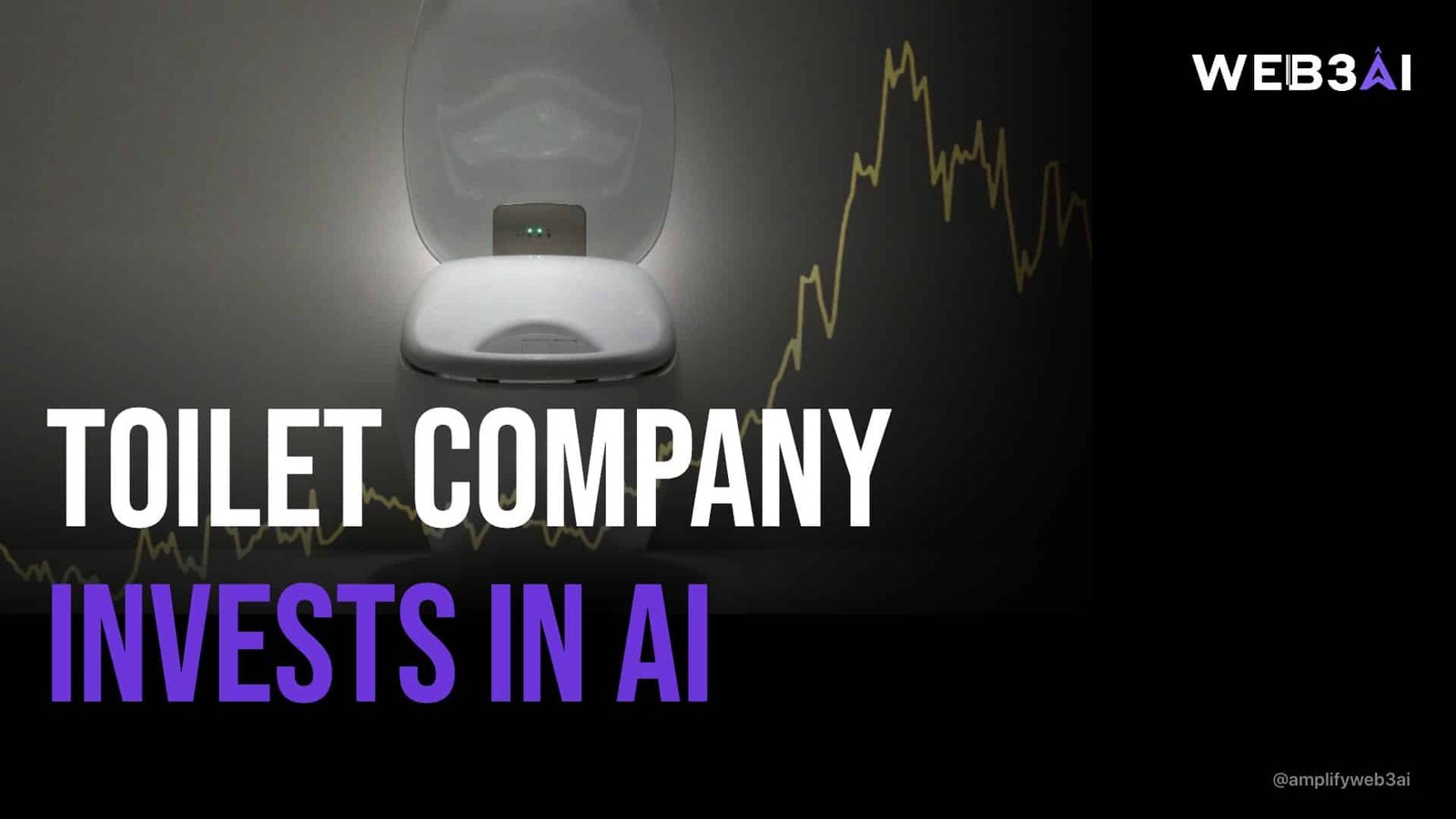

AI smart toilet technology has arrived — and it is more serious, and more fascinating, than you might expect. Japanese bathroom giant TOTO has announced an ambitious AI-powered initiative that turns your most private daily ritual into a personalized health monitoring session. If the idea sounds futuristic, that is precisely the point: TOTO wants the bathroom to become the next frontier of preventive healthcare.
We spend an average of several minutes in the bathroom every single day, yet that time has historically yielded zero health data. That is changing fast. According to reporting from Wired’s investigation into smart toilet health monitoring, researchers and manufacturers have been working for years to make toilets capable of detecting everything from urinary tract infections to early signs of colorectal cancer — all without a single lab visit. TOTO’s new AI push represents the most commercially ambitious version of that vision yet.
In this post, we break down exactly what TOTO is building, why AI is the missing ingredient that makes it viable, and what this means for the broader conversation about health data privacy and ownership in a Web3 world.
TOTO, the world’s largest toilet manufacturer, is integrating artificial intelligence into its Wellness Toilet concept — a product line designed to analyze waste, monitor hydration, detect biomarkers, and provide users with actionable health feedback. The system uses a combination of sensors, cameras, and AI models trained on health data to identify patterns that might indicate underlying conditions.
The toilet is designed to measure metrics like urine flow rate, color, and chemical composition, along with stool consistency mapped against recognized medical scales. Over time, the AI builds a personalized baseline for each user, flagging deviations that might warrant attention. Think of it less like a medical device and more like a daily wellness check-in that requires absolutely zero extra effort from you.
TOTO has been refining this concept for over a decade, but the integration of modern AI — particularly machine learning models capable of pattern recognition at scale — is what makes the current iteration genuinely powerful. Earlier versions relied on fixed sensor thresholds; the AI version learns your body.
Pro Tip: Preventive health tools are most effective when they integrate passively into your existing routine. The genius of AI smart toilet technology is that it requires no behavioral change — your data is collected simply by living your life.
TOTO’s project does not exist in a vacuum. It sits at the intersection of two massive technological waves: AI-driven health diagnostics and the consumerization of medical monitoring. We have already seen smartwatches track heart rate, blood oxygen, and sleep. Smart scales measure body composition. Continuous glucose monitors have moved from clinical tools to consumer products. The bathroom is simply the next logical environment to instrument.
What makes the AI component so critical is the shift from data collection to insight generation. Sensors can capture raw numbers, but AI is what turns those numbers into meaning. A single urine sample tells you relatively little; a thousand samples analyzed over months, compared against population health data, can tell you a great deal. This is the same logic driving AI adoption across every layer of the healthcare ecosystem — and we have explored that shift in depth in our post on how AI is transforming healthcare.
The consumer appetite for this kind of passive health monitoring is real and growing. People want to understand their bodies without having to schedule appointments, wait for lab results, or navigate complex insurance systems. AI-powered bathroom technology meets people exactly where they are — literally.
Building a toilet that can perform reliable health analysis is an engineering challenge on a different scale from, say, a fitness tracker. The environment is wet, chemically complex, and highly variable between users. TOTO has invested heavily in sensor durability, contamination prevention, and signal accuracy to make its system clinically meaningful rather than merely interesting.
The current system incorporates flow-rate sensors, optical sensors for color and turbidity analysis, and chemical biosensors capable of detecting specific biomarkers associated with conditions like diabetes, kidney disease, and dehydration. The AI layer sits above all of this hardware, processing the sensor outputs and generating user-facing insights through a companion app.
Calibration is one of the trickier problems the company has had to solve. Each human body is different, each diet varies, and hydration levels fluctuate constantly. The AI handles this by learning individual baselines over time rather than applying population-wide fixed thresholds — a much more sophisticated and personalized approach than anything the industry has attempted at scale before.
Pro Tip: When evaluating any AI health device, ask whether it uses personalized baselines or fixed population averages. Personalized models are almost always more accurate for individual health tracking — and they improve the longer you use the device.
TOTO’s smart toilet ambitions are a natural complement to the wearable technology explosion we have seen over the past five years. Wearables capture continuous data from your skin surface — heart rate, movement, temperature. Smart toilets capture episodic but high-information data from the metabolic outputs of your body. Together, they paint a remarkably complete picture of your health without requiring a single clinic visit.
This convergence is exactly what we covered in our exploration of the rise of AI-powered wearables — the idea that health monitoring is shifting from reactive to proactive, from clinical to ambient, and from episodic to continuous. Smart toilets are the missing home node in that network.
The most compelling future scenario is not a standalone smart toilet but a fully integrated health ecosystem: your wearable tracks overnight heart rate variability, your smart toilet analyzes morning biomarkers, and an AI health assistant synthesizes both streams into a single, actionable daily summary. That vision is closer than most people realize.
Here is the question that deserves far more attention than it currently receives: if your toilet is generating continuous biomarker data about your body, who owns that data, where does it go, and who can access it? These are not hypothetical concerns. Health data is among the most sensitive categories of personal information that exists, and the regulatory frameworks governing it vary enormously across markets.
TOTO has indicated it will process data in compliance with regional privacy laws, but the specifics matter enormously. Does the AI model train on your data in the cloud? Is your data anonymized before it leaves your home? Can it be sold to insurers or pharmaceutical companies? These are the kinds of questions consumers should be asking before adopting any AI smart toilet technology — and frankly, before adopting any AI health product.
This is where Web3 principles become genuinely relevant. Decentralized data ownership models could allow users to generate health data at home, retain cryptographic control over it, and choose to share it selectively — with their doctor, with a research study, or with no one at all. We have written about this intersection of personal data and Web3 in our post on Web3 and the future of personal data.
It is worth being clear-eyed about what AI smart toilet technology can and cannot do in its current form. The potential is real, but so are the constraints.
Potential benefits of AI smart toilet health monitoring:
Current limitations to understand:
AI smart toilet technology refers to bathroom fixtures equipped with sensors, cameras, and machine learning systems that analyze waste to monitor health biomarkers. The AI processes sensor data — measuring things like urine color, flow rate, chemical composition, and stool consistency — and generates personalized health insights delivered via a companion app. The system learns your individual baseline over time, making its insights more accurate the longer you use it.
Current AI smart toilet systems are most accurate for tracking hydration levels, detecting signs of urinary tract abnormalities, and flagging significant deviations from your personal baseline. Clinical-grade diagnostic accuracy for specific diseases is still being validated. These tools are best understood as early-warning systems and wellness trackers rather than replacements for professional medical diagnosis.
Privacy practices vary by manufacturer and region. TOTO and similar companies are subject to applicable health data privacy laws, but the specifics of data storage, anonymization, and sharing policies differ significantly. Before purchasing any AI health monitoring device, consumers should review the manufacturer’s privacy policy carefully and understand exactly how their data is stored, processed, and potentially shared.
Current and near-future smart toilet systems can detect biomarkers associated with hydration status, kidney function, diabetes indicators like glucose and ketone levels, signs of urinary tract infections, and gastrointestinal health indicators. Research prototypes have also explored detection of certain cancer-associated markers, though commercial systems at that diagnostic level are still years away from widespread availability.
AI smart toilet technology is designed to function as one node in a larger personal health network. When combined with wearable devices that track continuous physiological metrics and AI health assistants that synthesize data from multiple sources, smart toilets contribute high-value, metabolic-level data that complements what surface-level sensors can capture. Together, these technologies represent a shift toward truly continuous, ambient health monitoring.
TOTO’s Wellness Toilet concept is expected to reach commercial markets in Japan first, with international availability to follow. Initial pricing is expected to position the product as a premium health device, well above the cost of standard smart toilets. Broader affordability is likely several years away, contingent on manufacturing scale, regulatory approvals, and competitive market dynamics.
AI smart toilet technology is not a gimmick — it is a genuinely significant development in the long-term trajectory of preventive healthcare. TOTO’s vision transforms one of the most mundane parts of your daily routine into a continuous, passive health monitoring session that requires nothing extra from you. The AI does the work; you simply live your life. That frictionless quality is what makes this category of technology potentially transformative rather than merely novel.
The bigger questions — around data ownership, clinical validation, equitable access, and the integration of bathroom health data into broader health ecosystems — are the ones that will determine how quickly and how beneficially this technology matures. Those are conversations worth having now, before the products are in millions of homes. The intersection of AI health monitoring and decentralized data ownership is one of the most important design challenges of the coming decade, and the bathroom turns out to be a surprisingly compelling place to start.
Explore what we have built at attn.live.