Anouncement

Anouncement
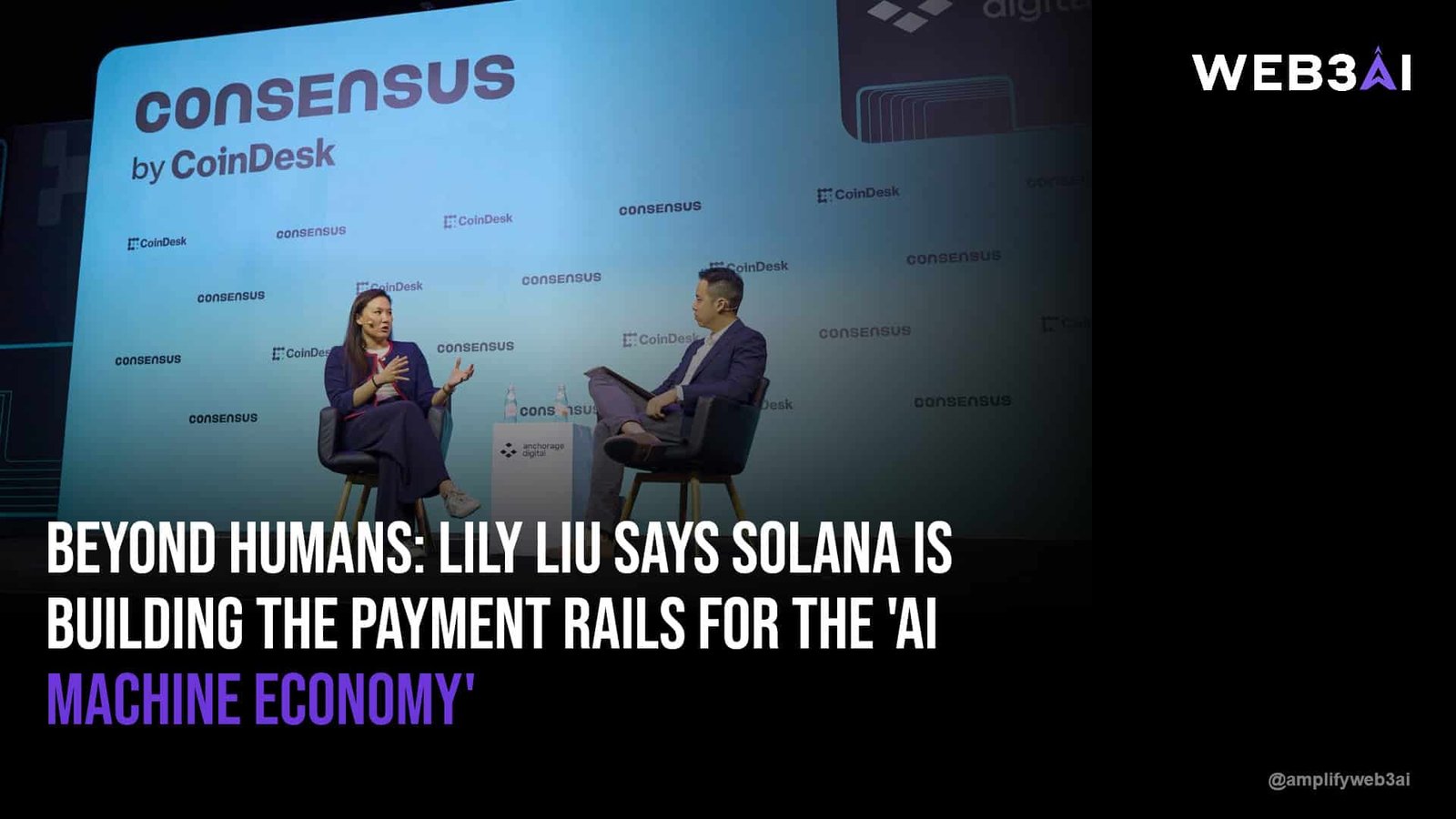

Solana stablecoin payments AI agents just moved from science fiction to live infrastructure. In May 2025, Solana Foundation and Google Cloud jointly announced a new payments service that lets autonomous AI agents send and receive stablecoins on the Solana blockchain — without a human approving every transaction. This is not a whitepaper or a roadmap item. It is a working product, available now, built on one of the fastest blockchains in the world and backed by one of the largest cloud providers on the planet.
The timing matters. According to McKinsey’s analysis of stablecoin infrastructure, stablecoins are rapidly becoming the backbone of digital-dollar settlement for enterprises and developers alike. When you layer autonomous AI agents on top of that settlement layer, you get something genuinely new: software that can earn money, pay for services, and complete financial transactions entirely on its own. That combination is what Solana and Google Cloud are now enabling at scale.
In this post, we break down exactly what was announced, why it matters for developers and businesses, and how this convergence of AI and blockchain payments is reshaping the Web3 landscape in 2025.
The partnership between Solana Foundation and Google Cloud centers on a payments infrastructure layer purpose-built for AI agents. The service allows AI agents — autonomous software programs that execute tasks with minimal human oversight — to hold, send, and receive stablecoin payments directly on Solana. Think of it as giving a software program its own wallet and the ability to spend from it intelligently.
The core of the integration runs through Google Cloud’s infrastructure, meaning developers can deploy AI agents using familiar Google Cloud tooling while those agents interact natively with Solana’s blockchain. Supported stablecoins include USDC, the largest regulated dollar-pegged stablecoin by volume. The settlement speed on Solana — often under 400 milliseconds per transaction — makes it practically instant by financial standards, which is exactly what autonomous agents need to operate efficiently.
This is a meaningful upgrade over traditional payment rails. Legacy systems like ACH or SWIFT were designed for humans approving transactions over hours or days, not for software acting in milliseconds. Solana’s architecture was always suited for high-frequency, low-cost transactions, and this collaboration formally unlocks that potential for the AI agent economy.
Pro Tip: If you are a developer building AI agents today, Solana’s sub-second finality and near-zero fees make it one of the most practical blockchains for autonomous payment flows — explore the official Solana Pay documentation to see how quickly you can integrate.
To understand why this launch is significant, it helps to think about what AI agents actually do. These are programs that can browse the web, book services, hire other agents, pay for APIs, and complete multi-step tasks — all without a human in the loop. The missing piece has always been money. How does a software agent pay for the compute it needs, or compensate another agent for completing a subtask?
Until now, the answer was clunky workarounds: pre-loaded API keys, centralized payment processors that require human accounts, or custodied wallets that reintroduce intermediaries. Stablecoins on a fast blockchain solve all of that. An AI agent with a Solana wallet can pay for services programmatically, receive compensation for completed work, and settle accounts in real time — without any human needing to log in and approve a transfer.
For a deeper look at how autonomous software is already reshaping decentralized ecosystems, our post on how AI agents are transforming Web3 walks through the key mechanics and real-world applications driving this shift.
The economic implications are significant. As agent-to-agent commerce grows, the volume of micro-transactions that need to settle instantly and cheaply will dwarf anything traditional payment rails were built for. Solana, processing thousands of transactions per second at fractions of a cent, is structurally better suited to this future than any legacy system.
Stablecoins are the natural currency for AI agents operating at machine speed. Unlike volatile cryptocurrencies, stablecoins maintain a predictable value — usually pegged 1:1 to the US dollar — which means an agent can transact without worrying about price swings eroding the value of what it just earned or spent. For autonomous systems making hundreds of micro-decisions per hour, that price stability is not a nice-to-have. It is a functional requirement.
USDC, the stablecoin at the center of this Solana–Google Cloud integration, is issued by Circle and is one of the most regulated and audited digital dollars in existence. That regulatory clarity matters for enterprises considering AI agent deployments. A company is far more likely to let software agents handle payments when those payments are denominated in a fully-backed, audited stablecoin rather than a speculative asset.
If you are new to how stablecoins work under the hood, our explainer on what a stablecoin is and how it maintains its peg provides a clear, jargon-free foundation before you dive into the more technical agent-payment use cases.
Pro Tip: When evaluating stablecoins for agent-payment infrastructure, prioritize those with transparent reserve audits and regulatory clarity — USDC on Solana currently offers both, along with the settlement speed autonomous agents require.
Not every blockchain is equal when it comes to powering autonomous payment flows. Ethereum, the most established smart-contract platform, still struggles with gas fees that can spike unpredictably — sometimes reaching tens of dollars per transaction during periods of network congestion. For an AI agent executing hundreds of micro-payments per day, that fee structure is economically unworkable.
Solana offers a fundamentally different profile. Transaction fees on Solana typically cost fractions of a cent, and the network processes thousands of transactions per second with finality under half a second. That combination — low cost, high throughput, near-instant settlement — is exactly what autonomous agents need to operate at scale without burning their budgets on infrastructure overhead.
There is also the developer ecosystem to consider. Solana has invested heavily in tooling, documentation, and SDKs that make it straightforward to build payment-enabled applications. The Google Cloud integration adds another layer, letting teams leverage Cloud Functions, BigQuery, and AI tooling alongside on-chain Solana payments in a single workflow. For a full comparison of how Solana and Ethereum stack up across these dimensions in 2025, see our breakdown of Solana vs Ethereum and which blockchain wins for developers.
For businesses, this launch opens up a new category of product entirely. Imagine a customer service agent that can issue a partial refund autonomously after verifying the claim meets policy criteria — no human approval required, settled in stablecoins in under a second. Or a supply chain agent that pays micro-invoices to logistics providers in real time as shipment milestones are confirmed on-chain. These are not futuristic scenarios. They are architecturally possible right now with this infrastructure.
The Google Cloud angle also matters for enterprise adoption. Most large organizations are already deeply embedded in Google Cloud for compute, storage, and AI services. By meeting enterprises where their infrastructure already lives — and extending it natively to Solana — this partnership dramatically lowers the integration barrier. You do not need a dedicated Web3 team to start experimenting. You need Google Cloud access and a basic understanding of Solana Pay.
Security remains a critical consideration. Autonomous agents with real financial authority represent a new attack surface, and the industry is still developing best practices around agent key management, spending limits, and on-chain authorization frameworks. Building in conservative guardrails from day one — spending caps, multi-sig approvals for large transactions, and audit logging — is essential before any production deployment.
Solana stablecoin payments AI agents are autonomous software programs that can send and receive stablecoin transactions — typically USDC — directly on the Solana blockchain without human intervention. The recent Solana Foundation and Google Cloud partnership provides the infrastructure layer that makes this possible at scale, combining Solana’s high-speed settlement with Google Cloud’s enterprise developer tooling.
The partnership combines Solana’s blockchain infrastructure — fast finality, low fees, high throughput — with Google Cloud’s enterprise reach and AI development tools. The goal is to make it straightforward for developers and enterprises to build AI agents that can transact financially on Solana without needing deep blockchain expertise or a dedicated Web3 team.
The launch centers on USDC, the Circle-issued dollar-pegged stablecoin, which is one of the most widely used and regulated stablecoins in the market. Solana also natively supports USDT and several other stablecoins, which may be incorporated into agent payment flows as the ecosystem develops further.
Security for AI agent payments is an evolving area. Current best practices include using programmatic wallets with tightly scoped permissions, setting spending caps, implementing multi-signature requirements for high-value transactions, and maintaining detailed on-chain audit logs. The Google Cloud integration adds an additional layer of access controls through IAM and key management services.
The most immediate opportunities are in industries with high transaction volumes and routine payment logic: logistics and supply chain, digital media and content licensing, SaaS platforms with usage-based billing, DeFi protocols, and customer service automation. Any domain where payment decisions follow predictable rules is a strong candidate for autonomous agent-driven settlement.
Not necessarily. The Google Cloud integration is specifically designed to lower this barrier. Developers familiar with Google Cloud services can access Solana payment functionality through familiar SDK patterns. That said, a working understanding of wallet management, transaction signing, and stablecoin mechanics will help you build more robust and secure agent deployments from the start.
Solana stablecoin payments AI agents represent one of the most concrete and consequential intersections of blockchain and artificial intelligence we have seen in 2025. This is not a theoretical use case. It is live infrastructure, backed by two major technology organizations, designed to let software transact financially without waiting for human approval. That capability — autonomous, instant, programmable money — is the foundation the agent economy has been waiting for.
The combination of Solana’s speed and cost efficiency, Google Cloud’s enterprise tooling, and USDC’s regulatory clarity creates an unusually practical stack for teams ready to build. The businesses and developers who start experimenting now will have a meaningful head start as agent-to-agent commerce grows from niche to norm over the next two to three years.
The convergence of AI and blockchain is not coming. It is already here, and it is moving fast. Explore what we have built at attn.live.