Anouncement

Anouncement

AI crypto wallet recovery is no longer a far-fetched concept — it is a real, documented breakthrough that is quietly changing how people reclaim lost digital wealth. In early 2025, a Reddit user shared a story that went viral across the crypto community: he had rediscovered an old seed phrase scrawled on a piece of paper, but could not get it to unlock his Bitcoin wallet. After hours of manual attempts and frustration, he turned to Anthropic’s AI chatbot Claude — and walked away with access to more than 5 BTC, worth approximately half a million dollars at current prices.
Lost crypto is a staggering global problem. Analysts estimate that millions of Bitcoin are permanently inaccessible due to forgotten passwords, corrupted drives, and miswritten seed phrases. As Wired has reported, a growing number of people are now experimenting with AI tools to bridge the gap between a partial clue and full wallet access — with surprising success rates. This post breaks down exactly what happened in this viral case, how AI-assisted recovery works, and what you should know before trying it yourself.
Whether you have a crumpled seed phrase in a drawer or a vague memory of a wallet password, understanding AI crypto wallet recovery could be one of the most valuable things you read this year.
The Reddit post that sparked this conversation described a straightforward but emotionally charged situation. The user had purchased Bitcoin years earlier and stored the seed phrase on paper — a best practice at the time. When he found the paper again, several words were smudged or unclear, making it impossible to enter the phrase correctly through normal wallet software. He had tried every obvious variation manually and was running out of patience and hope.
Rather than pay thousands of dollars to a professional data recovery firm, he decided to describe his problem to Claude, Anthropic’s conversational AI. He explained the structure of the seed phrase, identified which words were unclear, and asked Claude to help him systematically reason through the BIP-39 word list — the standardized dictionary of 2,048 words used in most modern seed phrases. Claude helped him narrow down the plausible word candidates for each unclear position and suggested a structured sequence for testing combinations.
Within a manageable number of attempts, the correct phrase was identified. The wallet unlocked. Five Bitcoin — accumulated during an earlier bull cycle — were now accessible again. The user described the experience as “methodical” and credited Claude’s ability to break a complex problem into clear, logical steps. It was not magic. It was structured problem-solving, accelerated by AI.
Pro Tip: If you have a damaged or incomplete seed phrase, document every readable word and its position before starting any recovery attempt. Preserving what you already know is the most important first step.
For a deeper look at how AI is reshaping every corner of the crypto ecosystem — from trading to security to user experience — explore our full breakdown at How AI Is Transforming the Crypto Industry.
To understand why this works, you need to understand how seed phrases are constructed. Most modern crypto wallets use the BIP-39 standard, which generates a 12- or 24-word recovery phrase drawn from a fixed list of 2,048 English words. Each word encodes a specific chunk of cryptographic data, and the full phrase together reconstructs your private key. If even one word is wrong, the wallet will not open.
The challenge with a partially damaged or misremembered phrase is that the search space — while theoretically large — is actually manageable if you can narrow it intelligently. For example, if you are confident about 11 of 12 words and only uncertain about one, you have at most 2,048 combinations to test. AI does not hack or brute-force anything. Instead, it helps you reason about which words are plausible given context, spelling similarity, and linguistic patterns, then suggests a structured testing order.
Claude and similar large language models are particularly well-suited to this task because they have been trained on vast amounts of linguistic data, including the BIP-39 word list itself. They can recognize that a smudged word is more likely “river” than “rivet” based on surrounding context, or suggest that a word you remember sounding like “arch” could be “march,” “larch,” or “parch.” It is pattern recognition applied to one of the most high-stakes puzzles a person can face.
Before attempting any AI crypto wallet recovery process, it helps enormously to understand the mechanics of how your wallet was set up in the first place. Not all wallets use the same standards, and a mismatch between your seed phrase format and your recovery tool can make success impossible even when the phrase is correct. Hardware wallets, software wallets, and exchange-custodied accounts all work differently.
If you are unfamiliar with how seed phrases, private keys, and wallet addresses relate to each other, that knowledge gap can turn a solvable problem into a confusing maze. Our beginner-friendly guide at What Is a Crypto Wallet? covers everything from hot and cold storage to exactly how a seed phrase unlocks your funds — essential reading before you start any recovery attempt.
One key concept to understand: your seed phrase does not “live” anywhere on the blockchain. It is a local key that regenerates your private key mathematically. This means recovery is always a local process. You are not retrieving anything from a server — you are reconstructing the master key to your own vault.
Pro Tip: Always attempt seed phrase recovery on an offline or air-gapped device. The moment a seed phrase touches the internet — even in a chat window — you introduce risk. Use AI for strategy and reasoning, not as the place where you type your actual phrase.
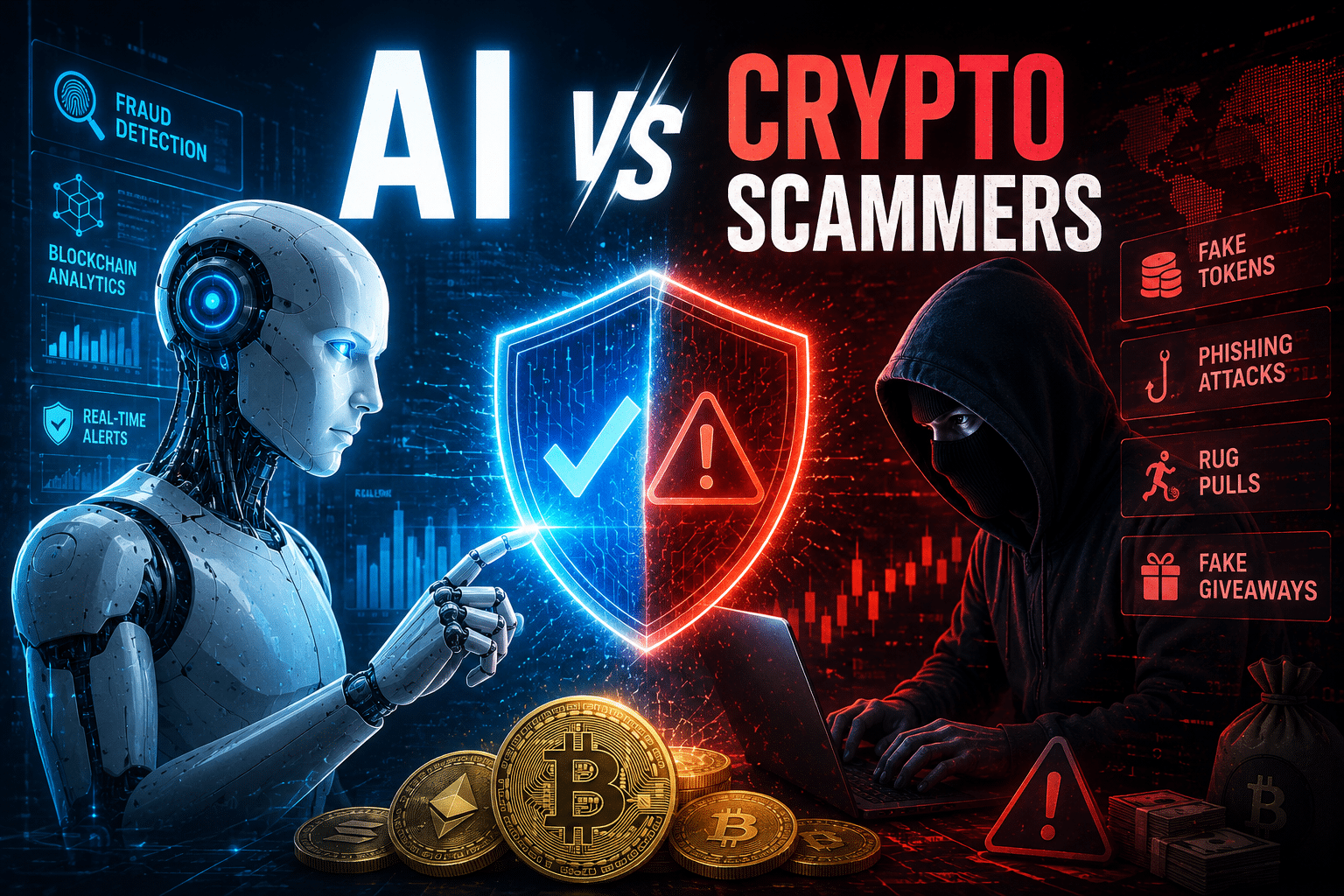
The story of the recovered 5 BTC is inspiring, but it is important to approach AI crypto wallet recovery with clear eyes about the risks involved. The biggest danger is not the AI itself — it is human error and misplaced trust in the wrong platforms. There are already scammers posing as “AI recovery services” who will ask for your full seed phrase upfront and disappear with your funds. No legitimate recovery service, human or AI, ever needs your complete seed phrase to help you.
There is also a subtler risk: using an AI chatbot through a cloud-connected interface means your inputs could theoretically be logged, stored, or intercepted. The Reddit user in this case was careful to describe his situation abstractly — he shared the structure and the uncertain words without ever typing the full phrase into the chat. That is the correct approach. Think of AI as your strategic advisor, not your execution environment.
Operational security during recovery is a serious topic. For a thorough overview of how to protect your assets throughout every stage of your Web3 journey — including wallet management and recovery planning — read our guide on Web3 Security: Protecting Your Digital Assets.
The Claude story is not an isolated incident. It reflects a broader shift in how ordinary people interact with complex technical systems, enabled by the rise of conversational AI. A few years ago, recovering a partially damaged seed phrase required either deep technical knowledge or an expensive specialist. Today, a well-structured conversation with an AI can walk almost anyone through the same logical process that an expert would use.
This democratization matters. Estimates suggest that somewhere between 3 million and 4 million Bitcoin — worth hundreds of billions of dollars — are permanently lost due to forgotten or damaged access credentials. Even recovering a small fraction of that through AI-assisted methods represents an enormous shift in accessible wealth. As AI models become more sophisticated and more widely used, the number of successful recovery stories is only going to grow.
There is also a product opportunity here. Wallet providers, security firms, and Web3 platforms are beginning to explore built-in AI recovery assistants that can guide users through the recovery process safely, without ever exposing the actual phrase to a third party. The intersection of AI and self-custody security is one of the most compelling frontier areas in Web3 today.
AI crypto wallet recovery is the process of using an artificial intelligence tool — such as Claude, ChatGPT, or a specialized recovery assistant — to help reconstruct a damaged, incomplete, or misremembered seed phrase. The AI does not break encryption or access the blockchain directly. Instead, it uses linguistic pattern recognition and logical reasoning to help you identify and prioritize candidate words from the BIP-39 word list, narrowing down the combinations you need to test manually.
It can be safe if you follow the right precautions. The most important rule is to never type your complete seed phrase into any cloud-connected AI chat interface. Use AI for strategy — describe your problem abstractly, get a structured approach, then execute the actual phrase testing offline using an air-gapped device and open-source tools. Think of the AI as a consultant, not a technician with access to your vault.
Anthropic’s Claude has gained particular attention for this use case due to its strong logical reasoning and structured problem-solving capabilities. OpenAI’s GPT-4 and GPT-4o are also capable of this task. The key is not which AI you use, but how you use it — provide structured information about your phrase layout, unclear words, and known context, and ask for a methodical, prioritized testing sequence rather than a single answer.
Start by identifying the word count — 12 or 24 words are the most common formats, indicating BIP-39 compatibility with most modern wallets. You can then use an offline BIP-39 tool to generate the corresponding wallet addresses and check whether any of them show a balance on a blockchain explorer. Do all of this offline, and only connect to check balances after you have identified the correct phrase and moved funds to a freshly secured wallet.
Yes. The BIP-39 seed phrase standard is used by wallets for Bitcoin, Ethereum, Solana, and dozens of other cryptocurrencies. The same logical recovery process applies regardless of the underlying blockchain. What changes is the derivation path — the specific sequence of cryptographic steps that transforms your seed phrase into a wallet address — so make sure your recovery tool is configured for the correct coin and derivation path before testing.
The most common scam involves fake “professional recovery services” that promise to recover your funds in exchange for your complete seed phrase or a large upfront fee. Once they have your phrase, they drain your wallet immediately. A legitimate recovery helper — human or AI — will never ask for your full seed phrase. Another growing scam involves fake AI recovery apps in mobile app stores that are designed purely to harvest seed phrase inputs. Always verify tools against community-trusted sources before using them.
AI crypto wallet recovery has moved from a theoretical curiosity to a proven, practical lifeline — and the story of one man reclaiming 5 Bitcoin with Claude’s help is only the beginning. The combination of AI’s pattern recognition capabilities and the structured logic of the BIP-39 standard creates a genuinely powerful toolkit for anyone sitting on a damaged or incomplete seed phrase. The technology is accessible, the process is learnable, and the stakes are often enormous.
What this story ultimately illustrates is that AI is not just changing how we create and trade digital assets — it is changing how we recover and protect them. The key is to approach this process with patience, rigorous operational security, and a clear understanding of what AI can and cannot do on your behalf. Use it as the intelligent reasoning partner it is, keep your actual credentials offline, and take the process one structured step at a time.
The future of Web3 is one where powerful AI tools are available to every participant — not just the technically elite. Explore what we have built at attn.live.