Anouncement

Anouncement
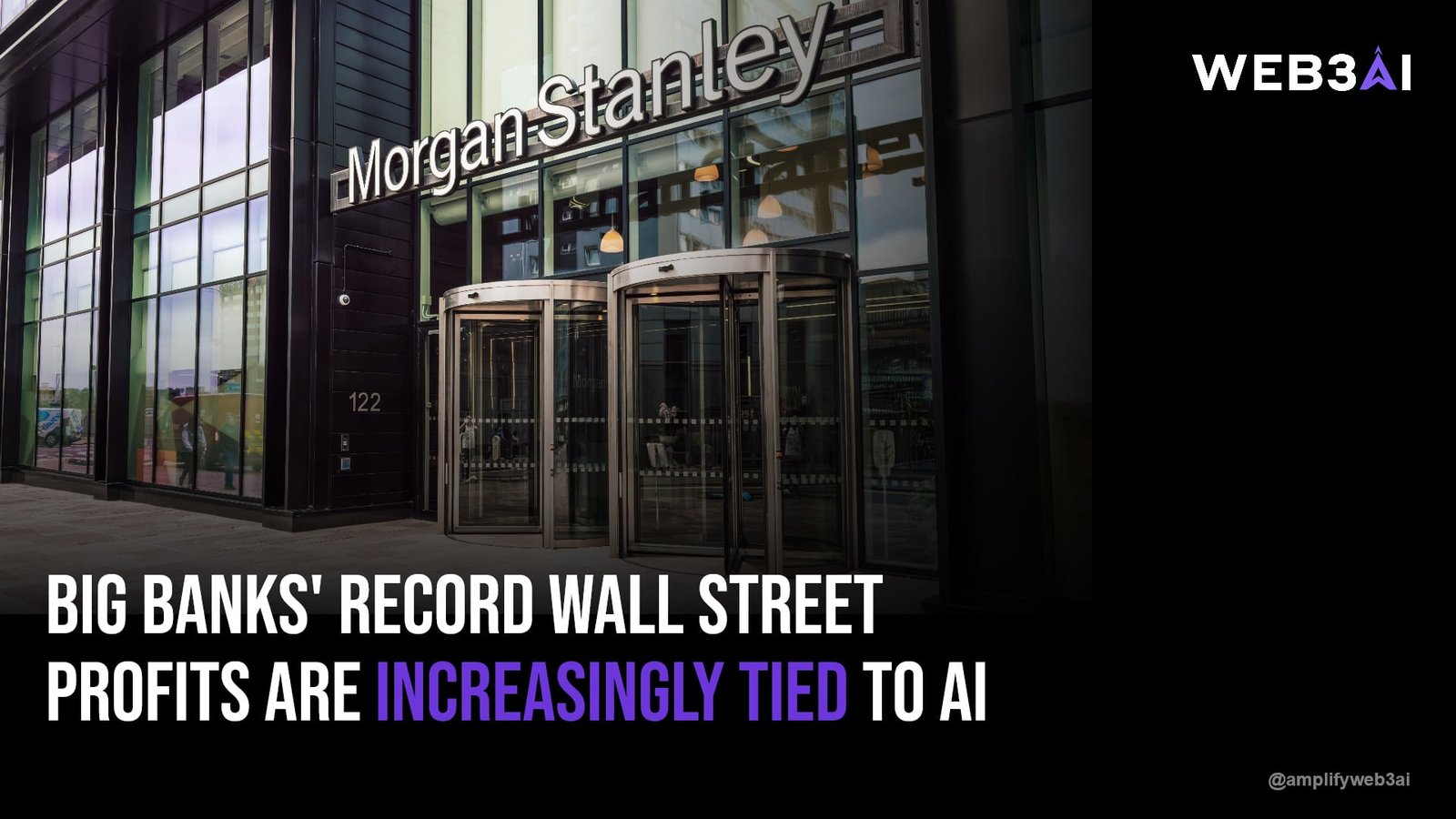

Wall Street AI profits have become the headline story of this earnings season, and it is not hard to see why. Banks that once measured success purely in trading volume and deal flow are now pointing to artificial intelligence as a core driver of record revenue. If you have felt a growing unease that finance is changing faster than you can keep up with, you are not imagining it.
According to Reuters’ recent coverage of bank earnings, major institutions are pouring billions into AI infrastructure while simultaneously reporting some of their strongest quarters in years. That is not a coincidence — it is a signal. The pain point for most people watching from outside the industry is simple: it feels like the financial world is being rebuilt around a technology most of us barely understand yet.
This post breaks down what is actually happening behind those record profits, why it matters beyond Wall Street, and what you can realistically do to stay ahead of the shift.
The short answer is efficiency at a scale humans simply cannot match. Big banks are using AI to automate research, speed up trading decisions, and cut costs in back-office operations that used to require armies of analysts. Every basis point saved on operations shows up directly on the bottom line.
Trading desks are also leaning on AI models to spot patterns in market data faster than any human team could manage. This has helped some firms report their best quarterly numbers in recent memory. The result is a feedback loop — more profit funds more AI investment, which drives more profit.
Pro Tip: When a bank mentions “AI-driven efficiency” in an earnings call, look for where headcount or operating costs shrank in the same report. That is usually where the real story is.
Record profits can mask real vulnerabilities, and this earnings cycle is no exception. Heavy reliance on AI models means banks are exposed to new kinds of risk — model bias, data quality issues, and algorithmic errors that can move markets in seconds. Regulators are already paying closer attention to how these systems make decisions.
There is also a talent risk. As banks automate more research and analysis, entry-level roles that used to train the next generation of bankers are shrinking. If you are early in a finance career, understanding this shift is not optional anymore — it is essential to staying relevant.
For readers new to how AI actually works inside financial systems, our beginner’s guide to AI in finance breaks down the core concepts without the jargon.
Several of the largest US banks have specifically credited AI tools for improved margins this quarter. These institutions are not just experimenting anymore — they have moved AI from pilot programs into core operations across trading, compliance, and customer service.
Some are building proprietary large language models trained on decades of internal market data. Others are partnering with established tech firms to license enterprise AI platforms. Either path requires massive capital investment, which only the biggest players can currently afford at scale.
If you want a broader look at the tools powering this shift across industries, not just banking, check out our roundup of top AI tools transforming business in 2025.
The ripple effects of Wall Street AI profits reach far past bank balance sheets. When the biggest financial institutions in the world validate AI at this scale, smaller firms and other industries take notice. It becomes a signal that AI adoption is no longer optional for staying competitive.
Insurance companies, real estate firms, and even retail businesses are watching how banks integrate AI and adapting similar strategies. This creates a broader economic shift where AI literacy becomes a baseline expectation, not a specialty skill. Our piece on how AI is reshaping traditional industries goes deeper into this cross-sector impact.
You do not need to work in finance to feel the effects of this shift. As AI becomes central to how the biggest financial institutions operate, the skills valued in the job market are changing quickly. Understanding AI at a practical level is becoming as important as understanding spreadsheets once was.
Pro Tip: Start small. Learning to use one AI tool deeply — whether for research, writing, or data analysis — builds more real skill than skimming ten tools superficially.
Going forward, expect banks to report AI spending as its own line item rather than burying it in general technology costs. This transparency will make it easier to judge whether Wall Street AI profits are sustainable or simply a short-term earnings boost. Watch for commentary on AI-related risk management, since regulators are increasingly asking pointed questions.
Also keep an eye on smaller regional banks. If AI-driven efficiency gains stay concentrated among giants, it could accelerate consolidation across the industry over the next few years.
Wall Street AI profits refer to the portion of bank earnings that executives directly attribute to artificial intelligence tools, including automated trading, research efficiency, and cost reduction from AI-driven operations.
Banks are scaling AI use across trading, compliance, and research faster than expected, cutting operational costs while improving decision speed. This combination is producing record quarterly earnings for several major institutions.
AI is automating many routine research and analysis tasks, which has reduced demand for some entry-level roles. However, it is also creating new positions focused on managing and interpreting AI systems.
Smaller businesses can study which specific AI use cases — like automation or predictive analytics — are driving results for banks, then apply similar tools at a scale that fits their own operations and budget.
It depends on how well banks manage the risks tied to AI models, including regulatory scrutiny and algorithmic errors. Sustainable growth will likely require continued investment in oversight, not just technology.
Wall Street AI profits are not a passing trend — they represent a structural shift in how the biggest financial institutions operate and compete. Understanding this shift matters whether you work in finance, run a small business, or simply want to make sense of where your money is going. The banks leading this charge are showing the rest of the economy what is possible when AI moves from experiment to core strategy.
Explore what we have built at attn.live.