Anouncement

Anouncement


AI job loss concerns Americans at a level we have not seen before — and a sweeping new survey from Anthropic makes that anxiety impossible to ignore. The research, conducted across thousands of U.S. adults, reveals that a significant share of the workforce believes artificial intelligence will fundamentally alter or eliminate their roles within the next few years. This is not background noise. It is a front-page signal about where our economy is heading and how everyday workers are processing that shift.
This growing unease is not limited to one industry or demographic. A Pew Research Center report published in March 2025 found that worry about AI-driven job displacement has climbed sharply over the past two years, with lower-income workers and those in routine-task-heavy roles feeling the pressure most acutely. The combination of that data with Anthropic’s internal survey paints a picture that is difficult to dismiss as hype.
What does all of this mean for you — and for the future of work as we know it? In this post, we break down the Anthropic survey findings, explore which jobs are most at risk, and share concrete strategies for staying relevant in an AI-augmented economy.
Anthropic’s survey asked Americans across age groups, income brackets, and industries how they feel about AI’s impact on employment. The results were striking. A majority of respondents expressed concern that AI tools — including large language models like Claude — will reduce the number of jobs available to humans in the near future. Many participants specifically flagged white-collar knowledge work as newly vulnerable, a shift from earlier conversations that focused almost exclusively on blue-collar and manufacturing roles.
The survey also found a notable gap between how executives and frontline workers perceive AI’s trajectory. Business leaders tended to frame AI as a productivity enhancer, while individual contributors worried about being replaced outright. That disconnect has real consequences — it shapes how companies communicate change, how workers prepare, and how policymakers respond to automation-driven disruption.
Perhaps most revealing: a substantial portion of respondents said they had already witnessed colleagues lose roles that were restructured or eliminated due to AI tooling. This is no longer a theoretical fear. For many Americans, it is lived experience happening in real time inside their own workplaces.
Pro Tip: If your company is rolling out AI tools without a clear communication plan for employees, that silence breeds anxiety. Transparent reskilling roadmaps are one of the most effective ways leaders can reduce fear while accelerating adoption.
Not all jobs carry equal exposure. The Anthropic survey and broader labor research consistently highlight a cluster of roles where AI is already automating meaningful portions of the work. Data entry, basic copywriting, customer support scripting, financial report generation, and certain paralegal functions are all areas where AI tools have moved from experimental to operational in many organizations.
The pattern emerging is not simply “low-skill jobs disappear.” It is more nuanced: roles that involve predictable, language-based, or pattern-matching tasks — regardless of the salary attached to them — are showing higher vulnerability. A junior analyst producing templated reports faces a similar risk profile to a call center agent reading from a script.
At the same time, roles that demand embodied judgment, complex interpersonal skills, creative synthesis, or physical dexterity in unpredictable environments remain difficult for AI to fully replicate. Nurses, skilled tradespeople, senior strategists, and creative directors continue to hold ground — though even these roles are being reshaped by AI assistance rather than left entirely untouched.
AI job loss concerns Americans deeply, and that concern is valid. But the historical record of technological transitions — from the printing press to the industrial revolution to the internet — shows that disruption and creation tend to arrive together. The challenge is that the creation of new roles rarely happens at the same speed, in the same geography, or for the same people who lost the old ones. That lag is where real human harm lives, and it deserves honest attention rather than dismissal.
What is genuinely different about this moment is the pace. Previous technological shifts unfolded over generations. AI capability is compressing that timeline dramatically. A worker who mastered a skill set in 2020 may find significant portions of that skill set automatable by 2026. This requires a different kind of career planning — one built on adaptability rather than mastery of a fixed domain.
For a deeper look at how AI is actively reshaping employment structures across sectors, explore our breakdown of how AI is transforming the future of work and what individuals and organizations can do to get ahead of the curve.
The Anthropic survey did not just capture fear — it also captured agency. A meaningful portion of respondents said they are actively upskilling, experimenting with AI tools, or seeking roles in organizations that have clear AI adoption strategies. Workers who are leaning in rather than waiting tend to report lower anxiety and stronger career confidence, even in sectors experiencing significant disruption.
Organizations are responding in uneven ways. Some are investing heavily in reskilling programs, creating internal “AI fluency” tracks, and redefining job descriptions around human-AI collaboration. Others are quietly automating roles and absorbing the productivity gains without reinvesting in their workforce. That second path may produce short-term margin improvement but tends to erode culture, retention, and institutional knowledge over time.
Pro Tip: The most future-proof career move right now is not learning one specific AI tool — it is developing the judgment to decide which tasks to delegate to AI and which ones require your uniquely human insight. That meta-skill compounds across every role you will ever hold.
At the policy level, conversations about universal basic income, portable benefits, and AI-specific labor regulations are gaining momentum — though meaningful legislation remains slow to materialize. The gap between technological change and policy response is a consistent feature of every major industrial shift, and this one is proving no different.
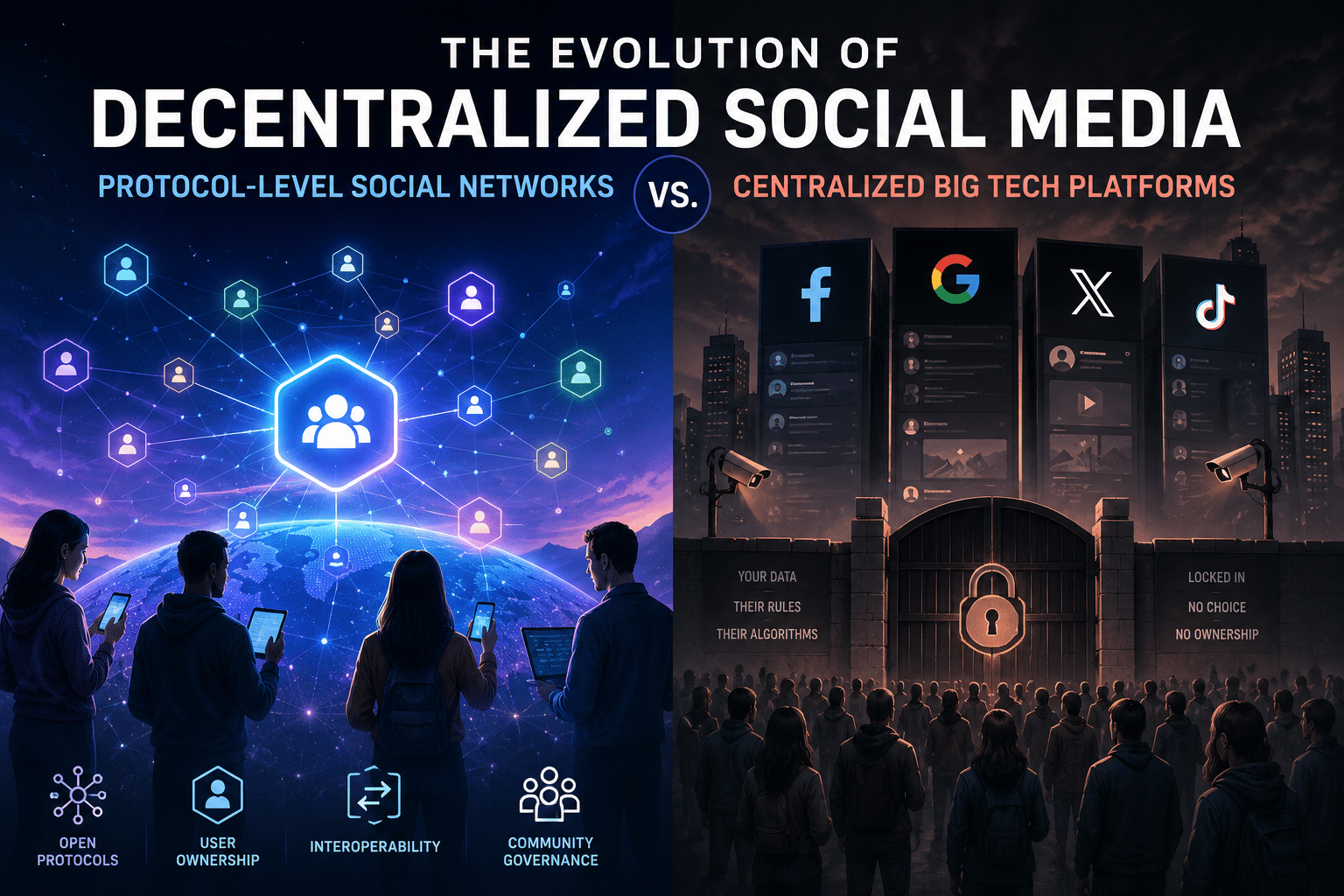
One of the more underexplored dimensions of this conversation is how decentralized technologies interact with AI-driven labor transformation. Web3 infrastructure — including blockchain-based credentialing, decentralized autonomous organizations, and tokenized incentive systems — offers potential frameworks for workers to own more of their economic output, even as traditional employment structures shift beneath them.
Imagine a world where a freelance AI trainer, a prompt engineer, or a data curator can verifiably credential their skills on-chain, get paid transparently through smart contracts, and participate in governance of the platforms they help build. That is not science fiction — it is an emerging economic model that Web3 makes possible. For a fuller picture of how these two technologies are converging, our post on Web3 and AI reshaping industries offers essential context.
Resilience in this moment is not about being anti-AI. It is about being intentional. Workers who approach AI as a collaborator rather than a competitor tend to find more opportunity than those who treat it purely as a threat. The same goes for organizations — those that view AI as a workforce-augmentation tool rather than a headcount-reduction mechanism tend to build stronger, more adaptable teams.
Here is a practical framework for building personal career resilience in an AI-driven economy:
The creator economy in particular is worth watching closely. As traditional employment models shift, more Americans are finding agency in building audiences, selling expertise directly, and participating in tokenized communities. Our coverage of the rise of the creator economy in Web3 explores how these models are maturing into serious economic alternatives.
The speed of AI capability development has accelerated dramatically in the past two years, moving from experimental tools to operational deployments inside real workplaces. Americans are not reacting to theoretical futures — many are witnessing colleagues’ roles being restructured or eliminated in real time. The Anthropic survey and Pew Research both confirm that firsthand proximity to AI displacement is a strong driver of anxiety, more so than media coverage or abstract predictions.
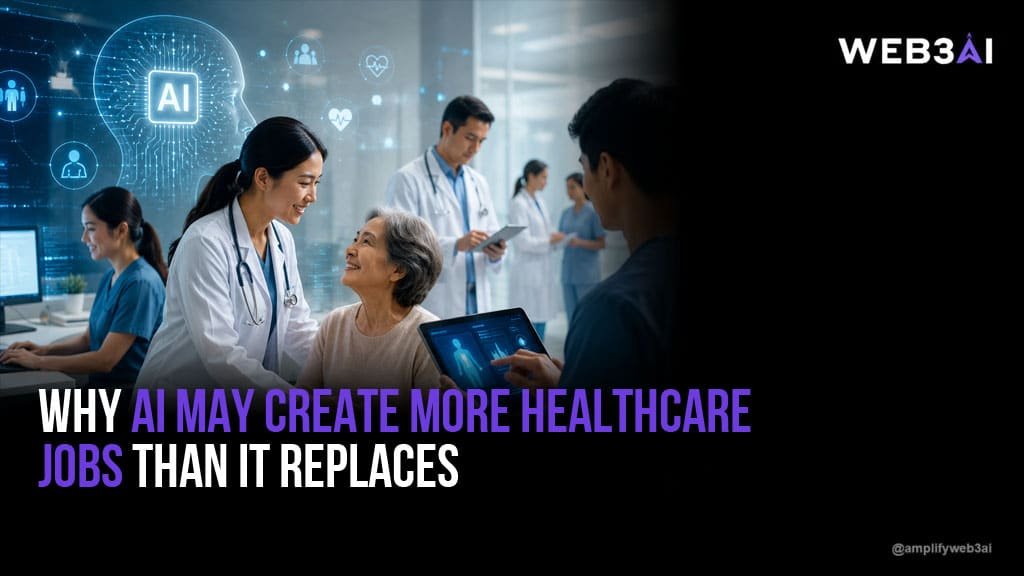
Industries with high concentrations of knowledge work, routine language tasks, and data processing are seeing the earliest disruption — including financial services, legal support, media, customer service, and certain areas of healthcare administration. Manufacturing has faced automation pressure for decades, but white-collar sectors are now feeling the shift in ways they had not previously anticipated.
The honest answer is that economists disagree, and the historical record is mixed. Previous waves of automation eliminated certain job categories while creating others that did not previously exist. The key concern with AI is the pace of change — if new roles emerge more slowly than old ones disappear, the transitional period creates real hardship for real people, regardless of long-term equilibrium outcomes.
The most durable protection is building skills that AI augments rather than replaces: judgment, creativity, interpersonal intelligence, ethical oversight, and the ability to design and direct AI systems themselves. Staying current with AI tools — not to master them but to understand what they can and cannot do — gives you a significant edge in any field. Portable reputation-building and diversified income streams also reduce your dependence on any single employer or role.
Younger workers face a genuinely different career landscape than the one that shaped their parents’ trajectories. Entry-level roles that historically served as on-ramps to professional skills — junior analyst, copywriter, customer service rep — are precisely the roles most vulnerable to early AI automation. This makes it more important than ever for new entrants to differentiate through specialized knowledge, human-facing skills, and proactive AI fluency rather than relying on traditional career ladders.
AI job loss concerns Americans across every income bracket, industry, and career stage — and the Anthropic survey makes clear that this is not irrational panic. It is a grounded response to real changes happening inside real workplaces right now. The most productive thing any of us can do with that anxiety is convert it into informed action: audit your exposure, build adaptive skills, stay curious about emerging technologies, and connect with communities that are building new economic models rather than waiting for old ones to recover.
The future of work will not look like the past — but that is not automatically bad news. Periods of technological disruption have always contained both genuine loss and genuine opportunity. The workers and organizations that come through strongest will be those who engage honestly with both sides of that equation. We are committed to covering this space with that same honesty — helping you understand not just what is changing, but what you can actually do about it.
Explore what we have built at attn.live.