## Why Energy Efficiency Workforce Development Is the Clean Energy Sector’s Overlooked Superpower
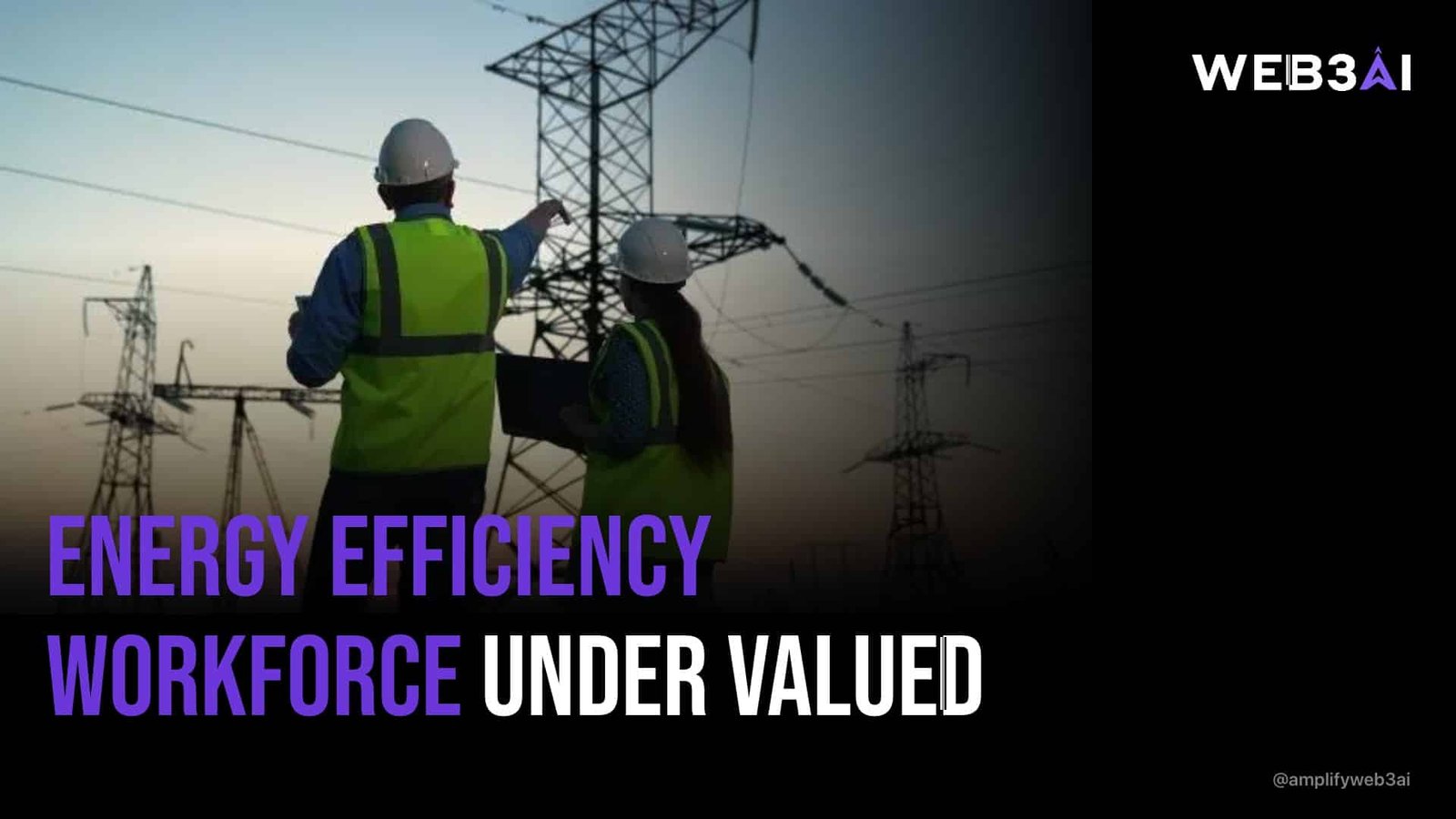
**Energy efficiency workforce development** is one of the most underfunded, underappreciated, and quietly urgent challenges facing the clean energy transition today. While headlines celebrate solar installations, EV adoption, and grid-scale batteries, a critical skills gap is widening in the background — and it threatens to slow everything down. The people who audit buildings, retrofit HVAC systems, and install smart energy controls are in short supply, and the pipeline to train them is not keeping pace.
This is not a niche concern. According to a McKinsey analysis of the energy transition workforce, millions of skilled workers will be needed globally over the next decade to support decarbonization efforts — with energy efficiency roles among the fastest-growing and hardest to fill. The irony is sharp: the technologies already exist to cut energy use dramatically, but we are running short on the human expertise to deploy them at scale.
This post breaks down why energy efficiency workforce development deserves far more attention, what the current landscape looks like, and how businesses, educators, and policymakers can begin closing the gap before it becomes a crisis.
## The Scale of the Skills Gap Nobody Is Talking About
The energy efficiency sector quietly employs millions of people across construction, engineering, building management, and technology. Yet a recent Forbes analysis highlights that this workforce is aging, underrepresented, and not being replenished fast enough. Retirements are outpacing new entrants in many trades, and training programs have not scaled to match the ambitions of climate legislation like the Inflation Reduction Act.
What makes this particularly costly is that energy efficiency is the cheapest and fastest path to reducing carbon emissions. Retrofitting a building costs far less than building new renewable generation capacity. But retrofits require skilled labor — energy auditors, insulation specialists, smart-controls technicians — and those roles remain invisible in most national conversations about green jobs.
The gap is not just about quantity. It is about quality and specialization. Many workers in adjacent trades lack certification or exposure to modern efficiency technologies like heat pumps, automated building management systems, or whole-home energy modeling software. Bridging that knowledge gap requires deliberate, funded, and coordinated workforce programs.
## What Good Energy Efficiency Workforce Development Actually Looks Like
Strong **energy efficiency workforce development** programs share a few defining characteristics. They are built in partnership with employers, so the curriculum reflects real job requirements rather than outdated textbook content. They offer stackable credentials that allow workers to advance without abandoning their current careers. And they actively recruit from communities that have historically been excluded from the energy sector — including women, people of color, and workers transitioning from fossil fuel industries.
Community colleges and technical schools are well positioned to lead here. They are already trusted in the communities where energy efficiency work actually happens, they are affordable, and they have the infrastructure to deliver hands-on training. What they often lack is direct funding and strong employer partnerships that translate training into guaranteed job placements.
Pro Tip: If your organization is planning energy efficiency upgrades, partner with a local community college or apprenticeship program before hiring. Co-designing a training pathway benefits everyone — and builds community goodwill alongside your sustainability credentials.
Apprenticeship models are also gaining traction. Registered apprenticeship programs in the building trades allow workers to earn while they learn, reducing the financial barrier that keeps many qualified candidates from entering the field. Expanding these models specifically to cover energy efficiency specializations — rather than treating efficiency as a subset of general construction — is a practical and proven lever.
## Why Diversity Is Not Optional in This Conversation
One of the most consistent findings across workforce development research is that diversity is not a soft add-on — it is a performance driver. Teams with broader backgrounds solve problems differently and more effectively. In the context of energy efficiency, this matters because the communities most affected by energy burden (low-income households, communities of color, rural areas) are often underrepresented in the very workforce being trained to help them.
Intentional recruitment strategies, paid pre-apprenticeship programs, and wraparound support services — childcare, transportation stipends, bilingual instruction — are the difference between programs that look inclusive on paper and programs that actually deliver equitable outcomes. The Forbes article specifically calls out the risk of defaulting to the existing talent pipeline, which tends to replicate the demographics of who was already in the room.
For growing businesses and platforms operating at the intersection of sustainability and technology, this is also a competitive issue. The organizations that build diverse, skilled efficiency teams early will move faster, serve broader markets, and attract better talent as the sector grows.
## The Role of Policy in Scaling the Workforce
Federal investment has created a genuine opening. The Inflation Reduction Act, the Bipartisan Infrastructure Law, and various state-level clean energy programs have directed billions toward efficiency upgrades — but funding for the work itself does not automatically fund the workforce to do it. Policymakers at every level need to treat labor as infrastructure, not an afterthought.
Pro Tip: Advocates and business leaders should explicitly request workforce development provisions in any energy efficiency legislation or grant program they engage with. Funding that arrives without a trained workforce to implement it simply sits unspent.
Prevailing wage requirements, local hiring preferences, and mandatory apprenticeship ratios embedded in public contracts have proven effective at raising job quality while building the workforce pipeline simultaneously. These are not radical ideas — they are standard practice in infrastructure sectors that have done this well before.
State workforce agencies also play an underutilized role. Many already administer job training funds that could be directed toward energy efficiency credentials but are not, simply because no one has made the case clearly enough. That case needs to be made, loudly and repeatedly, by businesses that actually need these workers.
The intersection of green jobs and emerging technologies is also worth watching closely. Our coverage of the future of green jobs and Web3 technology explores how decentralized platforms may soon play a role in credentialing and matching energy workers to opportunities.
You do not need to wait for a federal program or state initiative to begin investing in **energy efficiency workforce development**. Businesses of any size can take meaningful steps today that both address their own talent needs and contribute to broader sector health.
Audit your own hiring pipeline — Are your job descriptions requiring credentials that are unnecessarily restrictive? Could equivalent experience substitute for formal certifications?
Partner with local training providers — Community colleges, unions, and nonprofit workforce organizations are actively looking for employer partners. Your input shapes what gets taught.
Fund scholarships or paid internships — Even modest investment in early-career workers creates loyalty and helps fill your own future pipeline.
Advocate publicly — Use your business voice to push for workforce funding in state and federal energy programs. Industry associations and chambers of commerce are effective channels.
Track demographic data — You cannot improve what you do not measure. Understanding who you are hiring and retaining is the first step toward building a more equitable and effective team.
Building a sustainable digital economy requires more than clean infrastructure — it requires people trained to operate, optimize, and improve it. For a broader look at the economic stakes, see our piece on building a sustainable digital economy.
## Connecting Workforce Development to the Broader Digital Transition
There is a dimension to this challenge that does not get enough attention: energy efficiency is becoming increasingly digital. Smart meters, AI-driven building management systems, automated demand response platforms, and IoT sensors are now standard features of modern efficiency programs. Workers who cannot interpret data dashboards or troubleshoot connected devices are at a disadvantage, even in roles that were historically purely physical.
This means **energy efficiency workforce development** now has to bridge two worlds — hands-on technical trades and digital literacy. Training programs that ignore the digital dimension are already producing workers who will need re-training within five years. The good news is that this creates an opening for technology platforms and digital educators to become genuine partners in workforce development, not just observers.
Identify the digital skills gaps most relevant to your local energy efficiency market
Map those gaps to existing digital training providers — bootcamps, online certifications, community college IT programs
Design hybrid pathways that combine trade skills with digital competencies in a single credential or program
Pilot the program with a small cohort and measure outcomes before scaling
Share results publicly to build the evidence base that attracts future funding
## Frequently Asked Questions: Energy Efficiency Workforce Development
What is energy efficiency workforce development and why does it matter?
Energy efficiency workforce development refers to the systems, programs, and policies designed to train, certify, and support workers who implement energy-saving technologies and practices. It matters because the clean energy transition cannot succeed without enough skilled people to carry out the physical and technical work — from building audits to smart system installations. Without deliberate investment in this workforce, climate goals will be delayed and billions in efficiency funding will go unspent.
Which roles are most in demand within the energy efficiency workforce?
The highest-demand roles include energy auditors, building performance contractors, HVAC technicians specializing in heat pumps, insulation installers, and building automation system technicians. Increasingly, roles that combine field work with data analysis and IoT device management are also growing rapidly. Many of these positions are well-paying, accessible with two-year credentials, and resistant to offshoring.
How does energy efficiency workforce development connect to equity goals?
Energy burden — spending a disproportionate share of income on utility bills — falls hardest on low-income households and communities of color. A well-designed workforce development system recruits from these same communities, creating local jobs while delivering efficiency upgrades to neighbors. This dual benefit makes equity-centered workforce development one of the most effective policy tools available for addressing both economic and environmental justice simultaneously.
What funding sources are available for energy efficiency workforce development programs?
Funding is available through multiple channels, including the U.S. Department of Energy’s Workforce Development for Teachers and Scientists program, Workforce Innovation and Opportunity Act (WIOA) funding administered through state agencies, utility-sponsored training programs, and grants embedded in Inflation Reduction Act implementation. Many states also offer their own clean energy workforce funds, often administered through public utilities commissions or state energy offices.
How can small businesses contribute to energy efficiency workforce development?
Small businesses can contribute by partnering with local training providers to shape curricula, offering paid internships or apprenticeship slots, advocating for workforce provisions in local procurement and grant programs, and simply hiring from non-traditional pipelines rather than defaulting to candidates who already have extensive resumes. Even a single committed employer partner can meaningfully shift what a training program is able to offer its participants.
## Conclusion: The Workforce Is the Missing Piece of the Energy Efficiency Puzzle
The clean energy transition has attracted enormous investment, policy ambition, and public attention. But **energy efficiency workforce development** remains the under-resourced connective tissue that makes all of it work in practice. Without enough trained, diverse, and digitally literate workers, the best-funded efficiency programs will fall short of their potential — and the communities that need them most will wait the longest.
The opportunity is real and the window is open. Businesses, educators, policymakers, and technology platforms all have a role to play in building this workforce deliberately and equitably. The tools exist. The funding is arriving. What is still needed is the collective will to treat workforce development as the critical infrastructure it truly is.