Anouncement

Anouncement
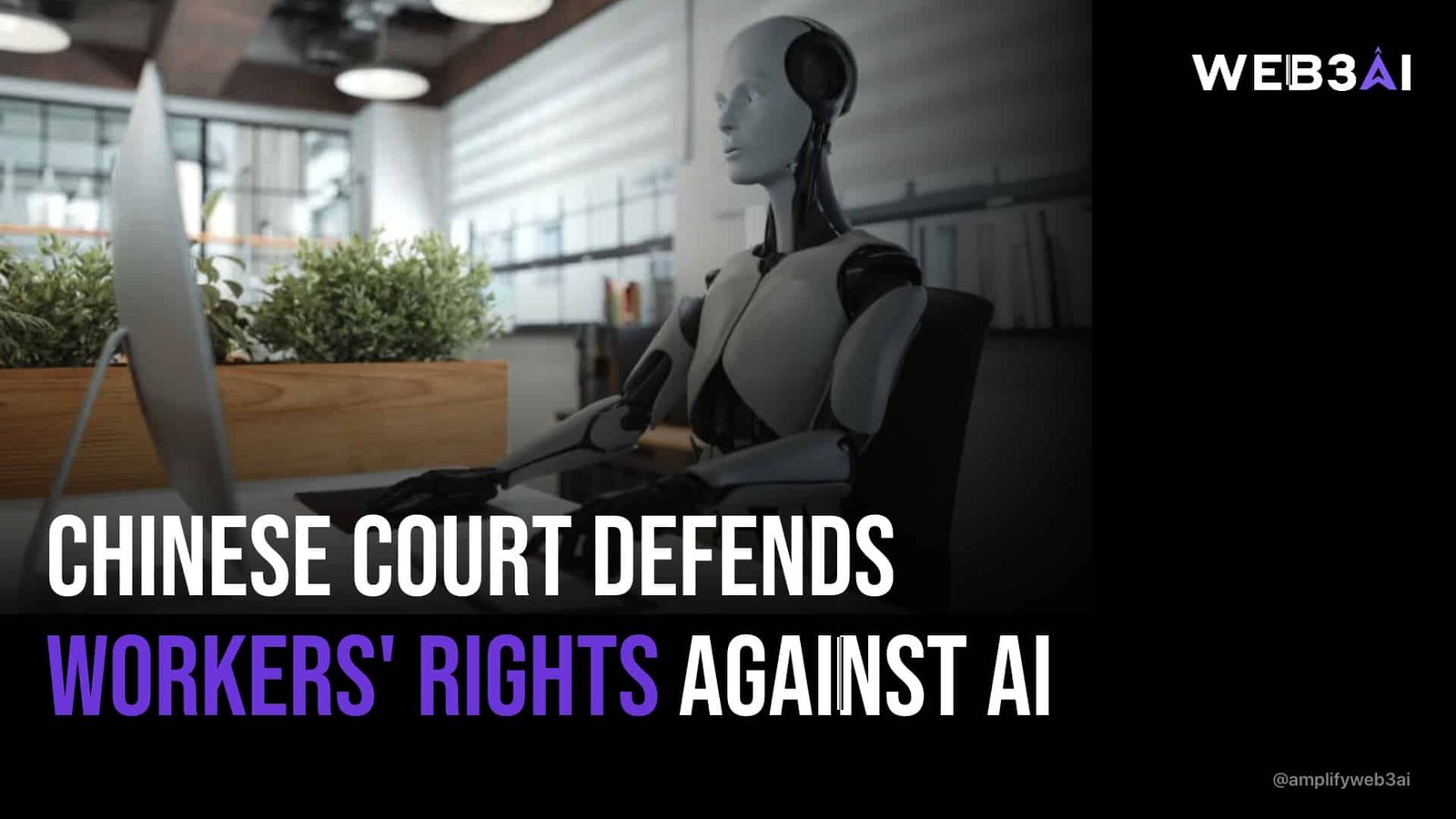

AI replacing workers and job protection collided in a Chinese courtroom this year — and the result sent shockwaves through boardrooms and labor ministries worldwide. A court in China has ruled that companies cannot legally terminate employees simply because artificial intelligence is now capable of performing their duties. The decision marks one of the first times a national judiciary has explicitly protected a worker’s livelihood against automated displacement, and it raises a question every working professional is quietly asking: Am I next, and who will protect me?
The anxiety is real and well-founded. According to research published by the McKinsey Global Institute, generative AI could automate tasks that currently account for roughly 60 to 70 percent of employee time across dozens of industries. That number is not a distant forecast — it is already reshaping hiring freezes, restructuring plans, and everyday workplace decisions right now. The pressure on workers, particularly those in administrative, creative, and analytical roles, has never been more acute.
This post breaks down exactly what the Chinese court ruled, why it matters far beyond China’s borders, and what workers, employers, and policymakers everywhere can learn from it as AI continues to accelerate through the global economy.
The case centered on a worker who was dismissed after their employer determined that an AI system could handle the role more efficiently and at a fraction of the cost. The court rejected the termination as unlawful, finding that economic efficiency alone — including the availability of AI as a replacement — does not constitute a legally valid reason to end an employment contract. In plain terms: “a machine can do it cheaper” is not a firing reason.
The ruling drew on existing Chinese labor law protections, which require employers to demonstrate legitimate cause before terminating a worker. The court extended that framework into the age of automation, signaling that AI capability does not override an employee’s contractual rights. This is a subtle but enormously important legal distinction — one that has not been tested so explicitly in most Western jurisdictions.
Judges noted that allowing AI-driven dismissals without constraint would effectively hollow out labor protections built over decades. The decision did not ban companies from adopting AI or from restructuring their workforces through legitimate means such as mutual agreement, severance, or proven business necessity. It simply closed a specific loophole: you cannot point at a chatbot and hand someone a termination letter.
Pro Tip: If your employer mentions AI efficiency as a reason for your role being “at risk,” ask specifically for the documented business case. In many jurisdictions, vague references to automation are not sufficient grounds for lawful dismissal.
China’s legal system is not a direct model for most Western democracies, but landmark rulings travel across borders as persuasive precedent and policy inspiration. Employment lawyers in the EU, the UK, and the United States are already citing this case in arguments about the limits of AI-driven restructuring. When one major economy draws a clear legal line, others are compelled to consider where their own lines sit — or whether they have drawn any at all.
The European Union’s AI Act, which came into full effect in 2025, includes provisions around high-risk AI applications in employment contexts. However, it stops short of the explicit worker protection established by this Chinese ruling. The gap between AI regulation and employment law remains significant, and workers in most countries have far fewer explicit protections against AI-driven dismissals than they might assume.
Understanding how AI is already reshaping employment is essential context here. At amplifyweb3.ai, we have covered the broader landscape in depth — read our guide on how AI is changing the future of work to understand the full scope of what organizations and individuals are navigating right now.
The Chinese ruling shines a spotlight on a pattern that has become increasingly common in large enterprises. Companies announce AI adoption, report efficiency gains, then quietly reduce headcount — framing the layoffs as natural evolution rather than displacement. The causal link between AI investment and job cuts is often deliberately obscured in earnings calls and press releases, making it harder for workers to challenge dismissals legally.
This is not hypothetical. Major technology firms, financial institutions, and media companies have all made public statements in 2024 and 2025 connecting AI tools to reduced hiring or active staff reductions. In some cases, workers have been offered the choice of retraining; in others, the notice period alone was the only concession. The absence of clear legal frameworks in most countries has made challenging these decisions extremely difficult.
The tactics vary, but the outcome is similar: roles are eliminated, responsibilities are redistributed to AI tools or the remaining human team, and the burden of proof — that AI was the actual cause — falls on the worker who can least afford a prolonged legal battle. The Chinese court’s decision disrupts this dynamic by shifting accountability back to the employer.
If you are exploring how AI automation is being deployed inside businesses today, our deep dive on AI tools for business automation walks through the specific platforms and strategies companies are adopting — and what that means for the people working within those organizations.
You do not need to wait for your government to pass landmark legislation before taking practical steps. Understanding your current employment contract, the labor laws in your jurisdiction, and your company’s stated AI strategy puts you in a much stronger position than most colleagues. Knowledge is the most immediate and accessible form of protection available to you today.
Pro Tip: Ask your HR department directly: “Does our company have a published AI ethics or workforce transition policy?” If they don’t, that gap itself is a signal worth acting on — either by advocating internally or by factoring it into your career decisions.
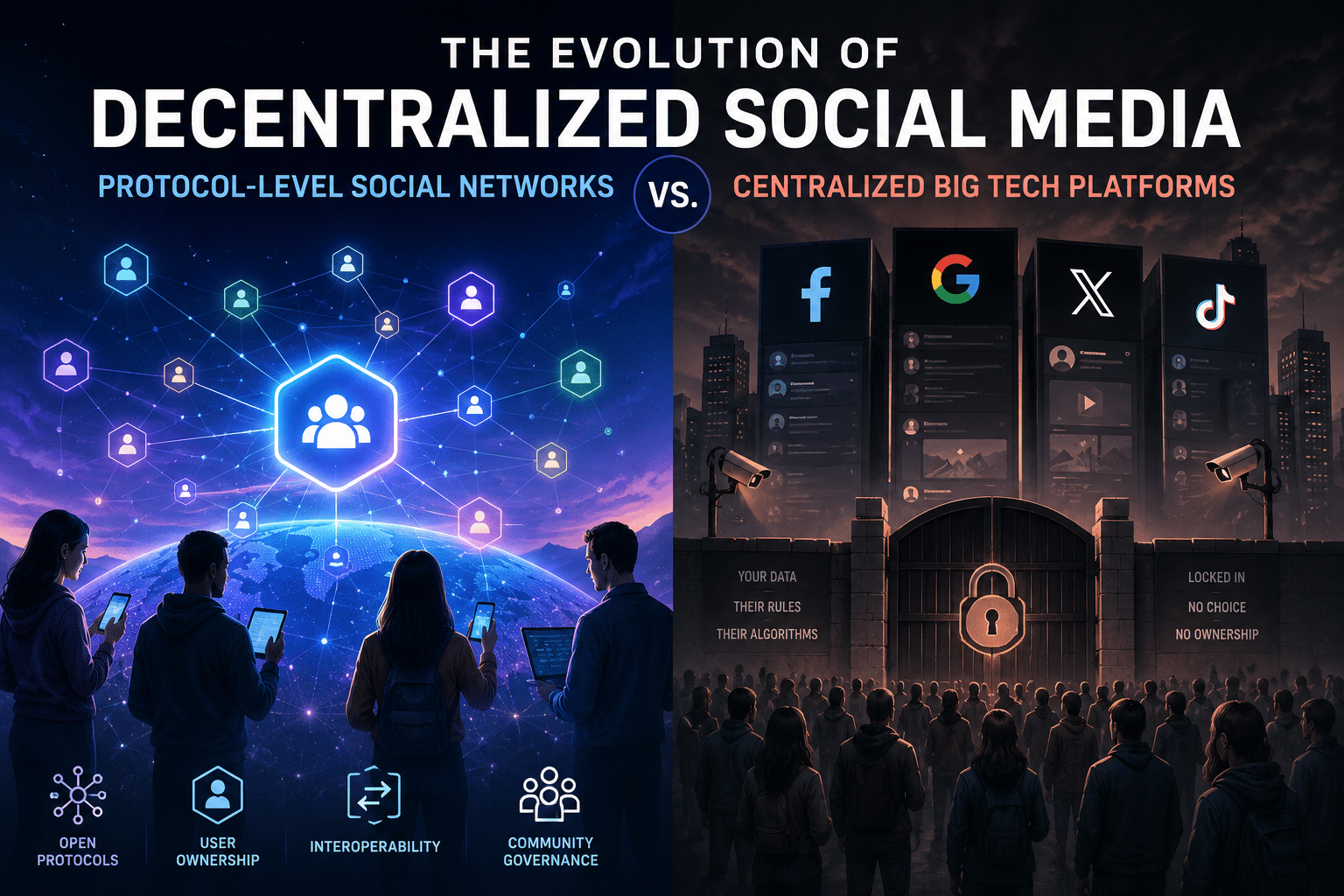
Beyond traditional legal frameworks, emerging technologies are beginning to offer workers new tools for self-protection and income diversification. Decentralized platforms, smart contracts, and tokenized work agreements are early-stage but promising mechanisms for workers to establish verifiable records of contribution, enforce payment terms without relying on a single employer, and participate in platform governance.
This is not a distant utopia — it is a direction that is actively being built. The intersection of Web3 and employment law is one of the more quietly significant conversations happening right now in labor economics and technology policy circles. For a fuller picture of how decentralized infrastructure is beginning to reshape employment models, explore our post on Web3 and the future of employment.
The Chinese court ruling and the rise of Web3 worker tools are both responses to the same underlying tension: AI is powerful, capital benefits from it immediately, and labor law typically takes years to catch up. The workers who will navigate this period most successfully are those building both legal awareness and technological literacy simultaneously.
This ruling is not anti-AI — it is pro-accountability. Businesses that adopt AI responsibly, with genuine workforce transition planning, have nothing to fear from a legal environment that demands legitimate justification for dismissals. In fact, companies with transparent AI adoption policies tend to retain talent more effectively, because workers trust they will not be discarded the moment an algorithm can approximate their output.
Policymakers face an equally urgent task. Labor law in most countries was written for an industrial economy and then updated incrementally for the knowledge economy. Neither framework anticipated an environment where a single AI system could plausibly perform the work of dozens of human employees. New legislation that explicitly addresses AI-driven dismissals — similar to what this Chinese court has established through precedent — is overdue in virtually every major economy.
The court ruled that employers cannot legally terminate workers solely on the grounds that an AI system is capable of performing their role. The decision extended existing Chinese labor law protections into the context of AI adoption, establishing that technological efficiency is not a sufficient legal justification for dismissal without further legitimate cause.
The ruling is binding only within the Chinese legal system, but it carries significant weight as persuasive precedent internationally. Employment lawyers, policymakers, and labor advocates in the EU, UK, and US are already referencing it in ongoing discussions about updating labor frameworks for the AI era. Most countries currently lack equivalent explicit protections.
In most countries, employers must demonstrate legitimate redundancy or business necessity to lawfully terminate employment. Whether AI-driven efficiency qualifies as sufficient legal grounds varies by jurisdiction and has not been definitively tested in most courts. Workers are advised to consult local employment law and seek legal advice if they believe AI was the actual reason for a dismissal framed as redundancy.
Workers can review their employment contracts for redundancy and technological change clauses, document unique contributions that AI cannot replicate, invest in complementary skills such as ethical reasoning and complex communication, and stay informed about evolving AI labor policies. Collective engagement through unions or worker advocacy groups is also increasingly effective at driving policy change.
The EU AI Act includes provisions for high-risk AI applications in employment, and the OECD has published AI employment guidelines. However, explicit legal protections equivalent to the Chinese court’s ruling remain rare. Most governments are still in early consultation phases, making this one of the most active and consequential labor policy debates of the decade.
Not significantly. The ruling does not prohibit AI adoption or even workforce restructuring — it simply requires that dismissals be grounded in legitimate legal cause beyond AI capability alone. Companies can still implement AI, reduce headcount through voluntary programs, and restructure through proper legal channels. The ruling raises the standard of justification, not the barrier to innovation itself.
AI replacing workers and job protection rights are no longer abstract concepts — they are live legal and policy battles playing out in real courtrooms, with real consequences for real people’s livelihoods. China’s ruling is a signal that the era of unchecked AI-justified dismissals may be shorter than many employers assumed. Whether your government moves quickly or slowly, the direction of travel is becoming clear: labor law will have to catch up with artificial intelligence, and the workers who understand both will be best positioned to navigate what comes next.
The conversation does not end in a courtroom. It continues in boardrooms, union halls, legislative chambers, and the open-source communities building the decentralized tools that may one day give workers structural sovereignty over their own labor. Staying informed, staying connected, and building both technical and legal literacy are the most actionable things you can do right now. Explore what we have built at attn.live.