Anouncement

Anouncement
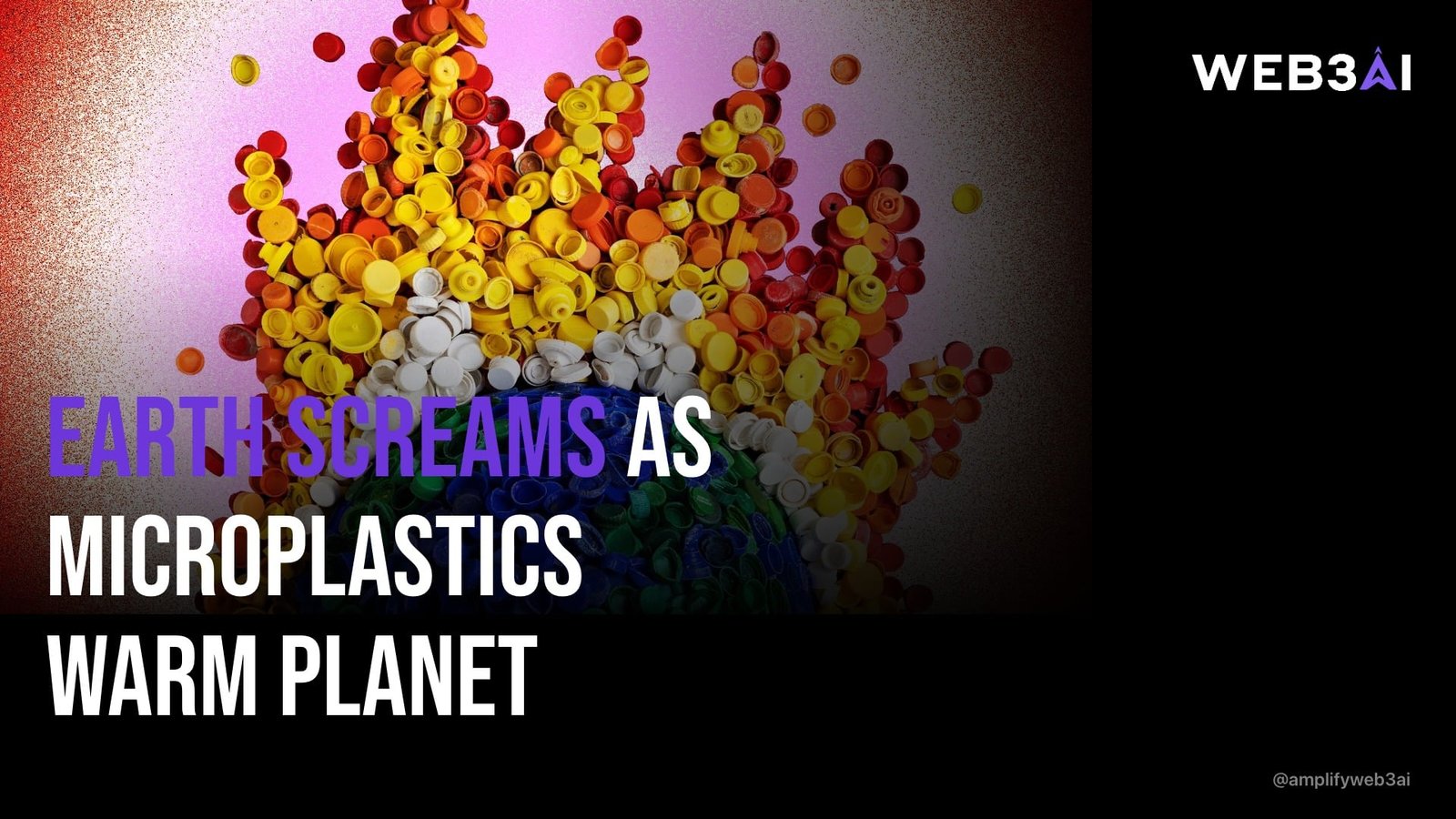

Microplastics and global warming have long been treated as two separate environmental crises — but new scientific research is forcing us to see them as deeply intertwined. A growing body of evidence now shows that the tiny plastic particles saturating our oceans, soil, and air are not just a pollution problem. They are actively warming our planet. If you thought plastic waste was already a troubling enough story, this new chapter makes it considerably more urgent.
Scientists studying the behavior of microplastics in the atmosphere have found that these particles absorb solar radiation and re-emit it as heat — functioning, in a small but measurable way, like greenhouse gases. According to reporting from Reuters Science & Environment, researchers are increasingly alarmed by the compounding effect microplastics may have on climate models that have not yet fully accounted for them. The implications are significant: our existing climate projections may be underestimating how fast warming is happening.
In this post, we break down what the science actually says, why the connection between microplastics and global warming matters for technology and policy, and how emerging tools — including AI and Web3 — are being brought to bear on the problem.
Microplastics are plastic fragments smaller than five millimeters — some so tiny they are measured in micrometers, invisible to the naked eye. They originate from the breakdown of larger plastic items, from synthetic textiles, from industrial processes, and from personal care products containing plastic microbeads. Once released, they move through water systems, rise into the atmosphere, and settle into soil and snow at the most remote corners of Earth.
Researchers have found microplastics at the summit of Mount Everest, in the deepest ocean trenches, and in human blood and lung tissue. That ubiquity is what makes their newly discovered relationship with climate change so alarming. These particles are not contained in one ecosystem or region — they are a genuinely global presence, meaning their atmospheric effects, however small per particle, accumulate at planetary scale.
The production of plastic itself is also a major source of carbon emissions. Manufacturing plastic relies heavily on fossil fuels, and global plastic output continues to grow year over year. So even before we account for the atmospheric heating effect of the particles themselves, plastic is already a climate problem rooted in the energy system.
Pro Tip: When reading climate research, look for whether microplastics have been included in the atmospheric models used. Many older studies have not yet integrated plastic particle data, which means their warming projections may be conservative.
The mechanism researchers have identified is striking in its simplicity. Microplastic particles — particularly dark-colored ones — absorb incoming solar radiation. Instead of that energy reflecting back into space, it is retained in the lower atmosphere as heat. This is a radiative forcing effect: the same basic physics that makes greenhouse gases warm the planet, now observed in plastic debris.
Beyond direct heating, microplastics also interact with cloud formation. Some studies suggest that plastic particles act as cloud condensation nuclei, altering how clouds form and how much sunlight they reflect. Since clouds play a crucial role in regulating Earth’s temperature, any disruption to cloud formation has downstream consequences for weather patterns and regional climates.
Additionally, microplastics in the ocean affect the marine organisms — particularly phytoplankton — that absorb enormous quantities of CO₂. When plastic pollution disrupts phytoplankton populations, it undermines one of Earth’s primary carbon sinks. This is not a theoretical risk: ocean plastic pollution is already measurable in its impact on marine microbial ecosystems. The link between microplastics and global warming, in this sense, is both direct and indirect.
For a deeper look at how artificial intelligence is helping scientists model these complex environmental interactions, our post on how AI is transforming climate action explores the computational tools now available to climate researchers.
For decades, the climate crisis has been framed primarily around carbon dioxide, methane, and nitrous oxide. Microplastics were discussed in parallel — a biodiversity and health issue, serious but separate. The new research demands that we revise that framing. Microplastics are not merely a symptom of our throwaway culture; they are an active contributor to the atmospheric conditions driving global warming.
This matters enormously for policy. International climate agreements, carbon budgets, and emissions reduction targets have been built on models that largely exclude microplastic radiative effects. If those models are incomplete, so are our targets. Governments and international bodies will need to start treating plastic pollution as a climate issue — not just an environmental one — and that has significant implications for regulation, industry, and investment.
It also changes the calculation for consumers and businesses. Reducing plastic use is no longer just about protecting sea turtles or keeping oceans clean. It is a direct climate mitigation action, measurable in its effect on atmospheric warming. That reframing could unlock new public and political will to tackle plastic production at its source.
Pro Tip: If your organization tracks Scope 3 emissions — indirect emissions across your supply chain — consider whether plastic packaging and single-use materials have been included in your carbon accounting. They may represent a larger climate liability than you realize.
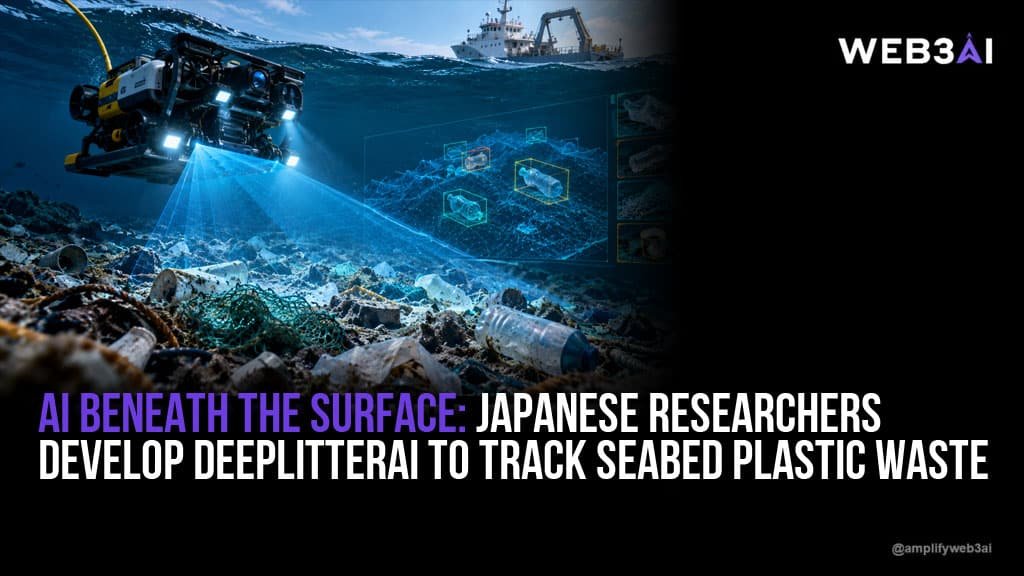
Technology is beginning to catch up with the scale of the microplastics problem. AI systems are now being trained to detect microplastic concentrations in water and soil using satellite imagery and sensor data, making it possible to monitor pollution at scales that manual sampling could never achieve. Machine learning models are also being used to predict how microplastics move through ocean currents and atmospheric systems — feeding directly into improved climate models.
Blockchain and Web3 technologies are entering the picture too, primarily around transparency and accountability in plastic supply chains. Decentralized tracking systems can follow materials from production to disposal, making it harder for plastic waste to disappear into unregulated channels. Our piece on Web3 and sustainability covers how distributed ledger technology is being applied to environmental accountability in meaningful ways.
There is also growing investment in materials science — developing biodegradable alternatives to conventional plastics that break down without releasing persistent microparticles. Combining these materials innovations with AI-driven monitoring and Web3-powered accountability creates a technology stack that could meaningfully reduce the flow of microplastics into the environment over the next decade.
Understanding the link between microplastics and global warming is important — but the knowledge only matters if it drives action. The good news is that meaningful steps exist at every level, from individual habit change to enterprise-level policy shifts.
For organizations, the opportunity is even greater. Companies that proactively reduce plastic in their operations and supply chains are getting ahead of incoming regulation, reducing climate liability, and building the kind of brand trust that increasingly drives consumer choice. The connection between microplastics and global warming gives sustainability teams a powerful new argument for faster internal change.
For more on how green technology is reshaping business strategy, our overview of the future of green technology offers a compelling look at where investment and innovation are heading.
Microplastics absorb incoming solar radiation and re-emit it as heat in the lower atmosphere, creating a radiative forcing effect similar — in mechanism if not yet in scale — to greenhouse gases. They also disrupt cloud formation and damage marine phytoplankton, which are critical carbon sinks. Researchers are still quantifying the total climate impact, but the directional evidence is clear: microplastics contribute to warming.
Most mainstream climate models have not yet fully integrated microplastic atmospheric effects. This is an active area of research, and scientists are working to build more accurate datasets. It means current warming projections may be underestimating the total radiative forcing at work — a sobering thought given how serious existing projections already are.
On a per-particle basis, the warming effect of a microplastic particle is far smaller than that of a CO₂ molecule. However, the sheer quantity of microplastics now present in the atmosphere and oceans — and the rate at which that quantity is growing — means the cumulative effect is increasingly meaningful. Scientists caution that it would be a mistake to dismiss it as negligible.
Yes, in multiple ways. Reducing plastic production cuts fossil fuel-derived emissions from manufacturing. Reducing the volume of plastic in the environment limits the formation and dispersal of atmospheric microplastics. Protecting marine ecosystems from plastic pollution preserves the ocean’s ability to absorb CO₂. Every step toward a less plastic-dependent economy has climate co-benefits.
AI-powered environmental monitoring, blockchain-based supply chain transparency, advanced filtration systems, and next-generation biodegradable materials are all showing real promise. The most effective solutions will likely combine monitoring (knowing where plastics are), accountability (tracking who produces them), and materials innovation (creating alternatives that do not persist in the environment). No single technology is sufficient — an integrated approach is needed.
The link between microplastics and global warming is not a future concern — it is happening now, in measurable ways, across every ecosystem on Earth. What was once considered a separate pollution challenge is revealing itself to be a climate challenge too, one that our current models, policies, and habits have not yet fully accounted for. That gap is where the urgency lives.
The encouraging reality is that the tools to respond are improving rapidly. AI can help us see and model the problem at scale. Web3 can help us hold producers accountable. Materials science can help us design our way out of plastic dependency. And each of us, in our daily choices and our advocacy, can contribute to a world that produces less plastic and therefore warms a little less. The science has connected the dots — now it is our turn to act on what we know.
Explore what we have built at attn.live.