Anouncement

Anouncement
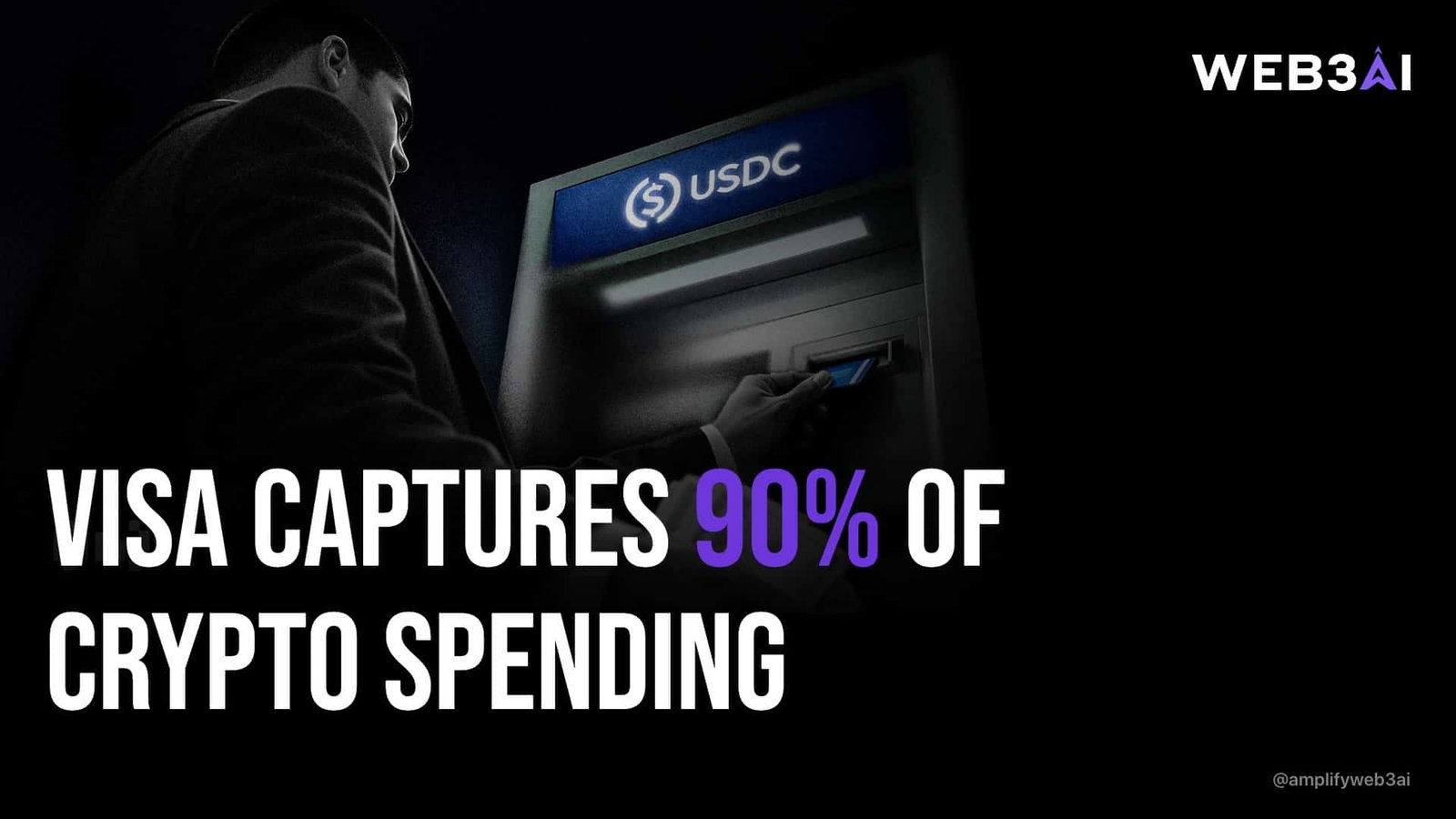

The crypto card spending surge is no longer a footnote in Web3 news — it is becoming one of the clearest signals that digital assets are breaking into everyday life. According to recent data, crypto-linked card spending has jumped by an astonishing 500% in a short period, showing that millions of people are not just holding crypto — they are actively using it at the checkout counter, the coffee shop, and online stores everywhere.
This shift did not happen overnight. Years of infrastructure-building, regulatory clarification, and consumer education have slowly lowered the barriers. A Forbes analysis on the rise of crypto payments found that consumer confidence in digital asset spending tools grew significantly through 2024, driven by improved user experience and greater merchant acceptance. The friction that once made crypto payments feel cumbersome has been quietly engineered away.
If you have been wondering whether crypto is “actually useful” in daily life, this post answers that with real data and context. We will walk through what is driving the surge, which cards are leading the charge, what challenges remain, and what this all means for the broader Web3 economy.
A 500% increase in anything sounds almost too dramatic to believe — but the mechanics behind the crypto card spending surge are logical when you break them down. First, the number of crypto card products available to consumers has multiplied. Platforms like Crypto.com, Coinbase, and Bybit have expanded their Visa and Mastercard-linked offerings into more regions, making it practical for users to spend directly from their crypto balances without any manual conversion step.
Second, the reward structures on these cards are genuinely compelling. Many crypto debit and credit cards offer cashback in Bitcoin, Ethereum, or platform tokens — sometimes as high as 5% to 8% depending on account tier. For crypto-native users who were already accumulating digital assets, these rewards function like a bonus savings mechanism layered on top of everyday spending.
Third, institutional support has grown. When major banks and payment processors integrate crypto rails into their existing networks, everyday consumers benefit without needing to understand the underlying technology. The card just works — and that simplicity is exactly what drives mass adoption.
Pro Tip: If you are evaluating a crypto card, compare the reward structure across your most common spending categories — some cards offer higher rates for travel, others for groceries or streaming services.
The demographic profile of crypto card spenders is broader than you might expect. Early adopters were overwhelmingly tech-savvy young men in North America and Europe. But the 2025 data tells a different story. Spending growth is now strong across Southeast Asia, Latin America, and parts of Africa — regions where traditional banking infrastructure is less reliable and crypto offers a genuine functional advantage over legacy systems.
In many emerging markets, a crypto card is not a novelty — it is a practical solution. It allows users to hold value in a stable digital asset, spend locally without visiting a bank branch, and receive cross-border payments more efficiently than traditional wire transfers. For these users, the crypto card spending surge represents financial inclusion in action, not just a tech trend.
For a deeper look at how blockchain and AI are working together to power next-generation payment experiences, explore this post on how AI and blockchain are transforming payments — it provides excellent context for the infrastructure driving these gains.
Not all crypto cards are built the same. The leaders in 2025 share a few common traits: deep liquidity pools so spending never stalls, broad Visa or Mastercard acceptance, real-time conversion at point of sale, and transparent fee structures. Here is a snapshot of what the top cards are offering right now:
Each of these products reflects a different philosophy about how crypto spending should work. The self-custody model (like Gnosis Pay) appeals to true decentralization advocates. The exchange-linked models (like Coinbase and Bybit) prioritize convenience. Both approaches are growing — suggesting there is no single winning formula, just a widening ecosystem.
One often-overlooked driver of the crypto card spending surge is the growth of real-world asset (RWA) tokenization. When physical assets — real estate, commodities, treasury bonds — are tokenized on-chain, they become liquid and programmable. That liquidity can flow into spending instruments, including crypto cards, in ways that were simply not possible five years ago.
Imagine holding a tokenized position in a U.S. Treasury bond inside your crypto wallet and using a card linked to that wallet to pay for your groceries. The value is stable, the yield is real, and the spending experience is indistinguishable from using any other debit card. This is not science fiction — it is the direction the market is moving in. For a comprehensive breakdown of this emerging landscape, read our post on the rise of real-world asset tokenization.
Pro Tip: Keep an eye on stablecoin-backed crypto cards. As regulatory frameworks around stablecoins solidify in 2025, these products are likely to see the fastest merchant adoption globally.
Progress this fast always comes with friction points. The crypto card spending surge faces several structural challenges that the industry must address to sustain its trajectory. Tax reporting is the most immediate pain for users. In most jurisdictions, spending crypto — even through a card — is a taxable event. Every coffee you buy with Bitcoin technically triggers a capital gains calculation. That administrative burden discourages casual users from spending crypto regularly.
Regulatory uncertainty is another headwind. While some countries have created clear frameworks for crypto payments, others have not. A card that works seamlessly in Portugal might face restrictions in another market. Issuers must navigate a complex patchwork of compliance rules, and that complexity translates into slower rollouts and geographic gaps in availability.
Finally, there is the volatility problem. Most crypto card users convert to fiat at point of sale, which removes the volatility risk — but not everyone understands this. Public perception that crypto spending means losing money on price swings still deters many potential users from trying these products in the first place.
Every time someone swipes a crypto card at a merchant, they are generating a data point that the broader ecosystem can learn from. Transaction volume, spending categories, geographic distribution, and reward redemption patterns — all of this feeds back into product development and shapes the next generation of crypto payment tools. The surge in spending is, in this sense, also a surge in real-world feedback that makes the entire system smarter.
For Web3 builders and platforms, this moment is significant. It validates the long-held thesis that crypto can be useful beyond speculation. It also creates new surface areas for innovation: embedded finance, crypto-powered loyalty programs, and cross-border payroll solutions are all natural extensions of the infrastructure being built right now.
To understand the broader adoption trends shaping these developments, our post on Web3 adoption trends you need to know offers a valuable strategic overview of where the industry is heading and why payment adoption is one of its most important growth vectors.
The crypto card spending surge is being driven by a combination of factors: expanded card availability in new markets, attractive cashback rewards paid in digital assets, improved user experience, and growing merchant acceptance via Visa and Mastercard networks. Regulatory clarity in key markets like the EU and parts of Asia has also made it easier for issuers to launch and scale their products.
In most countries, yes. When you spend cryptocurrency — even through a card that converts it at point of sale — it is typically treated as a disposal of an asset, which may trigger a capital gains tax liability. The gain or loss is calculated based on the difference between your purchase price and the value at the time of spending. Always consult a local tax professional or use dedicated crypto tax software to track these transactions accurately.
The best card depends on your priorities. If rewards are your focus, the Crypto.com Visa or Coinbase Card offer strong cashback programs. If decentralization matters most, Gnosis Pay allows you to spend directly from a self-custody wallet. If you spend across multiple currencies and countries, Wirex offers competitive multi-currency support. Compare annual fees, conversion charges, and reward tiers before committing.
The crypto card spending surge is one of the clearest indicators of mainstream adoption because it reflects real-world utility rather than speculation. When people use crypto to buy everyday goods and services, it demonstrates that digital assets are functioning as a medium of exchange — not just a store of value or a trading instrument. This behavioral shift is one of the most important milestones in the maturation of the crypto economy.
Most major crypto cards are issued in partnership with Visa or Mastercard and carry the same purchase protections as traditional debit cards. Funds held on exchange-linked cards may also be covered by exchange-level insurance or FDIC pass-through protection in some jurisdictions. To maximize safety, enable spending limits, use two-factor authentication, and avoid storing large balances on any card-linked account — treat it like a spending wallet, not a savings vault.
Stablecoins are increasingly important to the crypto card spending trend because they eliminate the volatility problem. A card that lets you spend USDC or USDT offers the convenience of crypto infrastructure with the price stability of a dollar-pegged asset. As stablecoin regulations become clearer in 2025, expect more card issuers to integrate stablecoin-first spending options, making crypto cards accessible to a much wider audience who were previously put off by price swings.
The crypto card spending surge is not a blip — it is a structural shift in how people interact with their digital wealth. A 500% increase in card spending signals that the infrastructure works, the demand is real, and the barriers that once made crypto payments impractical have been substantially reduced. What we are seeing in 2025 is the beginning of a long arc toward digital assets becoming a normal part of everyday financial life.
For Web3 builders, investors, and everyday users alike, this trend carries a clear message: the next chapter of crypto adoption will be written at the point of sale, not just on the trading screen. The most important innovations ahead will make crypto spending simpler, safer, and more rewarding — and the platforms that prioritize real-world usability will define the next era of the industry.
The tools, platforms, and insights that help you navigate this shift are already being built. Explore what we have built at attn.live.