## When the Boss Says AI Will Replace His Own Employees
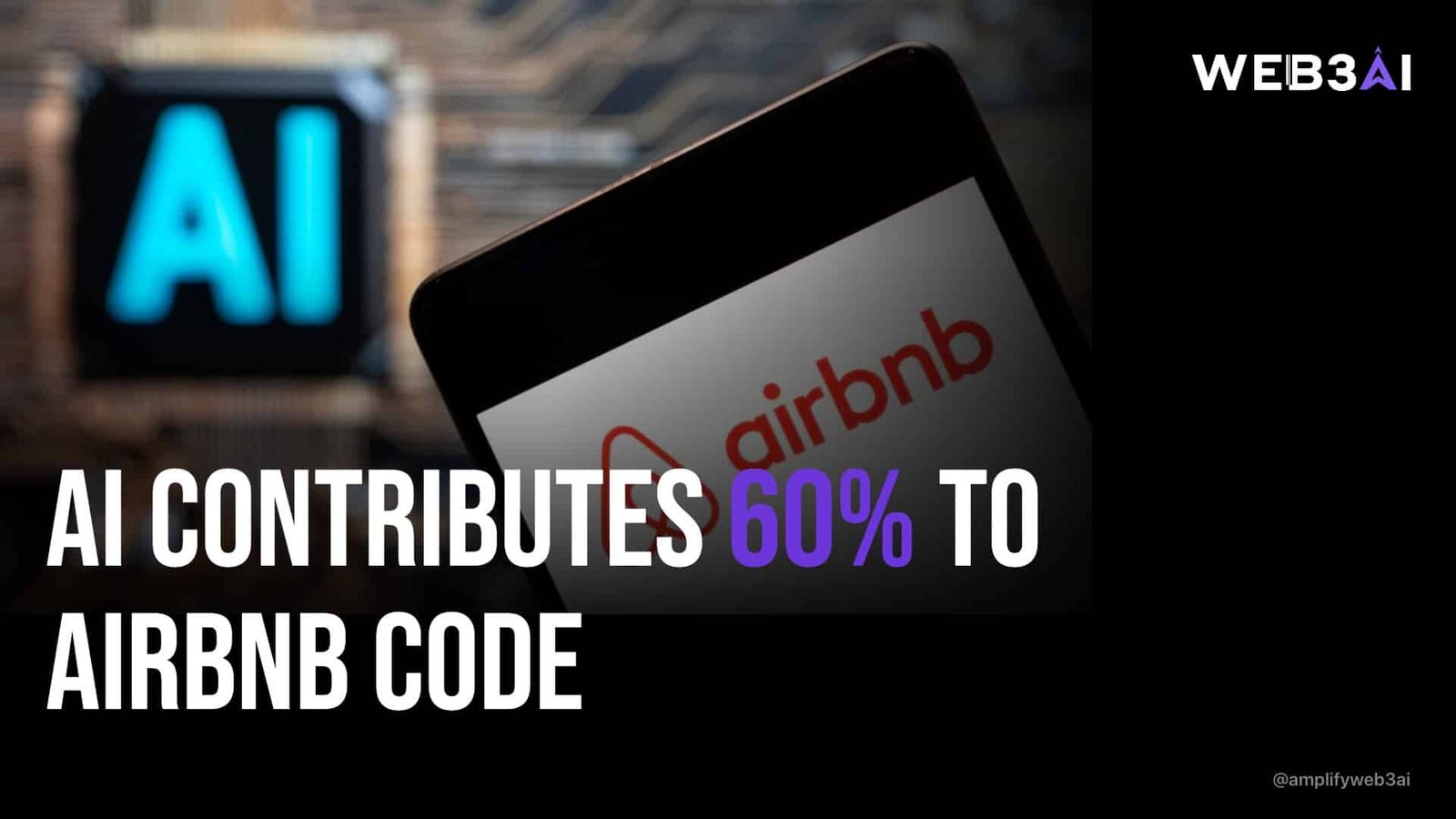
AI agents replacing human workers is no longer a fringe prediction whispered at tech conferences — it is now a frank admission coming from the CEO of one of the world’s most recognised consumer platforms. Brian Chesky, co-founder and CEO of Airbnb, made headlines in mid-2025 when he stated plainly that AI agents would replace many of the human roles currently employed at his company. For anyone watching the AI conversation from a safe distance, that statement is a signal worth taking seriously.
Chesky is not a sensationalist. He rebuilt Airbnb from near-collapse during the pandemic through disciplined, focused leadership. When he speaks about the future of his workforce, he is drawing on hard operational data, not hype. According to a widely cited analysis by BBC News on AI and job displacement, AI could automate tasks currently performed by hundreds of millions of workers globally — and what Chesky is describing fits precisely within that trajectory.
This post breaks down exactly what Chesky said, why it matters, and what individuals and businesses should understand about the era of AI agents replacing human workers before that transition accelerates further.
## What Brian Chesky Actually Said About AI Agents
Chesky did not hedge. In a public interview, he described AI agents as software that could perform end-to-end tasks — not just assist humans, but fully replace the need for a human in certain roles. He specifically mentioned customer service as one of the first functions where this replacement is already underway at Airbnb. His framing was honest: the company would need fewer people for certain categories of work as AI capabilities matured.
What made his comments particularly striking was the lack of corporate softening. Most executives pair AI announcements with reassurances about “augmentation” and “upskilling.” Chesky skipped that language almost entirely. He acknowledged the disruption as real and imminent rather than abstract and distant. That candour changes the weight of what he said — this is not a theoretical roadmap, it is a current operational reality at Airbnb.
## AI Agents Replacing Human Workers: How This Technology Actually Works
To understand the significance of Chesky’s statement, it helps to understand what an AI agent actually is. Unlike a basic chatbot that responds to single prompts, an AI agent can plan a sequence of actions, use tools, browse the internet, write code, send emails, and complete multi-step tasks autonomously. The leap from “AI that answers questions” to “AI that does jobs” is the leap Chesky is describing.
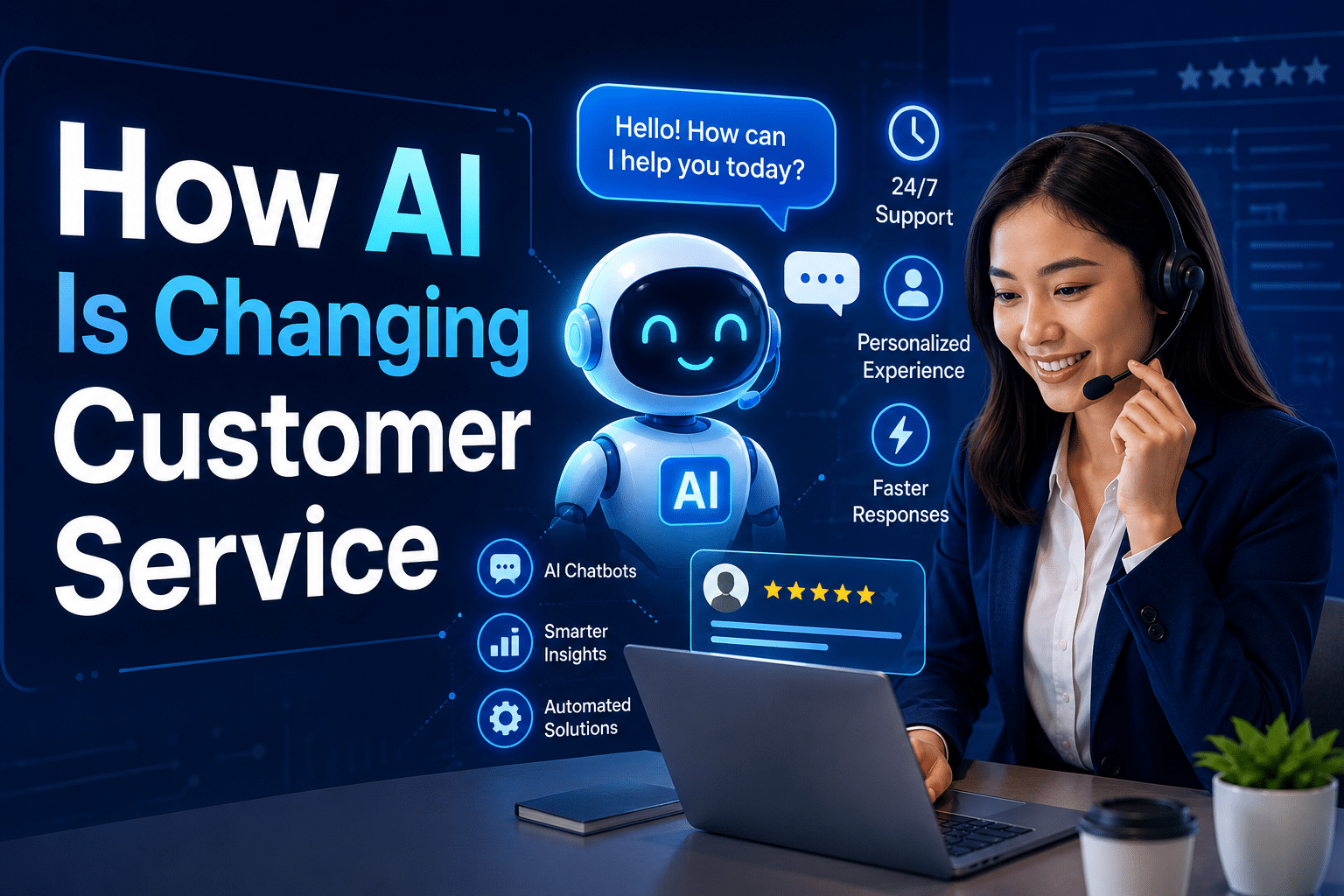
For a platform like Airbnb, this means an AI agent could handle an entire customer complaint from intake to resolution — checking booking records, communicating with the guest, processing a refund, and filing an internal report — without a single human touching the ticket. That is not a future capability. Versions of this workflow are already in deployment across multiple enterprise platforms today.
Pro Tip: When evaluating whether your role is at risk from AI agents, ask yourself: “Could this task be broken into a sequence of logical steps a system could follow?” If yes, it is worth developing skills that require human judgment, creativity, or relationship-building — the areas agents struggle most.
## The Industries Most Exposed to AI Agent Disruption
Customer service, as Chesky noted, is the most immediate front line. But the exposure extends well beyond hospitality. Knowledge workers in legal research, financial analysis, software testing, content moderation, and data entry are all operating in categories where AI agents are demonstrating strong and improving performance. This is not about robots on factory floors — it is about software handling white-collar workflows.
The pattern tends to follow a predictable arc: AI agents first assist humans at the edge of tasks, then handle entire task categories, then reshape headcount decisions at the executive level. Airbnb appears to be somewhere in the middle of that arc right now. Other consumer-facing tech companies are not far behind, and enterprise software providers are racing to embed agentic capabilities into every product layer.
Autonomous AI systems are already reshaping how companies structure their teams. Read more: amplifyweb3.ai Blog
## What Companies Are Getting Wrong About This Transition
Many organisations are treating AI agents as a cost-cutting tool first and a capability question second. That inversion creates problems. When you deploy an agent purely to reduce headcount without redesigning the workflow it operates within, you often get an agent that is fast but brittle — it handles the easy 80% of cases and catastrophically fails on the complex 20%. Chesky’s own career at Airbnb is a lesson in why quality experience matters more than efficiency metrics alone.
The smarter frame is to ask: what does this agent make possible that was previously impossible? AI agents can handle volume at a scale no human team could match. A customer service operation that previously managed 10,000 tickets per day with 50 agents might now handle 500,000 interactions — not by firing 50 people but by expanding the business’s reach without proportional headcount growth. That is the genuine opportunity. The displacement is a side effect, not the strategy.
Pro Tip: Businesses deploying AI agents should maintain a human review layer for edge cases during the first six to twelve months of deployment. Agents trained on historical data will encounter novel situations your training set did not anticipate — human oversight catches those failures before they damage customer trust.
## How Workers Can Respond to AI Agents Replacing Human Roles
The instinct when hearing news like Chesky’s is to panic or dismiss. Neither response is useful. The more productive question is: what are AI agents genuinely bad at, and how do I build depth in those areas? Current agents excel at structured, repetitive, information-retrieval tasks. They struggle with novel ethical judgment, deep relationship management, creative problem-solving under ambiguity, and tasks that require reading unspoken human context.
Workers who invest in those capabilities now — and who understand how to work *with* AI agents rather than in competition with them — are positioning themselves well. Learning to prompt, direct, and audit AI agents is already a marketable skill. Being the person who manages and improves the agent, rather than the person the agent replaces, is a viable and growing career path.
New categories of human-AI collaboration are emerging faster than displacement in many sectors. Read more: amplifyweb3.ai Blog
## The Policy and Ethics Dimension No One Is Ready For
Chesky’s candour also exposes a gap: most regulatory and social safety frameworks were not designed for a world where AI agents replacing human workers happens at the speed and scale now technically possible. Labour law, unemployment insurance, retraining programmes, and corporate governance models all evolved in a context where automation was slow and sector-specific. The current wave is fast and broadly horizontal.
Policymakers in the EU are beginning to address this through the AI Act, which includes provisions around automated decision-making in employment contexts. In the US, the conversation is less structured. What is clear is that the policy response is lagging behind the deployment reality — and that gap creates risk for both workers and the companies moving aggressively on AI adoption without adequate governance frameworks.
## Frequently Asked Questions: AI Agents Replacing Human Workers
What did Brian Chesky say about AI agents replacing human workers?
Airbnb CEO Brian Chesky stated publicly in 2025 that AI agents would replace many human roles at his company, particularly in customer service. Unlike most executives who soften this message with augmentation language, Chesky was direct about the displacement being real and already underway at Airbnb.
Are AI agents replacing human workers across all industries?
The impact is uneven. Industries with high volumes of structured, repetitive knowledge work — customer service, data processing, legal research, financial analysis — face the most immediate exposure. Roles requiring deep human judgment, emotional intelligence, and creative problem-solving are more resilient in the near term.
How is an AI agent different from a chatbot?
A chatbot responds to a single prompt with a single reply. An AI agent can plan and execute a sequence of multi-step actions autonomously — using tools, browsing data sources, making decisions, and completing full workflows without human intervention at each step. The difference is comparable to a calculator versus a junior analyst.
Can AI agents replacing human workers be slowed or regulated?
Regulation is possible and already emerging in jurisdictions like the EU through the AI Act. However, the pace of regulation consistently lags the pace of deployment. Companies adopting AI agents should not wait for regulatory guidance — building internal governance frameworks now is both ethically sound and strategically protective.
What skills protect workers from AI agents replacing their roles?
The most defensible skills are those that require novel judgment, relationship trust, ethical reasoning, and the ability to manage and direct AI systems themselves. Workers who learn to prompt, audit, and improve AI agents — rather than competing with them on task execution — are the most resilient to displacement in the current cycle.
Is Airbnb the only major company replacing workers with AI agents?
No. Airbnb is among the most candid, but widespread enterprise adoption of AI agents is underway at companies including Salesforce, Klarna, Microsoft, and dozens of others. Klarna notably disclosed in 2024 that its AI assistant was handling the work of 700 human agents. This is a broad industry shift, not an isolated case.
## Conclusion: The Honest Conversation the Industry Needed
AI agents replacing human workers is no longer a prediction — it is a present-tense business decision being made at the highest levels of major consumer platforms. Brian Chesky’s candour at Airbnb is, in a strange way, a service to everyone watching: it removes the comfortable ambiguity that many organisations have been hiding behind. The question for workers, leaders, and policymakers is not whether this transition is happening but how to navigate it with clarity, fairness, and foresight.
The organisations that will come out strongest are those that combine genuine AI capability with genuine human investment — using agents to expand what is possible, not simply to shrink payroll. And the individuals who will thrive are those who get curious about these systems now, learn how they work, and position themselves as the humans who make AI agents more effective rather than the humans agents make redundant.