Anouncement

Anouncement
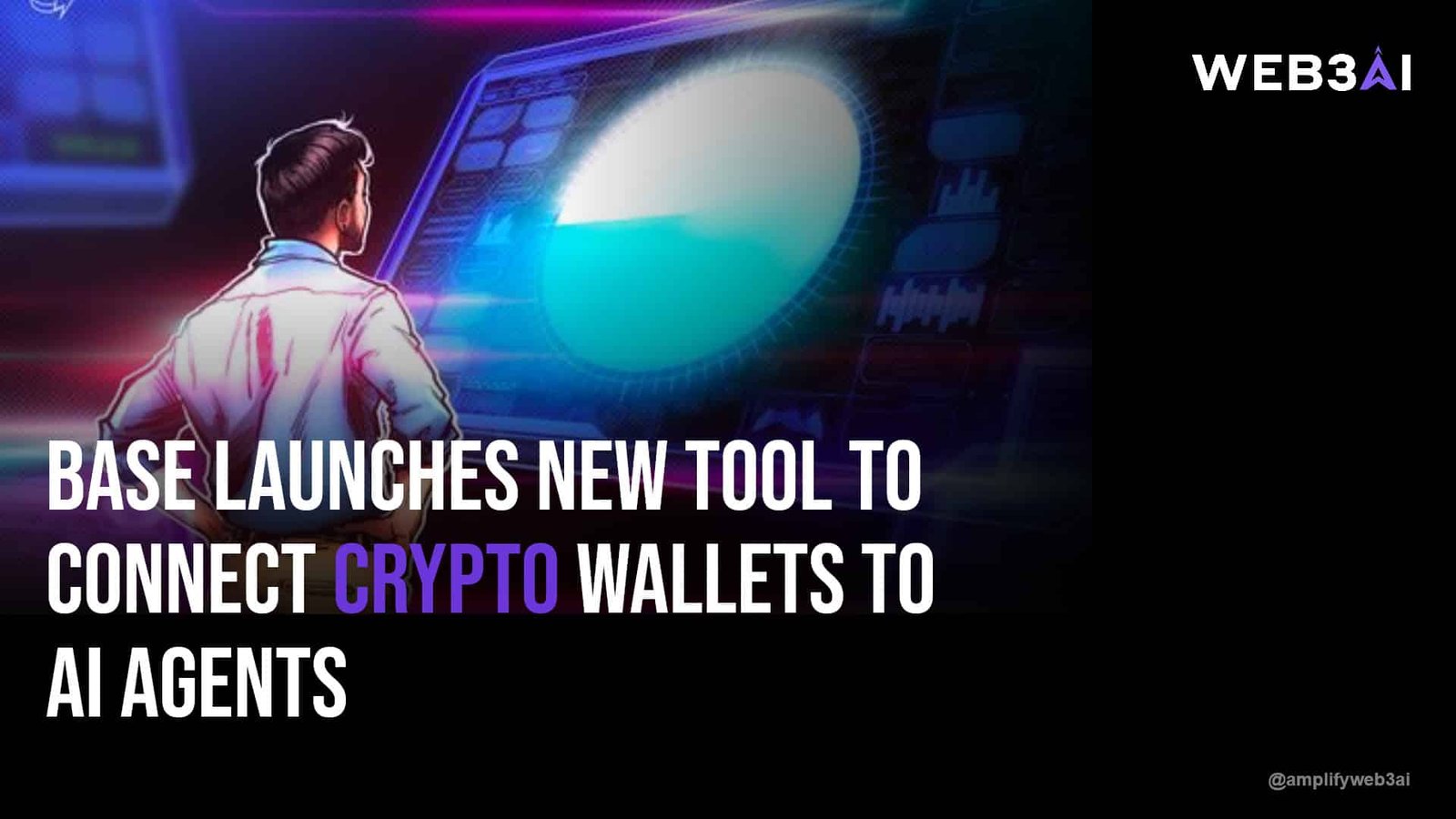

AI agents crypto wallet integration has taken a major leap forward, and the architect behind it is Base — Coinbase’s Ethereum Layer 2 network. In May 2025, Base announced the launch of its Wallet MCP (Model Context Protocol) tool, a developer-focused bridge that allows AI agents to connect directly to onchain infrastructure, check wallet balances, send ETH, and execute smart contract interactions — all without a human clicking through a dApp interface.
This isn’t science fiction. According to Wired’s 2025 coverage on autonomous AI systems, the convergence of large language models and blockchain tooling is one of the most consequential infrastructure shifts happening right now. Developers have long struggled to give AI systems the ability to “act” in the real world, and crypto wallets — programmable, permissionless, composable — turn out to be the perfect execution layer for autonomous agents.
If you’ve been wondering what it actually looks like when AI meets Web3 at the infrastructure level, this post breaks down exactly how Base’s Wallet MCP works, why it matters for builders and users alike, and what the broader implications are for autonomous onchain activity.
The Model Context Protocol (MCP) is an open standard — originally developed by Anthropic — that defines how AI models communicate with external tools and data sources. Think of it as a universal adapter: instead of building custom integrations for every tool an AI needs to use, MCP provides a single, consistent interface. Base has now implemented this protocol specifically for crypto wallet functionality.
Base’s Wallet MCP exposes a set of onchain capabilities as “tools” that any MCP-compatible AI agent can call. These include reading wallet balances, querying transaction history, sending native ETH, and invoking smart contract functions. In practical terms, this means a developer can wire up an AI agent — whether it’s built on Claude, GPT-4, or an open-source model — and give it the ability to act onchain with minimal custom code.
The tool is open-source and available on GitHub, lowering the barrier to entry for developers who want to experiment with agentic Web3 applications. Base has also structured the MCP to be composable, meaning teams can layer it alongside other MCP tools (search, databases, APIs) to build agents with rich, multi-modal capabilities.
Pro Tip: If you’re a developer exploring AI agents, start with Base’s Wallet MCP on a testnet. You can simulate real onchain transactions without risking actual funds while you refine your agent’s decision logic.
At its core, AI agents crypto wallet integration through MCP follows a straightforward request-response pattern. An AI agent receives a task — say, “check if wallet 0xABC has enough ETH to cover gas, then send 0.01 ETH to 0xDEF” — and it calls the appropriate MCP tools in sequence to complete that task. The wallet MCP server handles the RPC calls, signs transactions (using a connected key or smart wallet), and returns results back to the agent.
This is meaningfully different from earlier approaches that tried to bolt AI onto Web3. Previous solutions often relied on fragile API wrappers or required deep custom engineering for each blockchain interaction. MCP standardizes the communication layer, so an agent that already knows how to call tools (as most modern LLM frameworks do) can start making onchain moves with very little friction.
For a deeper look at how autonomous agents are already reshaping decentralized applications, our earlier breakdown on how AI agents are transforming Web3 covers the foundational context you’ll want before going deeper into tooling like this.
The Model Context Protocol matters because it solves an interoperability problem that’s been silently blocking agentic AI from reaching its potential. Before MCP, every team building an AI agent that needed to interact with an external service — whether a database, a payment API, or a blockchain — had to write and maintain custom connectors. That’s expensive, slow, and brittle.
MCP flips this by defining a shared language. An AI agent built on MCP can pick up new tools — like Base’s wallet capabilities — without the developer rewriting the agent itself. It’s the same philosophy behind USB-C: one standard connector, infinite devices. For Web3, this is transformative because it means the long tail of onchain tools, protocols, and contracts can eventually all be exposed as MCP-compatible endpoints.
To understand the full scope of what MCP enables beyond crypto, our guide on what the Model Context Protocol is and how it works gives you a comprehensive breakdown of the standard itself, its origins, and where it’s heading.
Pro Tip: When building with MCP, treat each tool as a microservice with clear input/output contracts. Agents that operate on well-defined tool boundaries are far easier to debug and audit — critical when those agents are moving real value onchain.
The practical use cases for this tooling are already emerging, and they span a wide range of applications. Here are some of the most compelling things builders can create today using Base’s Wallet MCP:
The common thread across all of these is autonomy with purpose. The agent isn’t replacing human judgment; it’s executing the human’s intent faster and more reliably than a manual interface would allow. For a deeper look at the Base network itself and why it’s become the go-to Layer 2 for builders, check out our overview of the Coinbase Base network and its ecosystem.
Giving an AI agent access to a crypto wallet is not a decision to take lightly. Unlike a traditional app that might hold read-only API credentials, an onchain agent with signing authority can move real assets — and blockchain transactions are irreversible. This makes the security model around AI agents crypto wallet integration one of the most important engineering problems in the space right now.
Base has structured Wallet MCP with this in mind. The tool supports integration with smart wallets, which allow for programmable spending limits, multi-sig approval flows, and session keys that restrict what an agent can do and for how long. Rather than handing an agent the keys to the entire wallet kingdom, developers can issue scoped permissions: this agent can only spend up to 0.1 ETH per day, only on approved contract addresses.
The emergence of standards like MCP actually helps here, because well-defined tool interfaces are easier to audit and constrain than ad-hoc custom integrations. The more formalized the contract between agent and tool, the more predictably you can enforce boundaries.
Zooming out, Base’s Wallet MCP launch is a signal about the direction the entire crypto industry is heading. We’re moving from a world where humans manually operate wallets and dApps toward one where AI agents act as first-class participants in onchain ecosystems — executing strategies, managing assets, and interacting with protocols at machine speed.
This shift has profound implications for how protocols are designed, how user interfaces evolve, and how we think about identity and authorization onchain. If an AI agent is acting on your behalf, what does “your” transaction history mean? Who is responsible when an agent makes a suboptimal trade? These are questions the ecosystem is only beginning to grapple with, and the teams that think carefully about them now will be the ones setting the standards later.
Base’s decision to build on an open, interoperable standard rather than a proprietary solution is the right instinct. It means the tooling can grow with the ecosystem rather than becoming a walled garden. And for developers looking to build at this intersection, the timing has never been better — the infrastructure is maturing, the standards are converging, and the use cases are real.
AI agents crypto wallet integration refers to giving autonomous AI systems the ability to interact with blockchain wallets — checking balances, sending tokens, and calling smart contracts — without direct human input for each action. It matters because it unlocks a new class of applications where AI can execute financial and onchain logic autonomously, dramatically expanding what’s possible with both AI and Web3 technology.
MCP is an open standard developed by Anthropic that defines how AI models communicate with external tools and data sources. Base has implemented MCP for crypto wallet functionality, meaning any MCP-compatible AI agent can now make onchain calls through a standardized interface. This avoids the need to write custom blockchain integrations for every new AI system.
It can be safe if implemented correctly. Base’s Wallet MCP supports smart wallets with programmable spending limits, scoped permissions, and session keys that restrict what an agent can do. Developers should always use spending caps, maintain audit logs, and test thoroughly on testnets before any mainnet deployment with real funds.
Using Base’s Wallet MCP, an AI agent can read wallet balances, query transaction history, send native ETH, and call smart contract functions. More complex workflows — like multi-step DeFi interactions involving approval, swap, and staking calls — can also be chained together within a single agent task.
Because Wallet MCP is built on the open Model Context Protocol standard, it is compatible with any AI model or framework that supports MCP tool calling. This includes Claude (Anthropic), GPT-4 and successors (OpenAI), and various open-source models and agent frameworks that have adopted the MCP standard.
For non-developers, the impact will initially come through products built on top of this infrastructure — AI assistants inside wallets and dApps that can execute complex actions on your behalf through natural language. Over time, the experience of interacting with blockchain applications may shift from navigating complex interfaces to simply describing your intent to an AI that handles the rest.
AI agents crypto wallet integration is no longer a speculative concept — it’s live infrastructure that developers can use today. Base’s Wallet MCP tool represents one of the clearest and most developer-friendly implementations of this vision: a standards-based, open-source bridge between the intelligence of modern AI models and the programmable financial rails of Web3. The combination is powerful, and the teams that start building on it now will have a significant head start as this paradigm matures.
The security questions are real, the design challenges are non-trivial, and the regulatory picture is still evolving. But the fundamental direction is clear. AI agents are becoming participants in the onchain world, not just observers of it. The infrastructure to support that future is being built right now, one open standard at a time.
Explore what we have built at attn.live.