Anouncement

Anouncement
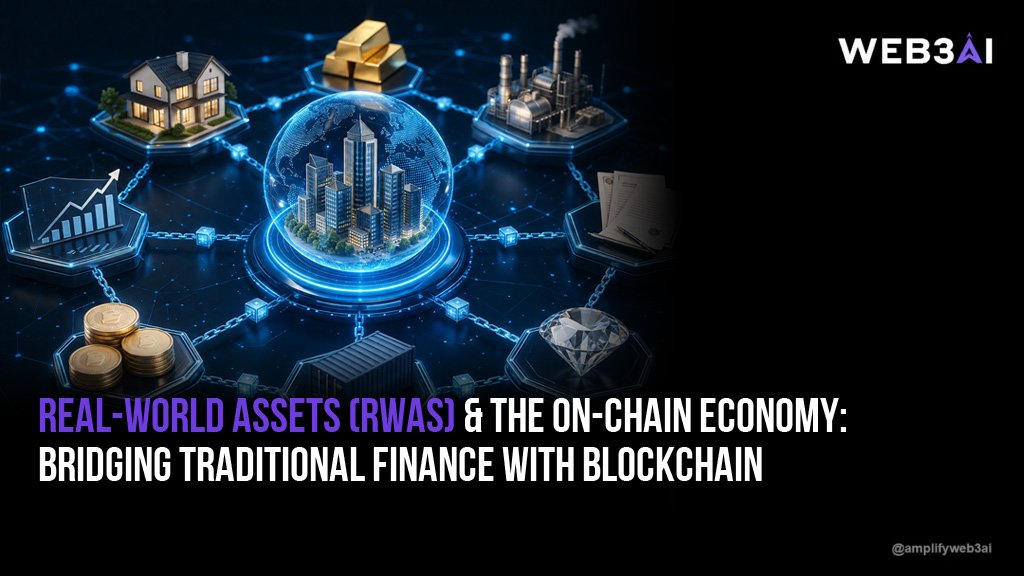

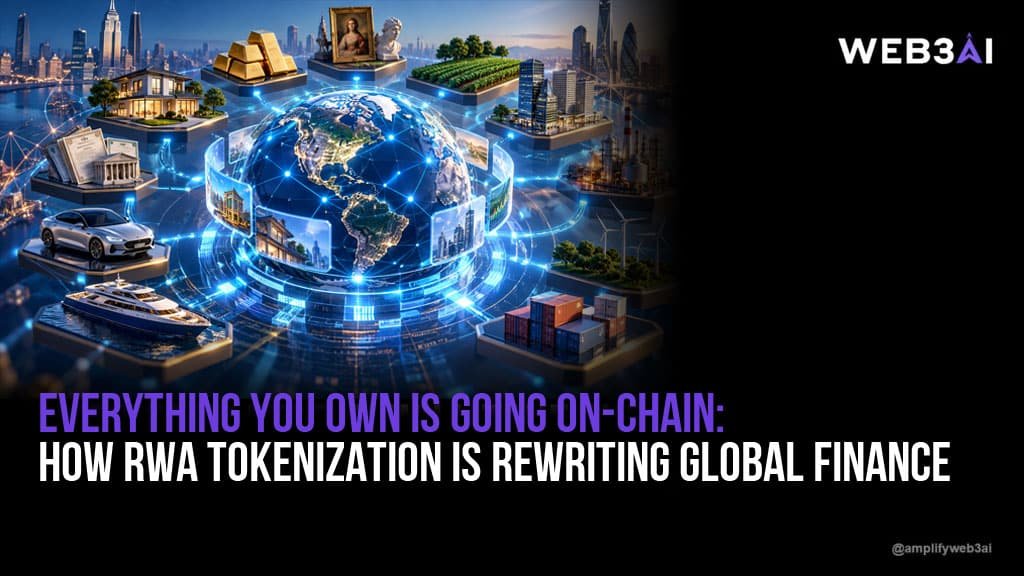
The blockchain industry has evolved far beyond cryptocurrencies and meme coins. Today, one of the fastest-growing sectors in Web3 is Real-World Assets (RWAs)—a movement that aims to bring tangible assets like real estate, government bonds, commodities, invoices, stocks, and even intellectual property onto blockchain networks.
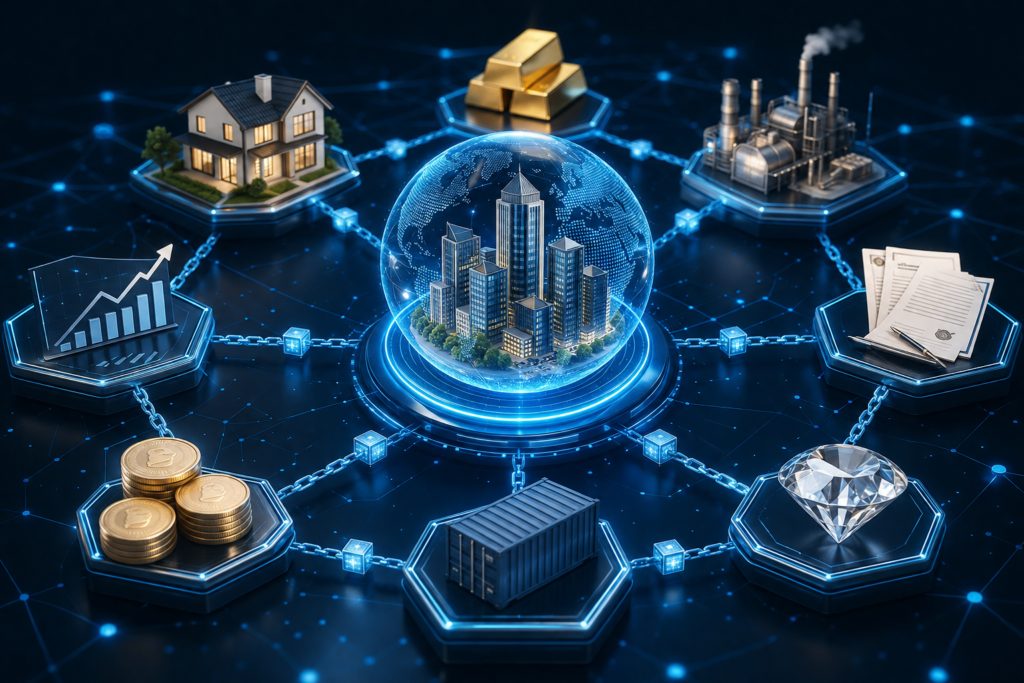
For years, crypto has been criticized for existing in its own digital bubble. While decentralized finance (DeFi) unlocked innovative financial products, much of its value remained tied to crypto-native assets. RWAs are changing that narrative by connecting blockchain technology with assets that already power the global economy.
As tokenization gains momentum, many analysts believe RWAs could become a multi-trillion-dollar market over the coming decade. Financial institutions, governments, fintech companies, and blockchain startups are increasingly exploring ways to move traditional assets on-chain.
But what exactly are Real-World Assets? Why are they becoming so important? And how will they shape the future of the on-chain economy?
Let’s explore.
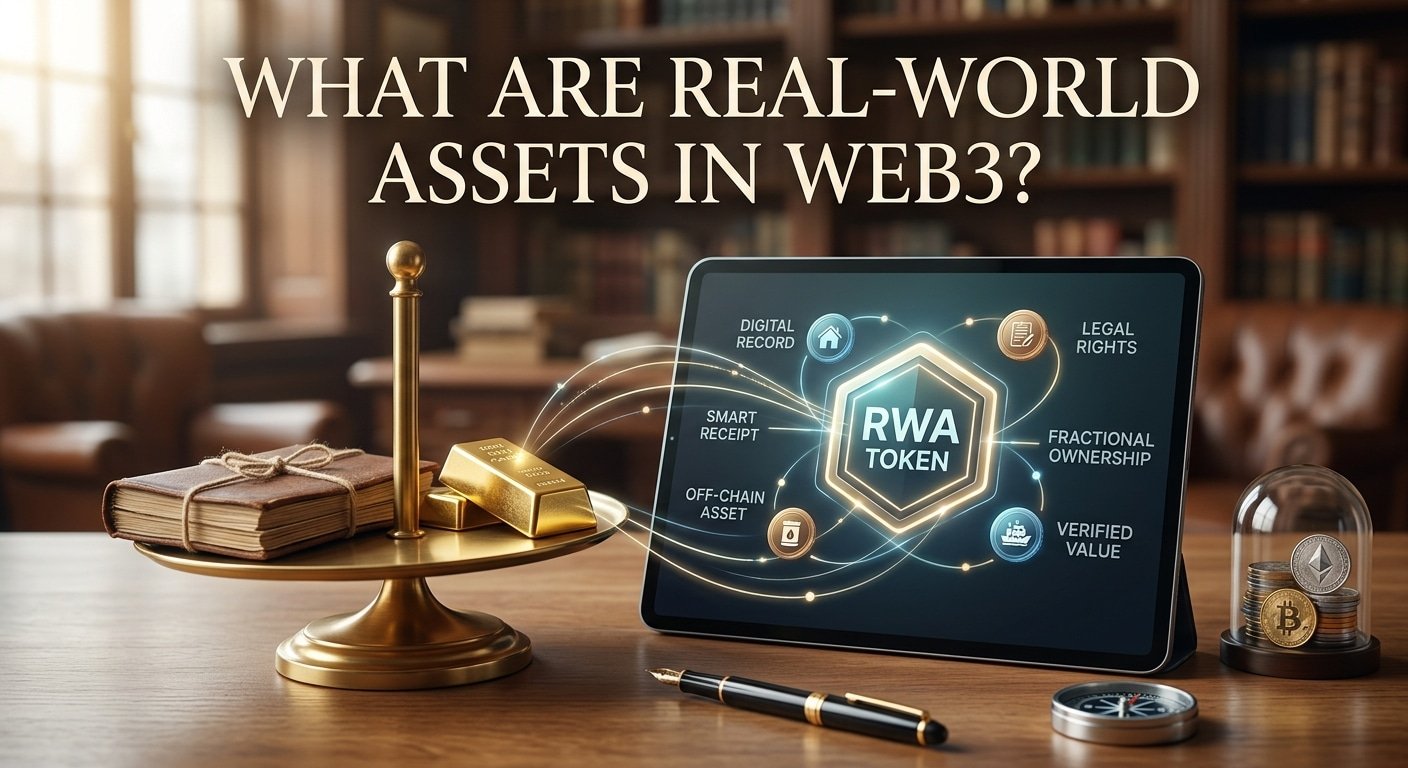
Real-World Assets (RWAs) are physical or traditional financial assets represented digitally on a blockchain through tokenization.
Instead of existing solely in paper records or centralized databases, ownership is represented by blockchain-based tokens.
Examples include:
The blockchain token acts as a digital representation of ownership, allowing investors to buy, sell, transfer, or use these assets within decentralized applications.
Think of tokenization as creating a digital certificate of ownership that is secure, transparent, and programmable.
Tokenization converts ownership rights into blockchain tokens.
Imagine an office building worth $20 million.
Traditionally:
With blockchain:
The building could be divided into 20 million digital tokens.
Each token represents a tiny ownership stake.
Investors worldwide could purchase fractions of the building, earning rental income proportional to their holdings.
Ownership transfers happen in minutes rather than weeks.
This dramatically lowers barriers to investing.
RWAs solve one of blockchain’s biggest challenges:
Connecting digital finance with the real economy.
Traditional finance holds hundreds of trillions of dollars in assets.
Crypto represents only a fraction of global wealth.
Bringing even a small percentage of traditional assets on-chain creates enormous opportunities.
Benefits include:
Many assets are difficult to sell.
Real estate, private equity, and fine art often require months to find buyers.
Tokenization allows fractional ownership and secondary markets that improve liquidity.
Investors no longer need millions to buy premium assets.
Instead of purchasing an entire apartment building, someone can invest $100.
This democratizes investing for individuals around the world.
Traditional financial transactions often require multiple intermediaries.
Settlement may take several business days.
Blockchain enables near-instant settlement, reducing costs and improving efficiency.
Anyone with internet access and a compatible wallet can potentially participate, subject to applicable laws and platform requirements.
Geographic barriers become significantly lower.
Blockchain provides publicly verifiable ownership records.
Every transaction is permanently recorded, improving auditability while reducing opportunities for fraud.
The on-chain economy refers to financial activity that occurs directly on blockchain networks.
Instead of relying entirely on traditional banking infrastructure, transactions happen through smart contracts.
This includes:
RWAs bring real economic value into this ecosystem.
For example:
Imagine owning tokenized Treasury bills.
Instead of simply holding them, you could:
Assets become programmable.
Smart contracts automate financial agreements.
Instead of manual paperwork:
Automation reduces operational costs while minimizing human error.
Government debt has become one of the fastest-growing RWA sectors.
Investors gain exposure to relatively low-risk yields while maintaining blockchain flexibility.
These products have attracted institutional investors seeking stable returns.
Real estate tokenization allows:
Commercial buildings, apartments, hotels, and industrial properties can all be tokenized.
Gold-backed tokens represent physical gold stored in secure vaults.
Investors gain exposure without needing physical delivery.
Blockchain also simplifies transferring ownership across borders.
Businesses often require financing before receiving customer payments.
Tokenized private credit enables investors to fund invoices, business loans, and receivables while earning returns.
Agricultural products, energy resources, and industrial materials can all be represented on-chain.
This increases accessibility while improving settlement efficiency.
Large financial institutions are no longer ignoring blockchain.
Instead, many are actively exploring tokenization.
Asset managers, investment firms, payment providers, and banks recognize that blockchain infrastructure can reduce costs while expanding market access.
Institutional participation brings:
This shift marks a significant evolution from blockchain being viewed solely as a cryptocurrency technology.
The average investor may experience several advantages as RWAs mature.
Instead of requiring tens of thousands of dollars, many tokenized assets can be purchased in much smaller amounts.
Unlike traditional exchanges with limited trading hours, blockchain markets can operate continuously.
This provides greater flexibility for global participants.
Investors can gain exposure to multiple asset classes from a single digital wallet.
A diversified portfolio may include:
Individuals in regions with limited access to traditional investment products may benefit from tokenized financial opportunities, where regulations permit.
Despite impressive growth, several challenges remain.
Every country has different securities laws.
Projects must comply with local regulations regarding ownership, investor protections, and financial reporting.
Regulatory clarity continues to evolve.
Blockchain records are immutable.
However, physical assets still require trusted verification.
Investors must know:
Reliable custodians and audits remain essential.
Safeguarding tokenized assets requires secure wallet management and institutional-grade custody solutions.
Both investors and service providers must prioritize cybersecurity.
Some tokenized assets still have limited trading activity.
As adoption grows, liquidity is expected to improve, but market depth varies across platforms and asset types.
DeFi becomes significantly stronger when backed by real-world value.
Instead of relying solely on volatile cryptocurrencies, decentralized protocols can integrate assets with more predictable characteristics.
Examples include:
This creates a healthier financial ecosystem that blends blockchain innovation with established asset classes.
Many experts envision a future where nearly every financial asset has a digital blockchain representation.
Imagine:
The line between traditional finance and decentralized finance may gradually blur.
Rather than replacing existing financial systems overnight, blockchain is more likely to complement and modernize them.
Beyond investors, businesses are also discovering the value of RWAs.
Companies can:
For startups and small businesses, tokenization may unlock financing opportunities that were previously difficult to access.
Real-World Assets (RWAs) represent one of the most practical and transformative applications of blockchain technology. By bringing tangible assets such as real estate, bonds, commodities, and private credit on-chain, tokenization has the potential to improve liquidity, lower investment barriers, enhance transparency, and enable new forms of programmable finance.
The on-chain economy is no longer limited to cryptocurrencies. It is evolving into a broader financial ecosystem where digital infrastructure supports real economic activity. While regulatory frameworks, asset verification, and liquidity challenges remain, momentum continues to build as financial institutions, technology companies, and blockchain innovators invest in tokenized markets.
As adoption grows, RWAs could reshape how people invest, businesses raise capital, and financial markets operate. Whether you’re a crypto enthusiast, investor, entrepreneur, or simply curious about the future of finance, understanding Real-World Assets is becoming increasingly important. The convergence of traditional finance and blockchain is well underway, and RWAs are poised to play a central role in defining the next generation of the global financial system.