Anouncement

Anouncement

Listen 🎧
Hi, I’m Riza Utile. Let me paint you a picture before we dive in.
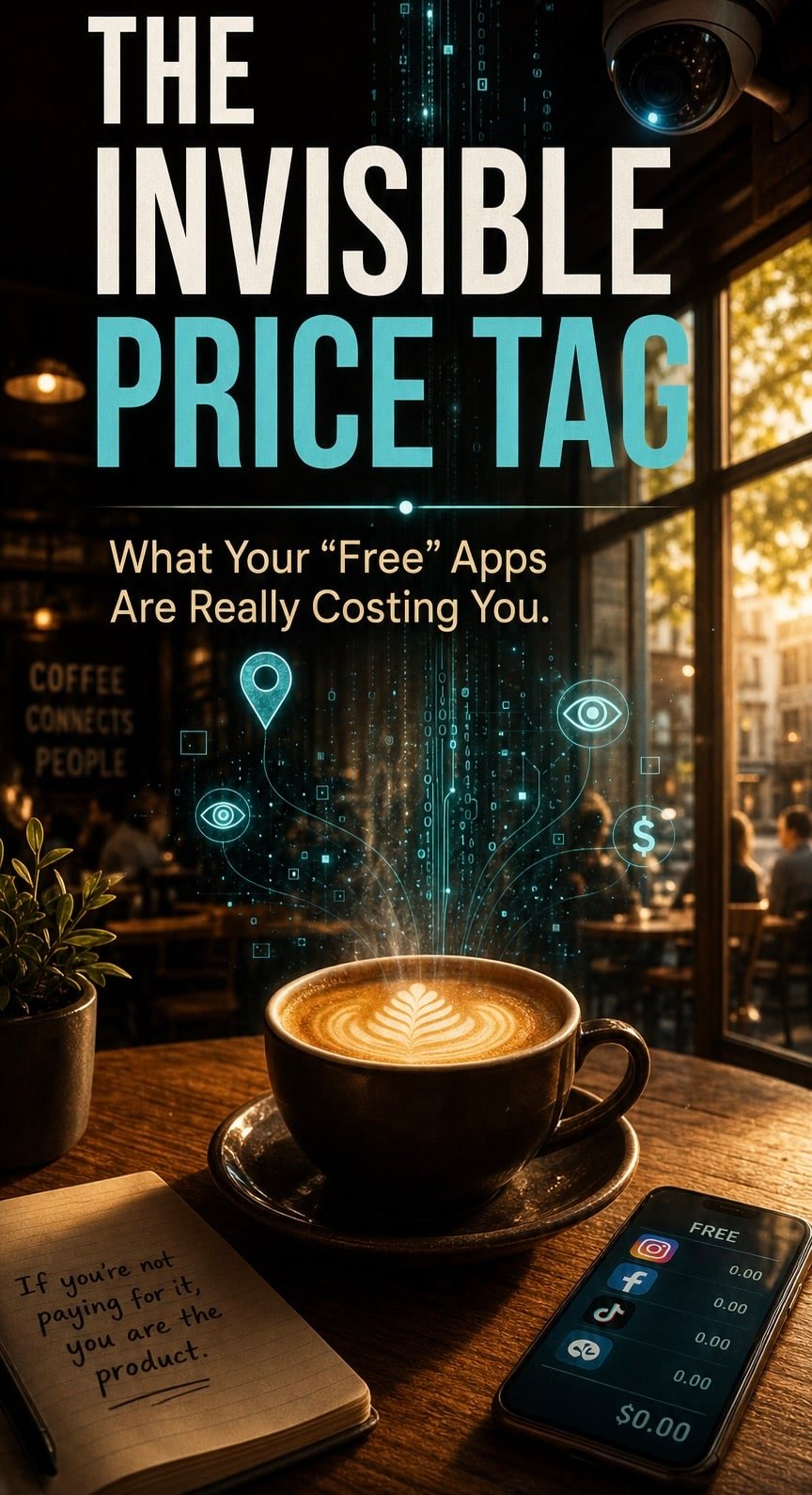
Imagine we walk into the most beautiful coffee shop you’ve ever seen, right in the heart of the city. The barista smiles, slides a perfectly crafted latte across the counter, and tells you it’s completely free. The pastries are free. The comfortable leather armchairs are free. The blazing-fast Wi-Fi is free. Stay as long as you want. Invite your friends. Host your business meetings here. All for zero dollars.
Sounds like a little slice of utopia, right?
But then you look closer. There’s a camera angled directly over your chair. The barista is quietly jotting down how many sips it took you to finish that latte. There’s a sensor under the table counting how often you tap your foot. When you pull out a book, a mechanical eye scans the title, the page number, and exactly how long you linger on each paragraph.
When you leave, the owner takes all of it — your habits, your nervous ticks, your favorite flavors, your schedule — and sells the ability to reach you to a dozen marketers who will now follow you around the city, whispering tailored ads into your ear.
Let me ask you: would you still drink that free coffee?
The Episode That Changed How I See My Phone
In Episode 4 of Web3 and AI Made Simple, I sat down with my husband and tech expert, Ian Utile, to talk about a reality that’s actually far more invasive than our imaginary coffee shop. We talked about the true cost of “free.”
We’ve all heard the proverb: “If you’re not paying for the product, you are the product.” But hearing a catchy phrase and truly feeling the weight of that trade are two very different things.
When you pay for software, the deal is honest. You give a company money, they give you a service, and their whole goal is to make that service good enough that you renew it next month. But when you use a platform for free, the model flips upside down. You’re no longer the customer. You’re the inventory — and the advertiser is the one being served.
We Are the Unpaid Lab Rats
Ian shared something that genuinely stopped me cold. When you open Instagram for just twenty minutes, the app isn’t passively showing you photos. It’s measuring what you tap, what you skip, how long you hover on a video before scrolling. Researchers call this the attention economy — products engineered to capture more of your attention than you ever meant to give, then sell that attention to the highest bidder.
And the experiments never stop. Platforms run thousands of continuous tests, quietly tweaking which button color, which notification sound, which feed order keeps you scrolling longest. We don’t have to take this on faith, either. Back in 2021, former Facebook data scientist Frances Haugen released internal documents showing the company had repeatedly misled the public about what its own research revealed.
In other words, billions of us are the unpaid research-and-development department for a refinement process whose final product is our own attention.
To show just how extreme this gets, Ian pointed to programs like Facebook’s Free Basics in developing countries — free, no-data-charge internet access, but only to a walled garden of approved services with Facebook at the center. It looks like philanthropy. People who couldn’t afford data could suddenly message family. But independent research by Global Voices found the program gave Facebook access to unique streams of data about users’ habits — tracking which sites they visited, when, and for how long, whether or not they were even logged in. The company extracted real commercial value from people simply trying to say hello to their neighbors.
So What Is It Actually Worth?
Here’s where it gets concrete, because data feels so abstract — it’s hard to feel robbed when you can’t hold the stolen thing in your hand.
So let’s put honest numbers on it. The credible public estimates cluster lower than the scary headlines you’ll see floating around online. A Washington Monthly analysis pegged the value of an American internet user’s personal data at roughly $202 per year. Meta’s own filings show average revenue per user in the US and Canada running around $217 a year, and over 99% of that is advertising. The privacy company Proton estimates the total annual value of a US user’s data — across Google, Facebook, and data brokers combined — at at least $700, and climbing.
Run that forward, and a heavily engaged user plausibly generates somewhere in the range of $5,000 to $7,000 of extracted value over a decade. Not the twenty thousand you’ll sometimes hear thrown around — but real money, paid silently, year after year. For someone on minimum wage, or living in a developing economy, even the conservative figure is life-changing. And honestly, the principle doesn’t depend on the exact dollar amount. You are on the short end of a wildly uneven trade, and you never once agreed to a price.
The Asset You Can Never Earn Back
But here’s where Ian got serious, and where I felt it most. Money comes and goes — you can be broke today and wealthy next year. There’s only one asset none of us can ever replenish: time. It moves in one direction. You cannot add a single minute to your life.
These products aren’t just designed to harvest your data. They’re engineered to harvest your time. Stanford addiction specialist Dr. Anna Lembke describes social apps as capable of releasing dopamine “just like heroin, or meth, or alcohol,” and peer-reviewed neuroscience finds that frequent use alters our dopamine pathways in ways similar to substance addiction. Every autoplay, every push notification, every “watch this for more rewards” is a calculated bid for another ten minutes of your irreplaceable life.
Now, one honest correction here, because accuracy matters to me. You may have heard that “Google reads your Gmail to serve you ads.” That was true years ago — but Google actually stopped scanning Gmail content for ad targeting back in 2017, and now states plainly that it won’t read your messages to show you ads. What is still true is that Google personalizes ads based on your searches, your YouTube history, and your location. The strongest critique is always the precise one.
The Great Digital Awakening
If all this leaves you unsettled, you’re not alone. But before you throw your phone in the ocean and move to a cabin in the woods, let’s look at history — because there’s real hope here.
Sixty years ago, almost everyone in America smoked. Ads sold cigarettes as healthy, sophisticated, even relaxing. The culture bought it completely. Then the data came out, the link to cancer became undeniable, and society slowly, painfully woke up to the fact that the thing giving them a quick hit was quietly killing them.
Many ex-smokers turned to convenience food. For half a century we were sold low-fat, high-sugar, chemically refined “progress” — until people started reading the labels and asking what was actually in the box.
We’re at the very beginning of the digital version of that awakening. For fifteen years we’ve been smoking digital cigarettes and binge-eating digital junk food, told it was all free and harmless fun. Now the data is coming out, and we’re finally starting to read the label.
Web3: Changing the Equation
So what’s the alternative — exploited, or hermit? Thankfully, neither.
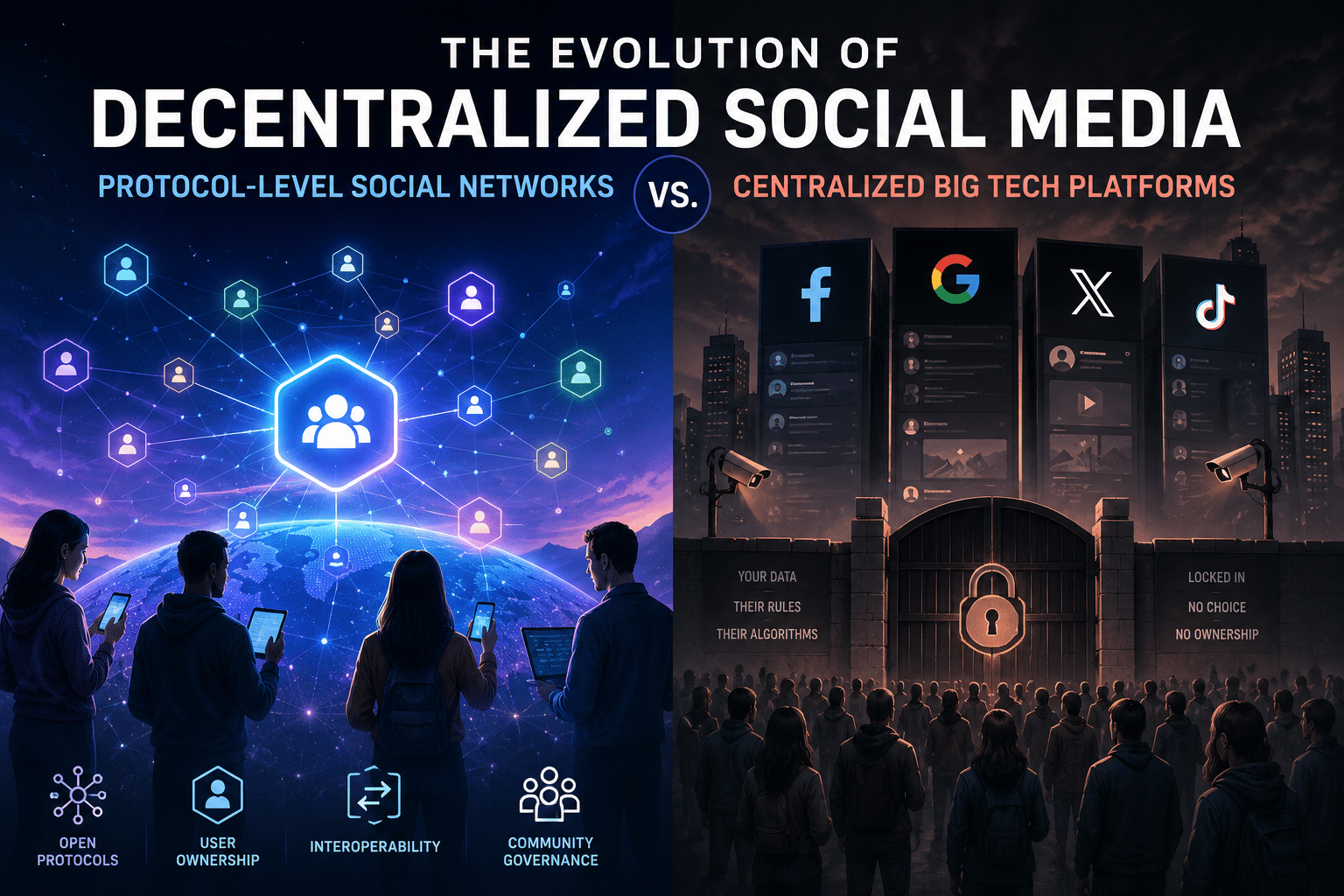
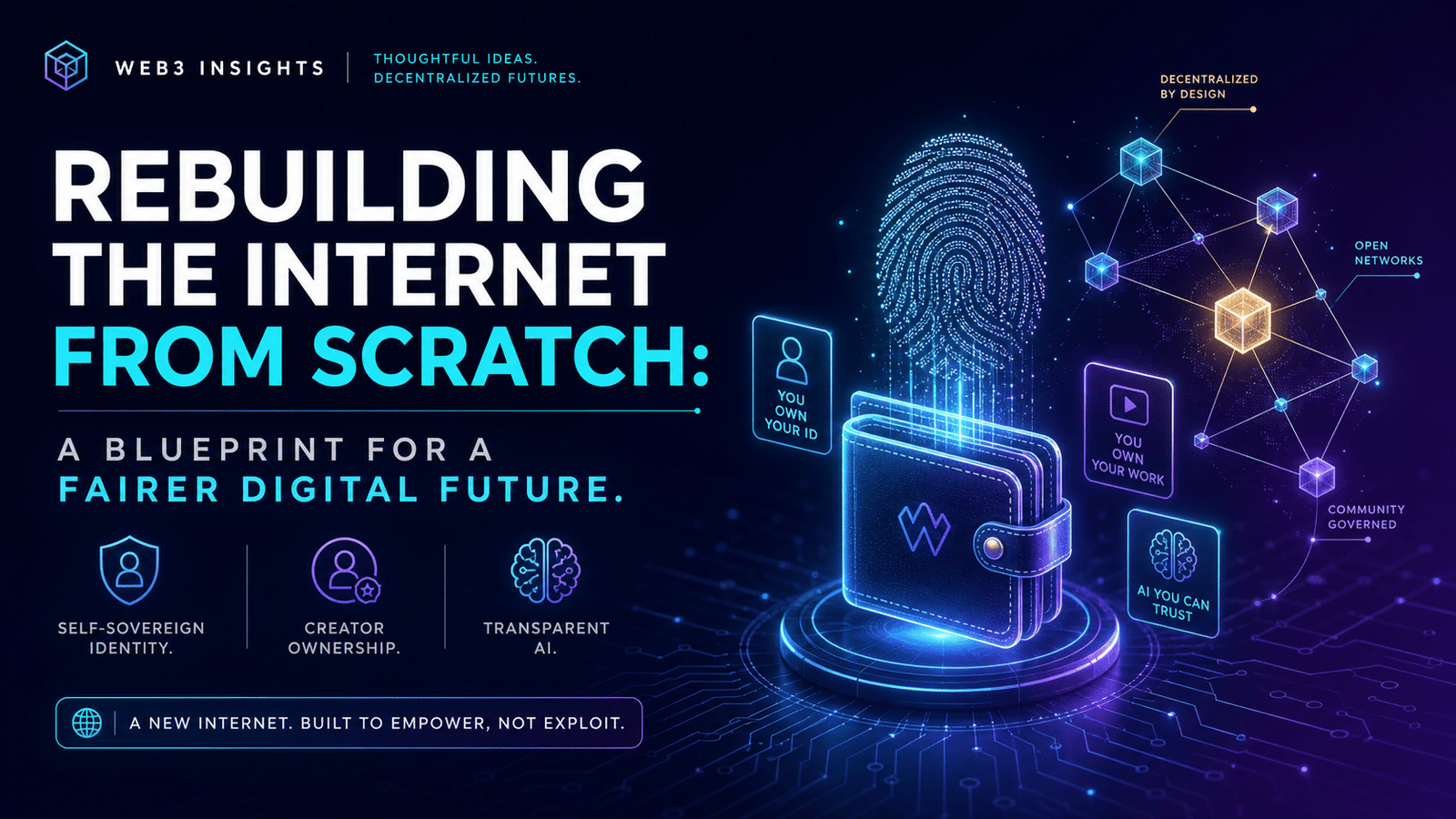
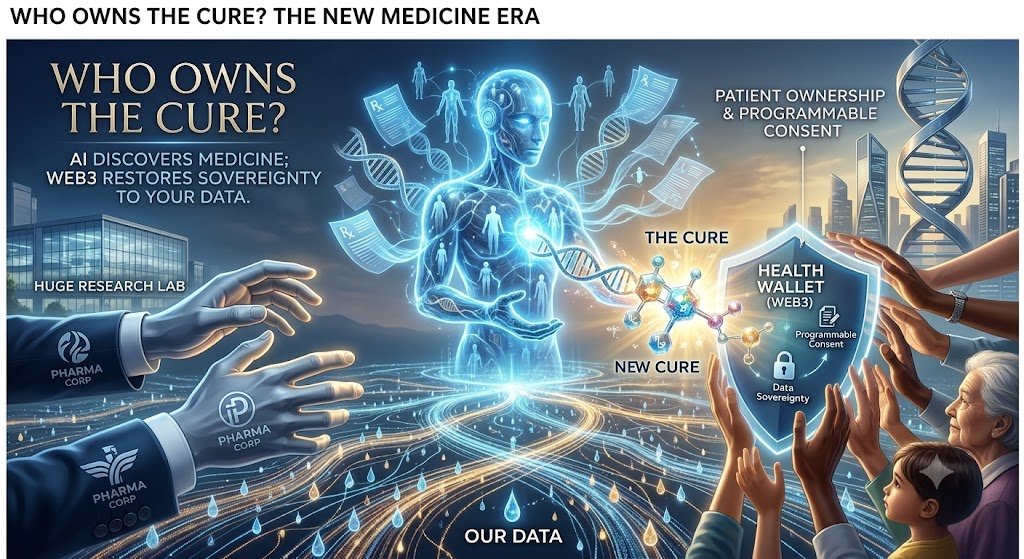
If today’s web is like renting an apartment where the landlord has cameras in every room and sells your schedule, the promise of Web3 is finally owning your own house. Built on blockchain, it aims to shift power away from centralized platforms and back to you — so you own your data, your identity, and your audience.
Think about what you don’t own now. Build 10,000 followers on a platform today, and you don’t own that connection — the platform does. Change the algorithm, ban the account, and your whole community vanishes in a second. The Web3 thesis is that your content, your connections, and your value belong to you.
I’ll be honest, though, because I’d never sell you hype. Web3 is still in its infancy. It’s clunky, there’s a learning curve, and some researchers rightly warn about the “illusion of decentralization” — much of it still re-concentrates around a few big infrastructure players. The vision is worth pursuing and worth scrutinizing. Don’t trade one set of unexamined claims for another.
Setting Your Non-Negotiables
This transition is a marathon, not a sprint, and it shouldn’t run on fear or rage. Anger at big tech won’t lead us anywhere good. It runs on clarity.
The goal is simple: live awake.
Look at your digital life and ask the hard questions. What are your non-negotiables? Maybe you turn off nonessential push notifications. Maybe you disable your phone’s advertising ID — that hidden tag data brokers use to stitch your activity together — and switch on App Tracking Transparency so apps must ask before following you around. Maybe you start building an email list so your audience doesn’t live only on someone else’s platform. Maybe you explore a decentralized tool, slowly, with curiosity instead of hype.
Whatever you choose, the point is that you’re no longer trading blindly. You can see the invisible price tag now. You know the true cost of free.
It’s time to rise above the noise, step back into the sunshine, and take ownership of your time, your data, and your beautiful future.
Stay curious. Stay grounded. And most importantly, stay human.
With warmth,
Riza Utile