Anouncement

Anouncement
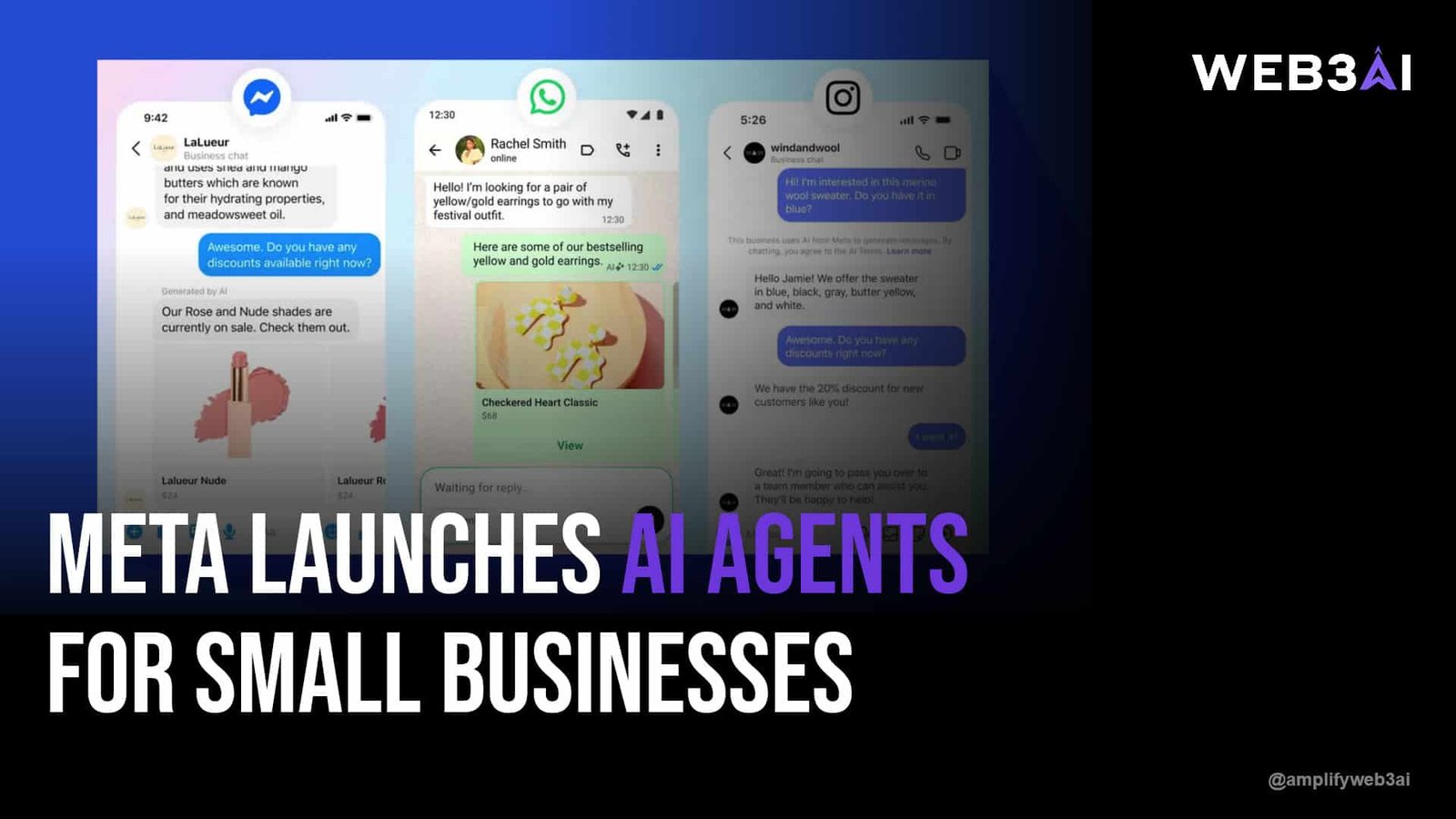

Meta AI agents for small businesses are no longer a distant promise — they are here, they are free, and they are surprisingly easy to deploy. If you have ever wished you could clone yourself to handle customer inquiries at 2 a.m., restock reminders, or Instagram DMs while you are cooking dinner, Meta’s new AI agent suite is designed exactly for that moment. The gap between what enterprise companies can automate and what a solo founder can afford has always felt enormous. Meta is now betting it can close that gap entirely.
According to TechCrunch’s coverage of Meta’s April 2025 announcement, the company is rolling out AI-powered business agents across WhatsApp, Messenger, and Instagram — platforms where hundreds of millions of customers already spend their time every day. The agents can answer product questions, process leads, and even complete transactions without a human ever touching the keyboard. For small business owners who are already stretched thin, that is not a nice-to-have feature. That is oxygen.
This post breaks down exactly what Meta’s AI agents do, why they make particular sense for small and independent businesses, where the real opportunities lie, and what you should watch out for before you hand your customer relationships over to a bot.
Meta’s AI agents are built on top of the Llama model family and are designed to live natively inside the apps your customers already use. Unlike a chatbot you bolt onto your website, these agents exist inside WhatsApp threads and Instagram DM conversations — meaning there is zero friction for the customer. They do not need to download anything, learn a new interface, or even realize they are talking to an AI if the conversation flows naturally.
The agents can be trained on your own business data: your product catalog, your FAQs, your pricing, your return policy, your store hours. Once set up, the agent handles inbound questions, qualifies leads, books appointments, and escalates to a human when the situation demands it. Meta has also built in commerce hooks, so an agent can send a customer directly to a checkout link mid-conversation. For a boutique clothing shop or a freelance photographer, that is a meaningful sales tool that used to cost thousands of dollars per month to replicate.
Pro Tip: Train your Meta AI agent on your most frequently asked questions first. Pull 30 days of customer messages and identify the top 10 recurring questions — those become your agent’s first knowledge base, and you will see a measurable drop in manual response time within the first week.
Meta is also making these agents available at no cost through its business tools suite, at least at launch. The monetization play for Meta is advertising — if your AI agent successfully converts a conversation into a sale, Meta sees that as proof of platform value and a reason for you to spend more on ads. That alignment of incentives means Meta has a genuine reason to make these tools work well for small operators, not just big enterprise clients.
The small business case for AI agents is more compelling than it first appears, and it goes well beyond simple automation. For a team of one or two people, every hour saved on repetitive communication is an hour redirected toward product development, creative work, or simply getting some rest. The compounding effect of that time savings across weeks and months is significant. We often underestimate how much small business burnout is driven by low-value-but-mandatory communication overhead.
For a deeper look at how AI automation is reshaping business operations at every scale, read our piece on how AI agents are transforming business operations — it covers the workflow shifts that matter most when you are running lean. The principles there apply directly to how Meta’s agents slot into a small business context.
Small businesses also benefit from something large enterprises often struggle with: proximity to the customer. A well-configured Meta AI agent for a local bakery can feel personal and warm in a way that a Fortune 500 chatbot rarely does, because the training data is specific, the use cases are narrow, and the brand voice is consistent. When you know exactly who your customer is, you can train an agent to speak to them in a way that feels human — even if it is not.
Meta is not operating in a vacuum here. The broader AI agent race in 2025 includes offerings from Google, Microsoft, Salesforce, and a wave of startups all competing to become the operating layer for automated business communication. What makes Meta’s play different is distribution. WhatsApp alone has over 2 billion active users. Instagram has 2 billion more. No competitor can match the existing audience that Meta’s business agents are born into.
The autonomous agent model — where AI acts on your behalf rather than simply responding to prompts — is one of the defining technology shifts of this decade. If you want to understand the trajectory of this movement, our overview of the rise of autonomous AI agents maps out exactly where this technology is headed and why it matters for anyone building a business in the current environment.
Meta’s approach also signals something important about where AI value will concentrate. The companies that control the interface layer — the screen where the customer actually types — will have enormous leverage over how AI commerce unfolds. By embedding agents inside Messenger, WhatsApp, and Instagram, Meta is positioning itself not just as a social media company but as the infrastructure layer for AI-powered small business commerce.
Pro Tip: Do not try to make your Meta AI agent do everything on day one. Start with one use case — order status updates, appointment booking, or product recommendations — and expand only after you have tested that the agent handles it accurately and in a tone that matches your brand.
Getting started with Meta’s AI agents is more approachable than most small business owners expect. The setup lives inside Meta Business Suite, which you may already be using to manage your Facebook and Instagram presence. Here is the core sequence for getting your first agent live:
The businesses that will get the most out of these tools are the ones willing to treat the agent as an employee that needs onboarding, feedback, and occasional retraining — not a switch you flip once and forget.
No tool is consequence-free, and Meta AI agents come with real considerations worth thinking through before you deploy. The most significant is data. When your customers message your business on WhatsApp or Instagram, those conversations flow through Meta’s infrastructure. For most retail or service businesses, that is a reasonable tradeoff. For businesses handling sensitive personal information — healthcare, legal services, financial advice — it warrants a much more careful review of Meta’s data policies before you proceed.
There is also the question of tone and error. AI agents can hallucinate — meaning they can confidently state something that is wrong. If your agent tells a customer the wrong price, promises a delivery date you cannot meet, or describes a product feature that does not exist, that is a trust problem that lands on your brand, not Meta’s. Strong escalation rules and regular conversation audits are not optional extras — they are core to responsible deployment.
Finally, for small businesses thinking about their broader content and creator strategy alongside automation tools, our guide to AI tools for content creators is a useful companion read — it covers the tools that help you stay present and consistent even when an agent is handling the front-line conversations.
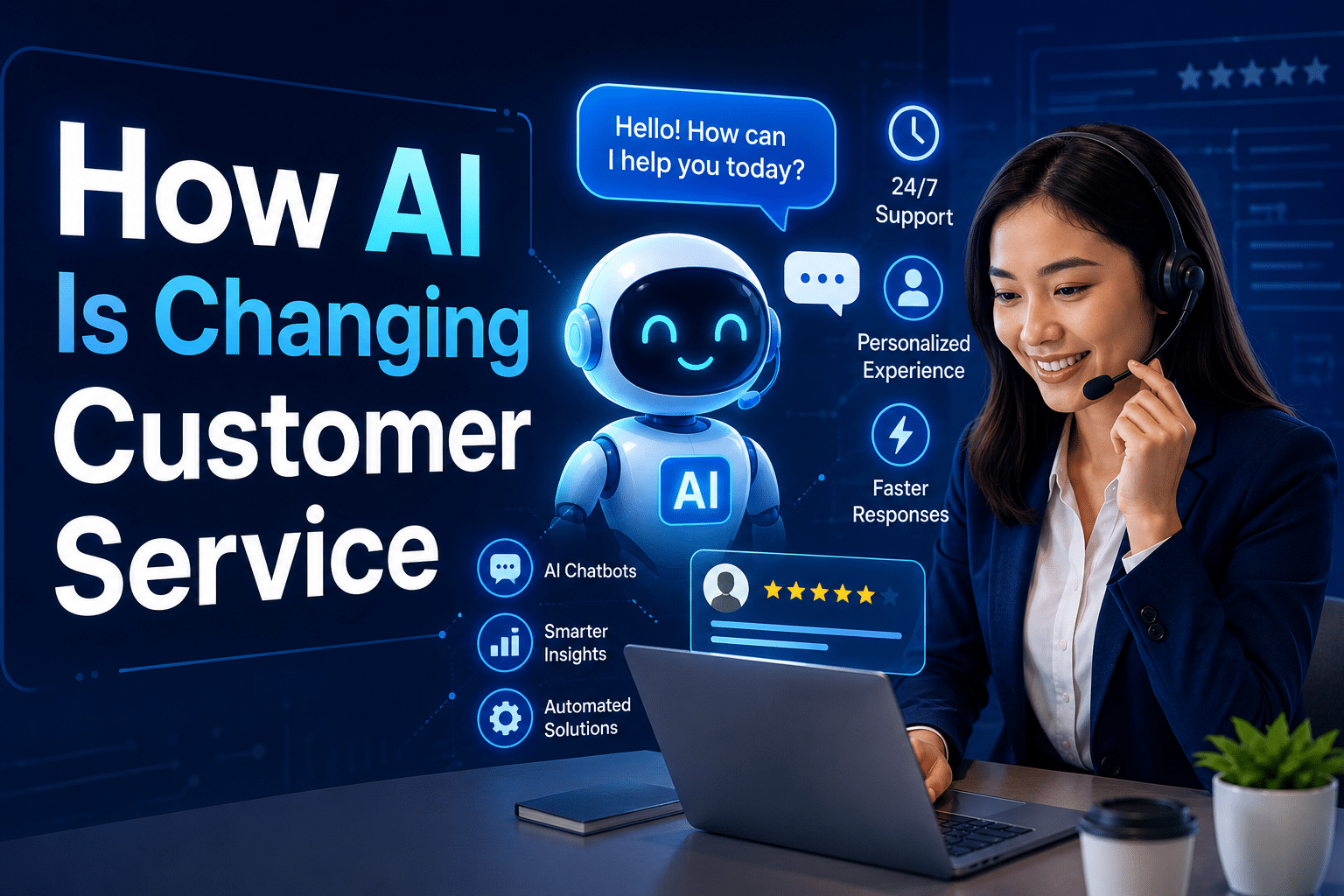
Meta AI agents for small businesses are AI-powered assistants that live inside WhatsApp, Instagram, and Messenger. They are trained on your business data — products, policies, FAQs — and handle customer conversations automatically, from answering questions to completing transactions, without requiring you to be online.
At launch, Meta is offering its AI agent tools at no direct cost through Meta Business Suite. The business model relies on advertising revenue, so Meta benefits when your agent drives sales and keeps customers engaged on its platforms. Costs may evolve as the product matures, so it is worth checking current terms in Meta Business Suite before committing to a workflow built around the free tier.
Yes — Meta has designed the onboarding experience to be manageable for non-technical business owners. The setup uses natural language instructions rather than code, and the knowledge base upload accepts common document formats. That said, getting the agent to perform accurately takes iteration and testing, especially in the first few weeks.
You can configure escalation rules that tell the agent when to hand a conversation to a human team member. Common triggers include complaint language, refund requests, or any question the agent’s confidence score falls below a set threshold. Setting these escalation rules carefully is one of the most important parts of responsible deployment.
Absolutely. Meta has built commerce hooks directly into the agent framework, allowing agents to send product links, answer pre-purchase questions, and guide customers toward a checkout within the same conversation. For small businesses that rely on Instagram or WhatsApp for discovery and sales, this creates a genuinely end-to-end purchase journey without the customer ever leaving the app.
Meta AI agents for small businesses represent one of the most accessible on-ramps to practical AI automation that has existed for independent operators. The distribution advantage — billions of users already on WhatsApp and Instagram — removes the friction that has historically made AI tools feel like an enterprise luxury. You do not need a developer, a big budget, or a six-month implementation timeline. You need a clear use case, a well-prepared knowledge base, and a commitment to reviewing performance regularly.
The businesses that will win with these tools are not the ones who automate the most — they are the ones who automate thoughtfully, keep the human relationship at the center, and use the time saved to do the creative and strategic work that no AI agent can replicate. Technology should serve your vision, not replace the reason customers chose you in the first place.
If you are building something in the AI and Web3 space and want to go deeper on the tools and strategies shaping the next era of business, explore what we have built at attn.live.