Anouncement

Anouncement
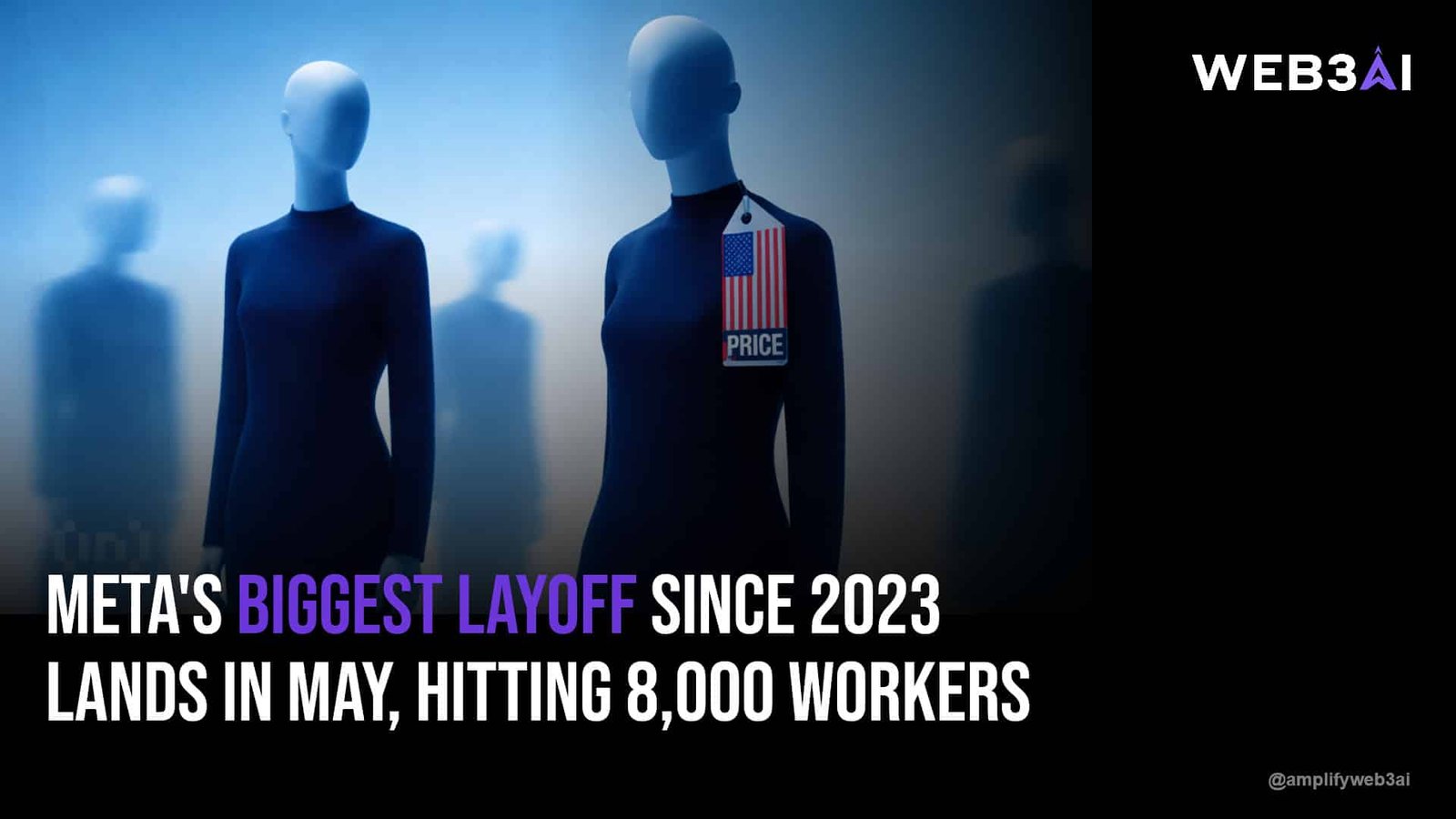

Meta layoffs and AI workforce restructuring are now front-page news — and the numbers are staggering. In early 2025, Meta announced plans to eliminate approximately 8,000 jobs by 2026, a move the company frames not as downsizing but as a deliberate pivot toward an artificial intelligence-driven operating model. For workers, investors, and anyone watching Big Tech, this signals something deeper than a routine cost-cutting exercise.
This is not an isolated decision. As Reuters reported, Meta’s cuts represent roughly 5% of its global workforce, with leadership explicitly tying the reductions to accelerating AI investment. The message from Mark Zuckerberg is clear: human roles that can be automated will be, and the company is willing to absorb the reputational cost of mass layoffs to get there faster.
If you have been wondering what the AI-first future actually looks like in practice — beyond the headlines and hype — this restructuring is one of the clearest real-world examples yet. In this post, we break down what is happening at Meta, why it matters far beyond Silicon Valley, and what it means for workers, creators, and the broader Web3 and AI landscape.
Meta’s planned reduction of around 8,000 positions spans multiple departments, but the cuts are most concentrated in mid-level management, content moderation, and roles that leadership believes can be replaced or significantly reduced through AI automation. The company has been transparent that this is a structural shift, not a response to poor financial performance — Meta’s revenue has actually been growing strongly.
Zuckerberg has publicly stated that Meta intends to hire aggressively in AI engineering roles at the same time it eliminates other positions. This is the defining paradox of the current moment: AI is simultaneously creating new jobs and destroying existing ones, often within the same company and the same quarter. The net effect on total employment remains deeply uncertain.
What makes this restructuring notable is the speed and scale. Previous rounds of tech layoffs in 2022 and 2023 were largely driven by post-pandemic overcorrection. This round is explicitly ideological — a bet that AI can do the work of tens of thousands of humans more efficiently, and that the companies willing to make that bet earliest will win the decade.
Pro Tip: When evaluating any company’s AI strategy, look past the press releases. The ratio of AI engineering hires to total layoffs tells you far more about their real intentions than any keynote speech.
Behind every statistic is a person. The 8,000 roles being cut at Meta represent engineers, project managers, trust and safety specialists, and countless others who built their careers at one of the world’s most influential technology companies. Many of these workers are highly skilled professionals who will find new roles — but not all of them, and not without disruption.
Content moderation roles deserve particular attention. Meta has long relied on large human teams to review harmful content across Facebook, Instagram, and WhatsApp. Replacing these workers with AI systems is not a neutral technical decision — it is a values-laden choice about how much accuracy and nuance we are willing to sacrifice for efficiency. AI moderation systems have well-documented limitations around context, cultural sensitivity, and edge cases.
There is also a geographic dimension that rarely gets discussed. Many of Meta’s content moderation teams are based in lower-cost regions including parts of Africa, Southeast Asia, and Latin America. When these roles are automated, the economic impact falls disproportionately on workers and communities who have fewer safety nets and fewer alternative opportunities in the tech sector.
Understanding how AI is reshaping employment patterns across industries is essential context here. We explored the broader dynamics in our deep dive on how AI is transforming the future of work — the patterns emerging at Meta are playing out across every major sector simultaneously.
Meta is not alone. Google, Microsoft, Amazon, and Salesforce have all announced significant workforce reductions in 2024 and 2025, with AI automation cited as a key driver in nearly every case. What is different about this wave compared to previous tech downturns is that the companies making these cuts are simultaneously reporting record profits and record AI investment.
The economic logic is straightforward, even if the human consequences are complex. When a company can replace a team of fifty content reviewers with an AI system that costs a fraction of the combined salaries, the financial incentive is overwhelming — especially when shareholders are rewarding AI investment with higher valuations. The pressure to automate is not coming from a place of financial distress; it is coming from a place of competitive ambition.
There is also a talent war dimension to this story. The global supply of genuinely skilled AI researchers and engineers is genuinely limited. By cutting thousands of non-AI roles, Meta frees up enormous budget to compete for the relatively small pool of people who can build and maintain frontier AI systems. In this framing, the layoffs are as much about talent reallocation as they are about cost reduction.
Pro Tip: If you are a professional in any field adjacent to technology, now is the time to build foundational AI literacy — not to replace your expertise, but to ensure your expertise remains irreplaceable alongside AI tools.
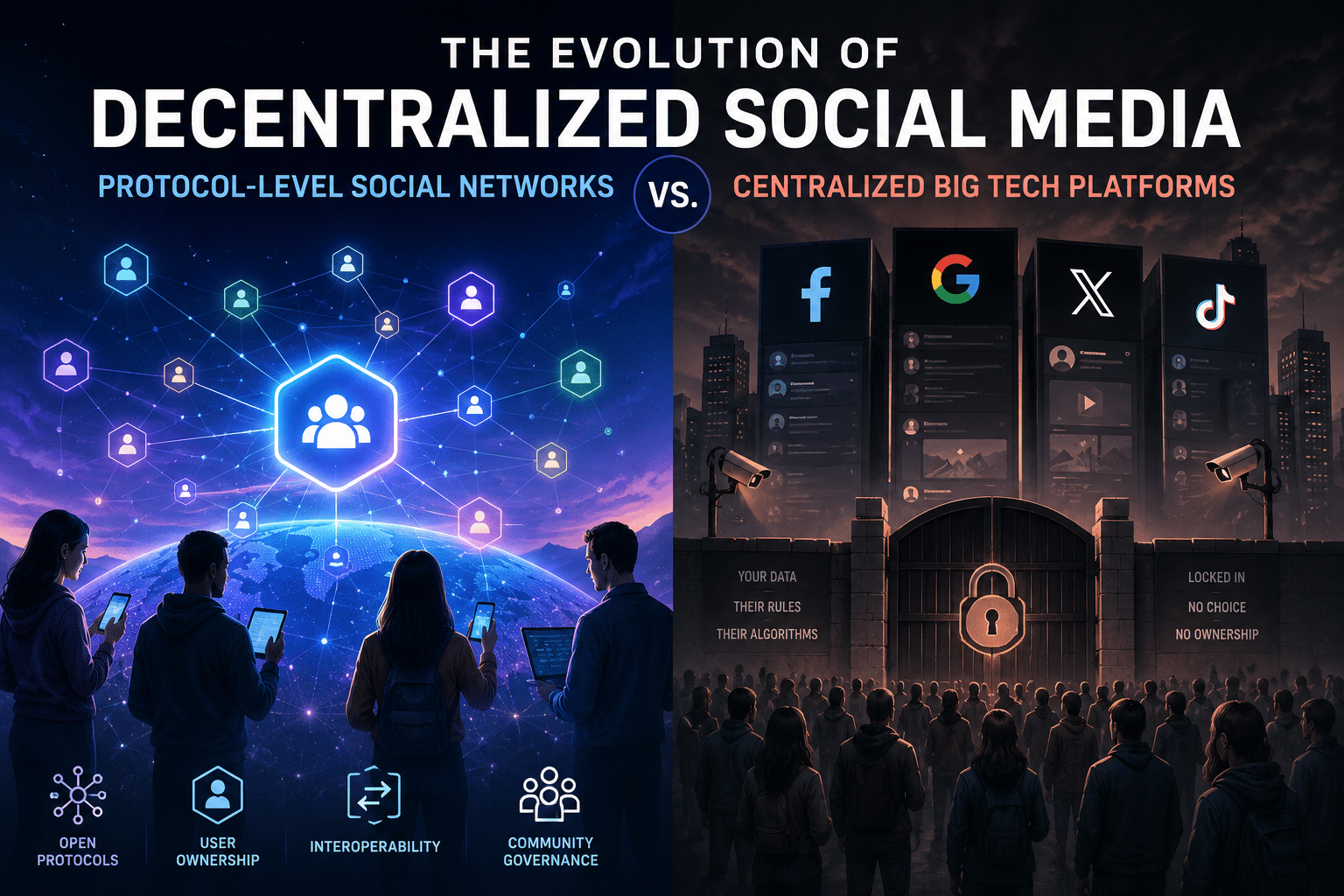
Meta’s aggressive AI centralization has an important mirror image: the growing movement toward decentralized AI and Web3-native alternatives. As Big Tech consolidates AI capability into fewer and fewer hands, the argument for decentralized approaches becomes more urgent, not less. The concentration of AI power at companies like Meta creates systemic risks that distributed systems are specifically designed to address.
The convergence of Web3 infrastructure and AI capabilities is one of the most important dynamics in technology right now. We examined this in detail in our analysis of Web3 and AI converging to reshape industries — the Meta restructuring makes that convergence more relevant than ever for builders and investors thinking about where value will accrue over the next decade.
Decentralized AI networks offer a fundamentally different model: one where compute, data, and governance are distributed across many participants rather than concentrated in a single corporate entity. This is not a utopian fantasy — projects building in this space are shipping real infrastructure today, and Meta’s moves are accelerating interest from developers and enterprises who are wary of single-point dependency on Big Tech AI systems.
It helps to organize the implications of Meta’s restructuring into clear, actionable insights rather than leaving them as abstract observations. Here is what the evidence actually tells us:
The companies and individuals who will thrive in this environment are those treating AI as a collaborator to amplify their capabilities, not simply a threat to be feared or a tool to be blindly deployed. That distinction matters enormously for how you position yourself over the next three to five years.
For a closer look at where decentralized AI infrastructure is heading, our overview of the rise of decentralized AI is essential reading for anyone thinking seriously about the post-Big-Tech AI landscape.
Meta layoffs in this cycle are not driven by financial distress — the company is highly profitable. Instead, leadership is making a deliberate strategic decision to reallocate capital from human labor toward AI infrastructure and engineering talent. The goal is to accelerate AI development faster than competitors, and executives have concluded that the reputational cost of large-scale cuts is worth the competitive advantage they expect to gain.
This is one of the most legitimate concerns raised by critics. AI moderation systems are faster and cheaper than human teams, but they perform significantly worse on nuanced cases involving cultural context, sarcasm, satire, and emerging forms of harmful content. Meta has acknowledged these limitations but appears to have determined that acceptable accuracy thresholds can be met with AI systems supplemented by much smaller human review teams.
Mid-level management, content moderation, data labeling, certain categories of software engineering focused on maintenance rather than innovation, and administrative coordination roles are most exposed. Creative, strategic, and highly specialized technical roles — particularly in AI research itself — are less vulnerable and in some cases seeing increased demand and compensation.
Yes, the pattern is highly consistent across major technology companies in 2024 and 2025. Google, Microsoft, Amazon, Salesforce, and others have all followed similar playbooks: announce workforce reductions in non-AI functions while simultaneously expanding AI engineering teams and infrastructure investment. Meta’s scale makes it particularly visible, but it is not an outlier in terms of strategy.
Meta’s consolidation of AI capability creates exactly the conditions that make decentralized AI alternatives attractive to developers, enterprises, and policymakers. When a single company controls the AI systems that moderate speech for billions of people, the systemic risks — around bias, outages, censorship, and geopolitical pressure — become very concrete. Decentralized AI networks offer a structural alternative that distributes these risks, and investment in that space is accelerating as Big Tech’s AI concentration deepens.
The most resilient career strategy right now combines deep domain expertise with genuine AI fluency. Workers who understand their field deeply and can effectively direct and audit AI tools are significantly more valuable than those who either ignore AI entirely or rely on it uncritically. Building in public, developing a visible portfolio of AI-augmented work, and staying closely connected to emerging platforms in your field are all practical steps with meaningful impact.
Meta layoffs and AI workforce restructuring represent one of the clearest signals yet that the AI-first transition is no longer theoretical — it is happening at scale, right now, inside the world’s most powerful technology companies. The 8,000 jobs being cut by 2026 are not a sign of Meta struggling; they are a sign of Meta betting everything on a future where AI replaces human labor across large categories of work, and investing aggressively to win that bet before anyone else does.
For workers, creators, and builders, the lesson is not to panic — it is to pay attention and adapt with intention. The companies and individuals who will define the next decade are those who understand AI deeply enough to work alongside it creatively, who are building on platforms that distribute rather than concentrate power, and who are engaging now rather than waiting for the dust to settle.
The decentralized Web3 and AI ecosystem represents one of the most important alternative paths forward — one where capability is not locked inside a handful of corporate giants but accessible to builders everywhere. Explore what we have built at attn.live.