Anouncement

Anouncement

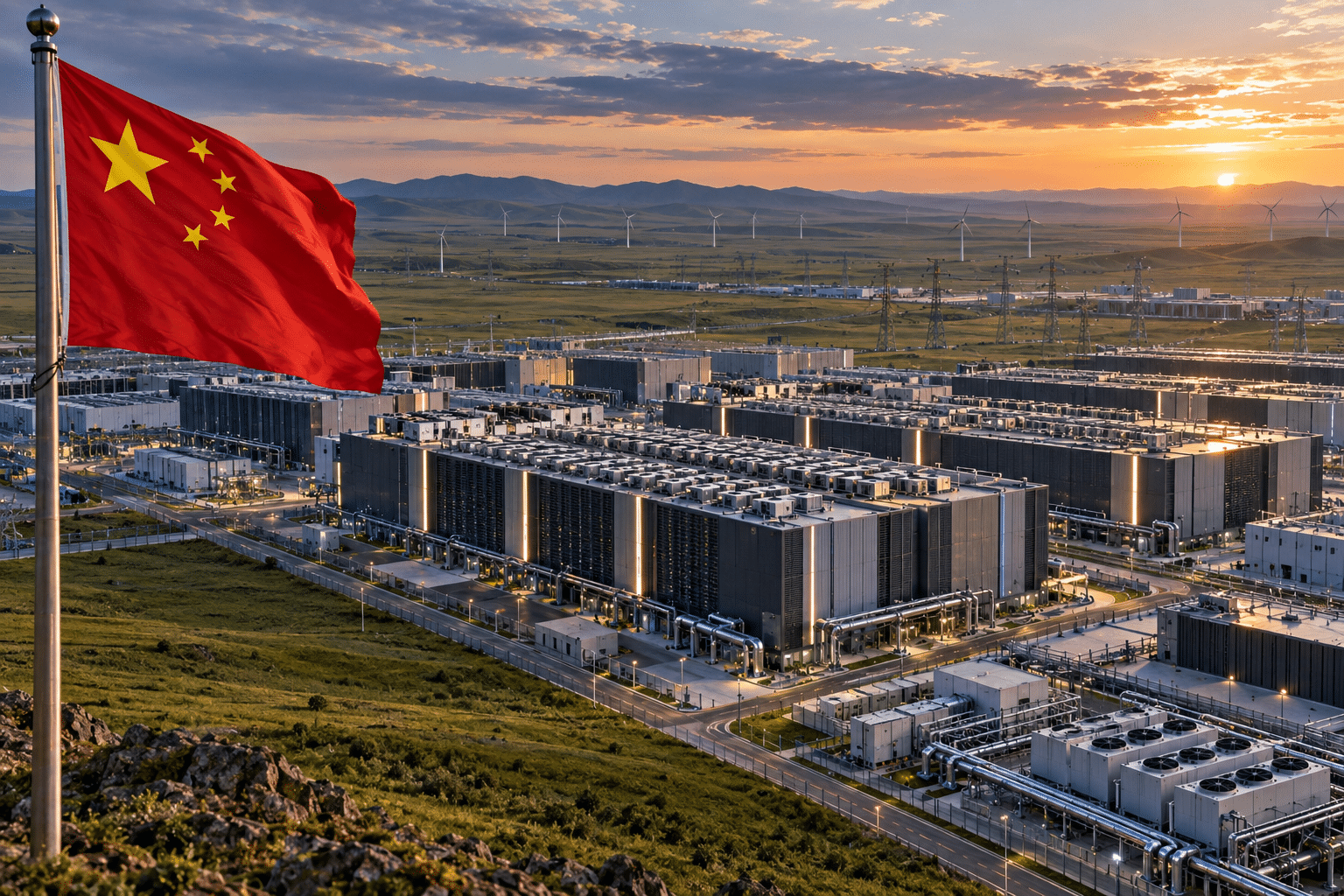
Carbon capture AI power is no longer a fringe experiment — it has moved to the center of how the tech industry plans to address its growing environmental footprint. As data centers consume electricity at unprecedented rates to fuel large language models and generative AI workloads, the pressure to offset or eliminate those emissions has become impossible to ignore. The question is no longer whether the industry should act, but how fast and with what tools.
The scale of the challenge is real. According to MIT Technology Review’s deep dive on carbon capture technology, direct air capture facilities still cost hundreds of dollars per ton of CO₂ removed — a figure that makes mass deployment difficult without serious innovation. Yet that is precisely where AI enters the picture, promising to compress timelines, reduce costs, and identify efficiencies that human researchers would take decades to find on their own.
In this post, we break down what is actually happening at the intersection of AI and carbon capture, why the tech sector’s energy hunger is both the problem and a potential part of the solution, and what this shift means for builders in the Web3 and decentralized technology space.
Here is the uncomfortable truth the industry is slowly confronting: training and running large AI models consumes enormous amounts of energy, much of it still sourced from fossil fuels. A single large-scale model training run can emit as much CO₂ as several transatlantic flights. That reality has made AI both a contributor to the climate problem and, increasingly, a proposed solution to it.
The paradox is not lost on researchers. Carbon capture itself is energy-intensive — you are essentially running a chemical or mechanical process that pulls CO₂ directly from the atmosphere or from point-source emissions. Powering that process with clean electricity is essential, and that is where the convergence of AI, renewable energy, and carbon removal technology becomes genuinely interesting rather than just aspirational.
AI tools are now being deployed to optimize the energy consumption of capture facilities in real time, predict equipment failures before they happen, and model the geological formations best suited for long-term carbon storage. These are not theoretical applications. Several pilot programs are already using machine learning to cut operating costs at direct air capture sites by meaningful margins.
Pro Tip: When evaluating carbon capture projects, look beyond the headline cost-per-ton figure. AI-assisted operations are compressing those numbers faster than traditional roadmaps predicted — the 2025 landscape looks very different from 2022 estimates.
The most immediate contribution AI is making to carbon capture is in materials discovery. Finding the right sorbent — the material that actually binds with CO₂ — has historically been a slow, expensive process of trial and error in physical labs. Machine learning models can now screen millions of candidate materials in silico, narrowing the field to the most promising candidates before a single lab experiment takes place.
Beyond materials, AI is transforming site selection and monitoring. Carbon storage requires injecting captured CO₂ underground into geological formations that will hold it safely for centuries. Analyzing seismic data, permeability maps, and pressure readings to identify the safest sites used to take years of expert analysis. AI-assisted geospatial modeling is cutting that timeline dramatically.
Process optimization is another major lever. Capture facilities run complex chemical cycles, and small inefficiencies compound quickly at scale. Reinforcement learning systems — the same family of techniques used to train game-playing AI — are being adapted to continuously tune these processes, squeezing out energy waste in ways that static engineering designs simply cannot match.
If you want to understand the broader context of how AI is rewriting energy sector economics, our coverage of AI’s impact on emerging technology sectors at amplifyweb3.ai goes deep on the structural shifts underway across infrastructure and sustainability.
It is no coincidence that the most aggressive carbon capture investments are coming from the same companies building the largest AI infrastructure. Microsoft, Google, and Stripe have made multi-year, multi-million-dollar advance purchase commitments for carbon removal credits. These deals do more than offset emissions on a spreadsheet — they provide the long-term revenue guarantees that early-stage carbon capture companies need to build out physical infrastructure.
Microsoft’s deal with Climeworks and Google’s investment in direct air capture facilities signal something important: these companies are not treating carbon removal as a PR exercise. They are integrating it into their long-term infrastructure planning, partly because regulatory pressure is increasing, and partly because their own sustainability pledges — some targeting carbon negativity by 2030 — require it.
The Web3 ecosystem has its own stake in this story. Blockchain-based carbon credit markets have struggled with credibility and verification problems, but the combination of AI monitoring and on-chain provenance tracking is emerging as a genuine solution to the double-counting and greenwashing problems that have plagued voluntary carbon markets for years.
Pro Tip: If your organization is evaluating carbon credits, prioritize projects that use continuous AI-based monitoring and publish verifiable on-chain records. Third-party spot audits alone are no longer sufficient for institutional credibility.
Decentralized technology has a meaningful role to play in scaling carbon capture — and it goes beyond tokenizing credits. Smart contracts can automate the lifecycle of a carbon removal agreement, from initial commitment through verified delivery and retirement, removing layers of intermediary cost and delay. Decentralized physical infrastructure (DePIN) models are already being explored for distributed carbon monitoring networks.
The transparency properties of public blockchains are particularly valuable here. One of the structural weaknesses of carbon markets is the opacity of the verification chain. When capture data, storage monitoring readings, and credit issuance all flow through a public ledger, the audit trail becomes immutable and accessible to any third party — a step change in accountability that centralized registries have struggled to provide.
AI adds the intelligence layer on top of that infrastructure. Imagine a network of distributed sensors monitoring CO₂ levels across a storage site, feeding data into an AI model that flags anomalies in real time, with each verified reading automatically recorded on-chain and triggering smart contract updates to credit holders. That is not science fiction — components of that system exist today and are being assembled by teams in both the climate tech and Web3 spaces.
For a broader look at how decentralized technology is intersecting with real-world sustainability initiatives, the amplifyweb3.ai blog covers the latest developments at the Web3 and sustainability frontier in depth.
Despite the genuine momentum, carbon capture AI power is not a solved problem. Cost remains the most stubborn obstacle. Even with AI-assisted efficiencies, direct air capture today costs roughly $300–$1,000 per ton of CO₂, depending on the technology and location. For context, most carbon offset markets have historically priced credits at $10–$50 per ton. That gap does not close overnight.
Energy sourcing is the second major challenge. Running AI-optimized capture facilities on renewable power requires either co-location with generation assets or access to clean grids that many regions simply do not yet have. Building the capture infrastructure and the clean energy infrastructure simultaneously is a coordination and capital problem as much as a technical one.
None of these challenges are insurmountable, but they require coordinated action across technology development, policy design, and private capital allocation — not just smarter algorithms.
The near-term picture is one of rapid iteration. AI-driven materials discovery is expected to yield a new generation of lower-cost sorbents within the next three to five years. Several next-generation direct air capture designs — including solid sorbent and electrochemical approaches — are moving from pilot to commercial scale with AI embedded in their operational architecture from day one.
Policy tailwinds are strengthening. The U.S. Inflation Reduction Act’s 45Q tax credit for carbon capture has been a significant catalyst for investment, and equivalent incentive structures are taking shape in the EU and Canada. As the economics improve and the regulatory environment stabilizes, the pipeline of projects moving from demonstration to full commercial scale is growing.
The path is not linear, and setbacks are inevitable. But the convergence of AI capability, decentralized infrastructure, and political will is creating conditions that did not exist five years ago — and that matters enormously for what becomes possible in the decade ahead.
Carbon capture AI power refers to the application of artificial intelligence to improve the efficiency, cost, and scalability of carbon dioxide removal technologies. It matters in 2025 because AI-driven data centers are among the fastest-growing sources of electricity demand globally, making the industry simultaneously a driver of emissions and a potential accelerant of solutions. The convergence of these two forces is creating both urgency and opportunity.
AI improves carbon capture through several distinct mechanisms: accelerating materials discovery for better sorbents, optimizing real-time process controls to reduce energy consumption, improving geological site selection for CO₂ storage, and enabling predictive maintenance that reduces downtime. Each of these applications can meaningfully reduce the cost and energy intensity of carbon removal operations when implemented well.
It depends on the definition of viable. Direct air capture remains expensive compared to legacy offset mechanisms, but AI-assisted operations are reducing costs faster than earlier projections. Corporate advance purchase agreements from major tech companies are providing the revenue certainty that makes commercial-scale projects financeable. The economics are improving, though mass-market affordability is still several years away.
Web3 technologies, particularly blockchain-based verification and smart contracts, are addressing the transparency and accountability problems that have undermined voluntary carbon markets. By creating immutable on-chain records of capture events, storage monitoring data, and credit issuance, decentralized infrastructure makes it much harder to double-count or misrepresent carbon credits. This is a structural improvement over the auditing models that dominated the market previously.
The most direct way is through carbon credit procurement — specifically prioritizing projects that use AI-based continuous monitoring and on-chain verification. Organizations building in Web3 can also explore DePIN models for distributed environmental monitoring, or integrate carbon accounting into smart contract workflows. Staying current with the rapidly evolving policy landscape — particularly 45Q credits in the U.S. and EU equivalents — is also essential for anyone planning capital allocation in this space.
Climeworks, Carbon Engineering (now part of Occidental’s 1PointFive), and Heirloom Carbon are among the direct air capture leaders integrating AI into their operations. On the AI infrastructure side, Google, Microsoft, and Stripe have made the largest advance purchase commitments. In the Web3 verification space, projects like Toucan Protocol and KlimaDAO have explored on-chain carbon markets, with newer entrants focusing specifically on AI-verified permanence monitoring.
Carbon capture AI power sits at one of the most consequential intersections in the technology landscape today. The same computational intelligence driving demand for electricity is being turned toward solving the emissions problem that electricity generation creates — and that feedback loop, if properly harnessed, could define the pace of climate progress through the 2030s. For builders, investors, and policy makers in the Web3 and emerging technology space, ignoring this convergence is no longer a neutral choice.
The opportunity is not just technical. It is economic, institutional, and deeply infrastructural. The organizations that embed AI-powered carbon accountability into their operations now — rather than treating it as a future compliance checkbox — will be better positioned as regulatory and market pressures accelerate. Decentralized technology has a genuine role to play in making that accountability transparent, verifiable, and trustless.
We are building at exactly this intersection of AI, Web3, and real-world impact. Explore what we have built at attn.live.