Anouncement

Anouncement


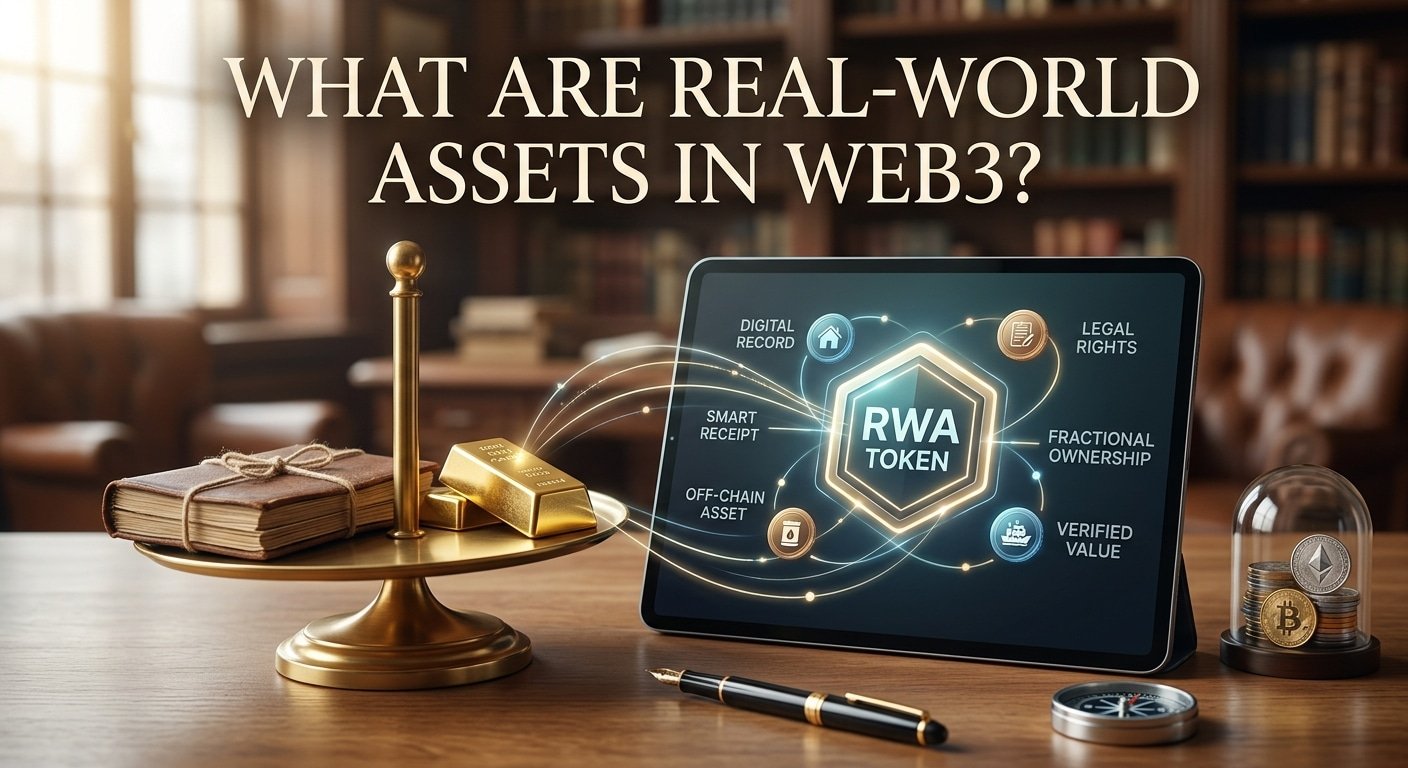
Maya hears the phrase “real-world assets” during a podcast while folding laundry.
The guest talks about tokenized Treasuries, fractional real estate, private credit, gold, and twenty-four-hour markets. Maya pauses the episode and looks at the washing machine as if it might explain everything.
“Does this mean regular people can own a piece of an office tower?” she asks.
The honest answer is: sometimes—but not always, not everywhere, and not in the way the marketing headline suggests.
Ordinary people can participate in the RWA economy, but participation has more than one meaning. You can invest in a regulated tokenized product. You can use a service powered by tokenized assets without touching a blockchain. You can work in the RWA industry. You can help a business finance a real activity. You can educate a community about the difference between a token and a legal right.
Maya is not standing in front of one door. She is standing in a hallway.
The first door costs nothing.
Maya begins by watching how a tokenized product works. She looks for the issuer, the legal documents, the asset, the custodian, the network, the investor restrictions, the redemption terms, and the fees. She does not connect her wallet or send money. She simply follows the trail.
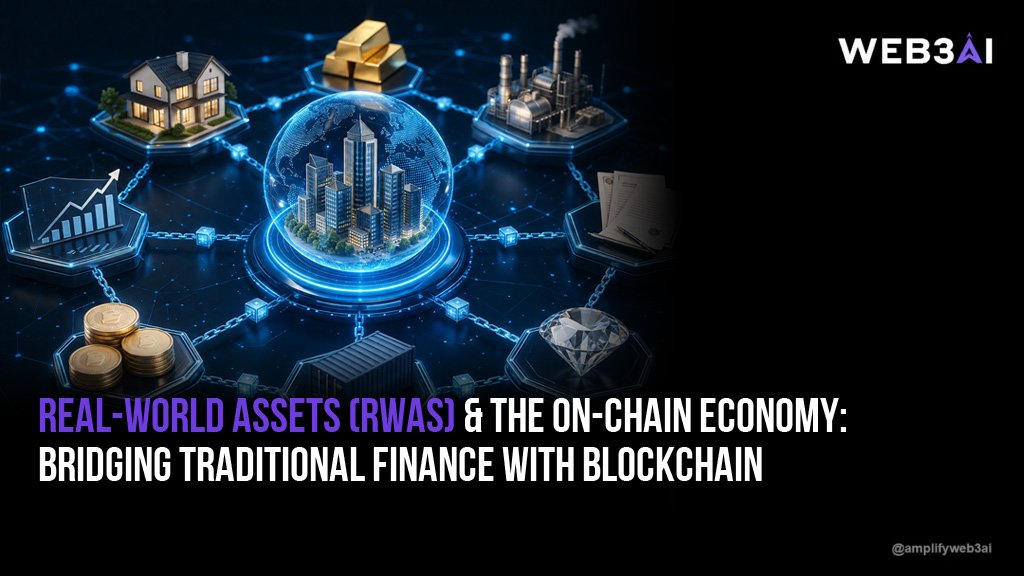
This may sound boring compared with buying a token in thirty seconds, but it is real participation. RWA literacy is a valuable skill because the label covers very different products. Tokenized U.S. Treasury funds, property interests, private loans, gold claims, and synthetic stock trackers should not be treated as one investment category.
It is like walking into a grocery store and calling everything “food.” An apple, a frozen dinner, a bottle of vitamins, and a bag of flour are all food-related, but they serve different purposes and carry different instructions.
As of September 18, 2026, RWA.xyz tracked about $38.25 billion in distributed tokenized real-world asset value, excluding the much larger stablecoin category. That total includes a varied group of assets rather than one unified market. Tokenized credit alone accounted for about $8.08 billion of distributed value as of September 16, 2026, while tokenized commodities were about $4.85 billion on September 17.rwa+2
Those figures show that the sector is real and growing, but size does not tell Maya whether a particular product is suitable, legal in her location, or easy to exit.
The second door is a regulated product or platform available to Maya’s investor type and country.
Some RWA products are designed for institutions or wealthy, legally qualified investors. BlackRock’s BUIDL began with a $5 million minimum and eligibility restrictions. Ondo’s OUSG, a tokenized product providing exposure to short-term U.S. Treasuries, listed a $5,000 minimum as of September 17, 2026, but remained limited to accredited investors and qualified purchasers under the stated U.S. rules.app.ondo+1
This is the first surprise in Maya’s journey: fractional technology does not automatically mean universal access.
A chocolate cake can be cut into one hundred pieces, but the host may still decide who is invited to the party.
Tokenization can reduce operational minimums. Hamilton Lane and Securitize, for example, offered a tokenized feeder fund with a $20,000 minimum rather than the roughly $5 million described as typical for the underlying private-market access route. Another private-credit feeder reduced the stated minimum from $2 million to $10,000. Yet these offerings still had eligibility requirements, so “broader access” did not mean “open to every wallet.”hamiltonlane+1
Other products may be available to individual investors through familiar interfaces. Franklin Templeton says its BENJI token, representing one share of its on-chain U.S. government money fund, is available to eligible U.S. investors through the Benji Investments app. This looks less like visiting a decentralized exchange and more like opening an investment account that happens to use blockchain-based recordkeeping behind the screen.
That difference is healthy for beginners to understand. You do not need to become a DeFi trader to participate in tokenized finance. In many cases, the most appropriate entry point will resemble a regulated brokerage or fund application, complete with identity verification and customer support.
The third door is not investing at all. It is contributing skills.
RWA projects need far more than blockchain developers. They need:
In other words, Maya can be “in RWAs” without purchasing an RWA token. A creator who explains tokenized bonds clearly may contribute more to healthy adoption than someone who buys a token because its logo looks expensive.
For people working in community strategy, education, media, or AI, a particularly valuable role is translation: turning legal language, blockchain mechanics, and financial risk into questions that real people can use.
There is no single “perfect person” for RWAs, but some people are better prepared for particular products.
A suitable participant is usually someone who:
A person who wants exposure to short-term government securities may explore a properly regulated tokenized Treasury product if it is available in their jurisdiction. A business owner may care more about tokenized invoices or credit. A property professional may see value in digital ownership records and automated distributions. An artist may be interested in royalty or intellectual-property structures. A technologist may focus on smart-contract security or interoperability.
The underlying need should lead. The token should not.
Maya also needs permission to say, “This is not for me yet.”
Someone should probably wait if they:
FINRA warns that crypto assets and related providers can involve exceptional volatility, limited liquidity, registration gaps, theft, and widespread fraud. A tokenized security may have a real asset behind it and still expose investors to platform, custody, liquidity, legal, and technology risks.finra+1
The safest word in investing is sometimes “no.” The second safest is “later.”
Before Maya invests, she writes ten questions on an index card.
1. What is the underlying asset?
Not “RWA.” Name it: Treasury bills, a commercial mortgage, gold, rental property, invoices, or private-company debt.
2. What exactly does the token represent?
Direct title, a fund share, a company interest, a secured claim, an unsecured promise, or price exposure?
3. Who is legally responsible?
A real entity should have a name, jurisdiction, management team, contact information, and legal obligations.
4. Where is the authoritative ownership record?
It may be the blockchain, an off-chain transfer-agent ledger, or a hybrid system. IOSCO stresses that this difference affects settlement, investor rights, and insolvency outcomes.
5. Who holds the asset?
A custodian, trustee, bank, vault, property company, or the issuer itself? Are assets segregated from the issuer’s balance sheet?
6. How is the value verified?
Look for recognized auditors, administrators, appraisers, proof of reserves backed by meaningful assurance, or public financial information. A dashboard created by the issuer is not independent verification.
7. Where does the return come from?
Treasury interest, rent, borrower interest, business revenue, gold-price appreciation, or newly issued tokens? If nobody can explain the return in one plain sentence, the risk is not understood.
8. How can the position be exited?
Is there issuer redemption, a licensed secondary market, a waiting period, a minimum amount, or no guaranteed buyer? The FSB warns that token and underlying-asset liquidity can differ, creating redemption pressure and run risk.
9. What are all the fees?
Subscription, management, custody, blockchain gas, foreign exchange, transfer, performance, and redemption fees can turn an attractive headline yield into a disappointing result.
10. What happens when something breaks?
Ask about lost keys, hacked smart contracts, wrong data, frozen transfers, issuer bankruptcy, custodian failure, and disputes. “The blockchain is immutable” is not a recovery plan.
Maya decides not to begin with money. She follows a four-week path instead.
Week one: choose one asset class. She selects tokenized Treasury products because she already understands that governments issue short-term debt. She avoids learning real estate, private credit, commodities, and bonds all at once.
Week two: compare one traditional and one tokenized version. She compares the underlying investments, fees, legal protections, operating hours, transfer rules, and eligibility. This helps her see what tokenization changes—and what it does not.
Week three: verify the institutions. She checks official regulator databases, offering documents, the custodian, the transfer agent, and the product’s real website. Dubai’s VARA, for example, specifically tells investors to verify firms through its public register before engaging in virtual-asset activity.
Week four: decide on her role. She may invest a small, affordable amount through an eligible regulated route, continue observing, or use her professional skills to create educational content. All three are valid outcomes.
If she invests, she starts with an amount small enough that a delay, error, or loss would not change her life. She records the purchase, fees, tax documents, redemption process, support contact, and wallet or account-recovery method.
The most exciting RWA story is often sold as, “Everyone can own a fraction of everything.” That future may partly arrive, but access is deeper than splitting assets into tiny pieces.
Real access means understandable disclosures, lawful participation, fair pricing, usable interfaces, realistic minimums, reliable custody, and a workable exit. It means a person with a small investment receives the same truthful information as the largest participant. It means the technology helps people make informed choices rather than merely making risky products easier to click.
Maya does not need to chase every tokenized building, bond, or gold bar. She needs one clear purpose, one verified doorway, and the confidence to ask ordinary questions.
Ordinary questions are powerful in Web3:
“What do I own?”
“Who owes me?”
“How do I get my money back?”
“What could go wrong?”
If a project cannot answer those questions without hiding behind jargon, Maya has already received her answer.
Always remember, stay curious, stay grounded and stay human.