Anouncement

Anouncement
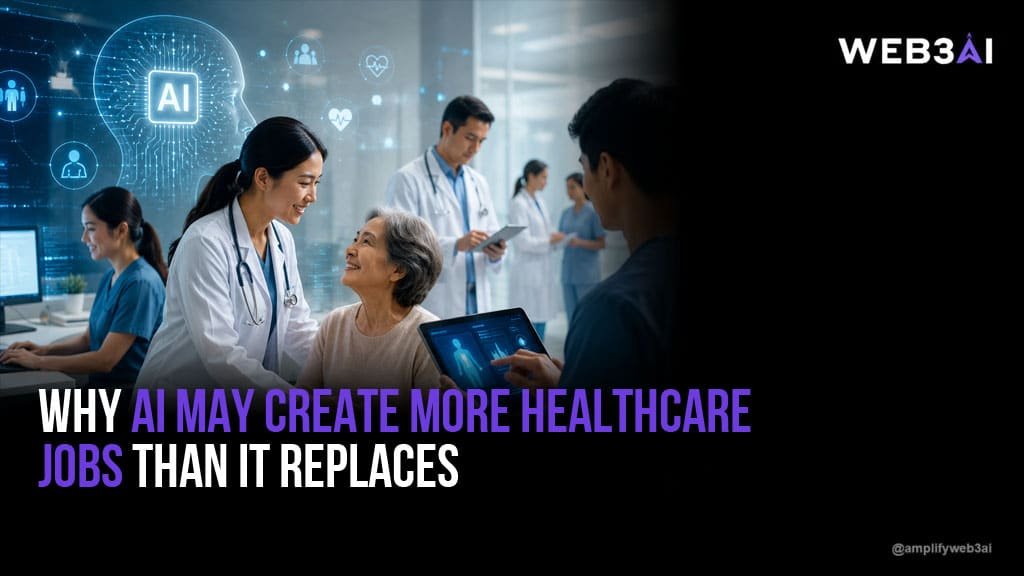

NEW YORK — As artificial intelligence agents become increasingly capable of performing complex cognitive tasks, widespread anxiety has gripped the healthcare industry. Radiologists, pathologists, primary care physicians, and psychiatrists have all faced predictions that medical AI could automate their roles and downsize the clinical workforce.
However, a perspective published in The New England Journal of Medicine by Dr. Dhruv Khullar, an associate professor of population health sciences at Weill Cornell Medicine and hospitalist at NewYork-Presbyterian/Weill Cornell Medical Center, challenges this narrative. Drawing on economic theory and the historical adoption of medical technology, Dr. Khullar argues that AI integration is far more likely to expand the U.S. clinical workforce over the long term.
A core driver of job growth in the AI era relies on an economic principle known as Jevons Paradox. This paradox occurs when technological innovations increase the efficiency with which a resource is used, ultimately leading to higher overall consumption rather than lower demand.
Dr. Khullar points to landmark medical advancements—such as cataract surgery and joint replacement procedures—as historical proof:
If AI models are priced near marginal cost and significantly lower the cost of delivering care, health systems will likely see a massive surge in demand for medical services, expanding the workforce needed to deliver them.
Pessimistic predictions regarding AI automation often rely on the “lump of labor” fallacy—the mistaken belief that there is a fixed, unchanging quantity of work to be done in healthcare.
In reality, technology continuously expands the scope of medicine:
Delivering medical care is rarely a single, isolated task; it is an intricate chain of interconnected decisions, patient interactions, and clinical judgments.
Dr. Khullar references O-Ring theory—named after the single faulty component that led to the Space Shuttle Challenger disaster—which states that in high-stakes, multi-step systems, a failure at any single point compromises the entire outcome.
| Task Type | Role of AI vs. Human Clinician | Impact on Workforce Value |
| Routine / Administrative Tasks | Automated by AI models (e.g., preliminary scan reading, charting) | Reduces friction and frees up clinical hours |
| High-Stakes / Relational Work | Requires human clinicians (e.g., nuanced decision-making, patient trust) | Increases the relative value of human oversight |
Because medical care carries high stakes, automation of specific tasks does not equal the automation of entire jobs. In fact, delegating repetitive cognitive burdens to AI elevates the importance and economic value of non-automated human skills—such as empathy, complex negotiation of treatment plans, and safety supervision.
While individual clinical roles and day-to-day workflows will undoubtedly evolve as AI agents mature, the long-term trend points toward workforce growth rather than widespread displacement. By lowering the cost of care, opening new treatment possibilities, and emphasizing the indispensable nature of human supervision, AI may ultimately usher in an expanded, more capable healthcare system.