Anouncement

Anouncement
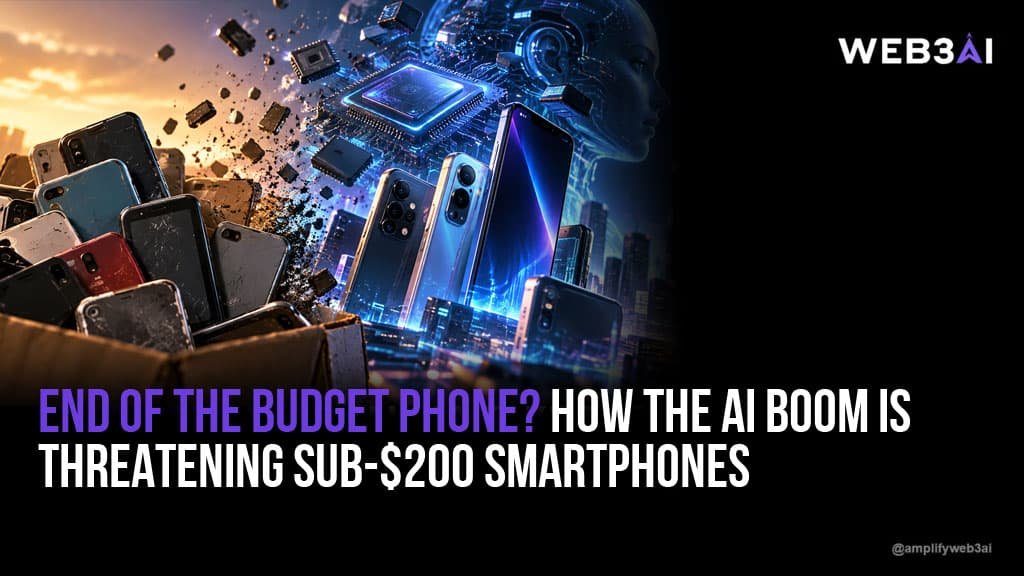

The era of reliable, ultra-affordable smartphones may soon draw to a close. As global tech giants pour hundreds of billions into generative artificial intelligence infrastructure, an unexpected casualty has emerged on the consumer front: the budget smartphone.
According to a study by market analysis firm Counterpoint Research, shipments of smartphones priced under USD 200 are projected to plunge by 40% by 2030. This represents a staggering loss of roughly 230 million entry-level devices annually, fundamentally transforming the mobile landscape.
The rapid rise of large-scale AI models has created an unprecedented demand for high-performance enterprise hardware. Tech conglomerates are aggressively expanding hyperscale data centers, placing massive procurement orders for essential silicon and memory components.
This surge has triggered fierce competition across semiconductor supply chains, leading to rising costs for:
Because profit margins on sub-$200 handsets are razor-thin, manufacturers can no longer absorb these climbing component expenses. Faced with dwindling returns, mobile brands are scaling back entry-level portfolios to concentrate on higher-margin mid-range and premium flagships.
| Segment | Projected Outlook by 2030 | Key Driving Factors |
| Budget (< $200) | Down 40% (~230M fewer units/year) | Soaring bill-of-materials (BOM), wafer capacity shift to enterprise AI |
| Mid-Range ($200–$600) | Steady Expansion | Better margins for OEMs; standard destination for upgrading users |
| Premium ($600+) | Strong Growth | On-device AI features, high consumer tolerance for hardware price increases |
Counterpoint notes that while total global smartphone volumes will likely stabilize toward the end of the decade, the market’s demographic composition will be permanently altered. Rather than disappearing entirely, the smartphone market is polarizing toward premium tiers, leaving entry-level offerings depleted.
For consumers in mature markets, the shrinking budget bracket may simply mean holding onto devices for three to four years instead of two, or turning toward certified pre-owned and refurbished devices.
However, industry analysts warn that the broader social fallout could be far more severe in developing regions.
“The loss of affordable new devices could effectively lock first-time users in lower-income regions out of mobile internet access entirely,” warned Yang Wang, Principal Analyst at Counterpoint Research.
In emerging economies across Southeast Asia, South Asia, Sub-Saharan Africa, and Latin America, sub-$200 smartphones have served as the primary gateway to banking, education, healthcare, and employment. If brand-new entry hardware climbs past the $200 threshold, millions of aspiring digital citizens risk being priced out of the internet economy entirely.
Unless component production scales significantly or governments step in with targeted digital inclusion subsidies, the ultra-affordable smartphone segment faces a steep contraction. For budget-conscious shoppers, the takeaway is clear: future mobile upgrades will likely depend heavily on refurbished secondary markets, telecom installment plans, or a transition into the $250-plus mid-range category.