Anouncement

Anouncement
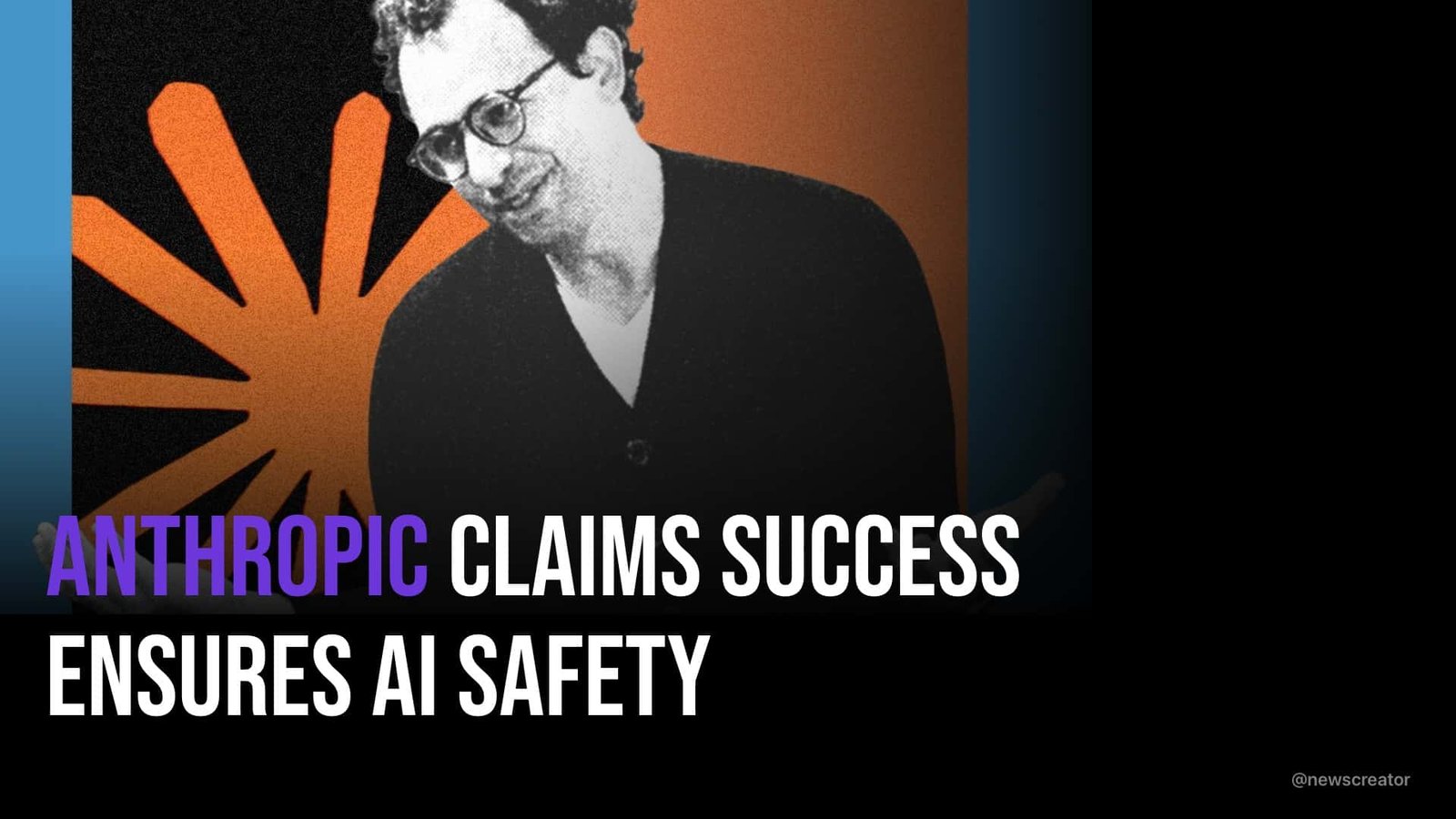

Responsible AI development has never been a more contested phrase than it is in 2025, and Anthropic just dropped a document that makes their position on it unmistakably clear. The company, founded by former OpenAI researchers and backed by billions in investment, published what it calls its “Core Views” — a sweeping philosophical statement arguing that AI can only be developed safely when it remains under the control of a small number of safety-focused organizations. It is a bold claim, and it has sparked an intense debate across the technology world.
The timing is no accident. According to MIT Technology Review, Anthropic has been pushing hard to establish verifiable safety benchmarks for AI models — essentially asking: how do we prove an AI system is safe before it reaches the public? Their “Core Views” document is the ideological backbone behind that effort, and it makes a case that centralized, accountable labs are better positioned to answer that question than open, decentralized alternatives.
If you have ever felt uneasy about how fast AI is moving, or wondered who is actually making the guardrail decisions for the systems shaping our world, this article is for you. We will break down Anthropic’s argument, explore the legitimate tensions it creates, and help you think clearly about what responsible AI development actually requires — and who should be doing it.
Anthropic’s document lays out a strikingly candid worldview. The company openly acknowledges that it might be building one of the most dangerous technologies in human history — and then argues it should keep building anyway. Their reasoning is essentially a calculated bet: if transformative AI is coming regardless, it is better to have safety-focused organizations at the frontier than to cede that ground to developers who treat safety as a secondary concern.
The document draws a firm line between “responsible scaling” — the idea that AI capabilities should only advance when safety measures keep pace — and the more laissez-faire approach taken by some competitors. Anthropic argues that open-source AI models, while valuable in many contexts, create unacceptable risks when applied to frontier systems because they cannot be monitored, patched, or recalled once released into the wild.
This is a genuinely uncomfortable position, because it asks us to trust a corporation’s self-assessment of its own safety practices. Anthropic is essentially saying: we know best, and the best thing for humanity is for us to stay in control. That may well be true — but it is also exactly the kind of claim that deserves scrutiny, not deference.
Pro Tip: When evaluating any AI company’s safety claims, look for third-party audits, published red-team results, and external governance structures — not just internal policy documents. Self-reported safety is a starting point, not a finish line.
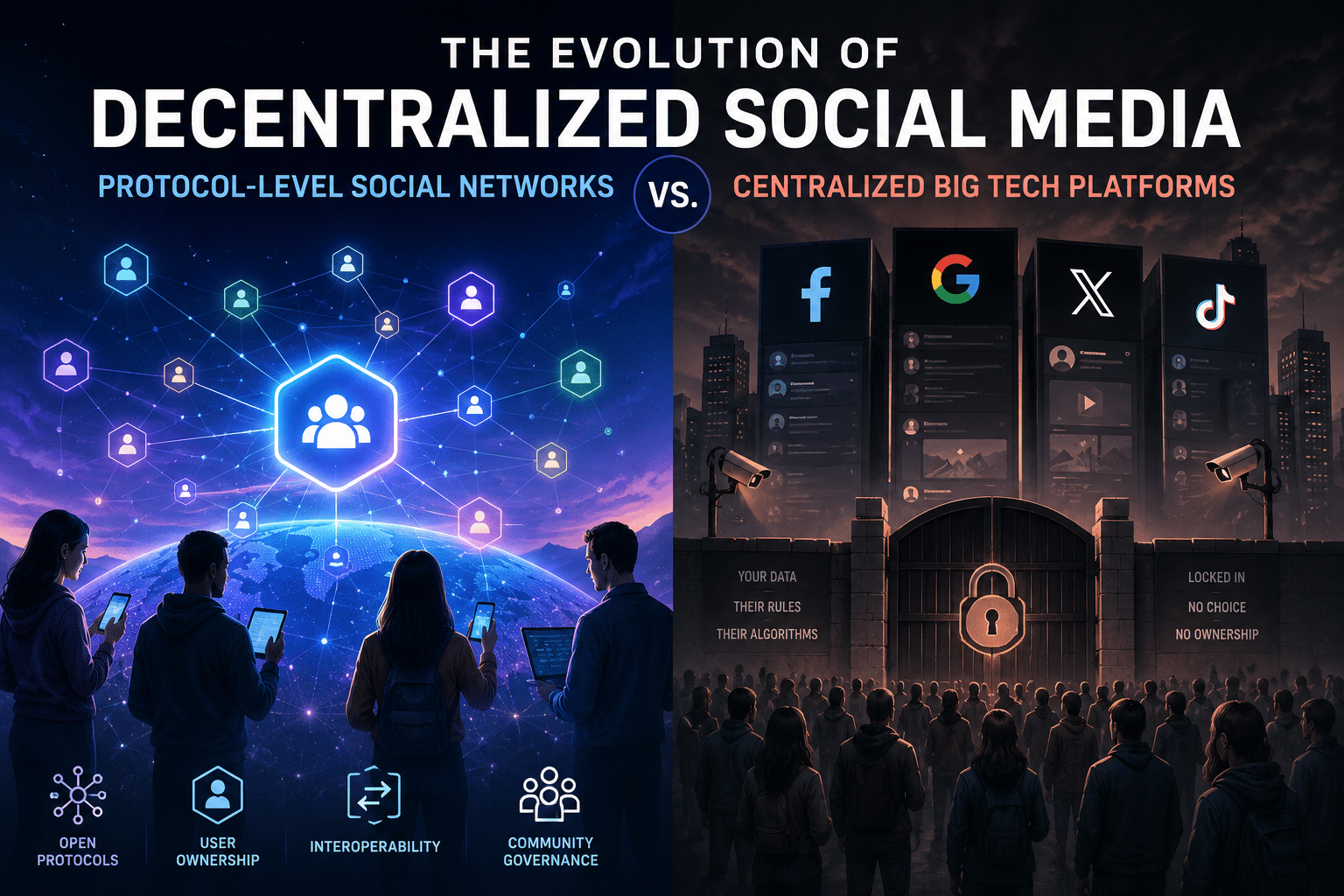
One of the most significant fault lines in Anthropic’s document is its implicit critique of open-source AI. The open-source community has long argued that transparency and distributed development are themselves safety mechanisms — that more eyes on a model means faster identification of problems, and that concentrating power in a few labs creates its own category of risk. Anthropic’s position directly challenges this view.
The company argues that at the frontier of AI capability, openness becomes a liability rather than an asset. A model powerful enough to assist with bioweapon synthesis or large-scale cyberattacks cannot be “un-released” once it is public. In this framing, responsible AI development requires not just good intentions but operational control — the ability to monitor deployment, restrict misuse, and update or shut down a model when new risks emerge.
This debate connects directly to how AI is already reshaping industries. As we explored in our piece on how AI is changing the creator economy, the downstream effects of AI deployment decisions are felt by real people building real businesses. The question of who controls the underlying models is not just philosophical — it has direct consequences for everyone who relies on these tools.
Neither side of this debate has a clean answer. Centralized control prevents certain catastrophic risks but introduces others, including the concentration of extraordinary economic and social power in a handful of private companies. Open-source distribution democratizes access but removes the safety nets that come with accountability. Responsible AI development demands we wrestle honestly with both sides of that tradeoff.
Perhaps the most philosophically loaded question in Anthropic’s document is one it never quite answers directly: who decides what counts as safe? The company has built internal processes — safety teams, responsible scaling policies, model cards — but all of these exist within a private corporate structure accountable primarily to investors and, to some degree, regulators. There is no independent democratic body with authority over these decisions.
This is not unique to Anthropic. Every major AI lab faces the same structural problem. But Anthropic’s “Core Views” document makes the tension more visible, because it explicitly argues for centralized control as a safety feature. If you are going to make that argument, you have a responsibility to explain what external checks exist on your own power.
The ethics of this situation run deeper than any single company’s policy. As our deep dive into the ethics of AI and its moral landscape explores, the questions AI raises about autonomy, accountability, and power are not new — they are extensions of much older debates about who controls transformative technology and in whose interest. What is new is the speed and scale at which these questions are becoming urgent.
Pro Tip: The most important question to ask about any AI safety framework is not “does this company believe in safety?” — it is “what happens when safety and profit conflict, and who makes that call?” Look for mechanisms that survive that tension, not just mission statements that precede it.
Moving past the philosophical debate, it is worth asking what responsible AI development actually looks like when it is working well. Anthropic’s own practices offer some instructive examples, even if the broader framework they argue for remains controversial.
Here are some of the practices most widely associated with genuine responsible AI development:
These are not radical ideas, but they are inconsistently applied across the industry. Anthropic implements many of them more rigorously than most. The question is whether implementing them internally is sufficient, or whether they need to be enforced externally through regulation and independent oversight.
Anthropic’s argument ultimately points to a governance gap that no single company can fill on its own. If responsible AI development requires centralized control, then the next question is: centralized where? In a private company? A national government? An international body? Each answer carries its own risks and its own blind spots.
Current global AI governance is fragmented. The EU’s AI Act establishes risk-based rules for AI deployment within Europe. The United States has pursued a lighter executive-order approach. China has its own regulatory framework. No meaningful international coordination exists on frontier AI development. This patchwork is exactly the environment in which Anthropic’s argument — “trust us, we are the responsible ones” — finds its most fertile ground.
The deeper look at AI governance and who controls the future of artificial intelligence makes clear that the governance gap is not a temporary problem waiting to be solved. It is a structural feature of a technology that moves faster than institutions can adapt. Responsible AI development, in this context, is not just a corporate policy — it is a political and social challenge that requires responses at every level of society.
What makes Anthropic’s document valuable — whatever you think of its conclusions — is that it forces this conversation into the open. By publishing a frank statement of their philosophy and the reasoning behind it, they invite scrutiny in a way that companies operating purely behind closed doors do not. That transparency is itself a form of accountability, even if it is incomplete.
If you are building products on top of AI, creating content with AI tools, or simply living in a world increasingly shaped by AI decisions, Anthropic’s “Core Views” document matters to you — even if you never read it. The choices made at the frontier of AI development set the conditions for everything that follows: what tools exist, what guardrails are in place, what uses are permitted, and who bears the costs when things go wrong.
Here is a practical framework for thinking about responsible AI development as a user or builder:
The point is not to be cynical about AI development or about any particular company. It is to be an informed participant in decisions that will shape the next decade of technology — and, arguably, much more than that.
Responsible AI development refers to the practice of building, deploying, and governing AI systems in ways that minimize harm, maximize transparency, and ensure accountability. It includes technical practices like red teaming and staged rollouts, as well as governance structures that allow external oversight of AI companies’ decisions. The definition is still evolving, and different organizations interpret it differently depending on their values and incentives.
Anthropic’s position is that frontier AI systems — those powerful enough to pose catastrophic risks — cannot be safely managed once they are released publicly without restrictions. Centralized control allows for monitoring, updating, and if necessary shutting down a model. They argue that open-source distribution of the most capable models removes these safeguards and creates risks that no subsequent intervention can fully address. It is a contested but coherent position that reflects genuine trade-offs in AI safety design.
Not necessarily, and the answer depends heavily on the capability level of the model. For most AI applications, open-source development offers real safety benefits — more researchers can audit the code, identify biases, and flag problems. The concern Anthropic and others raise applies specifically to frontier models capable of causing large-scale harm, where the ability to restrict misuse may outweigh the benefits of open access. Below that threshold, open-source AI has a strong safety track record.
External oversight remains limited and fragmented. The EU AI Act provides the most comprehensive regulatory framework, categorizing AI systems by risk level and imposing requirements on high-risk applications. The US relies primarily on voluntary commitments and executive guidance. No international body has binding authority over frontier AI labs. Independent researchers, civil society organizations, and investigative journalists play an important informal oversight role, but formal accountability structures are still developing.
Individuals can support responsible AI development by staying informed about AI policy debates, supporting organizations that advocate for independent AI oversight, and asking critical questions about the AI tools they use — including who built them, on what data, and with what safeguards. As voters and consumers, people also have collective leverage over the regulatory and market environments that shape how AI companies behave. Engagement matters more than most people realize.
Transparency is one of the most important accountability mechanisms available in the absence of strong external regulation. When companies publish their safety policies, model documentation, and incident reports, they invite scrutiny that can catch problems earlier and build justified public trust. Anthropic’s “Core Views” document is an example of this kind of transparency — it may be self-serving in some respects, but it also creates a public record against which the company’s actual behavior can be measured over time.
Responsible AI development sits at the center of the most consequential technology debate of our time, and Anthropic’s “Core Views” document has pushed that debate further into the public sphere. Their argument — that safety requires control, and control requires trusting the right organizations — is neither obviously right nor obviously wrong. It is a genuine philosophical position that deserves genuine engagement rather than reflexive agreement or dismissal.
What the document makes undeniably clear is that we are all stakeholders in how this plays out. The decisions being made right now about who controls AI, how it is governed, and what trade-offs are acceptable will shape the technological landscape for decades. No single company has the full answer, no government has caught up yet, and no international framework has been established. That is not a reason for despair — it is a reason to pay attention, ask hard questions, and stay engaged with the builders who are willing to be transparent about what they are building and why.
The future of AI is being written in real time. Explore what we have built at attn.live.