Anouncement

Anouncement

For Audio, listen HERE
Imagine walking down a busy city street on a typical weekday afternoon. You are surrounded by hundreds of strangers, each moving at their own pace, lost in their own thoughts and daily routines. Now, imagine that every time you take a single step, a tiny drop of ink leaves a permanent mark on the pavement beneath your feet. Over days, months, and years, these microscopic drops pool together, creating an incredibly intricate, massive, and beautifully complex map of human movement.
To the untrained eye, this sprawling canvas looks like a chaotic mess of overlapping stains. But to a master cartographer, it reveals a wealth of hidden patterns and behavioral secrets. It shows exactly where people stumble, where they walk the fastest, where they naturally gather to rest, and ultimately why they make the choices they do.
In our modern digital world, that invisible ink is your personal health data. Every routine blood test you have ever had, every prescription you have filled at the local pharmacy, and every single step counted by the smartwatch on your wrist acts as a digital footprint. Even that saliva sample you enthusiastically mailed off in a cardboard box to trace your family tree contributes to this growing landscape. Together, these countless data points form a vast, deep ocean of biological information.
In recent years, the medical world has witnessed breathtaking demonstrations of what happens when we give the world’s most powerful computational cartographers access to this map. We are no longer waiting for the future of medicine to arrive. The revolution is already unfolding in research laboratories and server farms across the globe.
It is a staggering triumph for human ingenuity and technological progress. Yet, as the initial applause for these milestones begins to fade, a chilling and urgent question echoes through the halls of modern medicine.
Whose ink actually created that map?
Who were those millions of anonymous patients whose biology fueled these discoveries? Were they ever directly asked for their explicit permission to be included in these massive datasets? Were they told their most personal medical histories were being used to train profitable corporate machines? Did they see a single cent of the resulting financial windfall?
In this article, we are digging deep into a topic that hits incredibly close to home for all of us. We will explore the intersection of artificial intelligence’s raw analytical power, the ongoing struggle for personal data ownership, and how a rising technological movement called Web3 might finally tip the scales back in favor of everyday people.
To truly understand this growing tension, we first need to look at how artificial intelligence actually functions in the medical field today. This is not a speculative, futuristic concept reserved for science fiction novels. Doctors are actively utilizing machine learning models right now to spot tiny anomalies in X-rays and MRI scans that the human eye might completely miss.
Beyond the clinic, research and development labs, pharmaceutical giants, and university research teams are deploying generative AI to crunch unimaginably massive datasets. These systems are used to predict how viral diseases spread through populations and to model how complex proteins fold. Tools like Google DeepMind’s AlphaFold have successfully predicted the 3D structures of nearly all known proteins, compressing what used to be years of painstaking laboratory work into mere minutes.
Furthermore, generative chemistry models are now capable of dreaming up entirely new molecular structures to target specific diseases. In recent years, we have seen AI-designed drug candidates successfully enter human clinical trials for conditions like idiopathic pulmonary fibrosis. While these systems do not magically bypass the necessary years of human safety trials and regulatory approvals, they dramatically accelerate the initial discovery phase.
But artificial intelligence is an inherently insatiable beast. It does not run on electricity and processing power alone; it absolutely requires vast amounts of high-quality data to function. Without billions of data points to learn from, a state-of-the-art AI model is like a cutting-edge sports car sitting idle in a garage without a single drop of fuel in its tank.
So, where does all this high-octane digital fuel come from?
It comes directly from you and your daily interactions with the healthcare system. Every time you step into a medical clinic, consult with a therapist on a mental health app, or log a workout on your phone, a permanent digital trail is formed. Insurance companies meticulously track your diagnostic codes and billing claims. Electronic Health Record (EHR) providers aggregate your entire medical history into centralized digital silos.
Much of this information is eventually “de-identified,” meaning your name and social security number are stripped away to comply with privacy laws like HIPAA. However, this anonymized data remains incredibly valuable and is routinely packaged, licensed, and sold to third-party data brokers and pharmaceutical research divisions. It is data collected during your most vulnerable human moments—when you are ill, when you are terrified about a diagnosis, or when you are simply curious about your genetic heritage.
Think of it like a giant, invisible oil rush happening right beneath our feet. You are the sovereign land containing the valuable crude oil, but massive, centralized corporations are the ones building the rigs, refining the product, and selling it on the open market. Your biological data is being brokered and traded behind closed doors without your active participation. You are the essential raw material driving the industry, yet you are completely left out of the financial transaction.
This dynamic brings us to a massive, complicated ethical paradox that society must navigate. On one hand, this large-scale data aggregation is undeniably accelerating research and saving human lives. Because millions of diverse medical records are pooled together, AI models can identify hidden correlations that lead to real-world treatments. Humanity, as a collective whole, benefits immensely when scientific discoveries happen faster.
But on the financial side of the equation, the rewards are entirely lopsided. The proprietary AI developers, the pharmaceutical monopolies, and the mega-insurance conglomerates are the entities reaping the massive financial harvests. They build multi-billion-dollar valuations on the backs of data generated by everyday citizens who struggle to pay their own medical bills.
This creates a high-stakes, uncomfortable trade-off for the average consumer seeking care. When you need medical help, you face a profound, unspoken dilemma about your personal privacy. You must visit the hospital or use a health-tracking app to preserve your well-being, knowing fully that the very fabric of who you are will likely be commercialized. Your genetic makeup and health habits become corporate assets without your explicit, informed awareness.
For decades, we have collectively accepted this unequal dynamic as the standard cost of doing business in the modern world. We shrugged our shoulders and assumed that this was simply how the healthcare system had to operate to fund innovation. But what if there was a legitimate way to maintain rapid medical progress without forcing individuals to sacrifice their personal sovereignty?
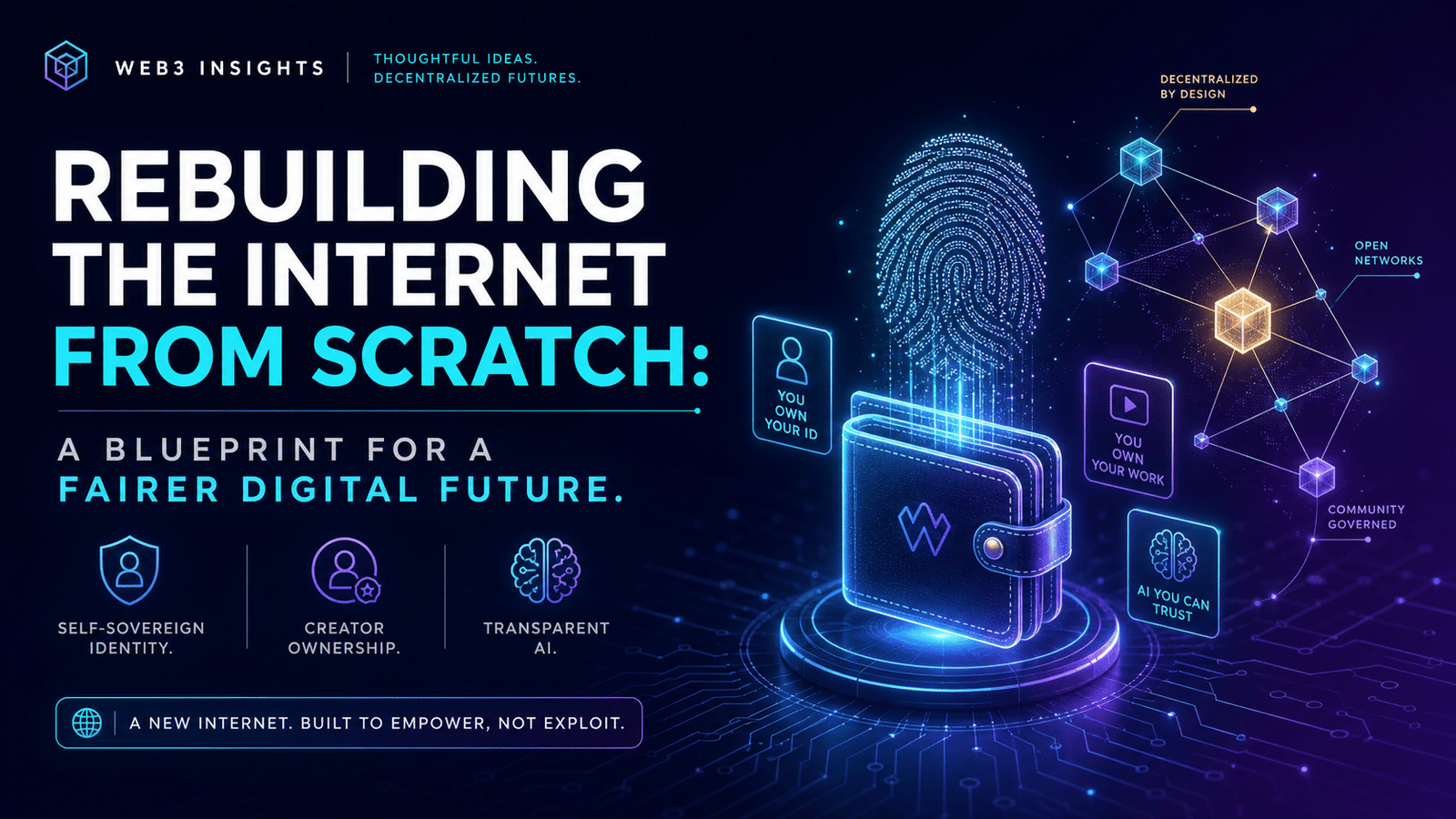
Most people associate the term “Web3” exclusively with decentralized financial tools and speculative assets. When you hear the word, you might immediately think of cryptocurrency trading, digital tokens, and browser-based financial wallets. If you have ever used a non-custodial Web3 wallet, you know it is a highly secure digital environment where you, and only you, hold the cryptographic keys to your assets.
Now, let’s take that exact same architectural concept and apply it to something far more inherently valuable than money: your personal health and biological data.
This idea is currently blossoming into a movement known as Decentralized Science, or DeSci. The goal of DeSci is to fundamentally rewire how scientific research is funded, how data is shared, and how discoveries are monetized. Instead of a few massive corporations hoarding siloed datasets, DeSci envisions a global, collaborative ecosystem powered by blockchain technology.
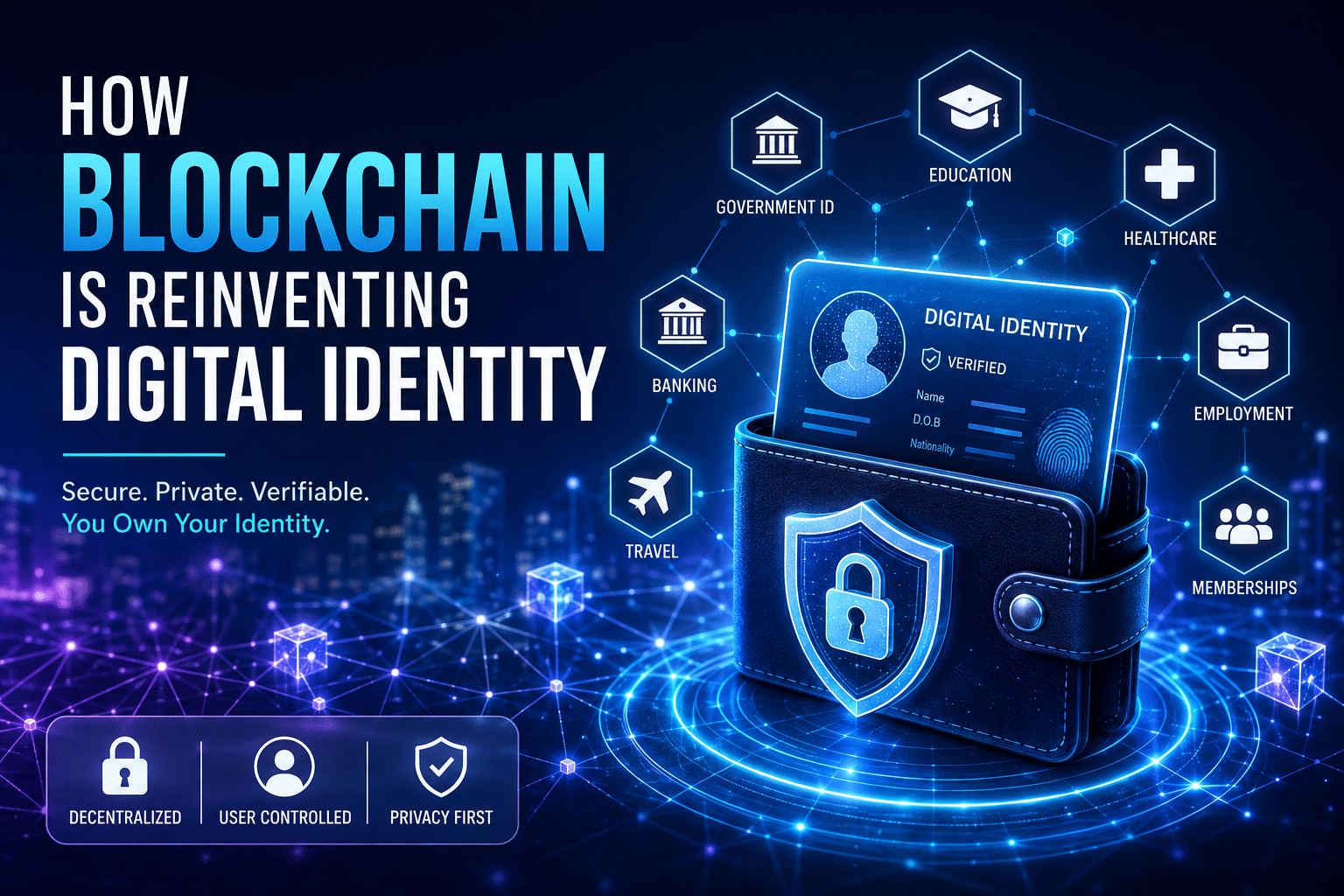
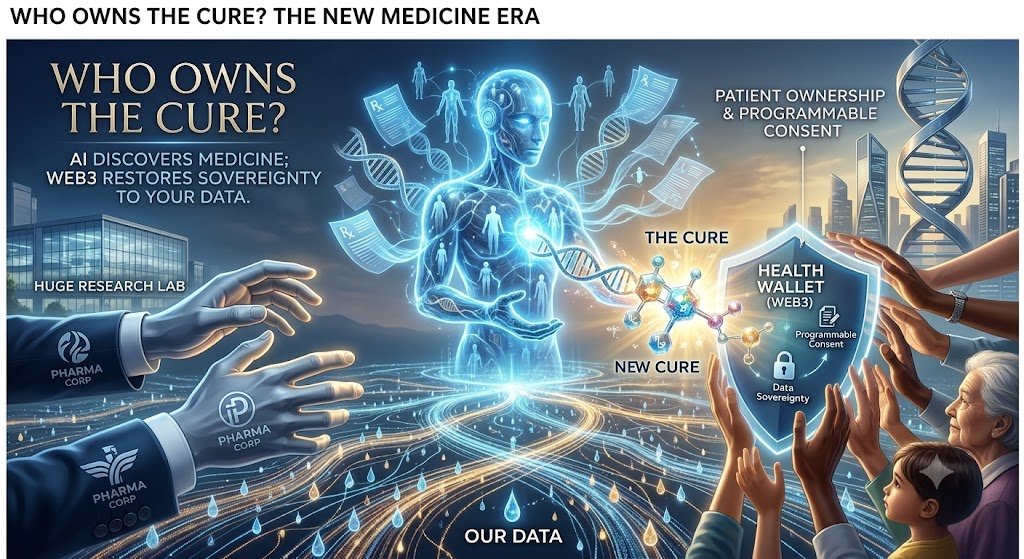
Imagine possessing a fully decentralized, independent Health Wallet on your smartphone or computer. Inside this secure digital vault sits a verified record of every dental visit you have ever had, every hospital discharge summary, and your complete genomic sequence. Because this wallet is built on a decentralized blockchain ledger rather than a corporate server, no single centralized authority owns or controls it.
If a pharmaceutical company or an academic AI researcher wants to run a simulation to find a cure for a rare disease, they can no longer just buy a massive batch of patient data from a shadowy third-party broker. They have to come directly to your digital doorstep and request permission.
With a decentralized Health Wallet, you finally gain the genuine power of programmable consent. Through the use of smart contracts—which are automated, self-executing agreements written directly into the code—you can set incredibly strict, granular rules for how your data is utilized. You are placed entirely in the driver’s seat of your digital identity.
You can execute specific commands and permissions, such as:
This technological shift fundamentally alters the power dynamic of the entire healthcare industry. You are no longer just the passive product being mined and sold to the highest bidder. You become an active, empowered partner in global scientific advancement.
A very common concern regarding this vision, especially among those who aren’t deeply embedded in the daily tech world, is a relatively simple one. People understandably want to know if storing health data on a blockchain is actually safe from malicious actors.
It is a completely valid and understandable fear to harbor in our current digital climate. We live in a chaotic era where major corporate security breaches and ransomware attacks make the evening news on a weekly basis. Capitalist institutions constantly assure us that our records are perfectly safe in their giant, centralized servers. Then, inevitably, a sophisticated hacker breaches the digital walls and compromises millions of highly sensitive medical records in a single afternoon.
When a centralized hospital network or data broker holds your information, it is exactly like putting all the town’s gold into a single, massive vault. It creates an incredibly lucrative, irresistible target for cybercriminals. If the vault cracks, everyone in the system loses everything at once.
Web3 architecture brilliantly flips this vulnerability on its head through distributed networks. By fragmenting and distributing encrypted data across a decentralized ledger, there is no single, massive vault left to rob. Furthermore, advanced cryptographic techniques like Zero-Knowledge Proofs allow you to prove that you meet the criteria for a medical study without ever revealing your actual identity to the researchers.
The foundational technology required to take back control of your health data already exists today. However, just because a revolutionary tool exists in the world does not mean it is currently easy or intuitive for the average person to use.
Think of it like the complex world of high-level estate planning and wealth management. Wealthy families have dedicated teams of CPAs, estate lawyers, and financial advisors to set up sophisticated trusts that protect their assets for generations. The average person simply does not have the money or the technical literacy to access those resources, so they miss out on the benefits. The legal structures are technically available to everyone, but the user experience is a massive barrier to entry.
Right now, successfully managing your own digital health data on Web3 platforms requires a frustrating amount of manual effort and technical know-how. You have to understand seed phrases, gas fees, and complex wallet interfaces.
But we are moving incredibly rapidly toward a future defined by seamless automation and account abstraction. Soon, intuitive user interfaces will hide the complex blockchain plumbing completely out of sight. Everyday citizens, regardless of their age or technical literacy, will be able to seamlessly manage their digital sovereignty with the simple tap of a button on their phones.
Your medical data is not just a collection of sterile, boring binary code sitting forgotten on a dusty hard drive somewhere. It is an authentic, living extension of exactly who you are as a human being. It represents your unique biology, your ancestral heritage, your physical struggles, and your ultimate resilience.
We are accelerating toward a deeply promising, highly ethical future for humanity. By combining the rapid, miraculous problem-solving intelligence of AI with the fair, democratic, and protective architecture of Web3, we can change the world. We can create a healthcare system where medicine heals us faster than ever before, while finally respecting and rewarding the individuals who made the cure possible in the first place.
Always remember to stay curious, stay grounded, and stay human.