Anouncement

Anouncement
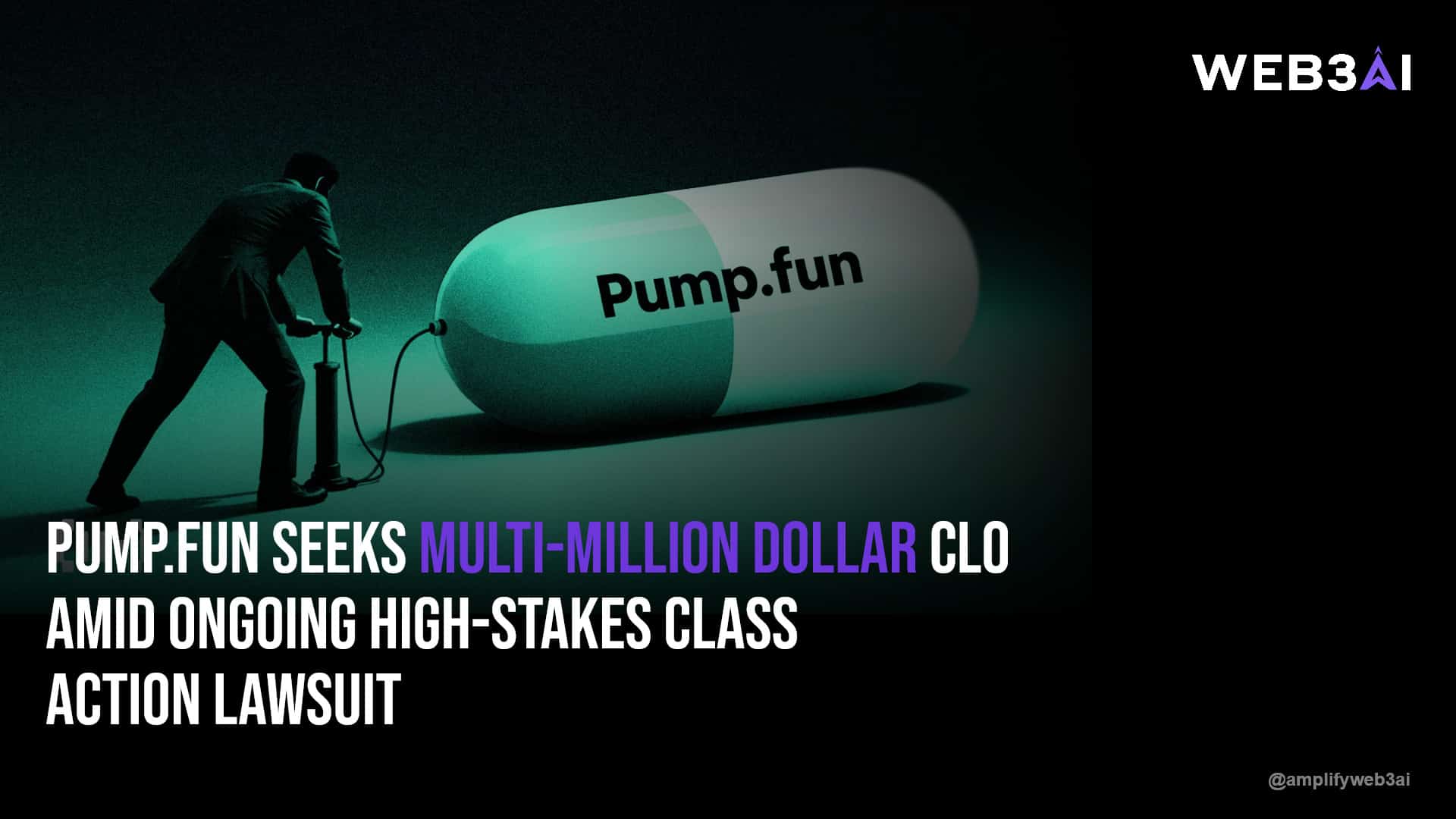

The Pump.fun class action lawsuit is now one of the most closely watched legal battles in decentralized finance, and for good reason. Pump.fun — the Solana-based memecoin launchpad that helped thousands of traders spin up tokens in minutes — is now facing serious legal scrutiny that goes far beyond its platform mechanics. A new class action filing has named the platform’s Chief Legal Officer (CLO) as a central figure in allegations of fraudulent hiring practices, deception, and broader misconduct that plaintiffs say harmed them financially.
This case doesn’t exist in a vacuum. Legal pressure on crypto platforms has been building steadily throughout 2024 and into 2025, as regulators and private litigants grow more sophisticated in how they pursue Web3 companies. According to reporting by major financial news outlets, this wave of litigation reflects a broader reckoning with how memecoin platforms operate, who is accountable when things go wrong, and whether current legal frameworks are adequate to protect retail participants.
In this post, we break down exactly what the Pump.fun lawsuit alleges, who is named, what it means for memecoin culture, and what broader lessons the crypto community should take away. Whether you’re a trader, builder, or curious observer, this story matters more than the headlines suggest.
At the core of the filing is a claim that Pump.fun’s CLO engaged in deceptive conduct related to hiring practices — specifically, that candidates were allegedly misled about the nature of their roles, compensation terms, and the company’s internal operations. Plaintiffs argue this constitutes fraud and that they suffered real financial and professional harm as a result of these misrepresentations.
The lawsuit also raises broader questions about how Pump.fun is structured legally. Because the platform operates in a largely decentralized manner, pinning liability on specific individuals or corporate entities has historically been difficult. This lawsuit attempts to do exactly that — identifying named executives rather than targeting the protocol itself. That’s a notable legal strategy that could set precedent for how future cases against DeFi platforms are pursued.
It is important to note that at the time of writing, these are allegations. No court has made a ruling, and Pump.fun has not publicly confirmed or denied the specific claims. The outcome will depend heavily on how courts interpret jurisdiction, intent, and the platform’s employment practices under applicable law.
Pro Tip: When following crypto legal cases, always distinguish between allegations in a complaint and actual court findings. Early filings reflect one side’s claims — not established facts.
Naming a Chief Legal Officer specifically in a class action is not a common move. Legal executives are typically shielded by corporate structures, and their decisions are often treated as internal policy rather than personal misconduct. The fact that plaintiffs have chosen to name the CLO directly signals that they believe they have evidence linking that individual’s personal conduct — not just corporate policy — to the alleged harm.
This matters because it raises the legal stakes considerably. If courts allow the case to proceed against a named individual, it could deter other crypto legal teams from making similar decisions in the future. It may also embolden other plaintiffs in adjacent cases to name individuals rather than entities, fundamentally changing how accountability works in Web3 companies.
For the memecoin ecosystem specifically, this development is worth watching closely. Pump.fun popularized the concept of near-instant token launches, and the platform’s legal and compliance leadership has been instrumental in shaping how it navigates regulatory gray areas. If that leadership is found to have acted in bad faith, the reputational and structural consequences for the platform could be severe.
If you want to understand the broader cultural context behind platforms like Pump.fun, our deep dive into how memecoins are reshaping the crypto landscape is essential reading for understanding where this industry has come from and where it’s heading.
The Pump.fun class action lawsuit is not an isolated incident. Across the DeFi and memecoin space, legal filings have become more frequent, more sophisticated, and more targeted at individual decision-makers rather than protocols alone. Courts are slowly developing a body of case law around how Web3 companies should be held accountable, and each new filing adds to that foundation.
What makes the current moment particularly interesting is the political and regulatory backdrop. With the U.S. taking a somewhat friendlier posture toward crypto under recent policy shifts, some observers expected litigation to slow. Instead, private class action suits have accelerated — suggesting that retail participants and their attorneys see the courts as a more reliable path to accountability than waiting for regulators to act.
Understanding how fraud and manipulation operate in crypto markets is critical for anyone participating in the space. Our breakdown of what a rug pull actually is in crypto gives you the foundational literacy to identify warning signs before they become costly mistakes.
If you have used Pump.fun to launch or trade tokens, you are likely wondering what — if anything — this lawsuit means for your assets or your exposure. In most cases, class action suits focused on employment practices do not directly affect the platform’s user-facing operations in the short term. The platform may continue to function while litigation proceeds.
However, there are knock-on effects to consider. Regulatory attention tends to follow litigation. If the case attracts media scrutiny and signals potential misconduct at the executive level, it could accelerate the timeline for formal regulatory inquiry from bodies like the SEC or CFTC. Platforms facing such scrutiny sometimes make sudden operational changes, restrict access for certain jurisdictions, or alter their fee structures and token policies.
Pro Tip: If you are actively using any memecoin launchpad, it’s wise to monitor their official communications and legal disclosures regularly — especially during periods of litigation. Don’t wait for a platform to announce changes reactively.
Token creators should also consider reputational risk. Launching tokens on a platform embroiled in legal controversy — even if you are entirely innocent — can affect how your project is perceived by the broader community, by exchanges, and by potential investors. Diversifying your launch strategy and building on-chain credentials that are platform-independent has never been more important.
The Pump.fun class action lawsuit arrives at a pivotal moment for the entire Web3 industry. The early narrative that decentralization equals unaccountability is being tested in courtrooms, and the results are genuinely shaping how platforms are structured, staffed, and governed. Executives who once assumed anonymity or jurisdictional ambiguity would protect them are learning otherwise.
This also connects to a larger conversation about how Web3 platforms should relate to the creators and communities they serve. As we explored in our piece on Web3 and the creator economy, the promise of decentralized platforms was always that they would redistribute power and revenue more fairly. When that promise is undermined by internal misconduct, it doesn’t just harm individual plaintiffs — it erodes trust in the entire ecosystem.
The next major milestone to watch is whether the court certifies this as a formal class action — a legal threshold that would dramatically increase the pressure on Pump.fun and potentially attract additional plaintiffs. If certified, the case could trigger serious consequences for the platform’s leadership and its operations.
The Pump.fun class action lawsuit alleges that the platform’s Chief Legal Officer engaged in deceptive hiring practices, misleading candidates about roles, compensation, and internal company operations. Plaintiffs claim they suffered financial and professional harm as a direct result of these alleged misrepresentations. The case is ongoing and no court ruling has been issued as of this writing.
The filing names Pump.fun’s Chief Legal Officer (CLO) as a central defendant. Targeting a named executive rather than a protocol or corporate entity is an unusual legal strategy that signals plaintiffs believe they have evidence of direct personal misconduct. This approach could set an important precedent for future litigation against DeFi platforms.
As of now, the lawsuit is primarily focused on employment and hiring practices, not on user funds or token trading directly. However, users should monitor the situation closely, as regulatory attention and operational changes often follow high-profile litigation. Token creators on the platform may also face reputational considerations while the case is active.
Class action certification is a significant legal threshold that allows a large group of plaintiffs to sue collectively. If certified, Pump.fun and its named executives would face substantially greater legal pressure, potential settlement negotiations, and broader scrutiny from regulators. It could also attract additional plaintiffs who believe they were harmed in similar ways.
Traders and token creators using Pump.fun should stay informed by following official platform communications and court filings. Diversifying across multiple platforms reduces concentration risk. Understanding the warning signs of platform instability — and knowing how to exit positions safely — is essential knowledge for anyone active in the memecoin space during periods of legal uncertainty.
Yes, at the time of writing, Pump.fun continues to operate. Litigation does not automatically result in a platform shutdown. However, prolonged legal battles can affect investor confidence, internal team stability, and platform governance. Users should remain vigilant and avoid over-concentrating assets or activity on any single platform during ongoing legal disputes.
The Pump.fun class action lawsuit is more than a headline — it is a signal that the era of consequence-free decision-making inside crypto platforms is ending. As legal frameworks catch up with decentralized technologies, the individuals who build and run these platforms are increasingly being held personally accountable for their actions. That is a development that most long-term believers in Web3 should welcome, even if the short-term turbulence is uncomfortable.
For traders, creators, and observers, the practical takeaway is clear: understand the platforms you use, diversify your dependencies, and stay informed as this case evolves. The memecoin space is still full of genuine opportunity — but that opportunity is best accessed by participants who combine enthusiasm with clear-eyed risk awareness.
The Web3 ecosystem is maturing, and accountability is a feature, not a bug. Explore what we have built at attn.live.