Anouncement

Anouncement
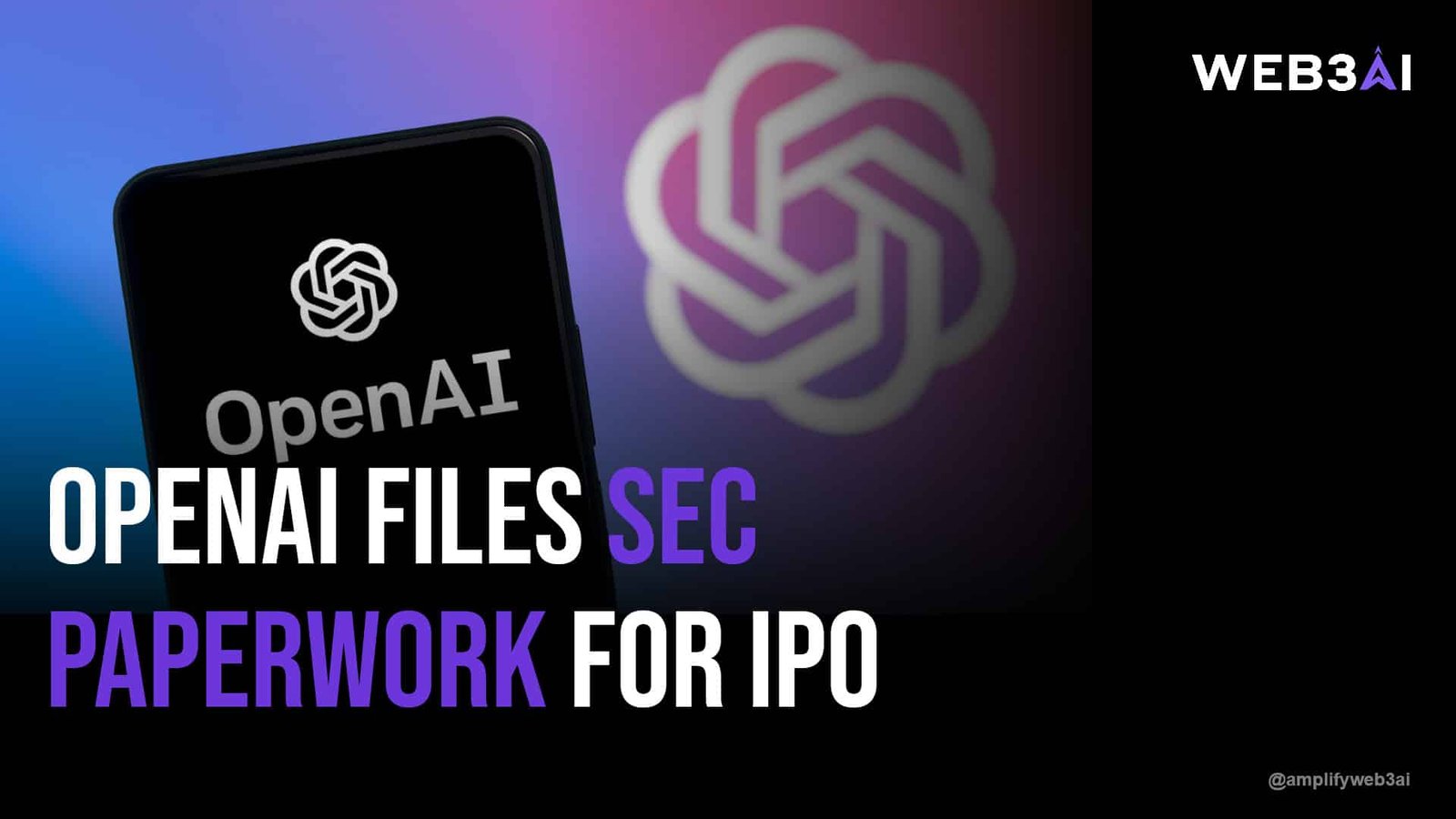

The OpenAI going public SEC filing is one of the most consequential moves in the history of artificial intelligence — and it deserves more than a passing headline. OpenAI, the company behind ChatGPT and GPT-4, has officially submitted paperwork to the U.S. Securities and Exchange Commission, signaling its long-anticipated transition from a nonprofit-controlled capped-profit structure into a fully registered public benefit corporation (PBC). This isn’t just a corporate formality. It’s a watershed moment for how AI companies are built, governed, and financed.
According to reporting from Reuters, the filing is connected to OpenAI’s landmark $40 billion funding round led by SoftBank — one of the largest private funding rounds in Silicon Valley history. The SEC paperwork is a Form D, which covers exempt securities offerings rather than a full S-1 IPO prospectus. That said, insiders and analysts broadly agree: this filing is the clearest signal yet that a public market debut is firmly on OpenAI’s roadmap.
In this post, we break down exactly what the filing means, how the restructuring works, what it signals for the broader AI and Web3 ecosystem, and why creators, developers, and everyday users should be paying very close attention right now.
The document OpenAI submitted is known as a Form D — a relatively compact SEC filing used when companies raise money through exempt offerings (meaning they don’t need the full public disclosure requirements of an S-1). This form is often filed during bridge rounds or pre-IPO fundraising, which is exactly the context here. OpenAI used it to formally register securities tied to its $40 billion SoftBank-led round.
What makes this filing remarkable is its structural implications. OpenAI is simultaneously converting from a hybrid nonprofit/capped-profit entity into a Delaware public benefit corporation. In a PBC, the company is legally required to balance the interests of shareholders with a broader public mission — in OpenAI’s case, the responsible development of artificial intelligence for the benefit of humanity.
The original nonprofit parent — the OpenAI Nonprofit — will not disappear. Instead, it will receive a significant equity stake in the new PBC structure, ensuring that the founding mission remains financially anchored even as commercial pressures intensify. This is an unusual but carefully constructed arrangement designed to satisfy regulators, investors, and the company’s own stated values simultaneously.
Pro Tip: A Form D filing is not an IPO — but it is a strong signal of pre-IPO activity. Watch for an S-1 filing if OpenAI moves toward a full public offering in 2025 or 2026.
The SEC filing is inseparable from OpenAI’s $40 billion funding round, the closing of which hinges on the successful completion of this corporate restructuring. SoftBank — the Japanese investment conglomerate behind the Vision Fund — is leading the round, and the sheer size of the investment reflects just how aggressively institutional capital is moving into frontier AI infrastructure.
For context on how dramatically the AI investment landscape has shifted, our deep-dive into how AI is transforming the creator economy shows how funding flows at the infrastructure level eventually reshape what tools and opportunities become available to individual creators and builders. What happens at the top of the capital stack rarely stays there — it trickles all the way down to developers, platform users, and everyday professionals.
SoftBank’s $40B commitment also carries a conditional element: if the restructuring isn’t completed by a specific deadline, the investment terms may change. This creates a powerful incentive for OpenAI to finalize its PBC conversion quickly and cleanly. The speed at which this is moving suggests both parties are highly motivated to close.
No OpenAI restructuring story would be complete without mentioning Elon Musk, who filed a lawsuit attempting to legally block the nonprofit-to-PBC conversion. Musk argued that the restructuring represented a betrayal of OpenAI’s original charitable mission and that it enriched Sam Altman and other insiders at the expense of the public interest the organization was created to serve.
A federal judge dismissed Musk’s lawsuit, clearing a major legal hurdle for OpenAI’s restructuring plans. While Musk’s legal team has suggested the possibility of an appeal, the dismissal effectively removes the most immediate obstacle from OpenAI’s path toward completing its corporate conversion and closing the SoftBank round.
This legal drama is worth understanding not just as gossip, but as a substantive debate about what AI governance should look like. Who gets to profit from transformative technology? What obligations do mission-driven companies have when they accept billions in private capital? These are questions the entire AI industry will be grappling with for years to come — and OpenAI is living through them in real time.
Pro Tip: If you’re following AI governance debates, watch for state attorneys general actions alongside federal ones — several states have ongoing inquiries into OpenAI’s restructuring separate from Musk’s dismissed suit.
A public benefit corporation is a specific legal entity recognized in Delaware and many other states that formally embeds a public mission into a company’s legal charter. Unlike a standard C-corporation — which is legally obligated to prioritize shareholder returns — a PBC must balance financial performance with a stated public benefit. Directors of a PBC are shielded from shareholder lawsuits when they make decisions that prioritize the public mission, even at some cost to short-term profits.
For OpenAI, this structure is genuinely meaningful, not just cosmetic. It legally protects the board’s ability to slow commercial deployments if safety requires it, to invest in research that isn’t immediately profitable, and to maintain alignment with its founding mission even under pressure from investors expecting returns. Whether those protections will prove robust in practice remains one of the most important open questions in AI.
Understanding how Web3 and decentralized technologies intersect with these governance models is something we explore extensively at amplifyweb3.ai. Our look at the convergence of Web3 and AI reshaping the internet offers valuable context for why governance architecture matters as much as the technology itself.
If you’re a creator, developer, or Web3 builder, you might be wondering why any of this matters to your day-to-day work. The answer is: more than you might expect. When OpenAI transitions to a PBC and eventually moves toward a public listing, the competitive dynamics of the entire AI tools market will shift.
For Web3 builders specifically, the intersection of decentralized ownership models and AI governance is rapidly becoming one of the most important strategic conversations in tech. OpenAI going public doesn’t resolve that tension — it heightens it.
Filing a Form D is a beginning, not an end. Here’s what to watch for as OpenAI’s restructuring and potential public offering unfolds over the next 12 to 24 months:
For anyone following the AI space — whether as an investor, a builder, or simply a curious professional — the OpenAI story in 2025 is a masterclass in how transformative technology, corporate structure, and public accountability collide. Our coverage of the future of AI regulation and what businesses need to know digs deeper into the regulatory environment shaping these decisions.
OpenAI submitted a Form D — a document used to register securities offered in exempt fundraising rounds — to the U.S. Securities and Exchange Commission. This is connected to its $40 billion funding round led by SoftBank and its conversion to a public benefit corporation structure. It is not yet a full S-1 IPO filing.
Not immediately. The OpenAI going public SEC filing is a pre-IPO step related to its current funding round and corporate restructuring. A full IPO would require a separate S-1 filing with far more detailed financial disclosures. However, most analysts view this as a clear step on the path toward an eventual public offering, likely in 2025 or 2026.
A public benefit corporation is a legal entity that requires the company to balance shareholder returns with a stated public mission. OpenAI is choosing this structure to maintain its founding commitment to safe AI development while also accepting large-scale commercial investment. It provides legal protection for the board to prioritize safety over short-term profits when necessary.
The OpenAI Nonprofit will not be dissolved. Instead, it will receive a significant equity stake in the new public benefit corporation, ensuring that the original mission remains financially represented even as the commercial entity grows. This is a novel arrangement designed to bridge charitable and for-profit governance models.
The OpenAI going public SEC filing and accompanying capital raise will significantly shape OpenAI’s product roadmap, API pricing, and competitive dynamics for years to come. Developers building on OpenAI’s platform should monitor changes to usage policies and pricing as the company faces new public-market pressures. For everyday users, the most visible effects may come through new product launches funded by the capital raise.
No. A federal judge dismissed Elon Musk’s lawsuit, which had sought to block OpenAI’s conversion from a nonprofit-controlled entity to a public benefit corporation. While Musk’s legal team has not ruled out an appeal, the dismissal cleared a significant legal obstacle for OpenAI’s restructuring and the closing of its SoftBank funding round.
The OpenAI going public SEC filing is more than a corporate milestone — it’s a signal that AI has officially entered the era of institutional accountability. Whether you’re a developer, a creator, an investor, or simply someone who uses AI tools every day, the decisions being made inside OpenAI’s boardrooms and SEC filings will ripple into every corner of the technology landscape. The public benefit corporation model is a genuine experiment in whether transformative technology can remain mission-driven under the weight of commercial capital — and the whole world is watching to see if it works.
At amplifyweb3.ai, we believe the intersection of AI governance, decentralized technology, and creator empowerment is one of the most important conversations of our time. The OpenAI story is evolving fast, and we’ll continue to track every development that matters to builders, creators, and communities navigating this new landscape. Explore what we have built at attn.live.