Anouncement

Anouncement
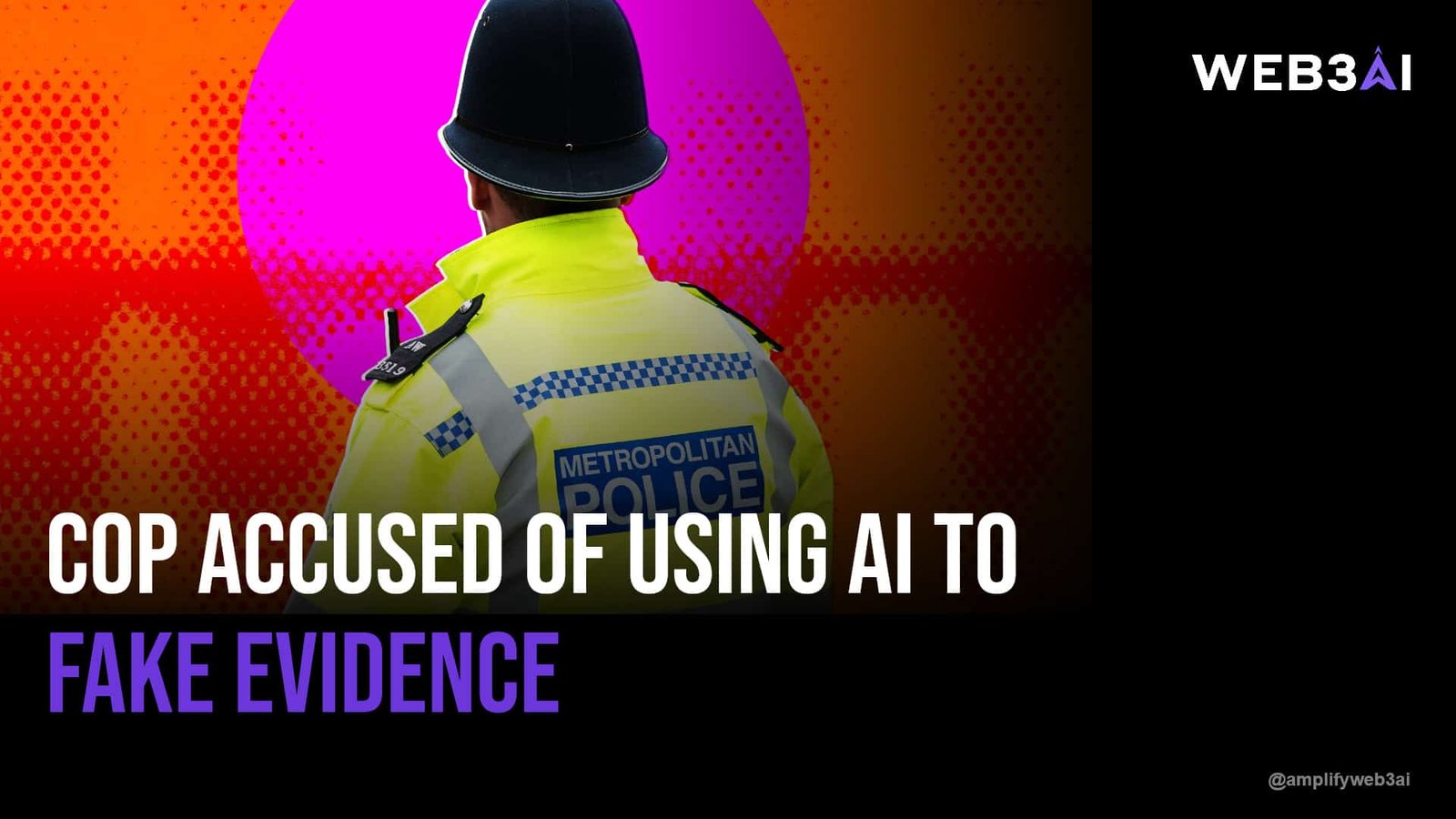

AI-generated fake evidence police officers have submitted in court is no longer a hypothetical — it has already happened. In a deeply troubling case out of the United Kingdom, a serving police officer was caught submitting AI-fabricated content as part of a legal proceeding, exposing a vulnerability in our justice system that very few people were prepared for. This is not a science-fiction plot. It happened. And it forces all of us — citizens, policymakers, legal professionals, and technologists — to ask hard questions about how artificial intelligence is reshaping truth itself.
The implications stretch far beyond one rogue officer. According to a 2025 report covered by The Guardian, the use of AI tools within UK policing has already raised serious human rights concerns, with critics warning that unchecked AI adoption in law enforcement creates systemic risks to due process, civil liberties, and the integrity of evidence itself. This case is the sharpest example yet of what those warnings actually look like in practice.
In this post, we break down exactly what happened, why it matters far beyond the UK, what the justice system’s vulnerabilities look like in an AI-powered world, and what responsible oversight must look like going forward.
The incident involved a British police officer who used an AI tool to generate fabricated content and then attempted to pass it off as legitimate evidence within legal proceedings. While full details remain subject to ongoing investigation, the core fact is staggering: a person whose entire professional role is to uphold the law chose to weaponize an emerging technology to subvert it.
What makes this case especially alarming is how easy it apparently was to attempt. Modern AI tools can generate convincing text, images, audio, and documents in seconds — and without proper forensic detection protocols in place, fabricated materials can slip through legal systems that were never designed to scrutinize AI-generated content. The justice system runs on chains of custody and authenticated evidence. AI-generated fake evidence breaks that chain silently.
This is not an isolated incident in a vacuum. It is a preview. As AI tools become cheaper, faster, and more convincing, the risk of fabricated evidence appearing in courtrooms — submitted by bad actors in any profession — will only grow. The question is whether our institutions are moving fast enough to keep up.
Pro Tip: If you work in legal, compliance, or law enforcement, now is the time to audit your evidence intake protocols. Ask: does your organization have any process to flag or verify AI-generated content? If not, that gap is a liability.
It would be tempting to frame this as an isolated case of individual misconduct — one bad actor, one incident, contained and dealt with. But that framing misses the bigger picture entirely. The real problem is structural: our legal systems, court procedures, and evidence authentication methods were built for a world where fabricating convincing documents, images, or records required significant skill, resources, and time. AI has erased those barriers almost overnight.
For a deeper look at how artificial intelligence is reshaping identity and trust at a systemic level, our post on how AI is transforming the future of digital identity explores the foundational shifts that make incidents like this possible — and why digital trust infrastructure is urgently needed.
The risk is not limited to police officers. Lawyers could submit AI-generated witness statements. Defendants could fabricate alibi evidence. Corporations involved in litigation could manufacture digital records. The common thread is that AI has democratized the ability to create convincing fakes — and our verification systems have not caught up. Without systemic change, courts risk becoming venues where the most sophisticated AI user wins, not where truth prevails.
Understanding the technical landscape helps clarify exactly why this threat is so serious right now. Large language models can produce written documents — reports, statements, transcripts — that are grammatically flawless and stylistically indistinguishable from human-authored text. Image generation models can create photorealistic photographs of events that never occurred. Audio deepfakes can clone a person’s voice with a few minutes of sample audio. Video synthesis tools are advancing rapidly.
What’s more, many of these tools are freely available online. You do not need to be a sophisticated programmer to use them. A person with a basic laptop and a free account on any number of publicly available platforms can produce fabricated content within minutes. The barrier to creating convincing fake evidence has dropped from “requires a skilled forger and significant resources” to “requires a Wi-Fi connection and fifteen minutes.”
Courts and law enforcement agencies currently have limited standardized protocols for detecting AI-generated content. Forensic tools exist, but they are not uniformly deployed, not consistently required, and not always able to keep pace with the latest generation of AI models. Every time a detection method is developed, the underlying generative models improve, narrowing the gap again. It is, at its core, an arms race — and right now, institutions are behind.
Our legal systems were designed around a set of assumptions that no longer fully hold. Chain of custody procedures assume that physical evidence is difficult to fabricate convincingly. Witness testimony is cross-examined on the basis of human fallibility and motivation. Document authentication relies on signatures, notarizations, and institutional records. All of these systems assumed a world where creating a convincing forgery was hard. That world no longer exists.
The deeper threat is not just that fake evidence can be introduced — it is that real evidence can now be dismissed. Defense attorneys (and anyone else motivated to do so) can now raise reasonable doubt about authentic digital evidence by arguing it could have been AI-generated. This “liar’s dividend,” a term coined to describe how deepfakes make authentic content deniable, may prove as damaging to justice as fabricated evidence itself. Courts could be paralyzed by the inability to confidently authenticate anything digital.
Exploring how deepfakes and AI misinformation are already eroding digital trust, our coverage of the dark side of AI, deepfakes, and digital trust provides important context for understanding the cultural and institutional conditions that allowed this police case to happen.
Pro Tip: Legal professionals should familiarize themselves with emerging AI forensics tools and push for standardized “AI content authentication” requirements in evidence submission — similar to how chain of custody documentation is currently required for physical evidence.
The answer to this crisis is not to ban AI from law enforcement — that ship has sailed, and there are genuinely beneficial applications of AI in policing, from pattern analysis to missing persons identification. The answer is robust, enforceable governance that treats AI as the powerful and potentially dangerous tool that it is. Governance is not optional. It is the difference between a tool and a weapon.
Several concrete steps are urgently needed. First, evidence authentication standards must be modernized. Courts need standardized procedures for flagging and forensically evaluating any digital evidence for signs of AI generation. Second, law enforcement agencies need internal AI use policies with teeth — clear rules about when and how AI tools may be used in investigations, with auditable logs. Third, independent oversight bodies need the technical capacity to investigate AI misuse by officers, not just misconduct in the traditional sense.
Training is equally essential. Officers, prosecutors, defense attorneys, and judges all need foundational literacy in what AI can and cannot do — not deep technical knowledge, but enough to ask the right questions when AI-touched evidence appears in a case. The gap between what AI can produce and what legal professionals currently understand about it is itself a vulnerability. On the broader question of accountability in AI systems, our post on AI ethics and governance lays out the key frameworks for assigning responsibility when AI causes harm.
Beyond the legal mechanics, there is a human dimension to this story that deserves attention. Public trust in law enforcement and the justice system is already fragile in many countries. Cases of police misconduct — even individual cases — have an outsized effect on community trust, because policing depends fundamentally on the legitimacy that public confidence provides. A police officer using AI to fabricate evidence does not just harm the specific victim of that fabrication. It harms the credibility of every piece of evidence every officer has ever submitted.
The same dynamic applies to the justice system as a whole. If courts cannot reliably distinguish real evidence from AI-generated fake evidence, then every verdict becomes questionable in the public mind — not just those where AI misuse is proven. This is how institutional trust collapses: not in one dramatic event, but through the accumulation of doubts that never fully resolve. The UK case is a loud, early warning that the collapse of evidentiary trust is a real and proximate risk, not a distant concern.
Restoring and maintaining that trust requires two things working in parallel: accountability for those who misuse AI, and visible investment in the systems and standards that make misuse detectable and deterrable. Neither alone is sufficient. Both together send the message that institutions are taking this seriously.
A serving UK police officer was found to have used an AI tool to generate fabricated content and submitted it in the context of legal proceedings. The case is under investigation, but it represents one of the first confirmed instances of law enforcement personnel using generative AI to create false evidence. It has prompted urgent calls for updated evidentiary standards and AI governance in policing.
AI-generated content can sometimes be detected using specialized forensic tools that analyze patterns, metadata, and statistical signatures associated with machine-generated text or images. However, these tools are not foolproof, are not uniformly deployed in court systems, and are in an ongoing arms race with increasingly sophisticated generative AI models. Standardized authentication protocols are urgently needed.
Submitting any false or fabricated evidence is already illegal in virtually all jurisdictions — it constitutes perjury, fraud, or obstruction of justice depending on the context. However, most existing laws were not written with AI-generated content specifically in mind, and prosecutors and courts may face novel challenges in proving intent and origin when AI tools are involved. Many legal experts are calling for AI-specific evidence laws.
Yes — that is precisely the danger. Convincing AI-generated documents, images, or audio submitted as evidence could influence juries or judges who lack the tools or training to identify fabricated content. Conversely, the existence of AI fabrication tools also allows real evidence to be challenged as potentially fake, creating a “liar’s dividend” that benefits bad actors on both sides of a case.
Agencies should immediately audit their evidence intake and handling procedures to identify gaps in AI detection capability. They should establish clear, enforceable policies on the use of AI tools in investigations, require disclosure of any AI involvement in evidence preparation, and invest in training for officers and supervisors. Partnering with AI forensics experts to develop detection protocols is a practical near-term step.
This case is a concrete, real-world example of what critics of unchecked AI adoption in public institutions have warned about. It strengthens the argument that AI governance in law enforcement cannot be voluntary or self-regulated — it requires independent oversight, mandatory standards, and enforceable consequences. It also highlights that the risks of AI misuse extend to the people who are supposed to protect the public, not just external bad actors.
The emergence of AI-generated fake evidence police officers can deploy in courtrooms is not a problem that will resolve itself. It is a structural challenge that sits at the intersection of technology, law, ethics, and institutional trust — and it demands a response that matches its seriousness. One officer, one case, one country — but the vulnerability it exposes is global and growing. Every court system in the world that handles digital evidence is now operating in an environment where that evidence can be convincingly fabricated at low cost and high speed.
The path forward requires investment in detection technology, modernization of legal standards, mandatory training for everyone in the justice system, and governance frameworks that treat AI as the consequential tool it is. Most importantly, it requires the willingness to act before the next case — because the next case is coming. The question is whether our institutions will be ready for it, or whether they will again be caught off guard. Explore what we have built at attn.live.