Anouncement

Anouncement


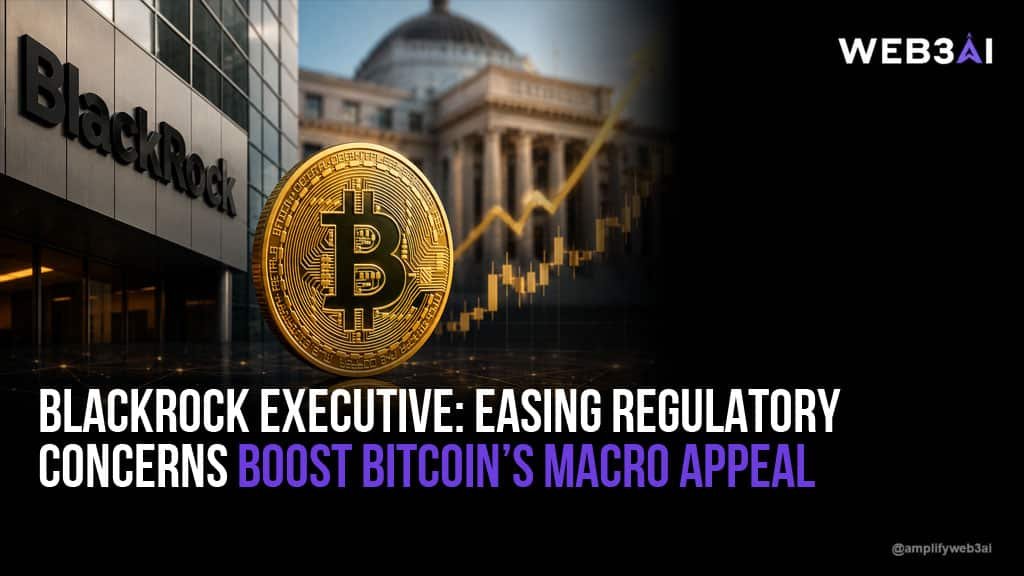
The BlackRock Bitcoin investment strategy just sent one of the clearest signals the crypto market has ever received from traditional finance. Samara Cohen, BlackRock’s Chief Investment Officer of ETF and Index Investments, recently stated that Bitcoin has become too large and too significant for institutional investors to overlook — a statement that carries enormous weight coming from the world’s largest asset manager, overseeing more than $10 trillion in assets.
This isn’t a casual endorsement. It’s a measured, deliberate communication from an institution that built its empire on disciplined, evidence-based investing. According to a Forbes Digital Assets report, BlackRock’s iShares Bitcoin Trust (IBIT) has become one of the fastest-growing ETF launches in Wall Street history, pulling in billions in institutional capital within months of its January 2024 debut.
If you’ve been watching the crypto space and wondering whether Bitcoin’s institutional moment has truly arrived, this post breaks down exactly what BlackRock’s position means, why it matters for everyday investors, and where the broader market may be heading in 2025 and beyond.
Samara Cohen’s remarks were direct and deliberate. She described Bitcoin as an asset that institutional investors can no longer afford to exclude from their portfolio conversations. In an industry where words are chosen carefully, calling Bitcoin “too big” is not hyperbole — it is a risk management acknowledgment.
BlackRock’s position is not purely speculative enthusiasm. The firm has studied Bitcoin’s correlation characteristics, its behavior during market stress events, and its long-term supply mechanics. Their conclusion is that ignoring Bitcoin at this stage of its development is itself a risk — a risk of being underexposed to an emerging asset class that is attracting permanent institutional capital flows.
This framing is significant. Rather than positioning Bitcoin as a high-risk gamble, BlackRock is repositioning it as a portfolio oversight risk if excluded. That is a fundamental shift in how the world’s most powerful asset manager is communicating Bitcoin’s role to its clients.
It wasn’t long ago that BlackRock CEO Larry Fink called Bitcoin an “index of money laundering.” That was 2017. By 2023, BlackRock filed for a spot Bitcoin ETF. By January 2024, IBIT was live. By mid-2025, BlackRock had become the single largest institutional holder of Bitcoin through its ETF vehicle — a complete reversal in under a decade.
The BlackRock Bitcoin investment strategy didn’t emerge overnight. It followed years of internal research, client demand analysis, and regulatory patience. BlackRock waited until the infrastructure was right — regulated custody, spot ETF approval, and clear demand signals from pension funds and endowments — before committing publicly and at scale.
Understanding this timeline helps contextualize the current moment. BlackRock isn’t reacting to Bitcoin’s price. They are responding to structural demand from institutional clients who want Bitcoin exposure within regulated, familiar wrappers. That’s a fundamentally different kind of buying pressure than retail speculation.
Pro Tip: When the world’s largest asset manager shifts from skeptic to category leader on any asset class, that transition itself becomes a data point worth tracking closely in your own investment thinking.
For a deeper look at how artificial intelligence is intersecting with this new wave of institutional Web3 adoption, explore how AI is transforming the future of Web3 and what that convergence means for investors and builders alike.
When retail investors buy Bitcoin, it creates price movement. When institutions like BlackRock build structured products around it, it creates market infrastructure. These are two very different outcomes, and the second one has far longer-lasting implications for Bitcoin’s legitimacy and staying power.
Institutional adoption brings regulated custody solutions, audited reporting standards, and Bitcoin’s inclusion in mainstream portfolio models. It means financial advisors can now recommend Bitcoin to their clients without professional liability concerns. It means pension funds can allocate a percentage without breaching their mandates. These structural changes don’t reverse easily.
The ripple effects extend beyond price. When BlackRock validates Bitcoin at scale, it implicitly validates the entire digital asset ecosystem. Other institutions that were waiting for a credible first-mover signal now have one from the most credible possible source. This creates a compounding legitimacy effect that benefits the broader crypto and Web3 space.
BlackRock’s current posture suggests this is not a short-term trade. Their ETF structure, their public communications, and their client engagement strategy all point toward a multi-year, multi-cycle commitment to Bitcoin as a recognized asset class within diversified portfolios.
Cohen’s comments align with a broader internal philosophy at BlackRock: that Bitcoin’s fixed supply, global accessibility, and independence from sovereign monetary policy give it characteristics that complement traditional portfolios in ways that gold historically served but with a different risk and return profile.
This doesn’t mean BlackRock is predicting a specific price target. What it means is that their research has determined Bitcoin deserves a structural allocation conversation — the same conversation that has been had about commodities, real estate, and emerging market equities over the past several decades.
Pro Tip: Institutional conviction is rarely about short-term price predictions. It’s about whether an asset class earns a permanent seat at the portfolio construction table. Bitcoin appears to have earned that seat at BlackRock.
If you’re new to understanding how Bitcoin exchange-traded products work and why they matter for this shift, our explainer on what a Bitcoin ETF is and why it matters is an excellent starting point for building that foundation.
BlackRock’s validation doesn’t mean you should immediately change your portfolio. What it does mean is that the informational environment has shifted. The question is no longer “is Bitcoin a legitimate asset?” — at least not in institutional circles. The question has moved to “what percentage allocation is appropriate?”
For everyday investors watching this from the sidelines, the key insight is about signal quality. BlackRock doesn’t make public statements about asset classes carelessly. When their CIO of ETFs says Bitcoin is too big to ignore, that is a deliberate, compliance-reviewed communication. It’s worth treating it with the same seriousness.
That said, position sizing, personal risk tolerance, and investment time horizon still matter enormously. Bitcoin remains a volatile asset with significant price swings. BlackRock is not suggesting everyone allocate 50% to Bitcoin — they are suggesting that a thoughtful, sized exposure deserves a seat at the portfolio design table.
For broader context on how institutional players are reshaping the Web3 landscape across multiple asset types, our deep dive on institutional crypto adoption in 2025 offers the full picture of where traditional finance and decentralized systems are converging.
BlackRock’s stance on Bitcoin doesn’t exist in isolation. It’s part of a larger structural shift where sovereign wealth funds, national pension systems, and central banks are actively researching Bitcoin’s role in a diversifying global reserve system. The geopolitical context — rising debt levels, currency debasement concerns, and a multipolar monetary order — creates the tailwind that makes Bitcoin’s fixed supply genuinely attractive to serious allocators.
When you pair that macro backdrop with the operational infrastructure that now exists — regulated ETFs, institutional-grade custody, real-time on-chain analytics, and growing regulatory clarity in the US, EU, and Asia — the conditions for sustained institutional adoption are more mature than they have ever been.
BlackRock’s executive wasn’t just making a market call. She was describing a structural reality: Bitcoin has reached an inflection point where its market cap, liquidity depth, and global recognition make exclusion from institutional portfolios the more unusual choice. That’s a remarkable milestone for an asset that was dismissed as a niche experiment just a decade ago.
BlackRock’s Bitcoin investment strategy centers on providing institutional clients with regulated exposure to Bitcoin through its iShares Bitcoin Trust (IBIT) ETF. Rather than holding Bitcoin speculatively, BlackRock positions it as a diversifying alternative asset with unique supply characteristics. Their executive communications in 2025 indicate this is a long-term, multi-cycle commitment rather than a short-term trade.
BlackRock’s Chief Investment Officer of ETF and Index Investments, Samara Cohen, made this statement to reflect Bitcoin’s maturation as an asset class. With Bitcoin’s market capitalization, global liquidity, and growing institutional participation, she argued that institutional portfolios that exclude it are now making an active omission rather than a neutral decision. It reframes Bitcoin absence as a risk rather than a safe default.
BlackRock’s institutional validation shifts the informational landscape for retail investors by confirming Bitcoin’s legitimacy at the highest levels of traditional finance. It also increases access, since regulated ETF products are available through standard brokerage accounts. Retail investors benefit from improved market infrastructure, better custody solutions, and greater regulatory clarity as a result of institutional engagement.
IBIT is a spot Bitcoin ETF launched by BlackRock in January 2024, following SEC approval. It holds actual Bitcoin as its underlying asset and allows investors to gain price exposure through a standard brokerage account without managing cryptocurrency wallets or private keys. It quickly became one of the fastest-growing ETF launches in history by assets under management.
BlackRock’s involvement does not make Bitcoin a “safe” investment in the traditional sense — it remains a volatile asset with significant price fluctuations. However, institutional participation does improve market maturity, liquidity depth, and regulatory legitimacy. BlackRock’s position suggests Bitcoin deserves a considered allocation within a diversified portfolio, not that it is risk-free.
Bitcoin’s capped supply of 21 million coins is central to BlackRock’s investment thesis. In an environment of rising global debt and currency debasement concerns, a digitally scarce asset with a predictable, algorithmically enforced supply schedule is attractive to institutional investors seeking non-sovereign stores of value. BlackRock has publicly cited this characteristic as a core differentiator from other asset classes.
The BlackRock Bitcoin investment strategy represents more than one company’s portfolio decision. It represents a turning point in how the world’s most powerful financial institutions view digital assets — and that shift has compounding implications for every participant in the market. When the firm managing more than $10 trillion says Bitcoin is too significant to exclude, the conversation moves permanently forward.
For investors, builders, and curious observers alike, the message is clear: Bitcoin has cleared the institutional credibility threshold, and the infrastructure for serious, compliant engagement now exists at scale. Whether you’re a financial advisor, a long-term holder, or someone still doing their research, this moment deserves thoughtful attention.
The broader Web3 and digital asset space is evolving rapidly, and staying informed is your most valuable edge. Explore what we have built at attn.live.