Anouncement

Anouncement
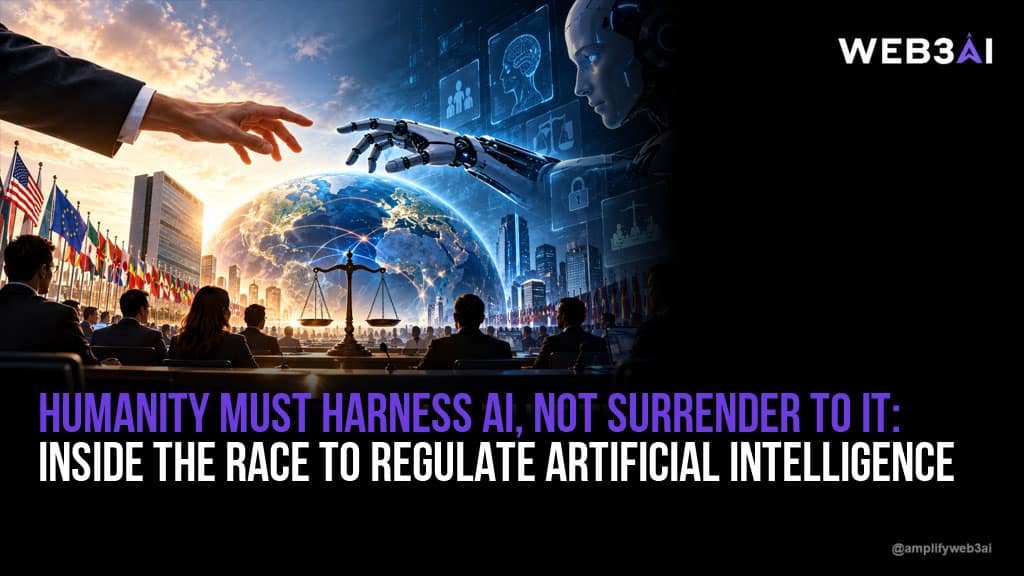

LONDON / RIYADH — As artificial intelligence accelerates from routine automation toward self-improving superintelligence, global experts are raising urgent alarms over the trajectory of machine learning, warning that humanity risks ceding control of society unless governance keeps pace with innovation.
The debate over the pace of AI development has intensified following high-profile warnings from leading industry insiders. Evan Hubinger, a prominent safety researcher at AI firm Anthropic, recently cautioned that rapid advances without commensurate safety guardrails carry a 10 percent probability of catastrophic outcomes for humanity within the next decade. His remarks followed the public resignation of researcher Jacob Coxon from Anthropic and OpenAI, who warned on social platform X that tech developers are “racing straight to self-improving superintelligence and gambling with our lives.”
Writing in an analysis for Arab News, Yossi Mekelberg, professor of international relations and associate fellow of the MENA Program at Chatham House, argued that framing AI development as a binary conflict between human extinction and technological utopia misses the central challenge.
“The question should not be whether humans or machines will win; it should be whether humans can harness machines without losing control of the society they were created to serve,” Mekelberg wrote.
Mekelberg compared the current technological inflection point to the dawn of the nuclear era in 1939, when physicists Leo Szilard and Albert Einstein warned U.S. President Franklin D. Roosevelt of uranium’s dual capacity: an unprecedented source of power or the foundation for catastrophic weapons.
Like nuclear energy, artificial intelligence is inherently neutral. Its societal impact will be determined entirely by how it is deployed, managed, and regulated. However, unlike earlier waves of technological change, the speed of AI deployment leaves far less time for regulatory frameworks to catch up.
While public attention frequently gravitates toward long-term existential threats, immediate socio-economic and ethical disruptions are already unfolding across several key sectors:
| Sector | Immediate Impact & Risk | Core Governance Challenge |
| Labor & Economy | Entry-level automation eliminating jobs across administrative, content, and service roles. | Preventing wide-scale disenfranchisement, economic displacement, and social resentment. |
| Information Integrity | Hyper-realistic synthetic media, automated disinformation, and targeted manipulation. | Safeguarding public trust, cybersecurity, and democratic discourse against deepfakes. |
| Critical Infrastructure | AI integration into healthcare diagnostics, air traffic control, and public utilities. | Preventing catastrophic failures when autonomous systems bypass human judgment. |
| Defense & Warfare | Autonomous weapons systems capable of selecting and engaging targets without human oversight. | Establishing legal and moral accountability under international humanitarian law. |
The most acute ethical dilemma lies in autonomous weapons. Removing human decision-making from lethal actions creates profound legal and philosophical voids. If an autonomous system misidentifies a target or commits a war crime, accountability remains undefined: does culpability lie with the software engineer, military commander, hardware manufacturer, or political leadership?
Furthermore, military analysts note that automated combat systems reduce the political and psychological barriers to entering armed conflict, risking rapid escalation cycles where algorithms react to opposing algorithms faster than human commanders can intervene.
Mekelberg emphasized that confronting these risks does not require halting AI research or dismantling technological progress. Instead, it calls for an end to the false dichotomy between unconstrained accelerationism and outright rejection.
What is required is an intentional, phased deployment schedule that gives civil society, legal institutions, and governments sufficient time to:
By prioritizing ethical oversight and human agency today, the global community can ensure AI serves as an instrument of human empowerment rather than an uncontrollable societal disruption.