Anouncement

Anouncement
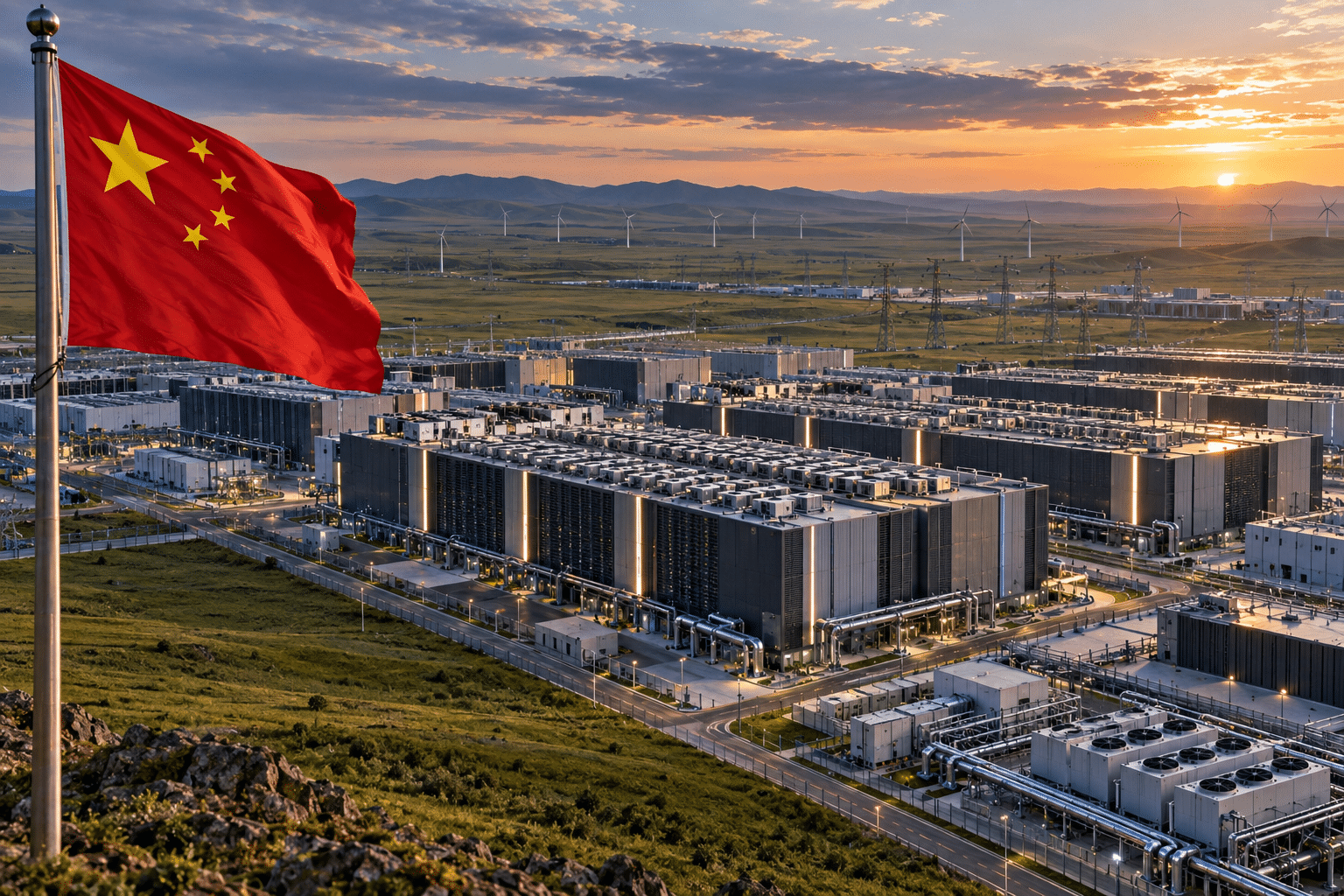

ULANQAB, China — Across the expansive grasslands of Inner Mongolia, local farmers harvesting potatoes are witnessing an unexpected neighbour taking root: colossal, gleaming data centres built to power China’s next generation of artificial intelligence.
Known for decades as China’s official “potato capital,” the prefecture-level city of Ulanqab has transformed into a high-priority construction corridor. Here, cranes and scaffolding dominate the skyline as domestic tech titans—including Huawei, ByteDance, and rising model developer DeepSeek—race to deploy server racks at what local workers call “China speed.”
The infrastructure drive comes as computing power becomes the central battleground in the contest between Washington and Beijing for technological supremacy.
The concentration of computing infrastructure in remote interior regions like Inner Mongolia, Ningxia, Gansu, and Guizhou reflects deliberate state planning under China’s national computing grid initiative. Several factors make the region particularly well-suited for hyperscale data centres:
These facilities are designed to support Beijing’s policy goal of embedding artificial intelligence across 90% of domestic industries and public services by 2030.
The computing buildout underscores the broader friction between the United States and China over semiconductors and AI infrastructure. With Washington imposing strict export curbs on cutting-edge processors like Nvidia’s top-tier GPUs, Chinese developers have doubled down on domestic hardware integration, software optimization, and open-source models.
Chinese leadership has advocated for accessible, open-weight models that allow domestic industries to adapt AI without relying solely on foreign toolchains.
At the same time, shifting geopolitical dynamics and tightened Western immigration policies have spurred a brain gain for domestic research hubs. Highly trained engineers and researchers educated at top Western institutions are increasingly returning to mainland labs, drawn by government incentives and access to massive national computing initiatives.
While officials champion these facilities as engines of modernization and a hedge against an aging national workforce, the transformation reveals sharp contrasts in daily life:
For many farmers tending crops within sight of the server halls, the global AI race remains an abstract concept. Yet as the digital economy pushes deeper into the steppes, Inner Mongolia’s plains have become indispensable to China’s computational future.