Anouncement

Anouncement
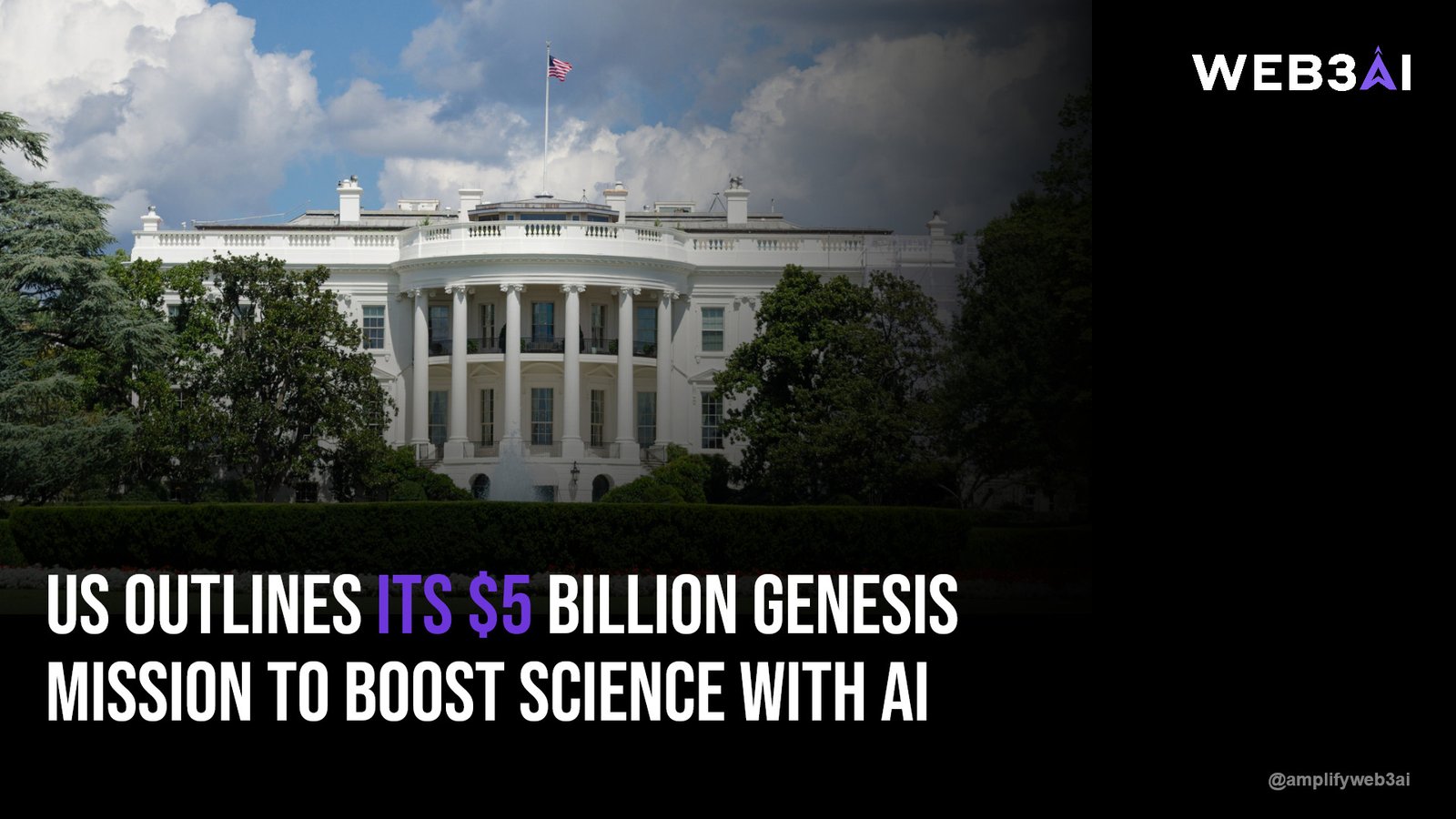

The Genesis Mission AI initiative just became one of the biggest government-backed technology bets in recent memory, and it’s easy to see why people are paying attention. Announced with roughly $5 billion in backing, this program aims to fuse artificial intelligence with national laboratories to speed up scientific discovery across fields like energy, medicine, and materials science. If you’ve ever felt like breakthroughs take too long to reach the real world, this initiative is a direct response to that frustration.
According to a Reuters report on the White House’s AI push for science, the federal government is positioning AI as a force multiplier for researchers who are currently bottlenecked by manual experimentation and slow data analysis. It’s a familiar pain point: brilliant scientists spend years on problems that AI-assisted modeling could potentially compress into months. That gap between potential and reality is exactly what this mission is designed to close.
In this post, we’ll break down what the Genesis Mission AI initiative actually involves, who benefits, what risks are on the table, and how it connects to the broader AI and Web3 movements we cover here at AmplifyWeb3.
At its core, the Genesis Mission AI initiative is a coordinated effort between federal agencies, national laboratories, and private AI developers. The goal is to build shared computing infrastructure and AI models that researchers across disciplines can use without starting from scratch. Think of it like giving every scientist in the country access to a supercharged research assistant that never sleeps.
The funding is expected to support supercomputing resources, data-sharing frameworks, and AI model development tailored to scientific use cases. Unlike consumer-facing AI tools, these models are being built to handle complex simulations, from climate modeling to drug discovery pipelines. That specificity matters because general-purpose AI often struggles with the nuance required in hard sciences.
National laboratories are the most obvious beneficiaries, but the ripple effects reach much further. Universities, biotech startups, and even Web3-adjacent research groups exploring decentralized data science could tap into shared resources. If you’re curious how decentralized systems intersect with emerging tech trends like this, our beginner’s guide to Web3 is a helpful starting point.
Smaller research institutions that historically couldn’t afford massive compute budgets may finally get a seat at the table. That’s a meaningful shift. Historically, cutting-edge AI research has been dominated by a handful of well-funded tech giants and elite universities.
Behind any AI initiative of this scale sits a stack of tools, models, and platforms that most people never hear about. The Genesis Mission is expected to lean on a mix of custom-built scientific AI models and existing large language model infrastructure adapted for research tasks. This isn’t just about chatbots answering questions faster.
It’s about running thousands of simulated experiments in parallel, something that would take human researchers lifetimes to complete manually. For a broader look at what’s currently shaping the AI tooling landscape, check out our roundup of top AI tools transforming business in 2025.
Pro Tip: When evaluating any large-scale AI initiative, look past the funding headline and ask what specific infrastructure — compute, data, and talent — is actually being built.
The U.S. has launched big science initiatives before, from the Human Genome Project to various DARPA programs. What sets the Genesis Mission apart is its explicit AI-first framing. Previous programs used computers as tools; this one treats AI as a research collaborator.
That distinction matters for funding priorities. Money is being directed toward model training, data infrastructure, and AI talent recruitment rather than solely toward hardware or lab space. It’s a bet that intelligence itself, not just raw computing power, is the missing ingredient in modern science.
No initiative this large comes without skepticism, and rightfully so. Critics point to concerns about data privacy, the concentration of AI power among a few large companies, and whether $5 billion is enough to meaningfully move the needle on complex scientific problems.
There’s also the question of oversight. When AI models start influencing scientific conclusions, transparency about how those models were trained becomes critical. Researchers and policymakers will need to work together to avoid a black-box approach to discovery. For a wider view on how AI is reshaping entire sectors, our piece on how AI is reshaping industries across the globe covers similar tension points.
Pro Tip: Track how funded AI initiatives report their model training data. Transparency here is often the clearest signal of long-term trustworthiness.
Rollout timelines for programs like this rarely move as fast as headlines suggest. Expect early phases to focus on infrastructure buildout, hiring, and pilot projects at a handful of national labs before wider expansion.
It’s a U.S. government-backed program using roughly $5 billion in funding to combine AI with national laboratory research. The goal is to accelerate scientific discovery in fields like energy, medicine, and materials science.
Funding comes primarily from federal government sources, with expected collaboration from private AI developers and research institutions. The exact funding breakdown will likely evolve as pilot programs launch.
Researchers at national labs and partner universities may gain access to shared AI models and computing resources they couldn’t previously afford. This could lower barriers for smaller institutions to compete on advanced research.
It shares some DNA with past large-scale efforts like the Human Genome Project, but it’s distinct because AI is treated as a core research collaborator rather than just a computing tool.
Key concerns include data privacy, concentration of AI power among a few companies, and whether the funding level is sufficient for the scale of problems being tackled. Oversight and transparency will be critical as the program matures.
The Genesis Mission AI initiative represents a meaningful shift in how governments think about accelerating scientific progress. By pairing serious funding with AI-first infrastructure, it’s betting that intelligence and computing power together can solve problems that have stumped researchers for decades. Whether it delivers on that promise will depend on execution, transparency, and how inclusively the benefits are shared.
As AI continues reshaping research, business, and technology at large, staying informed on initiatives like this helps you understand where the next wave of innovation is headed. Explore what we have built at attn.live.