Anouncement

Anouncement

For Audio, Listen HERE
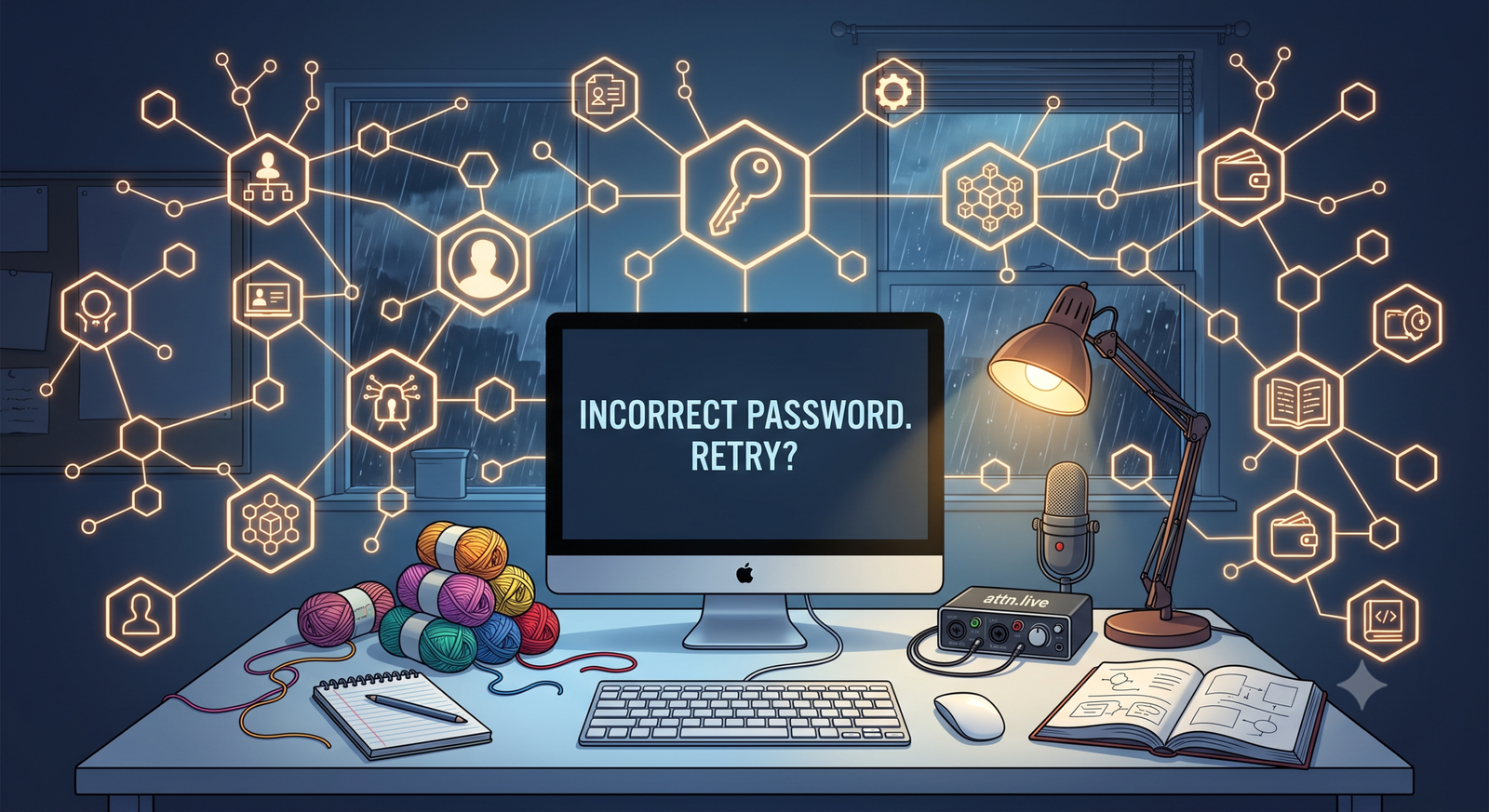
Imagine waking up tomorrow to find the entire digital world has vanished overnight.
Every social media platform, cloud server, login portal, and algorithmic feed — gone. Wiped clean.
After the panic fades, a strange thought creeps in: what if we got to build it all again, knowing everything we now know about privacy, creator rights, and algorithmic manipulation? Would we really recreate the same internet we have today?
Almost certainly not.
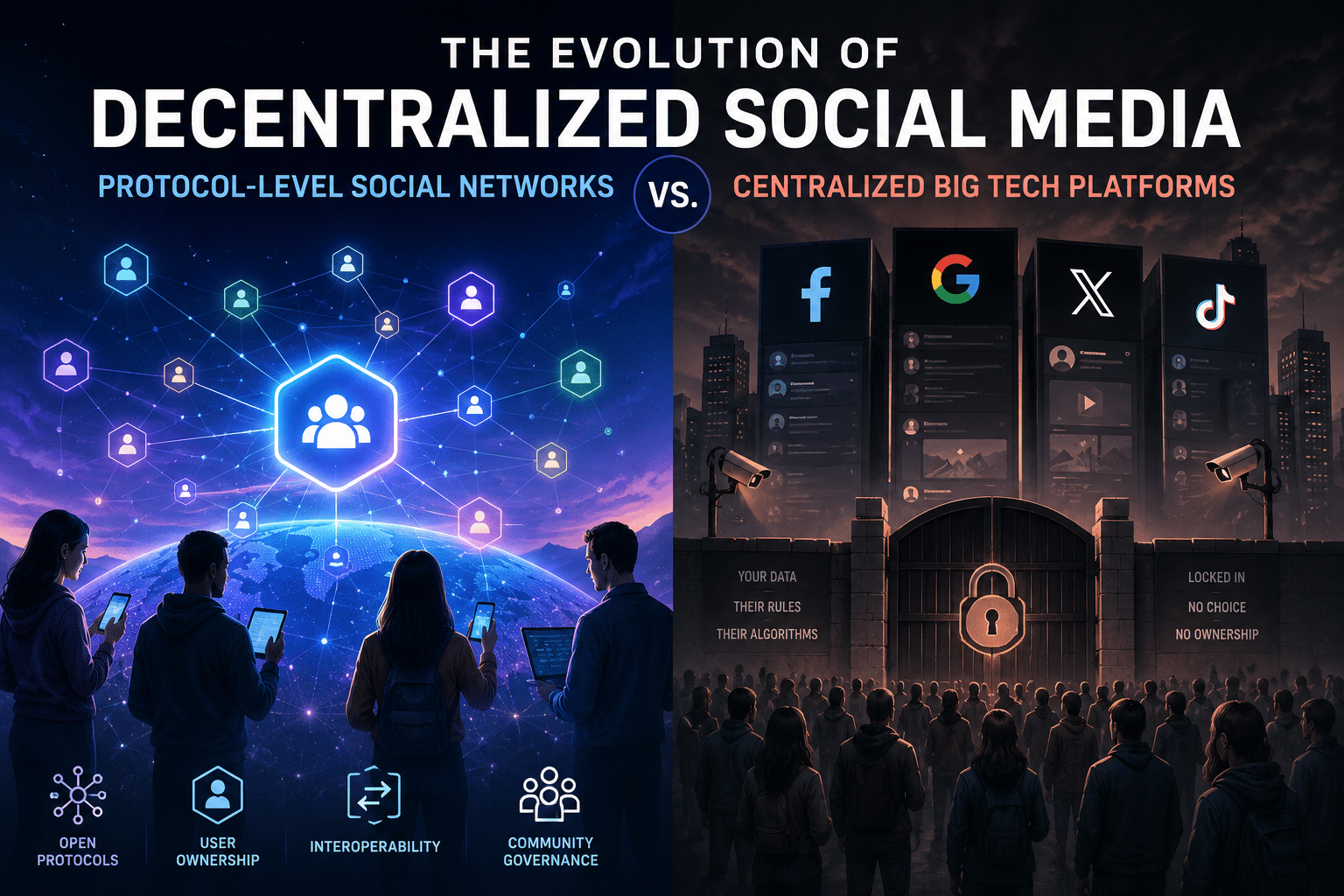
The original web was built in the late 20th century by genuine idealists who wanted to connect humanity and democratize knowledge. It worked — spectacularly. But over the following decades, commercial incentives quietly reshaped that open digital town square into a collection of walled gardens, each one designed to capture and monetize your attention.
That’s where Web3 comes in. Strip away the jargon and hype, and Web3 isn’t some distant futuristic mystery — it’s simply a better set of design choices. A blueprint for the internet we probably should have built the first time.
Here’s how our current digital house got built, why the foundation feels shaky, and how a more human-centered redesign is already quietly underway.
Think about how you move through the internet today. Want to read an article? “Log in with Google.” Want to try a new app? “Sign in with Facebook.”
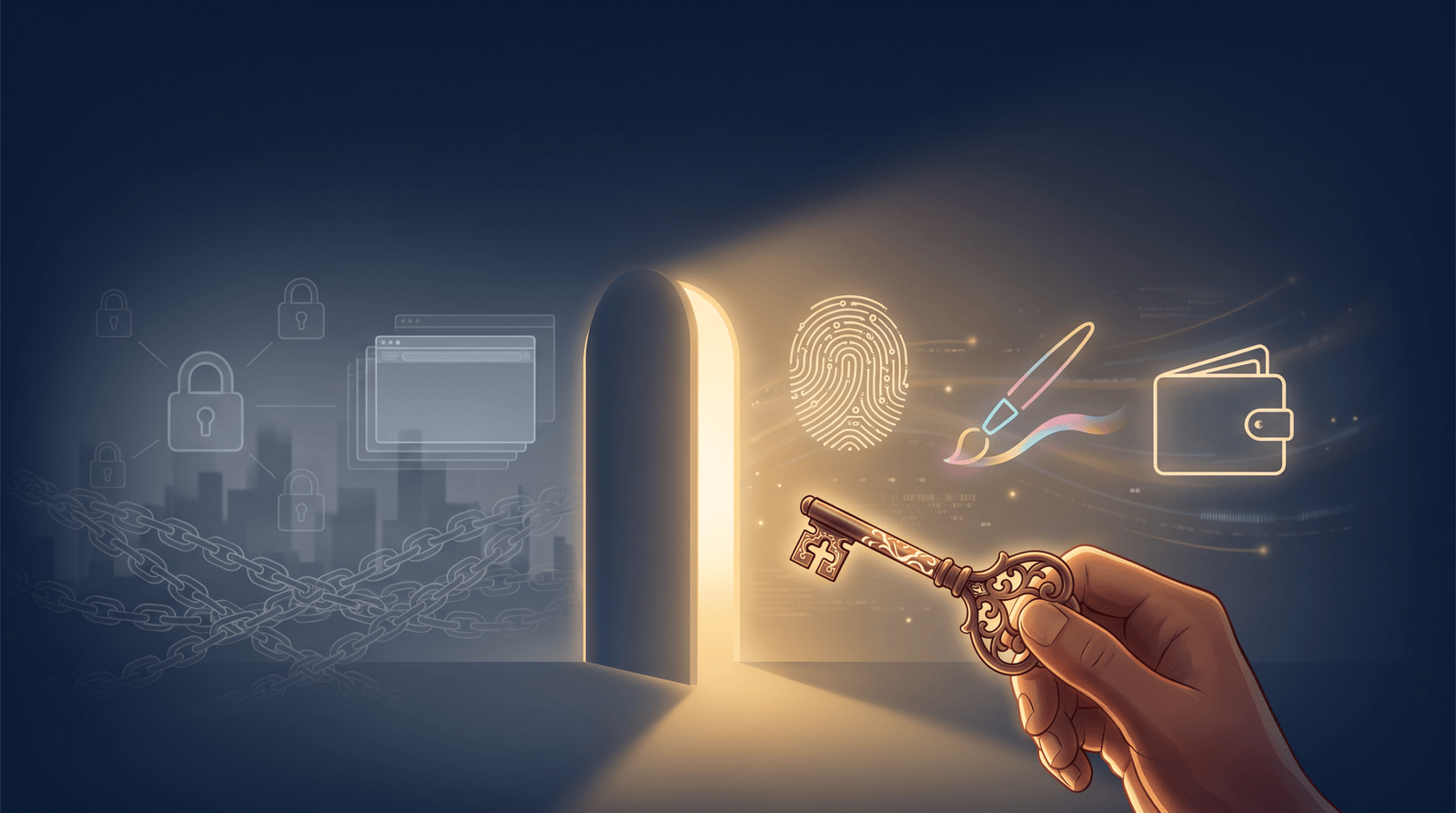
Now picture a town where two mega-landlords own every store, cafe, library, and gym. To enter any building, you need a key card issued by one of them. They log every door you open, how long you linger, and what you look at while you’re inside. Disagree with the landlord, and they can deactivate your card instantly — locking you out of your contacts, files, and community in one move.
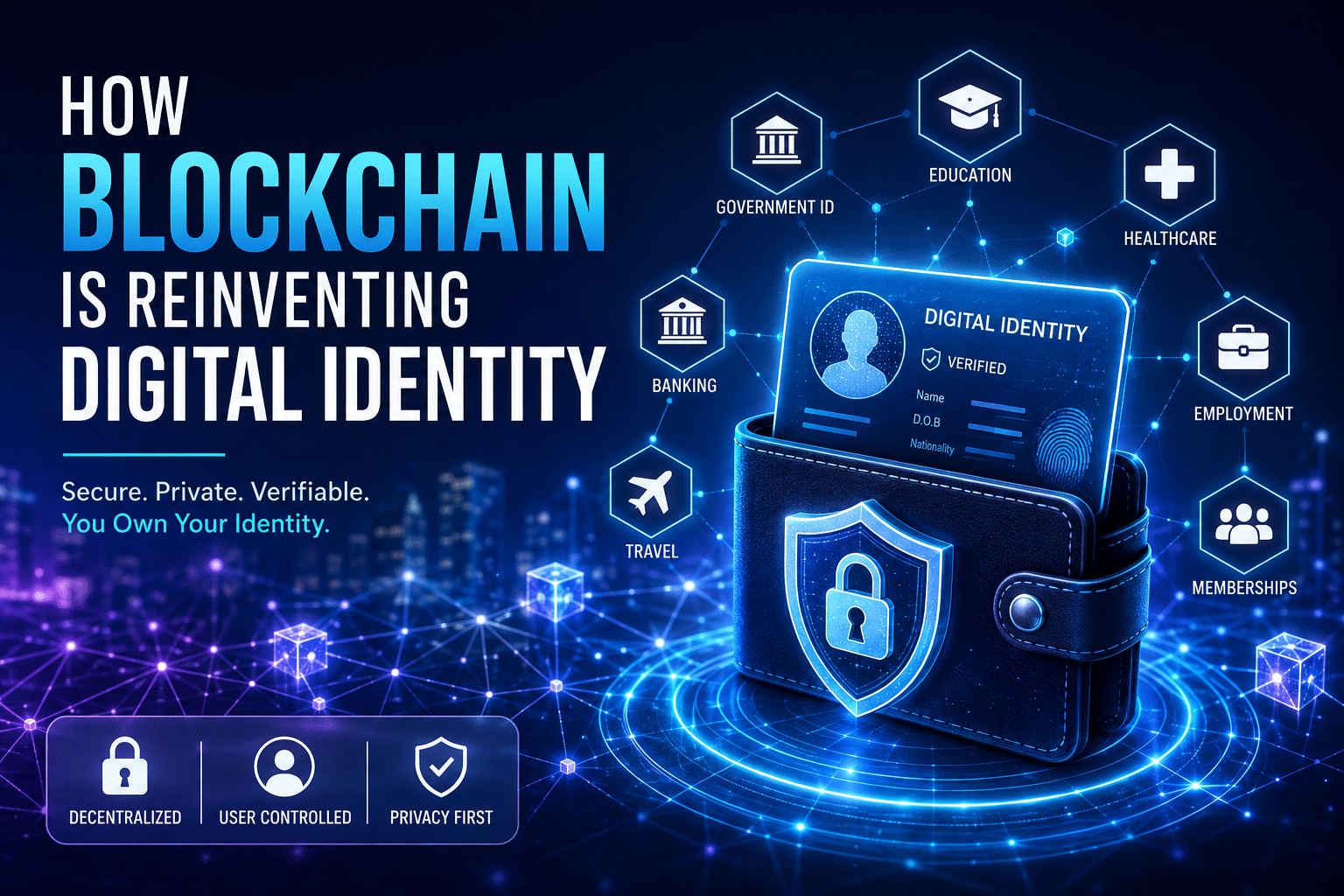
That’s essentially how digital identity works today. We traded control of our online selves for convenience, and platforms harvest our behavioral data as rent.
The problem: you don’t own your digital identity — you lease it from tech giants who profit from tracking it.
In the physical world, when a barista asks to verify your age, you show your driver’s license, they glance at it, and you put it right back in your pocket. They don’t keep a copy. They can’t call your bank and cancel your card because they disagree with you.
Self-sovereign identity (decentralized ID) brings that same logic online:
Sarah spent five years posting original landscape photography to a popular platform, building an audience of 100,000 followers.
Then the platform quietly updated its Terms of Service — the fine print nobody reads — granting itself broad rights to use public photos for AI training and third-party licensing. Soon Sarah spotted her work inside AI-generated art and ads she never approved and was never paid for. When she tried to delete her account, she discovered her photos were already baked into datasets scattered across the web, completely out of her control.
Web 2.0 model:
Creator work → uploaded to platform → platform claims usage rights → value flows to platform
Web3 model:
Creator work → embedded provenance → direct audience connection → value flows to creator
In a rebuilt internet, ownership isn’t buried in legal text — it’s embedded directly into the content:
This isn’t about hype or collectibles. It’s a basic principle of fairness: if you made it, it’s yours.
Ever wonder why the most popular apps are free? As the saying goes: if you’re not paying for the product, you are the product.
Picture a casino engineered by behavioral psychologists — no clocks, dopamine-tuned lighting, near-miss rewards baked into every pull. Its entire purpose is to keep you seated, because every extra minute you stay, an advertiser pays for a slice of your attention.
Ad-driven platforms reward engagement, and outrage, anxiety, and compulsive scrolling are the cheapest ways to manufacture it.
In an agricultural cooperative, farmers pool resources and crops, then split profits proportionally when produce sells. They’re co-owners, not raw material.
A Web3-style data cooperative applies the same logic:
Imagine hiring an assistant and telling them: “Focus on my health, teach me to bake sourdough, and cut down my political news stress.”
But behind your back, a fast-food chain and a tabloid are paying your assistant under the table. So every morning you get terrifying headlines and burger coupons instead. When you ask why, they shrug: “Your pulse spiked reading that headline — figured you wanted more.”
That’s essentially how today’s recommendation algorithms work: optimized for platform revenue, not your stated goals.
Current algorithms: maximize engagement and ad views (outrage, addiction)
Redesigned algorithms: maximize user intent and wellbeing (learning, satisfaction)
AI now screens job applications, evaluates loans, and flags medical scans — decisions that shape real lives.
Imagine a restaurant with a sealed, windowless kitchen. Your food appears through a slot, and when you ask what’s in it, the waiter says, “Trust the system — it’s good for you.” If you have a severe allergy, that’s terrifying.
Now imagine an open kitchen where you can watch the chef select ingredients and follow food-safety protocol in real time.
| Use case | Black-box AI (today) | Transparent AI (redesigned) |
| Loan applications | Denied by hidden code | Decision path independently auditable |
| Job screening | Filtered by unknown bias | Training data and scoring criteria disclosed |
| Medical guidance | Recommendations with no sourcing | Citations verifiable on an immutable record |
Trust in a machine shouldn’t be demanded. It should be earned through transparency.
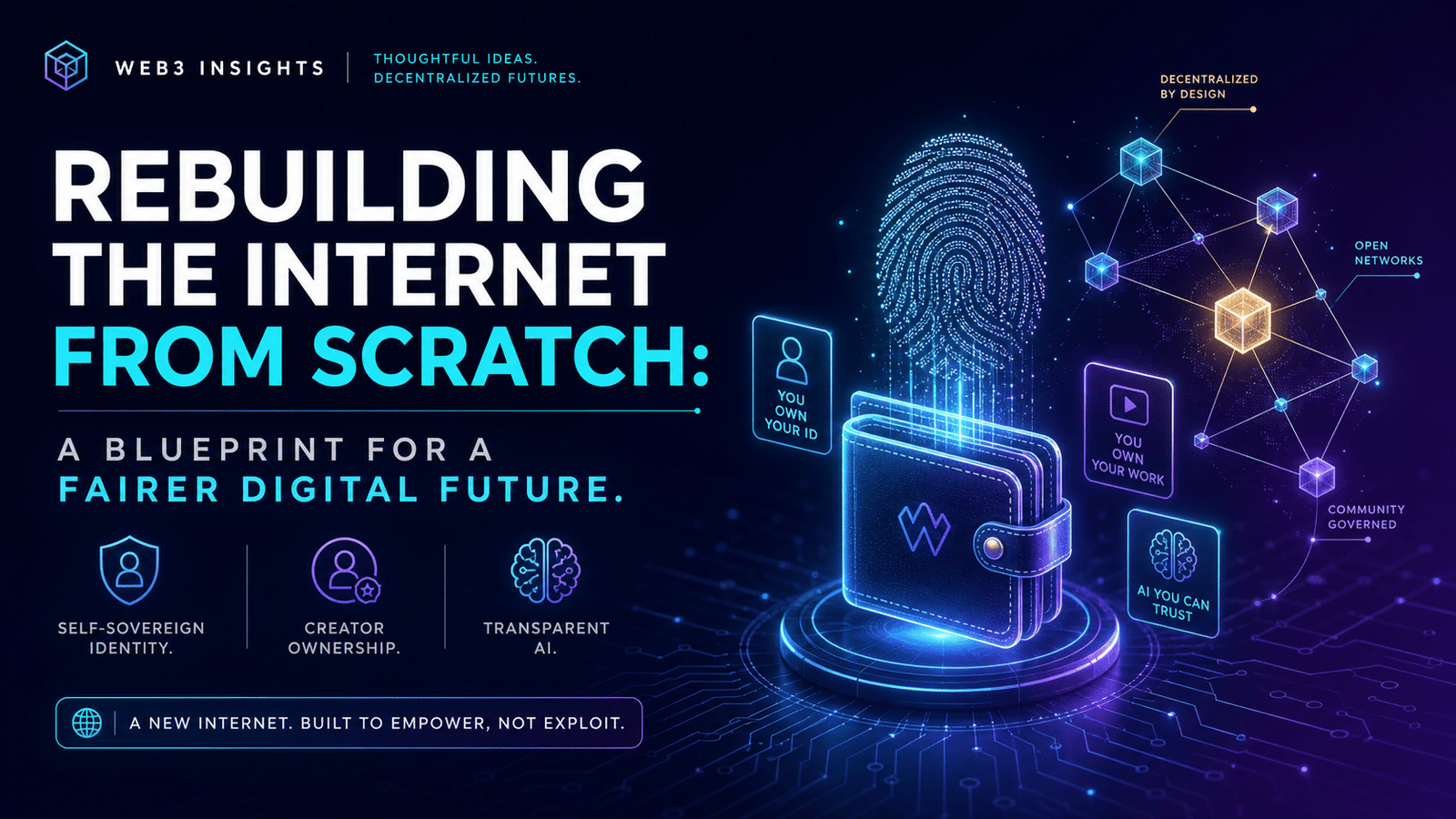
Put these five pieces together — self-sovereign identity, verifiable content ownership, data cooperatives, user-controlled algorithms, and transparent AI — and you get the real vision behind Web3.
This isn’t about discarding what the early internet achieved. It connected humanity in ways no previous generation could imagine. It’s about repairing the structural flaws that crept into the blueprint as that connection scaled into a global industry.
None of this is science fiction. Builders, researchers, and creators worldwide are writing this shift into code right now.
You don’t need to be a developer or cryptographer to be part of it. Just start asking better questions about your own digital life:
The internet wasn’t handed down on stone tablets — it was built by people making specific choices. Every time we demand transparency, agency, and ownership, we help rebuild a digital world that finally works for all of us.
Always remember, stay curious, stay grounded and stay human.