Anouncement

Anouncement

Audio: Listen here
Artificial intelligence (AI) has rapidly evolved from a futuristic concept into one of the most transformative technologies of the 21st century. It is changing how businesses operate, how people communicate, how students learn, and even how artists create. Whether you’re asking an AI assistant to summarize documents, generate images, write code, or help plan your day, AI is becoming an essential part of everyday life.
But what does the future hold? As AI continues to advance, understanding its opportunities, challenges, and long-term impact becomes increasingly important. In this article, we’ll explore the AI era, its influence across industries, the technologies driving innovation, and how individuals and organizations can prepare for an AI-powered future.
The AI era refers to a period where artificial intelligence is no longer a niche technology reserved for research labs or large technology companies. Instead, AI has become widely accessible through cloud services, mobile apps, productivity software, and specialized business platforms.
Modern AI systems can:
Unlike previous waves of digital transformation, AI doesn’t simply automate manual tasks—it can augment human creativity, improve decision-making, and unlock entirely new ways of working.
Artificial intelligence has become a strategic advantage rather than a luxury.
Organizations across nearly every industry are investing heavily in AI because it enables them to:
Individuals also benefit from AI-powered tools that help with writing, studying, scheduling, language translation, content creation, and personal organization.
As AI capabilities improve, those who understand how to work alongside intelligent systems will likely gain a competitive advantage in both education and the workplace.
Today’s AI boom didn’t happen overnight. It is the result of several technological breakthroughs working together.
Machine learning enables computers to recognize patterns by learning from data instead of relying solely on manually programmed instructions.
This technology powers:
The more relevant data available, the more accurate many machine learning models become.
Generative AI has captured global attention because it can create entirely new content rather than simply analyzing existing information.
Examples include:
Generative AI dramatically lowers the barrier to creativity, allowing individuals with limited technical expertise to produce professional-quality work.
Natural Language Processing enables AI to understand, interpret, and generate human language.
NLP powers:
The latest language models can engage in surprisingly natural conversations while assisting with complex reasoning and problem-solving tasks.
Computer vision allows machines to interpret images and video.
Applications include:
As image recognition continues to improve, computer vision is becoming increasingly valuable across industries.
The AI revolution extends far beyond the technology sector.
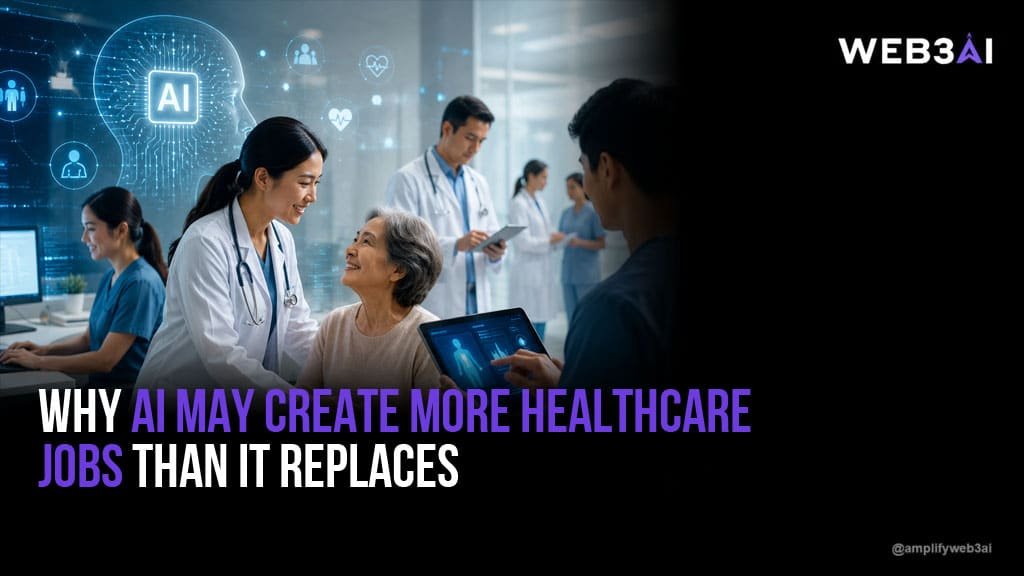
Healthcare professionals use AI to:
AI serves as a powerful assistant, helping clinicians make faster and more informed decisions while allowing them to focus more on patient care.
Students and educators benefit from AI through:
Rather than replacing teachers, AI enhances learning by adapting educational materials to individual needs.
Financial institutions use AI to:
AI enables financial organizations to process enormous volumes of transactions with greater speed and accuracy.
Factories increasingly rely on AI for:
These improvements reduce downtime while increasing productivity and efficiency.
AI has transformed digital marketing by enabling:
Businesses can now deliver highly relevant experiences that improve customer engagement and conversion rates.
One of the biggest questions surrounding AI is its impact on employment.
While automation may replace certain repetitive tasks, history shows that technological revolutions often create new opportunities alongside disruption.
Rather than eliminating work altogether, AI is reshaping job roles.
Workers increasingly spend less time on repetitive administrative tasks and more time on:
New careers are also emerging, including:
The future workforce will likely consist of humans collaborating with AI rather than competing against it.
Just as digital literacy became essential during the internet age, AI literacy is becoming a valuable skill.
Understanding AI doesn’t necessarily require programming knowledge.
Instead, AI literacy includes:
People who develop these skills today will be better prepared for tomorrow’s digital economy.
Despite its remarkable capabilities, AI presents important challenges that society must address.
AI systems often rely on large datasets.
Organizations must ensure they collect, store, and use personal information responsibly while complying with privacy regulations.
AI models learn from existing data.
If training data contains biases, AI systems may unintentionally produce unfair or discriminatory outcomes.
Developers must continuously evaluate and improve models to reduce these risks.
Generative AI can create highly convincing text, images, audio, and video.
While this opens exciting creative possibilities, it also increases the risk of misinformation and deepfakes.
Media literacy and content verification are becoming increasingly important.
AI can strengthen cybersecurity by detecting threats more quickly.
However, cybercriminals are also using AI to automate phishing attacks, generate malicious code, and identify vulnerabilities.
Organizations must stay proactive in defending against AI-powered threats.
Questions surrounding transparency, accountability, copyright, and responsible AI development continue to evolve.
Governments, technology companies, researchers, and the public all have important roles in shaping ethical AI policies.
Businesses don’t need to replace their workforce to benefit from AI.
Instead, successful organizations often begin with practical, incremental adoption.
Recommended steps include:
Organizations that embrace AI strategically often discover new opportunities for innovation rather than simply reducing costs.
Contrary to common fears, AI is not replacing human imagination.
Instead, it is becoming a creative partner.
Writers use AI to brainstorm ideas.
Musicians experiment with AI-generated melodies.
Designers rapidly prototype concepts.
Filmmakers accelerate editing workflows.
Developers generate boilerplate code before refining it manually.
The most compelling results typically come from collaboration between human creativity and machine intelligence.
AI expands what’s possible—but human judgment, emotion, originality, and storytelling remain irreplaceable.
The next decade will likely bring AI into nearly every aspect of daily life.
We can expect advances in:
As AI becomes more capable, the focus will shift from asking whether AI can perform a task to determining how humans and AI can work together most effectively.
Those who remain curious, adaptable, and committed to continuous learning will be best positioned to thrive in this new era.
The AI era is not a distant future—it is already here. From healthcare and finance to education, marketing, and creative industries, artificial intelligence is transforming how people live and work. While challenges such as privacy, ethics, bias, and misinformation require thoughtful solutions, the opportunities are equally significant.
Rather than viewing AI as a replacement for human intelligence, we should see it as a powerful tool that enhances our capabilities. Individuals who develop AI literacy, businesses that embrace responsible innovation, and communities that prioritize ethical implementation will be better equipped to navigate the years ahead.
Decoding tomorrow isn’t about predicting every technological breakthrough. It’s about understanding the direction of change and preparing to adapt. The AI era belongs to those who combine human creativity, critical thinking, and ethical responsibility with the incredible capabilities of intelligent machines. As technology continues to evolve, the greatest advantage will not simply be having access to AI—but knowing how to use it wisely.