Anouncement

Anouncement
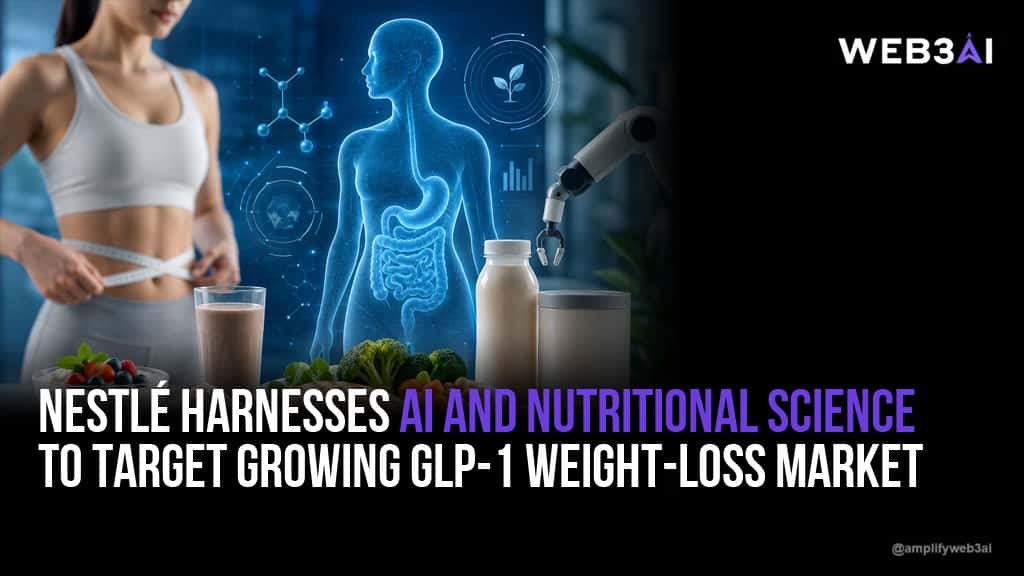

In a bold strategic pivot designed to turn an industry-wide existential threat into a major revenue driver, Nestlé S.A. is deploying cutting-edge artificial intelligence (AI) and advanced nutritional science to develop specialized food and health products for the millions of consumers using GLP-1 weight-loss medications like Ozempic, Wegovy, Mounjaro, and Zepbound.
The rapid global adoption of glucagon-like peptide-1 (GLP-1) receptor agonists—a category of appetite-suppressing pharmaceuticals currently used by an estimated 16 million Americans alone—has caused widespread disruption across the consumer packaged goods (CPG) and fast-moving consumer goods (FMCG) sectors. Investors have voiced persistent concerns that reduced caloric intake among GLP-1 patients could permanently dampen demand for conventional snacks, sugary beverages, and processed meals.
However, Nestlé, the world’s largest food and beverage company, views the shift as a prime commercial opportunity rather than a retreat. Speaking to media outlets, Stefan Palzer, Chief Technology Officer at Nestlé, emphasized that the company is ideally positioned to meet the distinct physiological and dietary demands of GLP-1 patients.
“We are well positioned with the portfolio. It’s a huge opportunity for our company,” Palzer stated, outlining how Nestlé is leveraging internal AI tools and clinical research to deliver targeted nutrition for this rapidly expanding consumer cohort.
While GLP-1 medications are highly effective at inducing significant weight loss by delaying gastric emptying and curbing appetite, they often present unexpected physiological side effects. Clinical data reveals that rapid weight reduction frequently leads to:
Nestlé’s R&D teams are directly tackling these health concerns through specialized product formulations. Palzer highlighted that Nestlé scientists have developed and industrialized a proprietary combination of two micronutrients designed to stimulate muscle tissue growth. When paired with high-quality dietary protein, this nutrient pairing encourages muscle retention and repair during period of caloric deficit.
Additionally, to address post-treatment weight rebound, Nestlé has secured patents for specialized ingredient blends formulated to help manage appetite rebound when consumers transition off GLP-1 medications.
Nestlé has already begun executing its GLP-1 strategy across its global brand portfolio, introducing targeted reformulations and brand-new product lines:
Launched specifically to support weight management and GLP-1 users, the Vital Pursuit line offers portion-controlled, nutrient-dense meal options rich in protein, fiber, and essential minerals to support balanced daily nutrition on a reduced-calorie intake.
In the North American market, Nestlé Health Science introduced Boost Advanced Nutrition Shake, packed with 35 grams of protein per serving. The beverage is explicitly positioned to assist consumers in maintaining lean muscle mass during active weight loss.
Recognizing that skin elasticity, facial aesthetics, and hair health are major consumer priorities during weight loss, Nestlé is expanding its Vital Proteins line. By integrating bioactive collagen peptides with key micronutrients, the company aims to capture growing demand in the “beauty-from-within” wellness segment.
In international markets across Asia and Australia, Nestlé has rolled out Milo PRO High Protein, an elevated protein iteration of its classic malt beverage designed for active consumers and individuals seeking concentrated daily protein intake.
At the heart of Nestlé’s rapid product development strategy is its deep integration of artificial intelligence across the R&D pipeline. The company is using AI to shrink product formulation timelines from years to months.
Key pillars of Nestlé’s AI infrastructure include:
Industry experts view Nestlé’s strategic focus on the GLP-1 market as a proactive blueprint for FMCG manufacturers navigating changing consumer eating habits.
| Strategic Domain | Traditional FMCG Approach | Nestlé’s AI-Driven GLP-1 Strategy |
| Market Focus | High-volume, calorie-dense foods | Nutrient-dense, portion-controlled functional foods |
| Product Target | Broad mass-market appeal | Specific health concerns (muscle loss, skin elasticity, hydration) |
| Development Cycle | 18–24 months via physical testing | Accelerated AI modeling via Food Genie platform |
| Consumer Insights | Retrospective surveys & focus groups | Predictive AI consumer simulations and social listening |
While some nutritionists argue that whole foods—such as lean poultry, fish, eggs, legumes, and natural dairy—remain cost-effective sources of essential nutrients, market analysts point out that convenience and precise nutrient delivery drive sustained consumer adoption. Specialized formulas, fortified beverages, and targeted supplements provide GLP-1 users with an accessible method to meet heightened nutritional thresholds when appetite suppression makes consuming full meals difficult.
By combining clinical science, portfolio diversification, and AI technology, Nestlé is establishing a early leadership position in what financial analysts expect to become a multi-billion-dollar market for medical and functional nutrition tailored to weight-loss therapies.