Anouncement

Anouncement
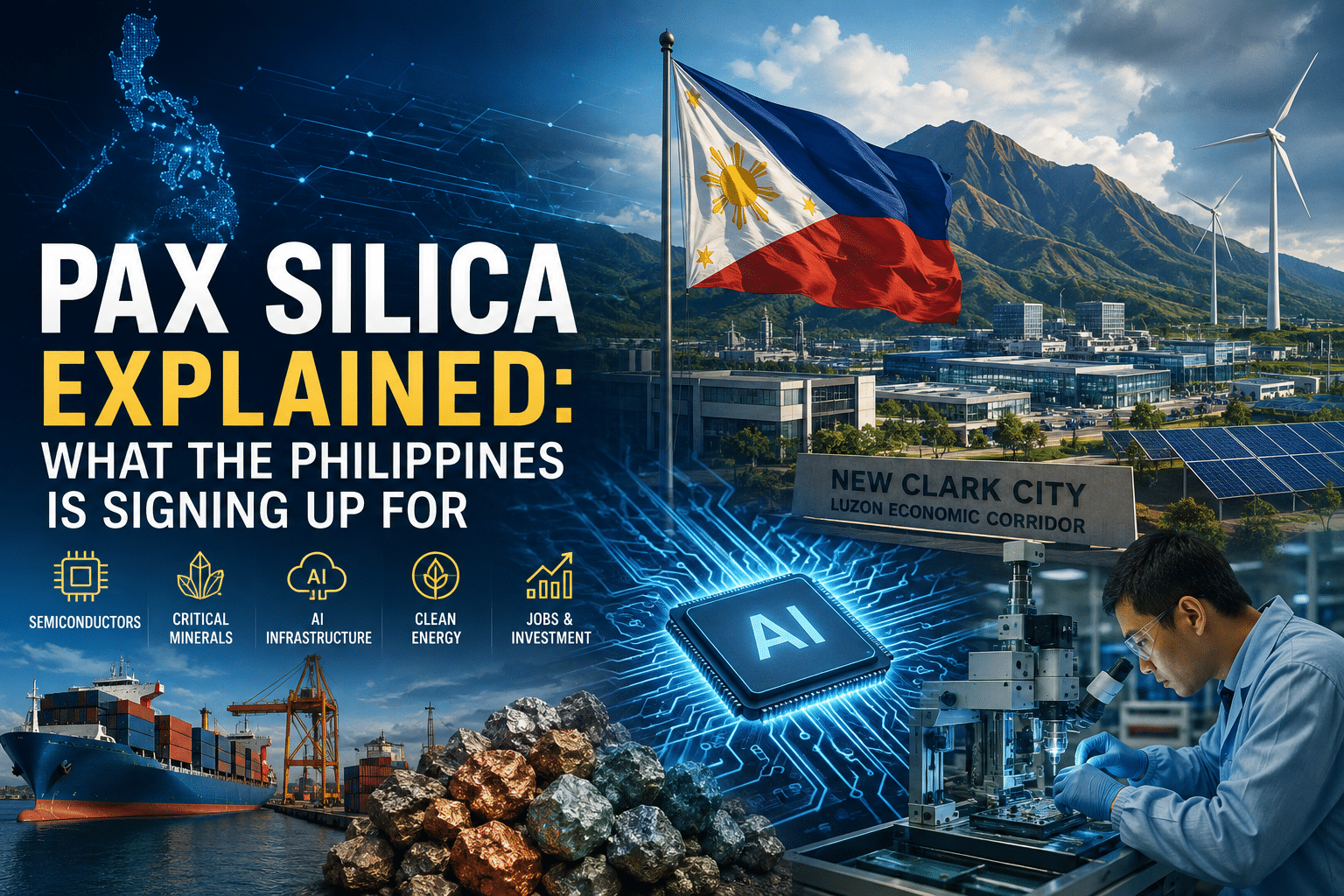

The phrase Pax Silica has quickly become one of the most talked-about technology and economic initiatives in the Philippines. It promises billions of dollars in investment, advanced manufacturing, AI infrastructure, and potentially more high-skilled jobs. At the same time, it has raised questions about the environment, land use, national sovereignty, foreign influence, and the Philippines’ role in the growing technology rivalry between the United States and China.
So, what exactly is the Philippines signing up for?
The short answer is: a strategic partnership focused on securing the supply chains behind artificial intelligence, semiconductors, critical minerals, energy, and advanced technology.
But there is an important distinction. The Philippines formally joined the Pax Silica initiative in April 2026, while the more detailed framework governing the proposed Philippine development is still being negotiated. Officials have been targeting a framework agreement later in 2026.
That means the broad direction is already clear, but many of the practical details are still being worked out.
Pax Silica is a US-led initiative designed to strengthen and diversify supply chains considered critical to the future of AI and advanced technology.
The initiative was launched in December 2025 by the US Department of State. Its focus extends across critical minerals, energy inputs, advanced manufacturing, semiconductors, AI, and technology infrastructure.
The name itself combines “Pax,” meaning peace, with “silica,” a material associated with silicon and the semiconductor industry.
The broader idea is straightforward: modern economies increasingly depend on a relatively small number of countries and companies for essential minerals, chips, computing infrastructure, and other components. Governments want supply chains that are more resilient and less vulnerable to geopolitical conflicts, trade restrictions, shortages, or excessive dependence on a single country.
For the United States and its partners, this is also closely connected to competition with China over advanced technology.
Pax Silica therefore isn’t simply a technology program. It is also an economic security and geopolitical initiative.
The Philippines officially joined Pax Silica in April 2026.
Trade Undersecretary and Board of Investments Managing Head Ceferino Rodolfo signed the declaration on April 17, 2026, making the Philippines part of the growing coalition.
The United States and the Philippines simultaneously announced plans for a major industrial development in the Luzon Economic Corridor.
The initial proposal covered approximately 4,000 acres, or roughly 1,620 hectares, for an economic security zone and AI-focused industrial hub.
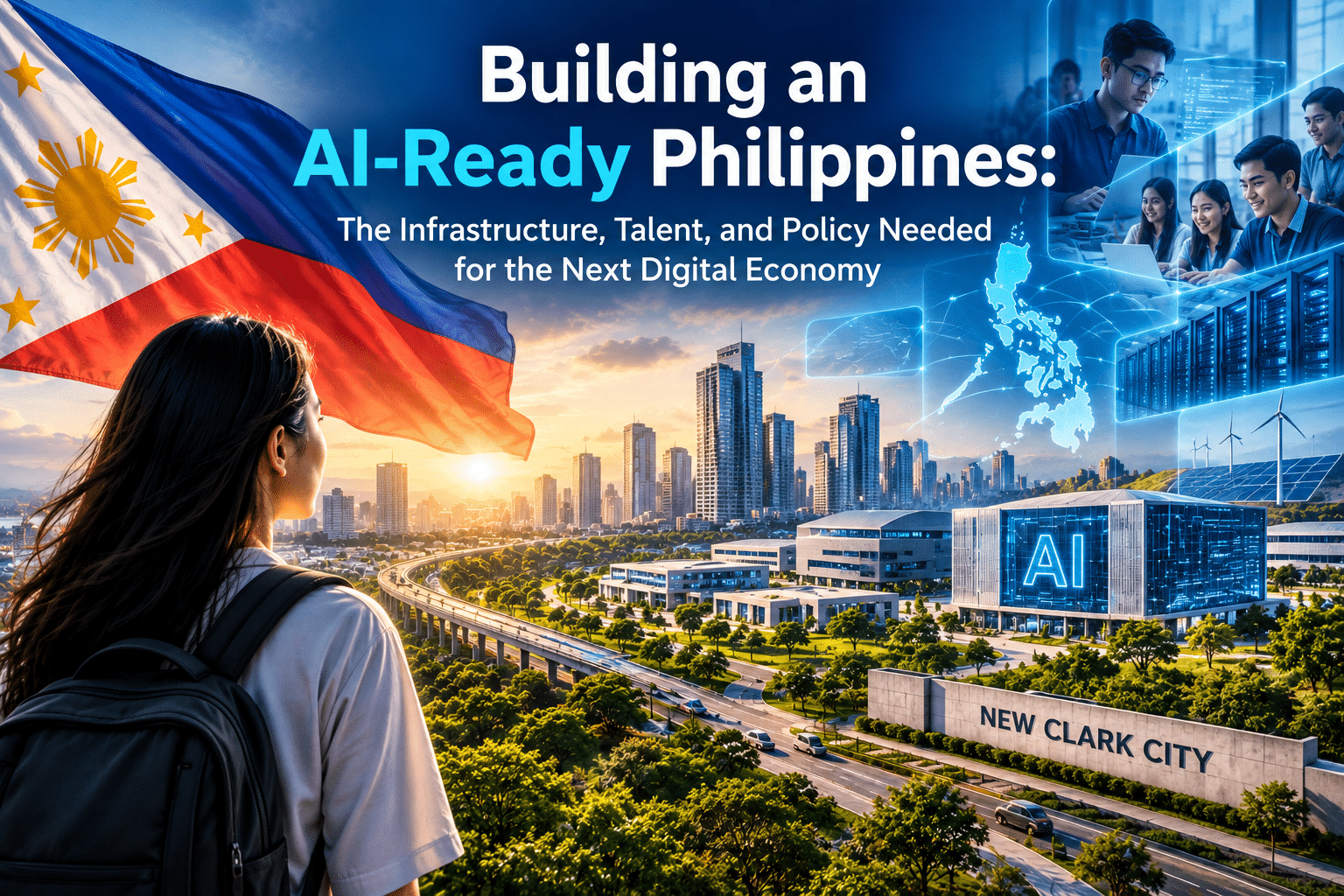
The planned site is in New Clark City, Tarlac, an area already positioned as a major infrastructure and investment corridor.
The project is envisioned as an AI-native industrial acceleration hub, bringing together manufacturing, technology, infrastructure, investment, and supply-chain activities.
The biggest potential benefit is the opportunity to move further up the global technology value chain.
The Philippines already has a significant semiconductor and electronics industry. It is also one of the world’s important producers of minerals such as nickel and copper.
However, producing raw materials or performing lower-value manufacturing is very different from controlling more advanced stages of the supply chain.
Pax Silica could potentially help the Philippines develop more capabilities in areas such as:
This is important because countries that control more stages of production generally capture more economic value.
Instead of simply exporting raw materials and importing finished technology, the Philippines could potentially process resources, manufacture components, develop technology, and support advanced industries domestically.
That is one of the biggest economic arguments behind the initiative.
At the center of the Philippine strategy is the proposed industrial hub in New Clark City.
Government officials describe the project as a potential cornerstone of the Philippines’ participation in Pax Silica and the wider Luzon Economic Corridor.
The Bases Conversion and Development Authority has said the development could eventually attract between US$40 billion and US$70 billion in investments and generate more than 130,000 high-quality jobs. The potential beneficiaries include engineers, researchers, computer science graduates, technicians, and other highly skilled workers.
If those projections materialize, the project could have a significant impact on the Philippine economy.
It could also help address a long-standing problem: the country’s difficulty in retaining highly skilled Filipino workers.
Instead of engineers and technology professionals leaving the Philippines to pursue opportunities abroad, a stronger domestic technology ecosystem could create more reasons for them to build careers locally.
That is why officials have framed Pax Silica as an opportunity for “brain gain” rather than brain drain.
AI may seem like a software story, but AI depends heavily on physical infrastructure.
Data centers require enormous amounts of electricity, advanced chips, cooling systems, networking equipment, construction materials, and other components.
Those components ultimately depend on global mineral and manufacturing supply chains.
The Philippines has substantial mineral resources, particularly nickel, copper, cobalt and other minerals relevant to industrial and technology supply chains.
The strategic question is whether the Philippines can capture more value from these resources.
One objective associated with Pax Silica is therefore to strengthen the country’s role in the midstream and downstream portions of the supply chain—processing materials and transforming them into higher-value industrial inputs rather than relying primarily on raw mineral exports.
This could create new industries, but it also creates an important responsibility: mineral development must be economically productive without causing unacceptable environmental damage.
Semiconductors are another major reason Pax Silica matters.
Everything from smartphones and automobiles to medical equipment, telecommunications systems, military technology, and AI servers depends on semiconductor components.
The global semiconductor industry is highly concentrated, and disruptions in major manufacturing centers can affect industries around the world.
For the Philippines, becoming a more important part of the semiconductor supply chain could bring investment and technological expertise.
The country already has experience in electronics manufacturing and semiconductor-related activities. Pax Silica could potentially encourage expansion into more sophisticated stages of production.
That would be a significant upgrade for the Philippine manufacturing sector.
The long-term goal should not simply be to attract factories. It should be to develop an ecosystem involving Filipino engineers, suppliers, researchers, universities, startups, manufacturers, and technology companies.
Jobs are perhaps the most immediate benefit ordinary Filipinos will be watching.
Government projections point to more than 130,000 potential high-quality jobs once the proposed development is fully established.
But the quality of those jobs matters as much as the quantity.
If Pax Silica succeeds, opportunities could emerge across multiple sectors:
Engineering: semiconductor, electrical, mechanical, chemical, and industrial engineers.
Technology: software developers, AI specialists, cybersecurity professionals, data scientists, and cloud infrastructure experts.
Manufacturing: technicians, operators, quality-control specialists, and industrial automation professionals.
Research: scientists and researchers working on materials, energy, computing, and advanced manufacturing.
Business services: logistics, finance, supply-chain management, legal services, and other professional industries.
For Filipino students and young professionals, this could eventually translate into an expanded technology job market.
However, education and workforce development will determine whether Filipinos actually capture those opportunities.
A high-tech industrial zone cannot succeed if the majority of specialized talent still has to be imported.
There is another major issue that often gets overlooked: AI requires enormous amounts of power.
Data centers and advanced manufacturing facilities can consume significant quantities of electricity.
That means the success of a Philippine AI hub will depend not only on buildings and investors but also on reliable and affordable energy.
The government has already explored partnerships involving renewable energy and digital infrastructure for the planned Luzon AI hub.
This creates an opportunity for the Philippines to connect AI development with renewable energy investment.
But it also creates questions about electricity prices, grid capacity, water consumption, environmental impact, and the ability of local infrastructure to support large industrial facilities.
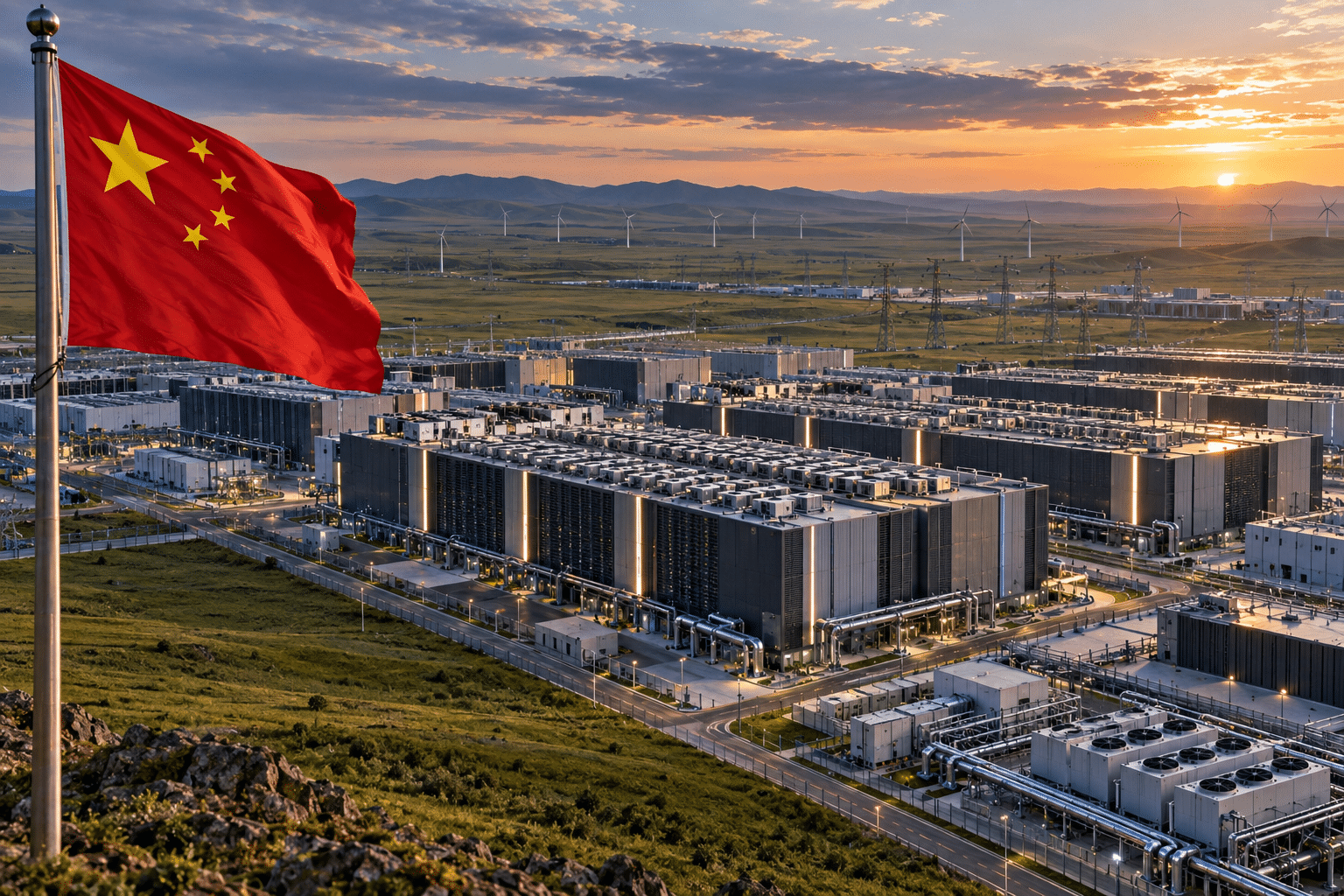
China is not necessarily named in every description of Pax Silica, but geopolitics is impossible to ignore.
The United States and China are competing for influence over AI, semiconductors, critical minerals, advanced manufacturing, and other strategic technologies.
Pax Silica is part of the US effort to build more resilient technology supply chains with allies and trusted partners.
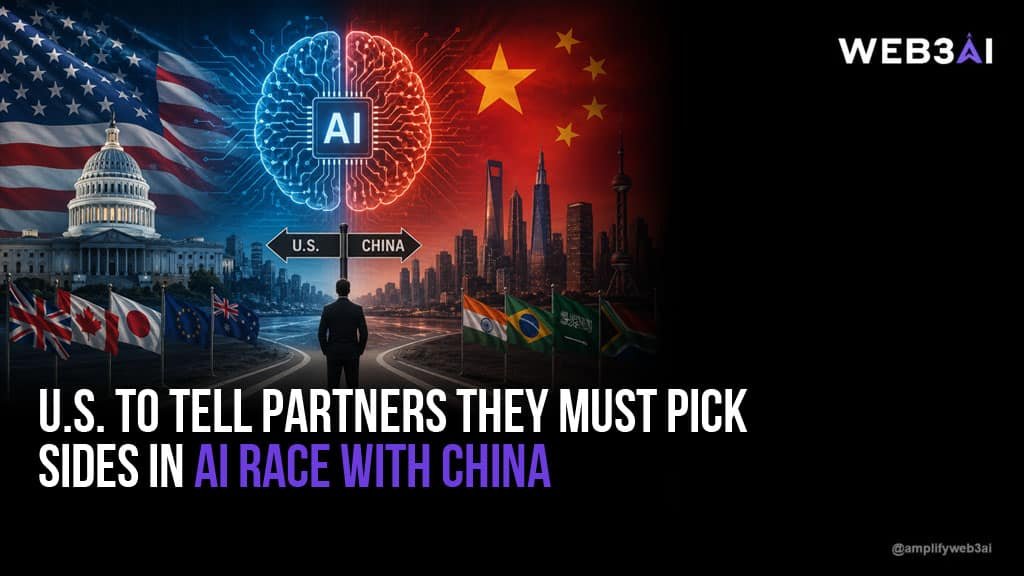
The geopolitical dimension became even clearer in August 2026, when the United States was reported to be preparing to tell partners that participation in the US-led Pax Silica initiative could be incompatible with joining China’s rival AI coalition.
For the Philippines, this means Pax Silica is not purely an economic decision.
It also places the country more visibly within a US-centered technology and economic-security network.
That could strengthen the Philippines’ access to Western investment and technology, but it may also require Manila to carefully manage its economic relationship with China.
Supporters see Pax Silica as an opportunity to modernize Philippine industry.
Critics are asking a different question: at what cost?
Several concerns have already emerged.
Large industrial facilities can require substantial land, energy, water, and transportation infrastructure.
Environmental groups and critics have questioned how the project will affect ecosystems, agricultural areas, and water resources.
The scale of the proposed development has also raised questions about land use and potential displacement.
The Philippine government has said that national laws, environmental safeguards, and protections for affected communities will have to be respected.
Some critics worry that a major US-linked economic security project could increase foreign influence.
The government has maintained that Philippine sovereignty and jurisdiction will remain protected and that the project will operate under Philippine law.
Another question is whether the Philippines will simply become a location for foreign companies or whether Filipino companies will develop alongside them.
The best outcome would be a technology ecosystem where foreign investment creates opportunities for local businesses, universities, workers, and entrepreneurs.
The Philippines has already signed the Pax Silica declaration, but the detailed framework for the proposed development is still being negotiated.
BCDA officials said in July that Philippine and US officials were exchanging draft arrangements and were aiming to finalize the framework within a few months, with a signing targeted before the end of 2026.
Infrastructure planning is already progressing.
In July, BCDA and the Subic Bay Metropolitan Authority agreed to develop Subic Bay as the preferred maritime gateway for Pax Silica-related logistics, including cargo handling, imports, exports, and supply-chain activities.
This suggests that Pax Silica is being considered not as a single industrial park but as a broader economic network connecting New Clark City, Subic, the Luzon Economic Corridor, energy infrastructure, manufacturing, logistics, and technology facilities.
The answer depends on how it is implemented.
Pax Silica could become one of the Philippines’ biggest opportunities to move into higher-value manufacturing and technology.
It could attract billions of dollars, create skilled jobs, strengthen semiconductor capabilities, encourage mineral processing, expand AI infrastructure, and make the Philippines more important in global technology supply chains.
But none of those benefits are automatic.
The country will need strong environmental safeguards, transparent agreements, meaningful community consultation, workforce development, technology-transfer requirements, and policies that ensure Filipino companies participate in the resulting economy.
The most important question is therefore not simply whether the Philippines should join Pax Silica.
It is whether the Philippines can negotiate and implement the initiative in a way that ensures the country captures a meaningful share of its long-term value.
Pax Silica represents something larger than one industrial hub in Tarlac.
It reflects the changing nature of global economic competition.
The next generation of economic power will increasingly depend on AI, semiconductors, electricity, critical minerals, data centers, advanced manufacturing, and the infrastructure connecting them.
The Philippines has several pieces of that puzzle already: a large workforce, strategic geography, mineral resources, an established electronics sector, a growing technology ecosystem, and close relationships with major global economies.
Pax Silica gives the country an opportunity to connect those pieces.
But the real measure of success will not be how many foreign companies arrive or how large the investment headline becomes.
It will be whether Filipino workers gain better careers, Filipino companies move up the value chain, local industries become more competitive, technology capabilities improve, and economic growth reaches communities without sacrificing environmental protection.
The Philippines has signed up for the opportunity. The harder part is making sure it becomes a Philippine success story.