Anouncement

Anouncement
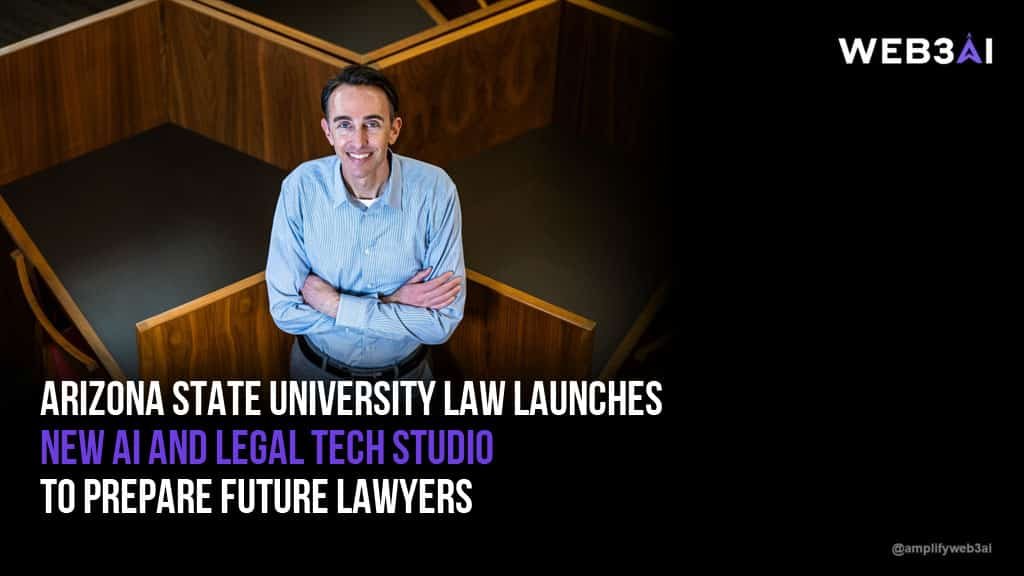

PHOENIX, AZ — As artificial intelligence rapidly transforms the legal landscape, Arizona State University’s Sandra Day O’Connor College of Law is leading the shift. Welcoming its inaugural cohort this fall, ASU Law has launched its groundbreaking AI and Legal Technology Studio, an initiative designed to give law students direct, hands-on experience developing and deploying AI-powered legal tools.
Directed by Sean Harrington, a nationally recognized authority on integrating artificial intelligence into legal practice, the studio addresses a widening gap between traditional law school curricula and the tech-driven demands of modern legal work.
“ASU is way ahead of the curve,” said Harrington. “When it comes to hands-on training, the gap is even wider. We’re building for where the legal profession is going, not where it’s been.”
According to a survey by the American Bar Association, ASU Law is among only 20% of law schools actively training students on AI and its legal implications. The new studio expands on this momentum through a dual-track strategy focused on public service and private entrepreneurship.
The AI and Legal Tech Studio is built around two core pillars designed to benefit both the public interest and the commercial legal sector:
To drive immediate public impact, the studio is partnering directly with the Maricopa County Court system—one of the largest centralized court networks in the United States.
ASU Law students will work with judges and court administration to solve real-world challenges facing Arizonans. Key initiatives include:
“In legal aid clinics, people line up for hours and still may not get help,” Harrington explained. “If you automate parts of that process, suddenly everyone can be served.”
Beyond public service, the studio operates as an incubator for legal technology ventures. Students will receive specialized mentorship, technical resources, and training to build commercial AI-powered applications and launch legal tech startups.
Harrington highlighted a cyclical funding vision for the initiative: commercial success generated through private innovation will help fund and sustain the studio’s access-to-justice initiatives.
ASU Law has a long history of tech leadership as the first law school to establish a dedicated Center for Law, Science and Innovation. The new AI studio builds upon this legacy by offering graduates a distinct edge in a competitive job market.
Angela Banks, Charles J. Merriam Distinguished Professor of Law and Interim Dean at ASU Law, emphasized that practical tech experience makes students immediate assets to top law firms and legal departments.
“Our students are already doing a fairly good job of competing for jobs in large law firms,” Banks said. “This additional skill set is going to make our students more prepared to practice law in an era in which AI is becoming a feature of legal practice. They are going to be able to walk into their jobs with a much better understanding of what tools are available.”
The studio’s work extends into cross-campus collaborations to redefine how legal education is delivered:
By integrating artificial intelligence into both its operational infrastructure and academic curriculum, ASU Law continues to set the standard for modern legal education in the digital era.