Anouncement

Anouncement
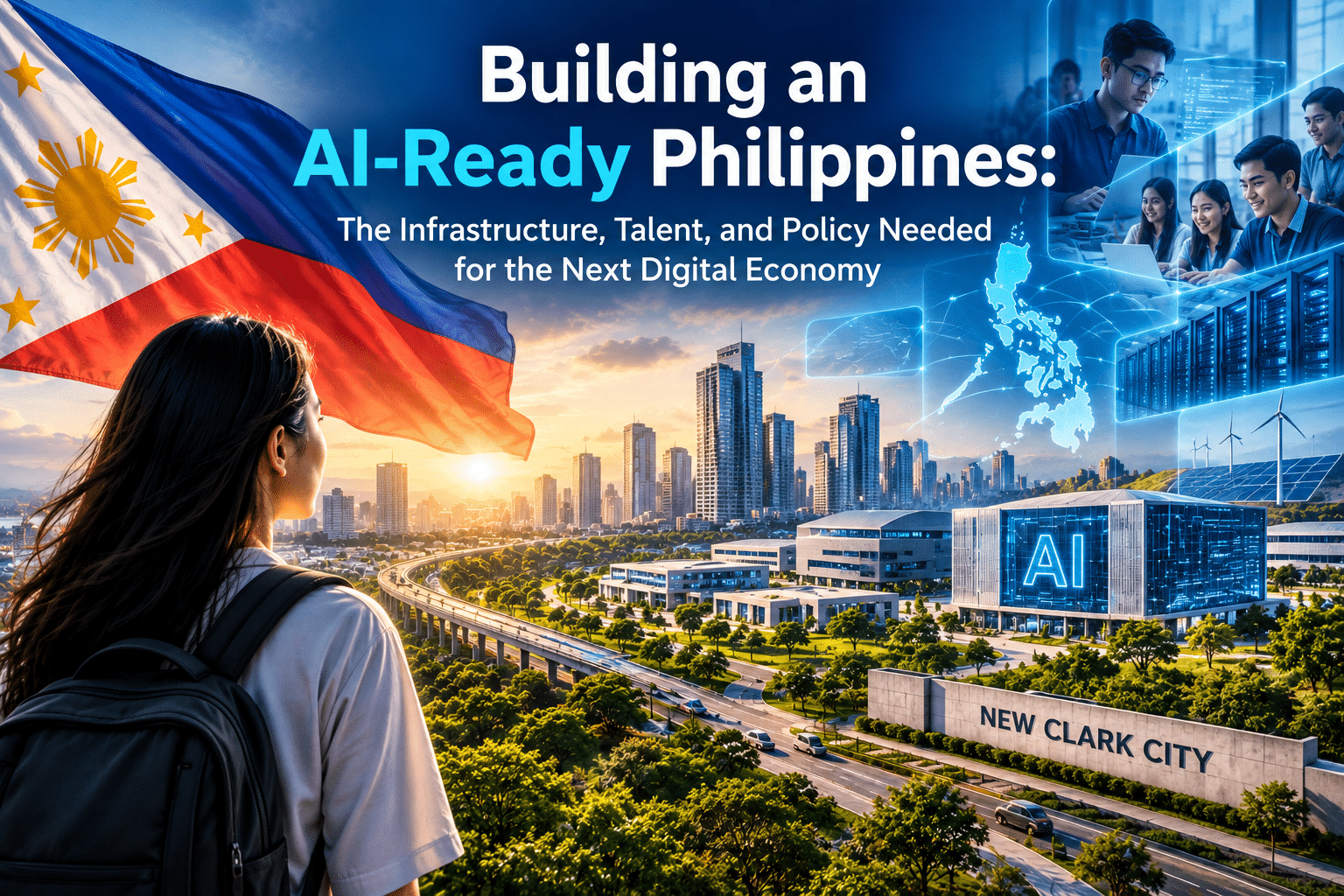

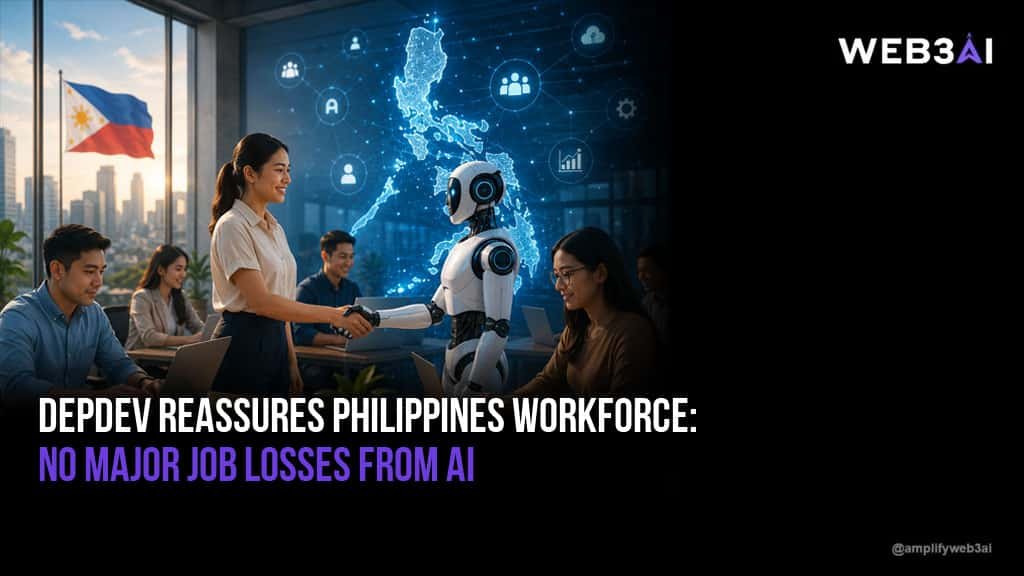
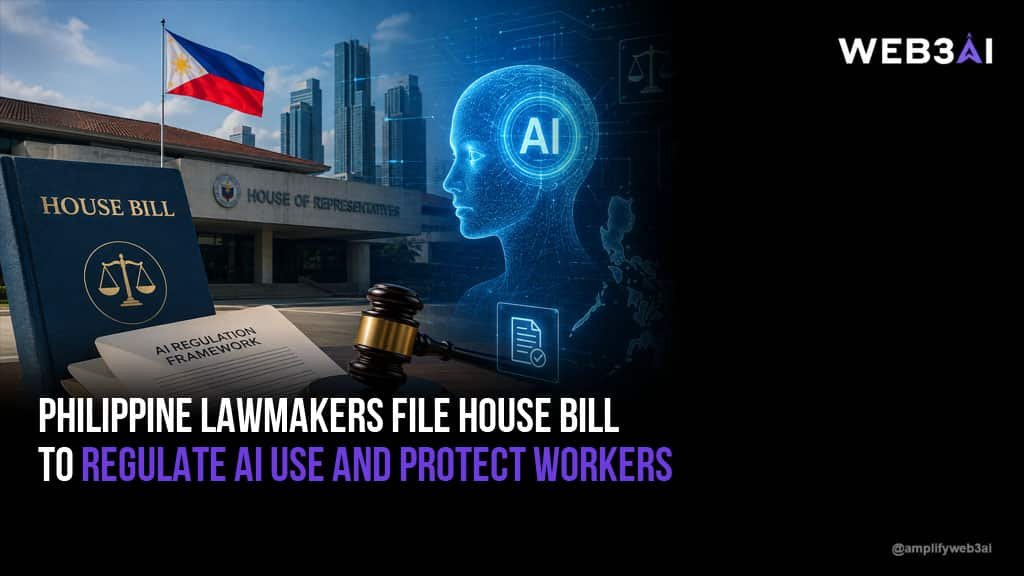
Artificial intelligence is rapidly becoming one of the biggest drivers of economic transformation worldwide. For the Philippines, the opportunity is enormous—but becoming an AI-powered economy will require much more than adopting the latest AI tools.
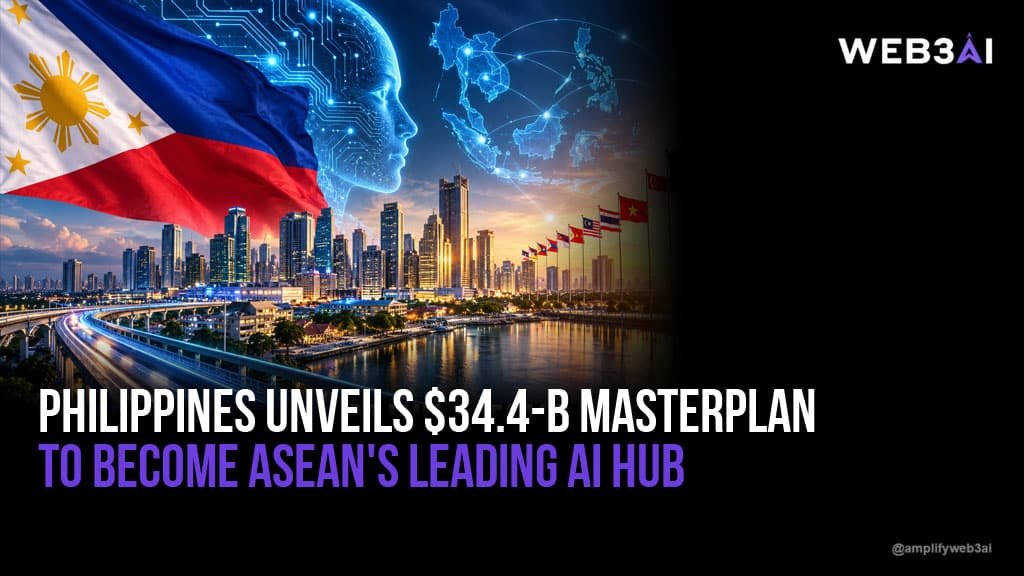
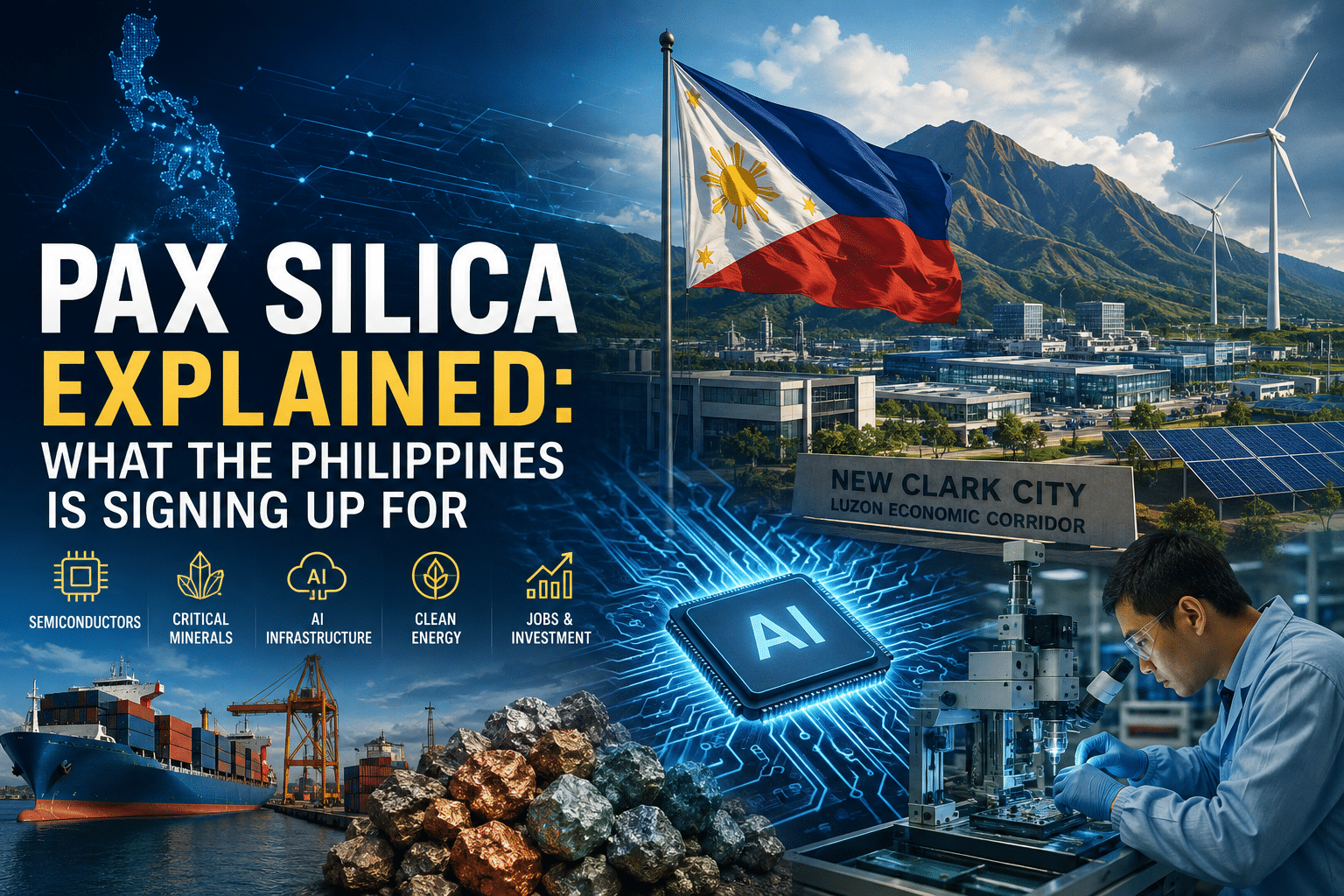
The country is increasingly positioning itself to participate in the global artificial intelligence economy, including through plans for an AI industrial hub in New Clark City, Tarlac. The proposed development is envisioned as a gateway to higher-value manufacturing, semiconductor production, data infrastructure, and participation in the global AI supply chain.
But before the Philippines can become a serious destination for AI investment, it needs to strengthen the foundations underneath the technology.
Reliable electricity, high-speed internet, cloud infrastructure, data centers, cybersecurity, quality data, skilled workers, and clear regulations will determine whether the country can successfully compete for AI-related investments.
The question is no longer whether the Philippines should embrace artificial intelligence.
The bigger question is: Is the Philippines ready to support an AI-driven economy?
The global AI boom is creating demand for new infrastructure, advanced computing, semiconductor manufacturing, data centers, software development, and highly skilled workers.
For the Philippines, this presents an opportunity to move beyond traditional outsourcing and position itself higher in the global technology value chain.
The proposed AI industrial hub in New Clark City could become an important part of this strategy. According to the Bases Conversion and Development Authority, the planned 1,619-hectare development could potentially generate as much as $200 billion in additional exports over 30 years, along with hundreds of thousands of direct and indirect jobs. Initial development of roughly 500 hectares is targeted for 2028.
If successfully executed, such a project could attract companies involved in semiconductors, advanced manufacturing, cloud computing, AI infrastructure, and other emerging technologies.
However, large technology projects do not operate in isolation.
An AI hub needs a broader ecosystem around it.
That means dependable electricity, strong telecommunications infrastructure, access to data, skilled talent, efficient transportation, cybersecurity, and policies that give investors confidence.
Artificial intelligence depends on digital infrastructure.
AI applications require fast and reliable networks to move enormous amounts of data between users, companies, cloud platforms, and computing facilities.
For the Philippines, connectivity remains one of the most important areas for improvement.
The World Bank has identified weaknesses involving data infrastructure, governance, broadband connectivity, data center capacity, and cloud adoption as potential constraints on the country’s AI ambitions. Telecommunications infrastructure investment as a percentage of GDP also declined from 0.64% in 2018 to 0.39% in 2024.
This matters because AI readiness cannot be measured simply by how many Filipinos have access to smartphones or social media.
A truly AI-ready country needs infrastructure capable of supporting businesses that depend on cloud computing, real-time analytics, automation, machine learning, and high-volume data processing.
For an archipelago of more than 7,000 islands, the challenge is particularly significant.
AI infrastructure must reach beyond Metro Manila and major business centers.
Regional cities, provincial businesses, schools, government agencies, and rural communities also need access to reliable digital networks.
Otherwise, AI could deepen existing economic inequalities rather than reduce them.
AI also has a less glamorous but extremely important requirement: electricity.
Modern AI systems require substantial computing power. Data centers, semiconductor facilities, and high-performance computing infrastructure can consume significant amounts of electricity.
That means energy availability and affordability could become major factors in determining where AI companies choose to invest.
An investor considering the Philippines will look beyond tax incentives and available land. They will want to know whether the country can provide reliable and competitively priced power.
New Clark City is already preparing infrastructure to support its planned development, including a dedicated power connection.
But national competitiveness requires a broader approach.
The Philippines needs an energy system capable of supporting the growth of data centers, semiconductor manufacturing, telecommunications infrastructure, and other electricity-intensive industries.
Renewable energy could also become increasingly important.
As global companies face growing pressure to reduce carbon emissions, access to reliable low-carbon electricity could become a competitive advantage for countries seeking AI and data center investments.
Computing power alone cannot create useful artificial intelligence.
AI systems also depend on data.
For the Philippines, improving the quality, accessibility, security, and interoperability of data should therefore become a national priority.
Government agencies, businesses, universities, hospitals, financial institutions, and other organizations generate enormous amounts of information. However, data often remains fragmented across different systems and institutions.
Poor interoperability can make it difficult to use information effectively.
A more connected data ecosystem could help government agencies deliver better services while allowing businesses and researchers to develop more useful AI applications.
Data governance will be equally important.
Citizens need confidence that their personal information is being protected. Businesses need clear rules governing data usage. AI developers need predictable standards for accessing and processing information.
The Philippines therefore needs to strike a balance between encouraging innovation and protecting privacy, security, and individual rights.
Infrastructure is only half of the equation.
The Philippines also needs people who can build, operate, manage, and govern AI systems.
The country’s large English-speaking workforce gives it an important advantage in the digital economy. But traditional digital skills will not necessarily be enough for the next phase of technological development.
AI-related jobs will require capabilities in areas such as:
The education system will therefore need to evolve alongside technology.
AI education should not be limited to producing programmers. Teachers, government workers, entrepreneurs, business executives, and ordinary employees will also need practical AI literacy.
The broader international AI governance discussion increasingly emphasizes that capacity building must include educators, students, policymakers, businesses, and communities—not simply technical specialists.
The Philippines can also benefit from partnerships between universities, technology companies, government agencies, and international organizations.
The goal should be to create a continuous talent pipeline rather than relying exclusively on short-term training programs.
There is another important distinction.
Training people to use AI is not the same as building an AI economy.
A person can complete an AI course and receive a certificate without having a job, business opportunity, or institution where those skills can be applied.
This is why workforce development needs to be connected to actual economic demand.
Businesses should be encouraged to create AI-enabled jobs and workflows. Government agencies can become early adopters of AI technologies. Universities can support research and startups. Local governments can experiment with AI-powered public services.
The objective should be to connect education → skills → deployment → jobs → economic value.
This approach would make AI investment more meaningful for Filipino workers.
Artificial intelligence also introduces new risks.
AI-generated misinformation, privacy violations, algorithmic bias, cybersecurity threats, intellectual property disputes, and automated decision-making are among the issues governments worldwide are beginning to address.
The Philippines will need policies that encourage responsible innovation without creating unnecessary barriers for startups and businesses.
This requires coordination among government agencies.
AI policy touches telecommunications, data privacy, education, labor, trade, cybersecurity, energy, finance, and national security.
Fragmented regulation could create uncertainty for businesses.
A coordinated national approach could instead give investors and innovators a clearer understanding of the rules.
The Philippines can also learn from regional frameworks. ASEAN has already developed guidance on AI governance and ethics, including expanded guidance addressing generative AI.
The planned AI industrial hub in New Clark City represents more than a single infrastructure project.
It could become a catalyst for broader technological development across the Philippines.
If successful, the hub could attract semiconductor companies, AI infrastructure providers, manufacturers, technology startups, research institutions, and international investors.
But its success should not be measured solely by the number of companies that establish facilities there.
The bigger opportunity is building connections between the hub and the rest of the Philippine economy.
Local universities could supply talent.
Filipino startups could develop products for companies operating inside the hub.
Provincial businesses could become suppliers.
Workers from different regions could participate in new technology-driven industries.
Government agencies could use the infrastructure and expertise developed there to accelerate digital transformation.
In this way, New Clark City could become part of a national AI ecosystem rather than an isolated technology enclave.
The Philippines has an opportunity to position itself as an important player in the emerging AI economy.
But attracting AI investment requires more than ambitious announcements.
The country needs to demonstrate that its foundations are ready.
That means expanding affordable broadband, strengthening electricity infrastructure, increasing data center and cloud capacity, improving cybersecurity, modernizing government data systems, developing AI talent, and establishing predictable regulations.
It also means ensuring that AI opportunities reach outside major urban centers.
An AI-ready Philippines should not mean an AI-ready Metro Manila alone.
The benefits of artificial intelligence should reach entrepreneurs in provincial cities, students in public schools, workers transitioning into new careers, farmers using smart technologies, healthcare providers adopting digital tools, and small businesses looking for ways to become more productive.
Artificial intelligence could represent one of the biggest economic opportunities available to the Philippines in decades.
The country already has several advantages: a large workforce, strong English proficiency, a growing digital economy, an established business-process outsourcing sector, and an expanding technology ecosystem.
The next challenge is infrastructure.
The proposed AI industrial hub in New Clark City provides a potential starting point, but the broader national ecosystem will determine whether the Philippines can truly capture the opportunity.
The message is straightforward: AI investment follows strong foundations.
Companies will look for reliable power, fast connectivity, secure data, advanced computing, skilled workers, and stable regulations.
If the Philippines can deliver those foundations, it could move from being primarily a consumer of AI technology to becoming a meaningful contributor to the global AI economy.
The race for AI leadership is already underway.
For the Philippines, the smartest strategy may not be to simply chase the newest AI model.
It is to build the infrastructure, institutions, talent, and ecosystem that allow Filipinos to create, deploy, and benefit from the technology themselves.
That is what will ultimately determine whether the Philippines becomes merely AI-ready—or genuinely AI-powered.