Anouncement

Anouncement
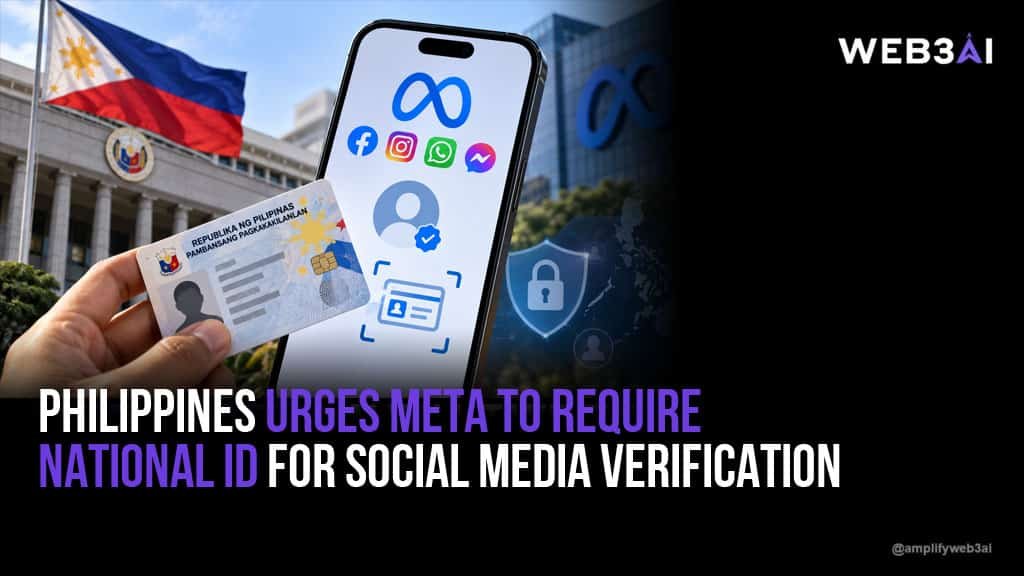

MANILA, Philippines — The Department of Information and Communications Technology (DICT) is pressing social media giant Meta to integrate the Philippine National ID system into its account verification process across platforms including Facebook, Instagram, Messenger, WhatsApp, and Threads.
The initiative aims to curb online crimes, eliminate anonymous illegal activities, and improve perpetrator attribution across digital platforms operating in the country.
Speaking on ANC’s Headstart, DICT Secretary Henry Aguda revealed that the Philippine government formally presented the proposal to Meta executives during a recent meeting in Singapore.
Aguda highlighted that online gaming platform Roblox has already committed to implementing national ID verification for its users in the Philippines—a precedent he believes leaves tech conglomerates with little defense against adopting similar measures.
“If Roblox can do it, I told Meta, ‘You have no excuse not to implement it,'” Aguda stated. “Meta told us it’s a lengthy process, but we told them we will wait.”
Aguda emphasized that mandatory identity verification is crucial to holding cybercriminals accountable:
“You can no longer hide behind Facebook when you commit something illegal. Attribution is extremely difficult right now.”
The push for mandatory ID verification comes after Meta admitted to a significant flaw in its automated content moderation system during an August 18, 2026 attack at Ateneo de Zamboanga University (ADZU).
A Facebook Live broadcast depicting the violence remained active on the platform for approximately 14 minutes before automated detection systems flagged and removed it. During that window, users copied and reuploaded the stream, forcing authorities and Meta to take down over 1,700 duplicate videos.
Meta acknowledged the delay, attributing it to a rare failure within its AI algorithms—claiming such instances represent the “one percent” that slips past automated filters.
DICT officials firmly rejected that explanation, calling a 1% failure rate in critical safety detection “unacceptable” given the real-world harm created by viral violent content.
Currently, Philippine law does not impose direct legal liability or financial penalties on social media platforms for unmoderated violent content. However, the Philippine Senate is actively drafting the Child Online Safety and Protection Act, a priority measure intended to establish strict platform liability and legal accountability.
Aguda cautioned Meta against waiting for punitive legislation, urging proactive platform safeguards instead of enduring costly litigations seen in other jurisdictions.
| Initiative | Lead Agency / Entity | Details & Objectives |
| Technical Working Group (TWG) | Meta, NBI, CICC | Meta technical and law enforcement experts arriving in PH (Sept 2026) to strengthen detection workflows. |
| Local Entity Establishment | Meta | Meta committed to setting up a dedicated Philippine office once legal frameworks are clarified. |
| Platform Liability Law | Philippine Senate | Drafting the Child Online Safety and Protection Act to penalize platform negligence. |
| Expanded Oversight | DICT | Plans to implement stricter regulations on Discord to combat child exploitation and online radicalization. |
Meta’s upcoming technical working group will collaborate directly with the National Bureau of Investigation (NBI) and the Cybercrime Investigation and Coordinating Center (CICC) to establish real-time reporting channels and prevent future content moderation breaches.