Anouncement

Anouncement


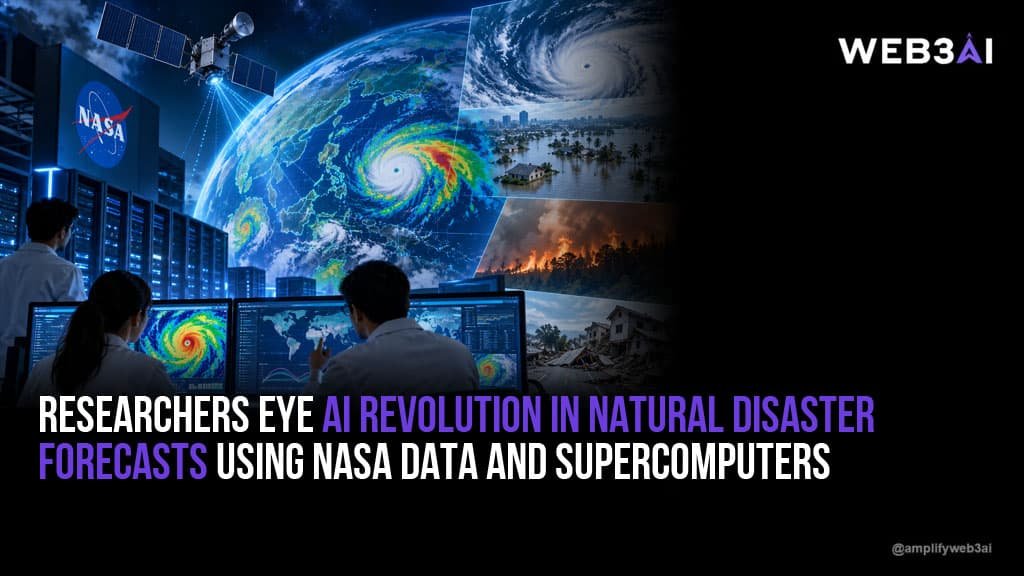
MANILA, Philippines — In a major leap toward science-driven disaster prevention, the Philippine government has officially released ₱1 billion to the University of the Philippines (UP) System to upgrade Project NOAH (Nationwide Operational Assessment of Hazards) with artificial intelligence (AI) and real-time hazard forecasting capabilities.
Announced by the Department of Budget and Management (DBM), the funding reinforcement aims to shift the country’s disaster response strategy away from reactive post-calamity relief and toward early, data-informed intervention before floodwaters rise.
Project NOAH, operated by the UP Resilience Institute, combines satellite data, high-resolution mapping, and meteorological inputs to map natural hazards nationwide.
The funding, sourced from the UP System’s built-in appropriation under the 2026 General Appropriations Act, provides critical infrastructure and research backing to scale up predictive technologies.
| Key Category | Allocation | Primary Objective |
| Research & Technical Services | ₱935 Million | AI-enhanced modeling, LiDAR mapping, algorithmic data analytics, and predictive flood simulation tools. |
| Management & Supervision | ₱65 Million | Operational support systems, administrative oversight, and multi-agency coordination. |
| Key Deliverables | High-tech ICT deployment | Procurement of scientific hardware, engagement of technical experts, and barangay-level forecasting. |
For decades, natural disaster management in the Philippines has often centered on post-typhoon relief and emergency response operations. The new funding injection marks an official policy shift toward pre-disaster mitigation.
“We do not need to wait for floodwaters to rise before we take action. The goal is to know where the danger is, who is at risk, and what needs to be done before disaster strikes,” stated DBM Acting Secretary Kim Robert C. de Leon.
“This ₱1-billion investment in Project NOAH is an investment in prevention. We are putting science, AI, and real-time hazard information to work so government can act earlier, communities can prepare better, and more Filipino lives and livelihoods can be protected.”
De Leon emphasized that investing in early warning systems saves taxpayers significantly more than rebuilding damaged infrastructure after severe weather events.
Managed by the UP Resilience Institute, Project NOAH utilizes a suite of modern technologies to generate actionable hazard data:
With dozens of typhoons hitting the Philippine archipelago every year, severe flooding frequently devastates agriculture, commercial trade, and residential communities. DBM officials noted that integrating UP NOAH’s predictive analytics into public expenditure monitoring will help protect government assets and direct flood mitigation funds where they are required most.
“We cannot stop typhoons or heavy rains from coming, but with the right information at the right time, we can reduce their impact,” De Leon added. “That is what we want public funds to deliver—not simply resources after a disaster, but greater protection before it happens.”