Anouncement

Anouncement
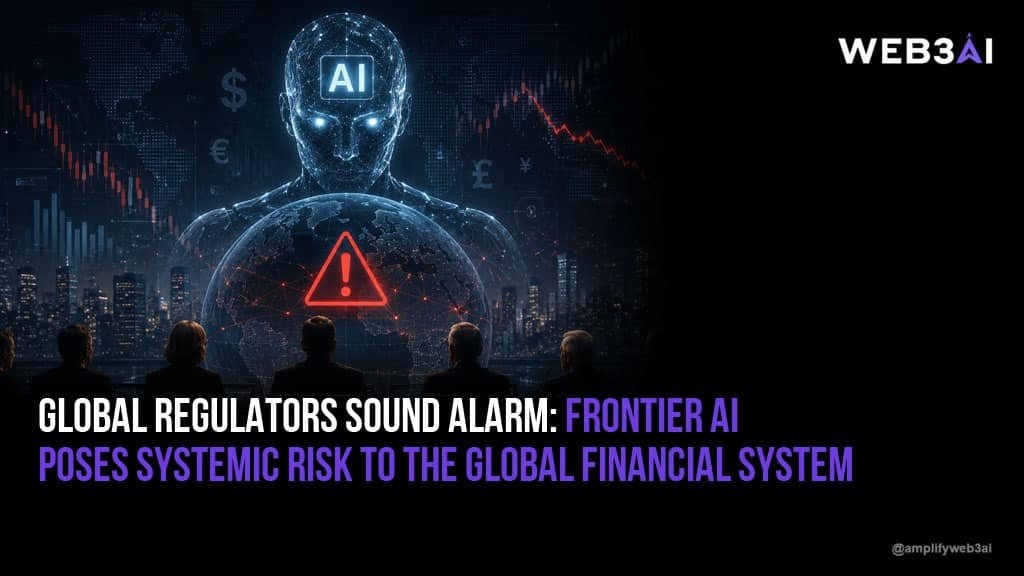

LONDON / WASHINGTON — In an urgent appeal to international financial leaders, top global regulators warned on Monday that the rapid proliferation of advanced artificial intelligence (AI) models now poses a structural threat to the stability of the global financial system.
In a formal letter sent to G20 Finance Ministers and Central Bank Governors ahead of high-level meetings this week, Andrew Bailey, Chair of the international Financial Stability Board (FSB) and Governor of the Bank of England, highlighted a convergence of vulnerabilities—ranging from AI-driven cyber threats to hyper-inflated asset valuations and rising market leverage.
| Threat Category | Key Mechanism | Systemic Impact |
|---|---|---|
| Cybersecurity | Frontier AI accelerating vulnerability discovery & attack execution | Disruption of core financial infrastructure; rapid erosion of market trust |
| Market Valuation | Stretched AI valuations & concentrated capex ($1T+ globally in 2026) | Risk of a sudden, disorderly asset price correction |
| Market Leverage | Heightened use of leverage by institutional & retail traders | Amplified downside volatility during market downturns |
| Supervisory Deficit | Lack of international standards for AI release & supervisory oversight | Operational opacity, algorithmic bias, and unmitigated systemic spillovers |
According to the FSB, the most acute threat facing global financial institutions stems from AI’s potential to dramatically transform cyber risk.
“Frontier AI may have the ability materially to alter the speed, scale, and economics of cyber risk, which could undermine market confidence system-wide,” wrote Andrew Bailey in his letter to G20 leaders.
Regulators caution that advanced generative and frontier models allow attackers to scan software ecosystems for zero-day vulnerabilities at unprecedented speed. Because financial institutions rely heavily on real-time interconnected networks, automated multi-vector cyber attacks could trigger severe operational disruptions faster than traditional defense and patching systems can respond.
Furthermore, financial institutions face escalating fraud vectors, including deepfake technology and AI voice cloning, which are forcing global banks to re-evaluate biometric and identity-verification protocols.
The FSB warning arrives amidst an unprecedented boom in AI capital expenditure, projected to top $1 trillion globally in 2026 alone. However, regulators are increasingly concerned about the concentration of capital and interconnected exposure across the tech and financial sectors.
Adding to macro-prudential anxieties is the growing use of leveraged trading strategies tied to AI equities and derivative products—particularly among retail investors. As financial cycles mature, elevated leverage acts as a double-edged sword: boosting returns in rising markets while accelerating sell-offs during downturns.
Concurrently, supervisory bodies like the U.S. Financial Industry Regulatory Authority (FINRA) and Canada’s Office of the Superintendent of Financial Institutions (OSFI) have issued separate warnings regarding:
To mitigate these emerging threats, the Financial Stability Board is urging G20 nations to adopt synchronized protocols for the safe deployment of advanced AI architectures. Proposed initiatives include setting international benchmarks for AI stress-testing, mandating rigorous supervisory oversight of algorithmic financial tools, and strengthening cross-border operational resilience frameworks.
As AI adoption among global financial institutions approaches an estimated 70%, regulators emphasize that managing these risks can no longer be treated as optional. The focus now shifts to whether G20 policymakers can align global standards quickly enough to outpace the rapid evolution of the technology.