Anouncement

Anouncement
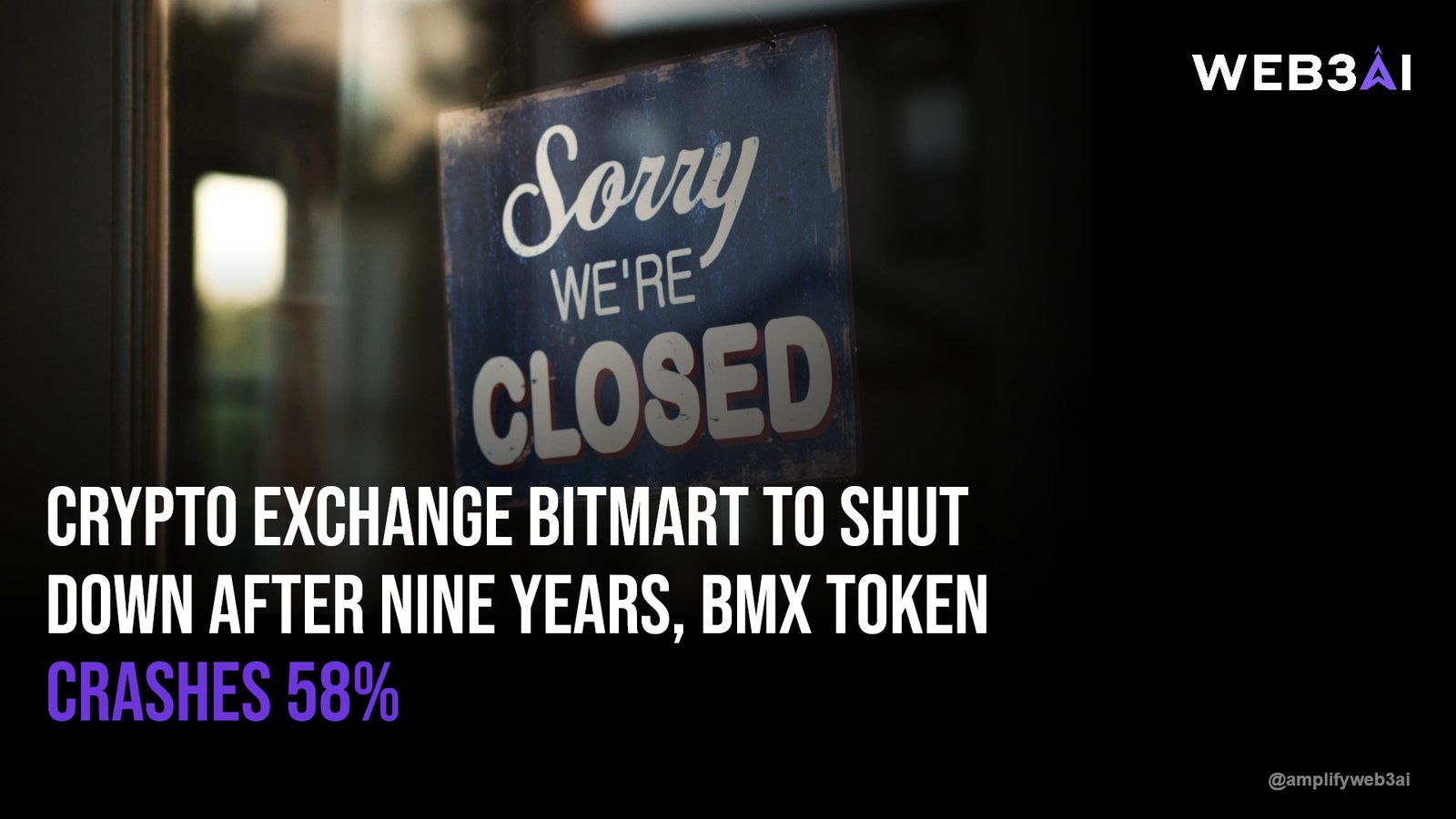

A crypto exchange shutdown rarely comes with much warning, and that is exactly what happened when BitMart announced it would close its doors after nine years in operation, sending its native BMX token into a freefall. For thousands of traders who had treated the platform as a stable part of their daily routine, the news landed like a gut punch. One day the exchange is processing withdrawals normally, and the next it is winding down entirely.
This kind of event is not new to the industry, but it never stops stinging. As Reuters reported, repeated exchange collapses have left the broader crypto market wrestling with a persistent trust problem that regulators and users alike are still trying to solve. Every time a platform folds, it reopens old wounds from FTX, Celsius, and now BitMart.
If you have ever felt that pit-in-your-stomach worry about where your funds actually sit, you are not alone. This post breaks down what happened with BitMart, why a crypto exchange shutdown can happen even to established platforms, and what steps you can take right now to protect yourself going forward.
BitMart launched in 2017 and built a reputation as a mid-tier exchange offering a wide range of altcoins that bigger platforms often ignored. Over nine years, it weathered multiple market cycles, a major hack in 2021, and shifting regulatory pressure across several jurisdictions. Its closure announcement cited unspecified operational challenges rather than a single dramatic event.
The immediate market reaction told its own story. BMX, the exchange’s native token, crashed as holders rushed to exit before liquidity dried up further. This pattern is familiar to anyone who followed previous exchange failures — the token tied to the platform is often the first casualty, and it tends to fall faster than anyone expects.
Most users assume that if an exchange has survived nearly a decade, it has proven its staying power. That assumption is part of the problem. Longevity in crypto is not the same as financial health, and internal issues can build quietly for years before surfacing publicly.
Centralized exchanges also operate with limited transparency around reserves, liabilities, and internal risk management. Unless a platform voluntarily publishes proof-of-reserves audits, users are essentially trusting a black box with their assets. That is a big ask when the stakes involve real money.
Pro Tip: Before depositing significant funds on any exchange, check whether it publishes regular proof-of-reserves audits from an independent third party.
Understanding this risk starts with understanding how your assets are actually stored. If you have not reviewed your own security setup recently, our beginner’s guide to Web3 wallet security is a good place to start closing that gap.
BitMart is not an isolated case. Over the past several years, the industry has seen a steady drumbeat of platform closures, ranging from sudden hacks to quiet insolvencies. Each event chips away a little more at user confidence in centralized crypto services.
There are a few recurring warning signs worth watching for:
None of these signs guarantee a shutdown is coming, but together they paint a picture worth paying attention to. Staying informed about the tools available to monitor exchange health is part of being a responsible participant in this market. Our roundup of top Web3 tools every investor should know in 2025 covers several platforms that help track exchange reserves and on-chain activity.
The single most effective step you can take is reducing how much you leave sitting on any one platform. Treat exchanges as places to trade, not places to store long-term holdings. Moving assets into a self-custody wallet after each transaction adds friction, but that friction is exactly what protects you.
It also helps to diversify across platforms rather than concentrating everything in one place. If one exchange faces trouble, your entire portfolio should not be at risk simultaneously.
Pro Tip: Set a personal rule to never leave more than you are actively trading on any single centralized exchange.
Here is a simple sequence to follow after news of any exchange trouble breaks:
Every crypto exchange shutdown pushes more users to reconsider decentralized alternatives that do not rely on a single company holding custody of their assets. Decentralized exchanges and AI-assisted risk monitoring tools are gaining attention precisely because they remove that single point of failure.
This shift is not just theoretical. Our piece on how AI is reshaping trust in decentralized finance explores how automated auditing and real-time risk scoring are helping users make more informed decisions before committing funds anywhere.
The technology is not perfect, and decentralized platforms carry their own risks. But the direction of travel is clear — users want more visibility, and they are increasingly willing to trade convenience for control.
What makes situations like BitMart’s closure so frustrating is how familiar they feel. The names change, but the underlying story rarely does — a platform grows, gains trust, then faces internal pressures that surface too late for users to react.
Regulation is slowly catching up, with more jurisdictions requiring proof-of-reserves and stricter licensing. That progress is real, but it is uneven across regions, which means the burden of vigilance still falls heavily on individual users.
The best protection remains a combination of skepticism, diversification, and a willingness to move assets into your own control when something feels off.
A crypto exchange shutdown can result from insolvency, regulatory pressure, security breaches, or unsustainable operating costs. Sometimes it is a combination of several factors building quietly over time. In BitMart’s case, the company cited operational challenges without detailing a single cause.
Watch for withdrawal delays, unusual social media silence, declining native token volume, and leadership changes. None of these alone confirm trouble, but multiple signs appearing together are worth taking seriously.
It depends heavily on the platform’s reserve practices and how quickly you act. Users who withdraw early often fare better than those who wait, since liquidity tends to dry up fast once a shutdown is announced.
Try a small test withdrawal first to confirm the platform is still functioning. If it succeeds, move remaining funds to a self-custody wallet as quickly as possible and document everything.
Decentralized exchanges remove the single point of failure that comes with a company holding your funds, which reduces this specific risk. They carry different risks of their own, such as smart contract vulnerabilities, so they are not a complete substitute for caution.
BitMart’s closure after nine years is a reminder that a crypto exchange shutdown can happen to even well-established platforms, and the warning signs are not always obvious until it is too late. The safest path forward involves spreading risk, minimizing what you leave on any single platform, and staying informed about the tools available to monitor exchange health.
None of this eliminates risk entirely, but it puts more control back in your hands where it belongs. Explore what we have built at attn.live.