Anouncement

Anouncement
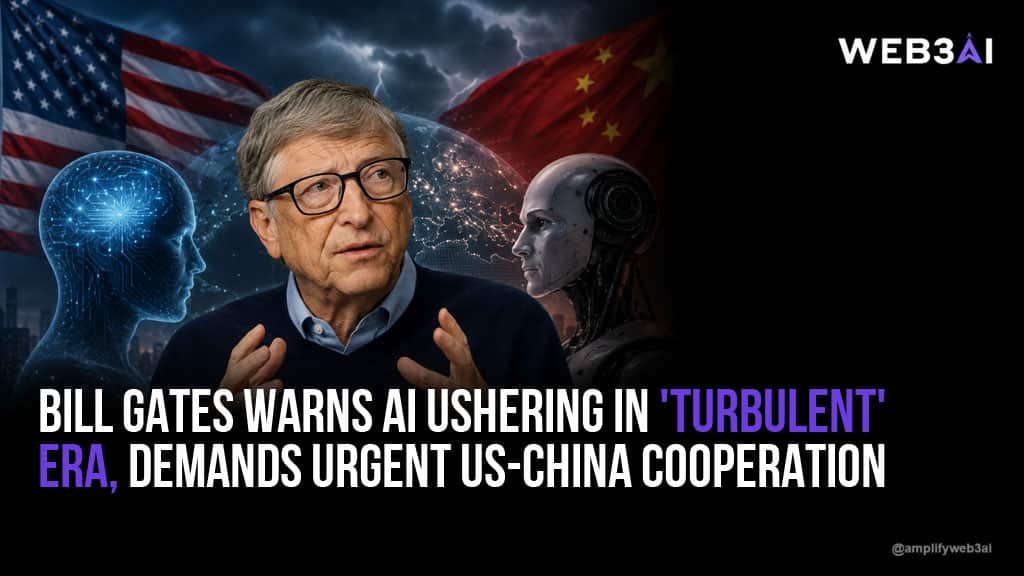

WASHINGTON / BEIJING — Artificial intelligence is driving humanity toward “one of the most turbulent times in human history,” tech pioneer and philanthropist Bill Gates warned in a sweeping 6,000-word essay.
To prevent the technology from becoming “the worst source of injustice,” the Microsoft co-founder is calling on the world’s two primary AI superpowers—the United States and China—to immediately begin setting shared global safety standards and operational norms.
Gates argued that traditional technological transitions offer little template for the speed and magnitude of AI’s development, asserting flatly: “This time really is different.”
While acknowledging theoretical calls for a worldwide pause on AI development, Gates dismissed a global R&D freeze as unfeasible due to intense geopolitical and commercial competition.
Instead of an unrealistic pause, Gates insists that the nations leading AI innovation and holding sway over key semiconductor and hardware supply chains must urgently sit down at the negotiating table.
“Building the framework I’m talking about will take years, which is why we need to start now… [The] countries that host the leading AI developers and control critical parts of the supply chain should begin meeting now to set up shared norms, before competitive pressure makes it harder for them to cooperate.”
— Bill Gates
Gates cautioned that global leaders remain dangerously unprepared for the systemic disruption AI will cause. He highlighted three primary areas requiring immediate governance and policy intervention:
Gates highlighted that advanced robotics is progressing far faster than many in Western nations appreciate, driven significantly by research and manufacturing in China.
As frontier models become more capable, the barrier to executing sophisticated cyberattacks, autonomous system hacks, and widespread digital surveillance is dropping rapidly. Gates warned that without cross-border security rules, terrorist misuse and rogue state activity could escalate unchecked.
Gates expressed deep concern over the psychological impact of AI on youth, particularly companion tools that foster emotional dependency. He pointed out that China has so far taken the most proactive stance in regulating emotional AI companion apps for minors, offering a potential blueprint for international safeguards.
The essay arrives at a delicate moment in US-China tech relations. While Washington and Beijing signed a landmark agreement in 2024 promising to keep human control—not AI—over nuclear weapon launch chains, broader AI governance agreements have remained stalled amidst intense technological competition.
The two superpowers are scheduled to hold preliminary AI governance talks during Chinese President Xi Jinping’s upcoming visit to the United States.
Furthermore, reports confirm that Gates is finalizing a high-profile meeting with President Xi Jinping in Beijing, tentatively scheduled for November, where AI governance and global safety protocols are expected to dominate the agenda.