Anouncement

Anouncement


Niantic Pokemon Go AR mapping has officially moved from a side experiment to a core global strategy — and most of the 90 million monthly players driving it have no idea it’s happening. Every time a Pokémon Go player scans a PokéStop or a real-world landmark with their phone camera, they are contributing a small tile to what Niantic hopes will become the most detailed, human-verified augmented reality map ever built. It is an ambitious undertaking hiding in plain sight inside one of the most beloved mobile games on the planet.
The scale of what Niantic is attempting is hard to overstate. According to TechCrunch’s deep-dive coverage of Niantic’s spatial mapping initiative, the company has been quietly stitching together millions of scans into a living 3D model of the physical world — one that could power the next generation of AI navigation, robotics, and immersive AR experiences. This is not just about catching Pikachu. This is infrastructure for the real-world internet.
In this post, we break down exactly what Niantic is building, why it matters for AI and Web3, what it means for player privacy, and why this might be one of the most consequential data projects of the decade — whether players realize they are part of it or not.
At its core, Niantic is using Pokémon Go’s massive player base to perform photogrammetry — the process of using overlapping photographs to reconstruct three-dimensional spaces. When a player taps the “scan” button at a PokéStop, their phone camera captures video footage of the surrounding environment from multiple angles. Niantic’s software then processes these clips to build a precise spatial mesh of that location.
These individual scans are not standalone snapshots. They are stitched together across millions of contributions into what Niantic calls the “Visual Positioning System,” or VPS — a global AR anchor layer that allows any device to understand exactly where it is in physical space, down to the centimeter. Think of it as GPS, but for the eyes of a camera rather than the antenna of a satellite receiver.
The practical applications go far beyond gaming. A precise, crowdsourced VPS layer could let delivery robots navigate city streets with confidence, allow surgeons to visualize patient anatomy overlaid on a real room, or let architects walk through a building that has not yet been constructed — all anchored to a verified physical world. Niantic is positioning itself not just as a gaming company but as the foundational mapping layer for the spatial computing era.
Pro Tip: If you play Pokémon Go and want to contribute meaningfully to the AR layer, scan PokéStops in varied lighting conditions and from multiple angles. Diverse scans produce higher-quality 3D meshes and may earn you in-game rewards through Niantic’s scanning incentive programs.
What makes Niantic’s approach genuinely novel is that it is essentially a crowdsourced content-creation engine disguised as a reward loop. Players receive in-game bonuses for scanning, which means they are voluntarily generating valuable spatial data in exchange for digital goods. This is the creator economy applied to physical-world data — and it has enormous implications for how AI systems learn about the real world.
This dynamic mirrors broader shifts in how AI is being trained and how value flows back to the people generating that training data. As we explored in our piece on how AI is transforming the creator economy, the line between “user” and “contributor” is dissolving. Pokémon Go players are not passive consumers — they are, knowingly or not, co-builders of a commercial AI dataset. The question of whether they should be compensated more fairly is one the industry cannot avoid much longer.
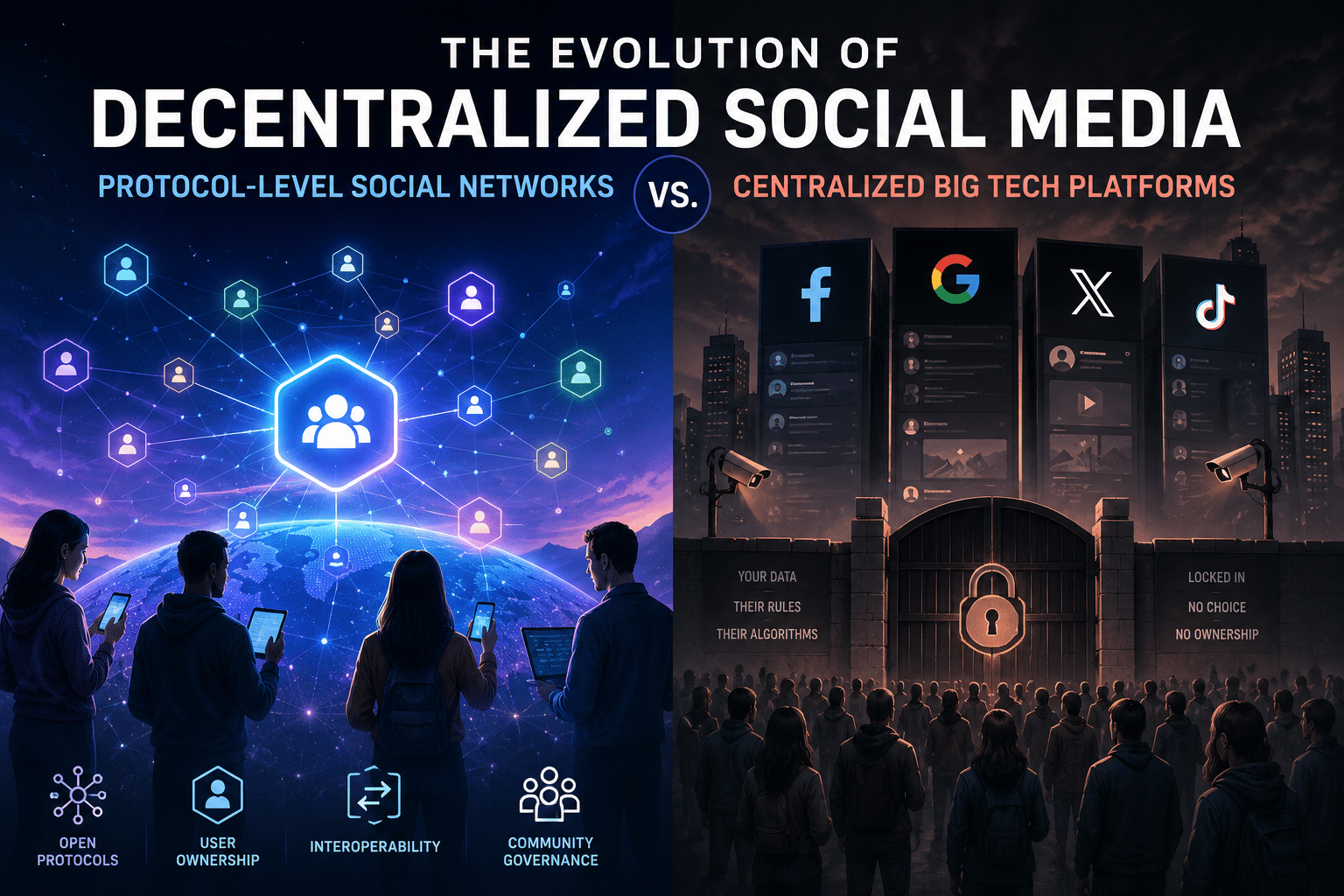
This tension — between platform value capture and contributor reward — is exactly the kind of structural problem that Web3 mechanisms are designed to address. Tokenized incentives, transparent data provenance, and on-chain ownership records could theoretically allow players to own a stake in the very map they help create. That future is not here yet, but Niantic’s model is forcing the conversation.
Here is where things get genuinely complicated. Pokémon Go’s scanning feature captures detailed video of homes, businesses, parks, transit stations, and public spaces — uploaded to Niantic’s servers and processed into permanent 3D models. Players opt in to scanning, but most are not fully aware that their contribution persists well beyond their gaming session and may be used to train commercial AI systems.
Niantic does anonymize scan data before processing, and the company’s privacy policy outlines how spatial data is handled. But anonymization has well-documented limits. A sufficiently detailed 3D model of a private residence could theoretically be reverse-engineered, cross-referenced with public satellite imagery, or used in ways that were never anticipated when a player happily tapped “scan” to earn extra Poké Balls.
Regulators in the EU and UK have already begun scrutinizing how location and spatial data is collected by consumer apps. As augmented reality mapping scales, the governance frameworks that currently apply to GPS data or photo metadata will likely need to evolve. The physical world is becoming a dataset, and the rules for that dataset are still being written.
Pro Tip: Before enabling AR scanning in any app, check the privacy settings to understand what data is retained, for how long, and whether you can request deletion. Most AR platforms offer a data removal request process through their privacy portals.
The Niantic model raises a fundamental question about data ownership that Web3 is uniquely positioned to answer. If millions of players collectively generate a dataset worth billions of dollars to AI developers, robotics companies, and spatial computing platforms, who owns that value — and who should benefit from it? Right now, the answer is unambiguously Niantic.
Understanding what Web3 is and why it matters helps clarify the alternative. A decentralized spatial data protocol could allow players to mint their scans as verifiable contributions on-chain, receive microtransaction royalties whenever their scan data is accessed, and retain the right to revoke or delete their contribution at any time. This is not science fiction — the technical primitives for it exist today.
Several Web3 projects are already experimenting with decentralized mapping and location data, including Helium’s expansion into geospatial services and emerging projects building on the Solana and Ethereum ecosystems. Niantic’s centralized model may become a compelling case study for why decentralized alternatives are worth building — even if Niantic itself never adopts them.
Niantic’s mapping ambition does not exist in isolation. It sits at the intersection of two of the most powerful technological currents of our era: the rise of large-scale AI models that can interpret physical space, and the emergence of decentralized infrastructure for building and sharing those models without ceding control to a single corporate gatekeeper.
We have written before about the rise of decentralized AI and how distributed training and inference are beginning to challenge the dominance of centralized AI labs. Spatial AI — models trained on real-world 3D data — is perhaps the most consequential frontier for this decentralization argument. Whoever controls the map controls the model, and whoever controls the model controls how machines see and navigate the world.
Niantic’s VPS, if it achieves global scale, will be one of the most powerful private datasets in existence. The company that builds the definitive 3D map of human civilization will have extraordinary leverage over every industry that depends on machines understanding physical space — which, as autonomous vehicles, delivery drones, and AR glasses become mainstream, will eventually be almost every industry.
For the average Pokémon Go player, none of this feels urgent. You open the app, you walk around, you catch Pokémon, maybe you tap scan at a PokéStop to get a bonus. The experience is fun, low-stakes, and social. That is exactly what makes Niantic’s data collection so effective — and, some would argue, so ethically complex.
Here is a clear summary of what players are contributing, whether they realize it or not:
If you want to make an informed choice about your participation, here is a practical step-by-step process:
Niantic Pokemon Go AR mapping is the process by which Pokémon Go players voluntarily scan real-world locations using their phone cameras. These video clips are processed using photogrammetry to build detailed 3D spatial models, which are stitched together into Niantic’s Visual Positioning System — a global AR anchor layer. The result is a crowdsourced map of the physical world that machines can use to understand and navigate real environments.
Niantic currently compensates players with in-game rewards such as Poké Balls, experience points, and special items for completing AR scans. There is no monetary payment. Critics argue that the commercial value of the spatial dataset Niantic is building far exceeds the value of the in-game rewards offered, raising questions about fair compensation for data contributors.
There are legitimate privacy concerns associated with Niantic’s AR scanning program. Scans capture detailed video of real-world spaces, including private residences and public gathering areas. While Niantic anonymizes this data, privacy advocates note that detailed 3D spatial models carry risks beyond traditional photo or GPS data, and regulatory frameworks have not yet caught up with the technology.
Niantic’s model is a clear example of a centralized platform capturing the full value of decentralized user contributions. Web3 principles — including token-based incentives, on-chain data provenance, and smart contract royalties — could theoretically enable a model where players own a stake in the data they generate. Several decentralized spatial data projects are exploring this alternative architecture today.
Niantic’s Visual Positioning System is a global database of 3D spatial anchors built from player scans. It allows any AR-enabled device to determine its precise physical location by matching its camera view against the VPS database — far more accurate than GPS alone. VPS technology has potential applications in autonomous vehicles, robotics, AR glasses, medical visualization, and industrial navigation, making it one of the most commercially valuable geospatial datasets being built today.
Yes. Pokémon Go players can choose not to participate in AR scanning without losing access to the core game. The scanning feature is opt-in, meaning players must actively tap the scan button to contribute. Players who wish to opt out can simply ignore scan prompts, and those who have previously contributed can contact Niantic’s privacy team to request data deletion under applicable regulations.
Niantic Pokemon Go AR mapping is one of the most quietly consequential technology projects of the 2020s. What looks like a fun bonus feature inside a beloved mobile game is actually a global crowdsourced infrastructure project — one that will shape how machines see, navigate, and interact with the physical world for decades to come. The players are real, the scans are real, and the stakes are very real, even if the Pokémon are not.
The deeper questions this raises — about data ownership, fair compensation, privacy governance, and the role of decentralized alternatives — are exactly the kinds of questions we explore every day at the intersection of AI, Web3, and the creator economy. The physical world is becoming a dataset, and how we choose to govern that dataset will define the spatial computing era. Players, developers, policymakers, and platforms all have a role in getting this right.
Explore what we have built at attn.live.