Anouncement

Anouncement
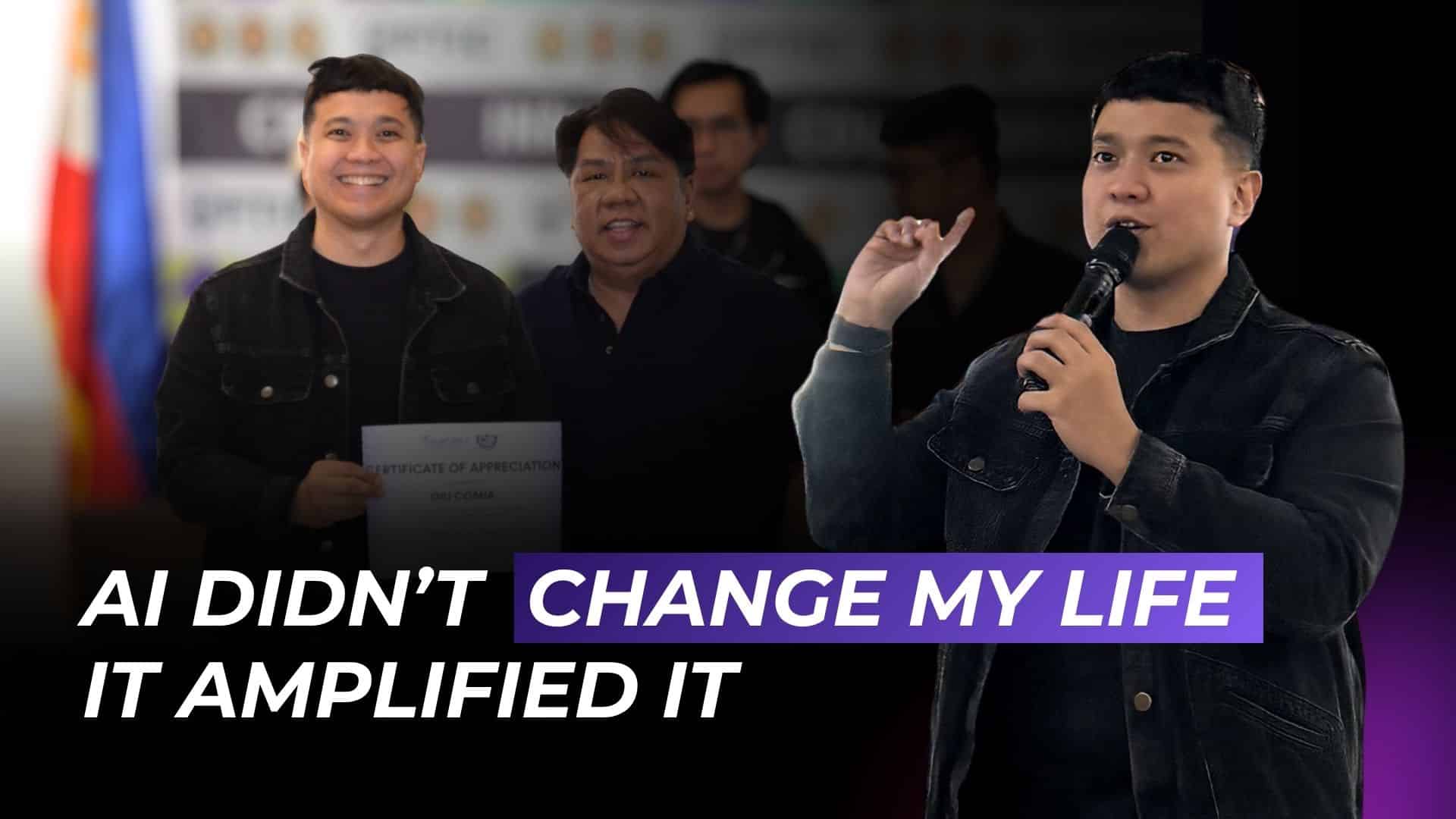

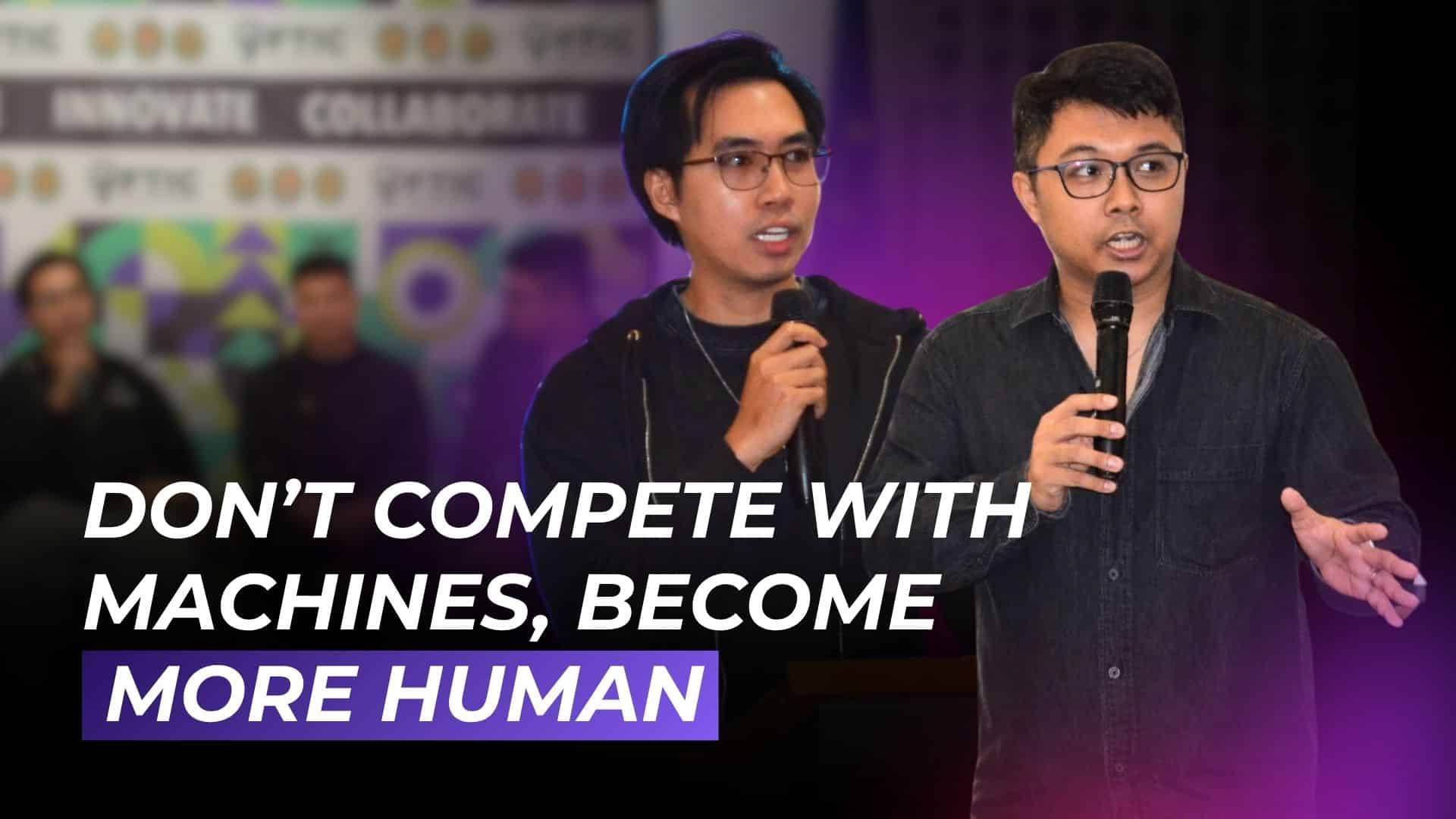
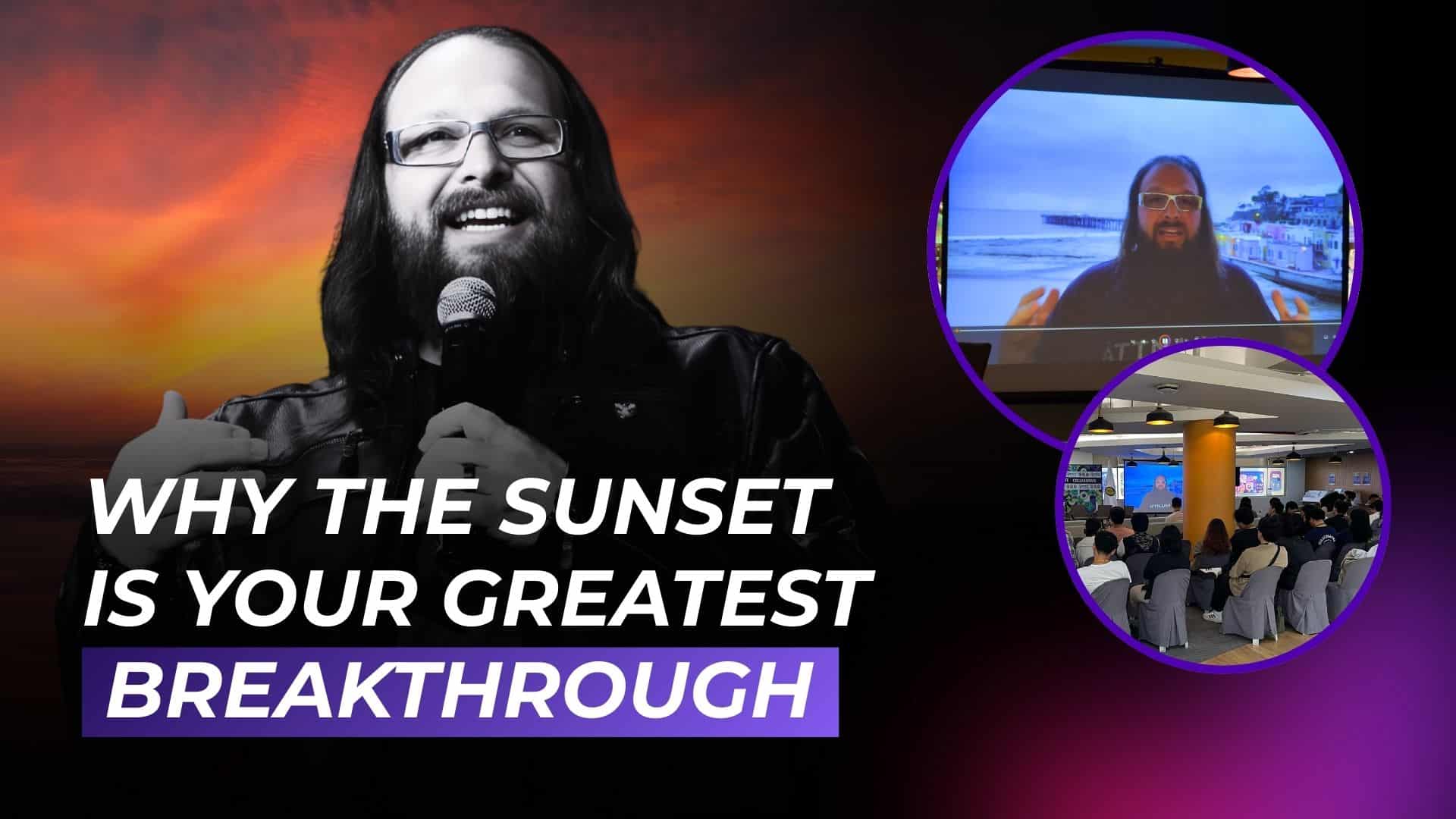
The room was filled with graduating students—some excited, some anxious, and many quietly wondering the same thing:
“What happens next?”
The speaker stepped onto the stage, not with a complicated explanation of artificial intelligence, but with a simple statement that immediately shifted the energy in the room:
“AI is already part of your life. You just haven’t named it yet.”
It wasn’t the usual dramatic warning about machines taking over jobs. It was something more grounded—almost comforting.
Because suddenly, AI didn’t feel distant or intimidating.
It felt familiar.
The speaker, Giu Comia, didn’t position himself as someone who built his life around AI. Instead, he described himself as someone with many roles—content creator, marketer, performer, trader, and someone who takes his health seriously.
And across all those roles, there was one common thread:
He used AI every single day.
But not in the way most people imagine.
“AI fits into my life. I didn’t change my life to fit AI.”
That line landed differently, especially for students who had spent the last few months hearing that they needed to “learn AI or be replaced.”
Because here was someone showing the opposite.
AI wasn’t something you had to chase.
It was something you could integrate—naturally, intentionally, and on your own terms.
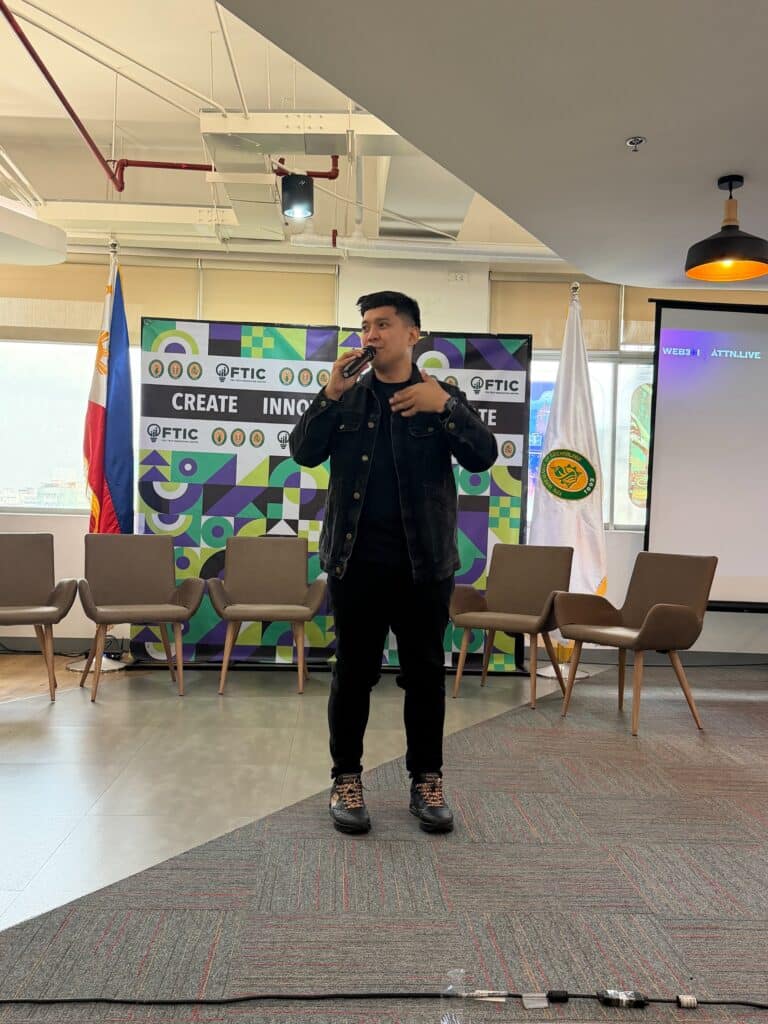
One of the biggest fears among graduating students is uncertainty.
Will there be jobs?
Will AI replace roles before they even get started?
Will everything they studied still matter?
Instead of dismissing those fears, Giu reframed them:
“AI is not a replacement. It’s a partner.”
That single shift—from replacement to partnership—changed the conversation.
Because if AI is a partner, then the question is no longer:
“Will AI replace me?”
But rather:
“How do I work with AI?”
As the talk moved into content creation, the room became more attentive.
Many students today are not just looking for jobs—they’re trying to build something of their own. A page. A brand. A side hustle.
And almost everyone has experienced the same frustration:
Staring at a blank screen.
Not knowing what to post.
Not knowing where to start.
This is where AI becomes useful.
Not as a replacement for creativity, but as a way to begin.
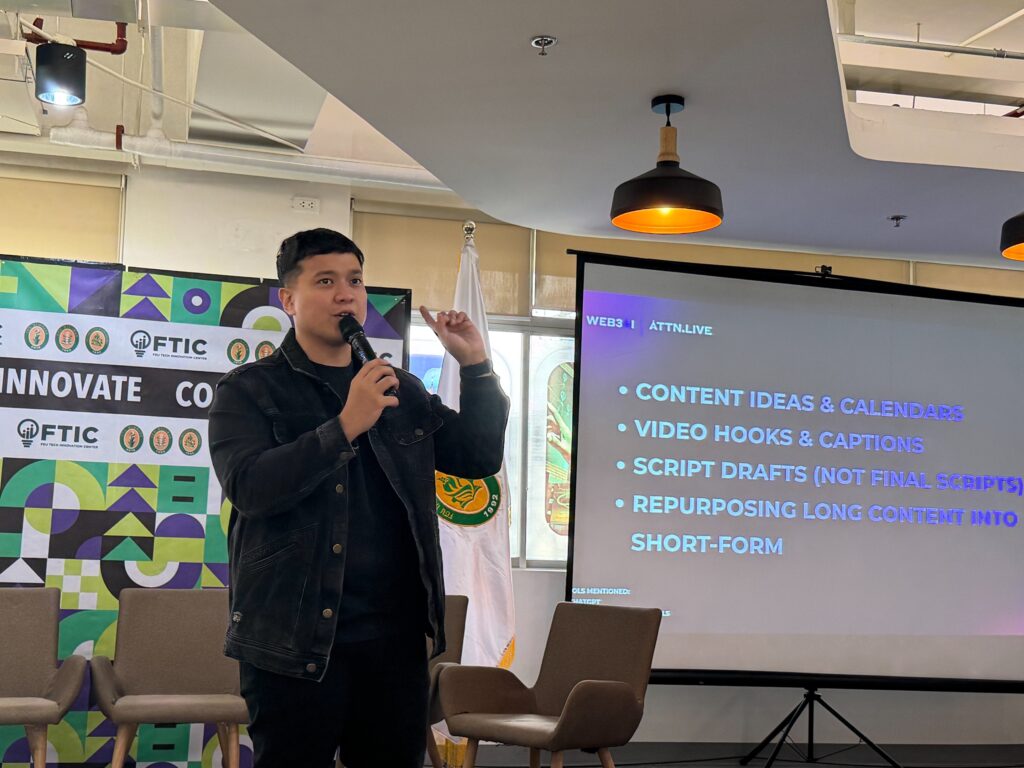
It can generate ideas, suggest hooks, draft scripts, and even help repurpose long-form content into short-form pieces. But Giu made one thing very clear:
“AI helps me start. I finish.”
The room nodded. Because deep down, everyone knows that the most difficult part of any project is not finishing—it’s starting.
AI removes that friction.
But the voice, the story, the authenticity—that still belongs to you.
When he transitioned into marketing, the message became more practical.
Before AI, many decisions were based on guesswork. Trial and error. Trying something and hoping it worked.
Now, AI can help break down audiences, generate campaign ideas, test different messaging angles, and even suggest funnel strategies.
The result?
Faster planning.
Better iteration.
More clarity.
For students entering a world that feels increasingly competitive, this was an important realization:
You don’t need to know everything.
You just need to know how to work smarter.
The conversation then shifted into creativity—music, performance, and the process of making something from nothing.
And here, Giu shared something that resonated deeply:
“Artist block usually comes from overthinking. AI gets me moving.”
It wasn’t about replacing creativity.
It was about unlocking it.
AI can suggest melodies, generate ideas, and help create rough drafts. But the emotional depth—the part that connects with people—still comes from human experience.
“AI gives starting points. Human emotion finishes the work.”
For students who often feel pressured to be perfect before they begin, this was a powerful reminder:
You don’t need perfect ideas.
You just need momentum.
When the topic turned to trading and decision-making, the tone became more serious.
Here, AI is not about creativity—it’s about control.
It helps remove emotional bias.
It reduces impulsive decisions.
It supports consistency.
But Giu didn’t sugarcoat it.
“AI is not guaranteed profits.”
It doesn’t eliminate risk.
It doesn’t predict the future.
What it does is help you follow systems and stay disciplined.
And that lesson extends far beyond trading.
Because in life, consistency often matters more than talent.
One of the most unexpected parts of the talk came when he discussed health.
In a world obsessed with productivity and success, it’s easy to neglect the basics—sleep, food, movement.
But Giu integrates AI even into this part of his life.
Tracking calories.
Analyzing food.
Planning workouts.
Building habits.
And then he said something that cut through everything else:
“If you don’t manage your body, none of the success matters.”
It was a reminder that no amount of success—career, financial, or otherwise—can replace well-being.
As the talk moved toward its conclusion, the message became more reflective.
Many people think the biggest benefit of AI is productivity or income.
But for Giu, it was something else entirely.
“AI gives me mental space—that’s the real upgrade.”
Less overthinking.
Faster decisions.
Reduced mental load.
And in a generation already dealing with information overload, that kind of clarity is priceless.
Before ending, he turned directly to the students.
AI can help you study.
Summarize research.
Draft ideas.
Learn new skills.
But there’s a line that should never be crossed:
“Use AI to learn faster, not to cheat.”
Because the goal is not to avoid effort.
It’s to accelerate growth.
As the final slide appeared, the message was simple—but powerful:
“AI is a tool. You are the value.”
And then, the line that stayed with everyone in the room:
“AI didn’t change who I am. It helped me become more of who I already was.”
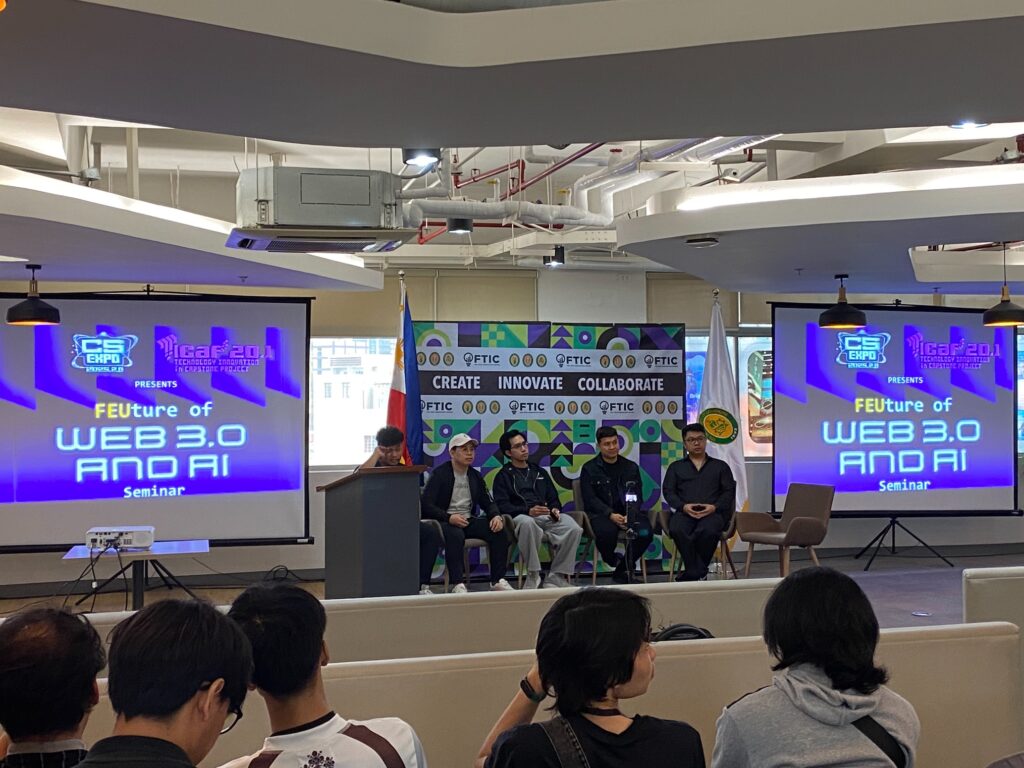
As the talk ended, the students didn’t leave with fear.
They left with clarity.
AI wasn’t something to compete against.
It was something to work with.
Not a replacement for their skills, but an amplifier of them.
And maybe the most important takeaway of all:
“Learn AI early—not to replace yourself, but to multiply yourself.”
Because in the end, the future doesn’t belong to AI.
It belongs to the people who know how to use it—without losing who they are.