Anouncement

Anouncement
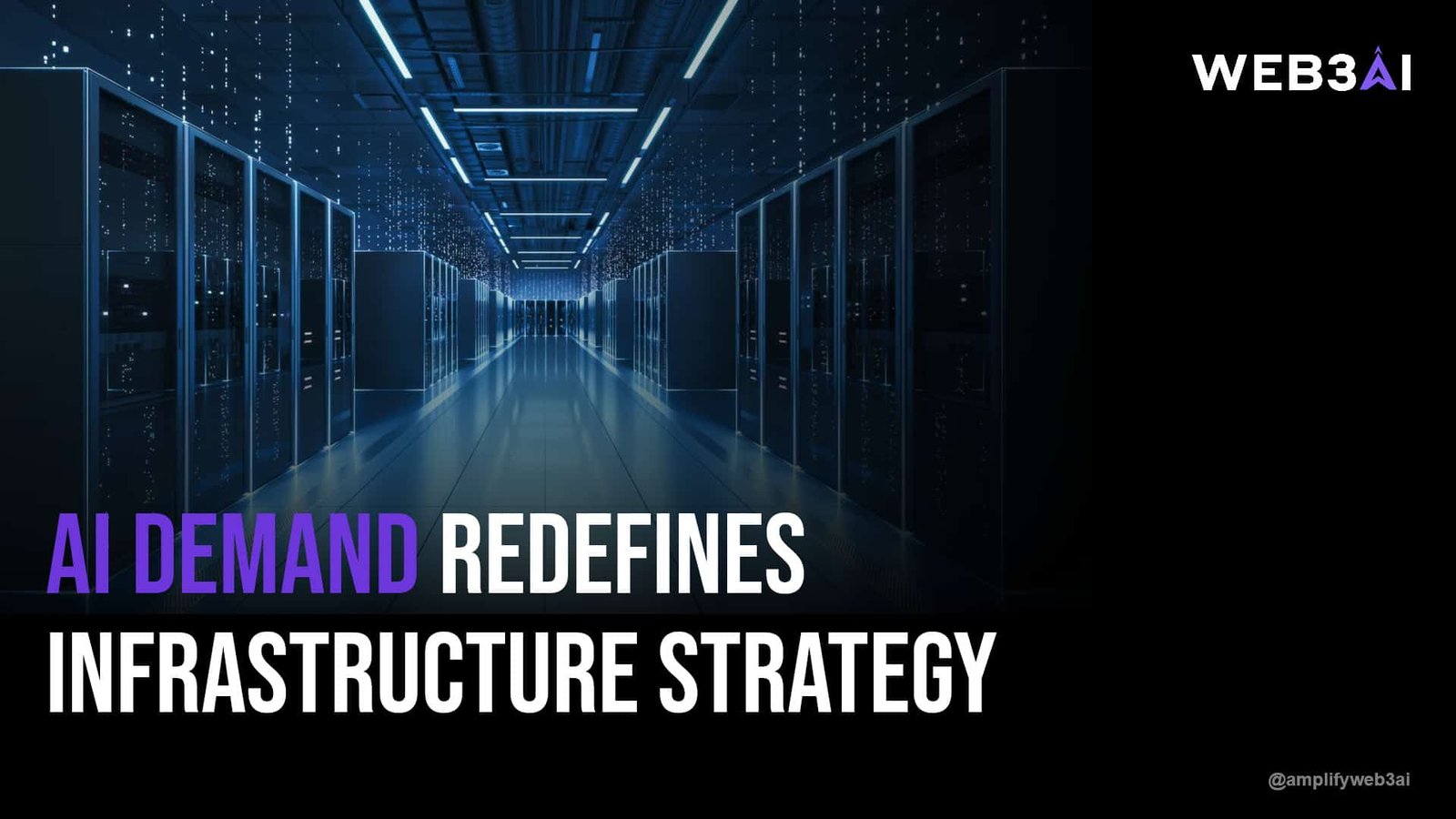

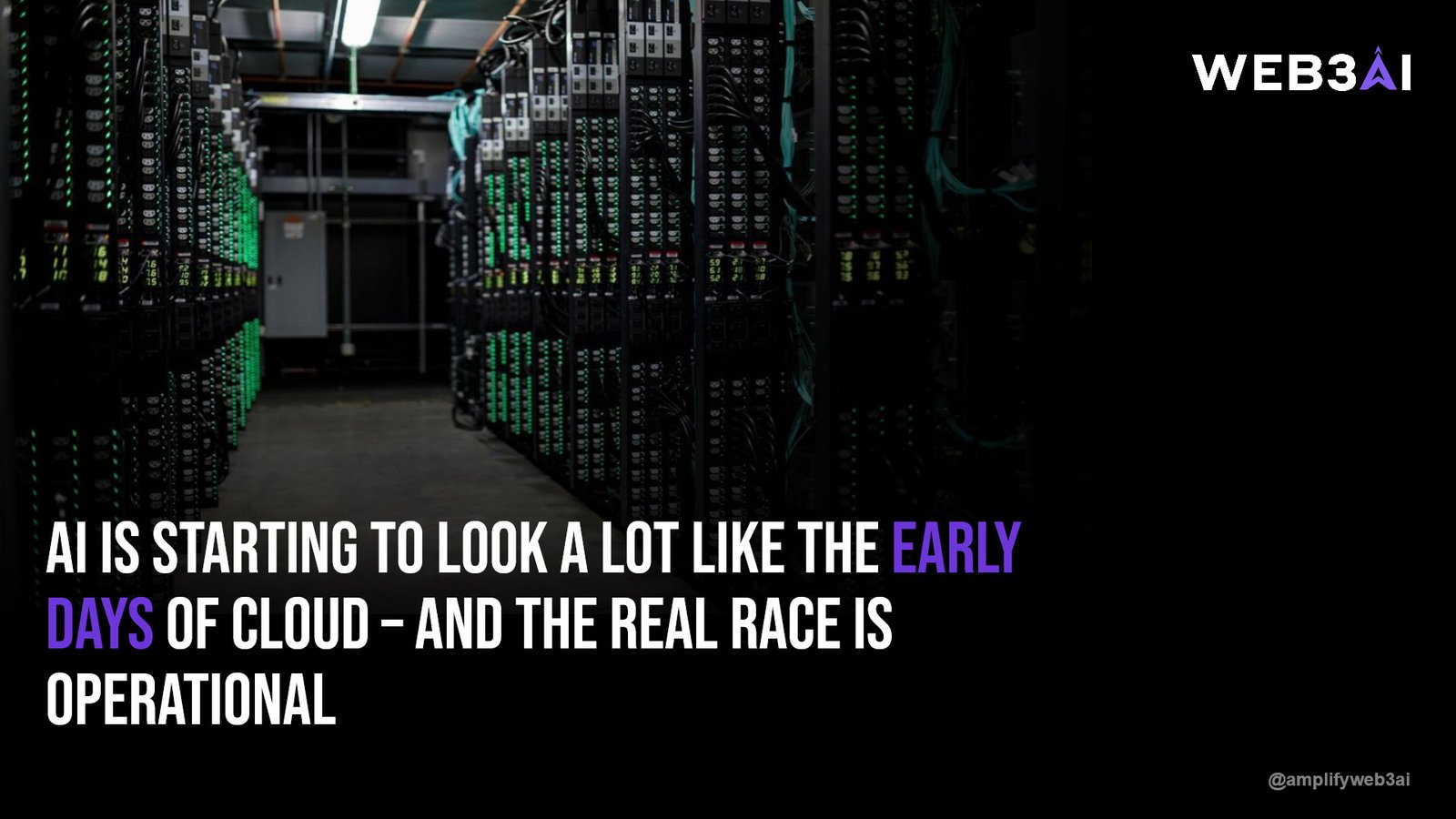
AI enterprise infrastructure strategy has moved from a back-office conversation to a boardroom priority almost overnight. The surging demand for large language models, real-time inference, and always-on automation has pushed enterprise IT leaders to completely rethink how they build, scale, and operate their foundational systems. What worked in 2020 simply cannot support what businesses need in 2025.
This shift is not purely technical — it is strategic and financial. According to McKinsey’s research on the economic potential of generative AI, AI adoption could add trillions of dollars in value across industries, but only for organisations that build infrastructure capable of supporting it at scale. The gap between AI-ready enterprises and those still running legacy stacks is widening fast.
In this post, we break down the key forces reshaping enterprise infrastructure, the decisions leaders are being forced to make right now, and how to position your organisation for the AI-powered decade ahead.
For years, enterprise infrastructure decisions were driven by cost efficiency, consolidation, and predictable workloads. Cloud migration happened gradually, and on-premises systems were maintained where compliance required it. AI has shattered that measured pace entirely.
Modern AI workloads — particularly training runs and large-scale inference — demand GPU clusters, high-bandwidth networking, ultra-low latency storage, and enormous energy capacity. Traditional CPU-centric data centre architectures were never designed for this. Enterprises that have not invested in upgrading their compute substrate are discovering painful bottlenecks exactly when they need speed the most.
The result is a growing infrastructure gap: organisations that want to deploy AI at meaningful scale but lack the physical and virtual foundation to do so reliably. Closing that gap is now one of the most expensive and time-sensitive challenges in enterprise technology.
Pro Tip: Before investing in new AI tools, audit your existing infrastructure for GPU availability, network throughput, and storage IOPS. Deploying AI on under-resourced hardware creates performance debt that compounds quickly.
One of the clearest strategic responses to AI demand has been a renewed commitment to hybrid cloud architectures. Rather than choosing purely public cloud or fully on-premises, leading enterprises are building dynamic hybrid environments that place workloads where they run best.
Sensitive training data stays on-premises or in private cloud environments to satisfy governance requirements. High-burst inference workloads — the kind that spike unpredictably when a product feature goes viral — get routed to public cloud GPU pools on demand. This flexibility is not just convenient; it is economically essential. Running permanent GPU reservations in the public cloud 24/7 is prohibitively expensive for most organisations.
For teams exploring how AI is already transforming industries built on decentralised foundations, our post on how AI is transforming Web3 marketing offers a practical look at how these same infrastructure shifts are playing out in emerging digital ecosystems.
Hybrid cloud also gives enterprises a hedge against vendor lock-in — a risk that has become more acute as hyperscalers compete aggressively for AI workloads with proprietary tooling and pricing models.
Compute gets most of the attention in AI infrastructure conversations, but networking and storage are equally critical — and often the actual bottleneck in production deployments. AI models are enormous. Moving a 70-billion parameter model between storage and GPU memory repeatedly during inference is a fundamentally different challenge from serving a traditional web application.
High-performance networking fabrics like InfiniBand and next-generation Ethernet are becoming standard requirements in enterprise AI data centres. These technologies allow GPU nodes to communicate with each other at speeds that prevent idle compute cycles during distributed training runs. Without them, you are essentially leaving a significant portion of your expensive GPU investment unused.
On the storage side, NVMe-based all-flash arrays and distributed file systems built for AI (such as GPFS or Lustre) are replacing conventional SAN and NAS configurations. The I/O demands of AI simply cannot be satisfied by spinning disk or even mid-tier flash deployments that would have been considered high-performance five years ago.
Pro Tip: When evaluating storage vendors for AI workloads, ask specifically about sustained sequential read throughput at the scale of your largest model checkpoint. Burst performance figures in marketing materials rarely reflect real-world AI pipeline behaviour.
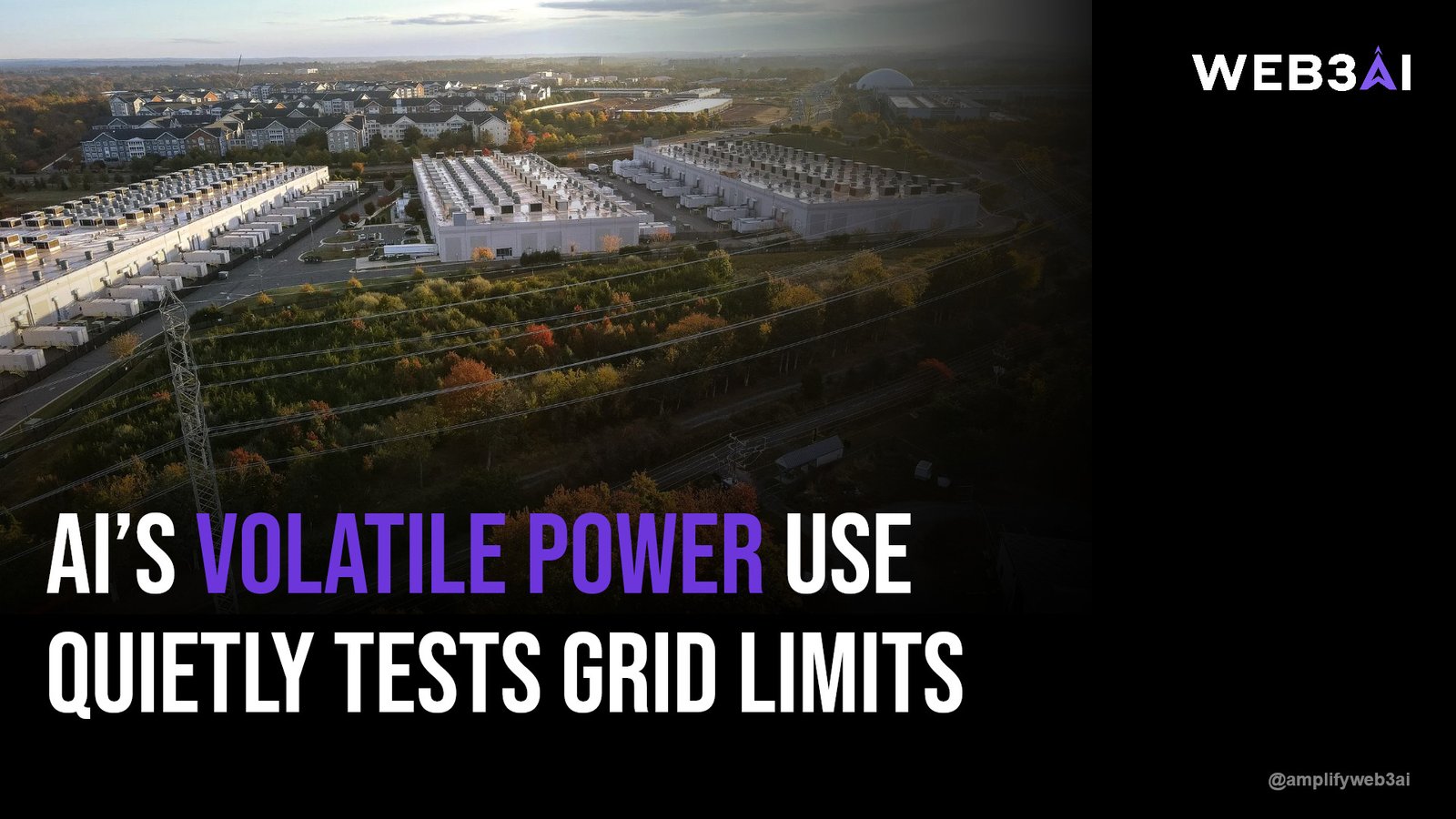
AI enterprise infrastructure strategy cannot be separated from the energy question. A single large-scale AI training run can consume as much electricity as hundreds of households use in a year. As enterprises scale up AI deployments from pilots to production, their power consumption — and their carbon footprint — scales with it.
Forward-thinking infrastructure leaders are integrating Power Usage Effectiveness (PUE) targets and renewable energy procurement directly into their AI infrastructure planning. Data centre selection is increasingly driven by access to renewable power grids, not just connectivity or real estate costs. This is a fundamental reorientation of how enterprise infrastructure site selection works.
The convergence of AI capability and blockchain-based energy credentialing is an emerging area worth watching closely. Our deep-dive into the future of AI and blockchain explores how decentralised technologies may play a role in verifying and trading renewable energy certificates at machine speed — a development with direct implications for enterprise sustainability reporting.
Infrastructure is not just servers and cables — it is the people, processes, and operating models that keep those systems running. AI enterprise infrastructure strategy requires a parallel investment in human capability that many organisations are underestimating.
The skill sets needed to operate an AI-ready data centre are genuinely different from those needed for traditional IT operations. MLOps engineers, AI platform architects, and data centre specialists with GPU expertise are in short supply globally. Enterprises that treat this as a hiring problem alone will struggle. Building internal training programmes and partnering with technology vendors for enablement is becoming part of infrastructure strategy, not just HR strategy.
For a broader view of how AI and emerging technologies are reshaping the foundational layer of the internet itself, our post on Web3 and AI: the convergence reshaping the internet provides essential context for infrastructure leaders thinking beyond the next budget cycle.
With so many moving parts — compute, networking, storage, energy, talent, and governance — building a coherent AI infrastructure roadmap can feel overwhelming. The organisations succeeding here are not necessarily those spending the most money. They are the ones sequencing their investments intelligently.
AI enterprise infrastructure strategy refers to the deliberate planning and investment decisions organisations make to ensure their technology foundations can support AI workloads at scale. In 2025, it matters because AI adoption has moved from experimentation to production deployment, and enterprises without a fit-for-purpose infrastructure are finding themselves unable to compete on speed, cost, or capability.
Traditional IT planning optimised for predictable, CPU-bound workloads with gradual growth curves. AI enterprise infrastructure strategy must account for GPU-intensive compute, massive parallelism, extreme data throughput requirements, and highly variable workload patterns. The planning horizons are shorter, the cost implications are larger, and the technical requirements are fundamentally different.
Hybrid cloud is the dominant model for most large enterprises because it balances data governance, cost flexibility, and performance. However, smaller organisations or those with less sensitive data may find that a public-cloud-first approach is more cost-effective and operationally simpler to manage, at least in the early stages of AI deployment.
Enterprises can manage AI energy costs by selecting data centres with access to renewable power, optimising GPU utilisation rates to avoid idle consumption, scheduling large training runs during off-peak hours, and integrating energy cost tracking into their FinOps frameworks. Partnering with facilities that publish transparent PUE metrics also helps with sustainability reporting obligations.
The most critical skills include MLOps engineering, GPU cluster management, AI-aware FinOps, security for machine learning systems, and observability tooling for AI pipelines. Enterprises should invest in both hiring and internal upskilling, as the global talent market for these specialisations remains highly competitive in 2025.
A well-considered AI enterprise infrastructure strategy is no longer optional — it is the foundation on which every meaningful AI initiative will either succeed or stall. The organisations pulling ahead are those treating infrastructure not as a supporting function but as a core strategic capability, one that requires the same deliberate investment and executive attention as product development or market strategy.
The decisions being made right now — about hybrid cloud boundaries, networking fabrics, storage architectures, energy sourcing, and talent pipelines — will determine which enterprises can actually deliver on their AI ambitions and which will spend the next five years retrofitting systems that were never built for this moment.
Whether you are just beginning to map your AI readiness or are deep in a multi-year infrastructure transformation, the principles are the same: build with intention, measure everything, and never let the speed of AI ambition outpace the robustness of the foundation beneath it. Explore what we have built at attn.live.